
Warmth on demand, no chimney required.
From new builds in Chanhassen and Victoria to farmhouses near Waconia and Cologne, Carver County homeowners are adding electric fireplaces for zone heat, ambiance, and rooms where venting a chimney or gas line just isn't practical. Find the right unit and get matched with a trusted local dealer.
Every Project Starts From One of These Five Situations
Zone heat that fits Carver County's coldest months.
Carver County sits in the western Twin Cities metro—Chaska as the county seat, with Chanhassen, Waconia, Victoria, Norwood Young America, Cologne, and Mayer rounding out a mix of new subdivisions, lake-country cabins, and older farmhouses. At climate zone 6A with a long, demanding heating season and winter lows averaging 4°F—comparable to Fargo, ND, in a hard year—this is genuine cold-climate territory where the furnace runs from October through April. Electric fireplaces have found a real niche here, not as a whole-home heat replacement but as targeted, no-hassle warmth in the rooms that need it most.
Because there's no chimney, no gas line, and no combustion byproducts to vent, an electric fireplace can go into a finished basement in a Chaska rambler, a Chanhassen townhome with an HOA that restricts open-flame appliances, or a Victoria addition where running gas line simply isn't in the budget. Most units plug into a standard outlet or run on a dedicated 20-amp circuit, which keeps installation timelines short and permitting minimal compared to a wood or gas project. The honest tradeoff: electric fireplaces are zone heaters, typically putting out 4,000 to 5,000 BTU per hour—enough to take the chill off a single room, not enough to carry a Carver County home through a subzero January stretch on their own. They work best paired with your existing furnace, not as its replacement.
Three steps. No salesperson until you're ready.
Tell us about your project
Your zip code, your situation, and the fuel you're leaning toward—or let the answers point you to one.
See what's actually available
The brands dealers within 100 miles genuinely carry—real options, never a catalog mirage.
Get your dealer & Project Guide
A trusted local dealer, plus the free Project Guide & Parts List that names every component of the job.
Frequently Asked Questions
How much does an electric fireplace installation cost in Carver County?
Plug-in electric inserts and freestanding stoves typically run $200 to $1,500 for the unit itself, with little to no installation cost beyond plugging it in. Built-in wall units or mantel-integrated fireplaces—popular in Chanhassen and Victoria new construction—run $1,500 to $4,500 once you factor in the unit, custom surround or mantel work, and an electrician running a dedicated 20-amp circuit if the unit calls for one. That's meaningfully less than a wood or gas project in Carver County because there's no chimney, no gas line, and no masonry work involved. A local dealer can quote a firm number once they know whether you want a simple plug-in insert or a full built-in installation.
Will an electric fireplace actually heat a room during a Carver County winter?
It will take the edge off, but it won't replace your furnace. Most electric fireplaces put out 4,000 to 5,000 BTU per hour, which is enough to warm a bedroom, home office, or finished basement family room in normal conditions. When Carver County hits its average winter low of 4°F—or drops well below zero, which happens most winters—an electric fireplace should be treated as supplemental zone heat layered on top of your existing forced-air system, not a stand-in for it. If you're heating a drafty three-season porch or a large open great room, ask your local dealer about higher-output models or whether a wood or gas alternative makes more sense for that space.
Do I need a permit to install an electric fireplace in Carver County?
Usually very little, which is one of electric's biggest advantages here. A simple plug-in unit that uses an existing outlet typically requires no permit at all. If you're installing a built-in unit that needs a new dedicated circuit, an electrical permit from your city (Chaska, Chanhassen, Waconia, and the other Carver County cities each handle their own permitting) or the county in unincorporated areas may be required—but this is a same-day inspection process, nothing like the building permit and chimney inspection process required for a wood stove. Most licensed electricians handle the permit paperwork as part of the job.
What's the difference between an electric insert and a freestanding electric fireplace?
An electric insert is built to slot into an existing masonry fireplace opening or a custom-framed wall cavity, giving you a built-in look with a surround, mantel, or TV mount above it. A freestanding electric stove or fireplace sits on the floor like a traditional wood stove and just needs an outlet—no framing or cutout required. For Carver County homes with an old, rarely-used masonry fireplace, converting to an electric insert is a common way to get usable heat and ambiance back from a fireplace that's otherwise just decorative. For basements, additions, or rental units without an existing fireplace opening, a freestanding unit is usually the simpler path.
Which electric utility serves Carver County, and does that affect running costs?
Xcel Energy serves much of the more urbanized eastern part of the county, including Chaska and Chanhassen, while Minnesota Valley Electric Cooperative covers rural stretches around Waconia, Norwood Young America, and Cologne. Running costs for an electric fireplace are modest either way—a typical 1,500-watt unit run for several hours a day adds roughly $10 to $25 a month to a bill, depending on your rate and how often you run it. That's part of why electric appeals to homeowners who want ambiance and zone heat without committing to a wood-cutting routine or a propane contract.
What's the best electric fireplace for a Carver County home?
For most homes here, a mid-size built-in from a brand like Dimplex, Napoleon, or Amantii covers the bases—realistic flame effects, a heater rated around 5,000 BTU, and options that fit standard framing widths for a mantel or media wall installation. If you're outfitting a finished basement or a bedroom where the fireplace is purely supplemental, a smaller plug-in insert is plenty. If you're trying to make a three-season porch usable further into fall, talk to a local dealer about whether electric's BTU ceiling will actually get you there, or whether a small gas or wood option would serve that space better.
Electric vs. wood—which makes more sense for my Carver County home?
Carver County has no air quality restrictions on wood burning, and locally abundant oak, maple, birch, and aspen make wood a genuinely practical choice for homeowners who want real heat output and a fuel source that keeps working when the power doesn't. That's the key tradeoff: an electric fireplace won't run during an outage unless you've got a generator, and Minnesota winters bring their share of ice storms and grid interruptions. Wood stoves can put out serious heat through a prolonged cold snap and double as emergency backup heat. Electric wins on convenience, cleanliness, and installation simplicity—no chimney, no wood stacked in the garage, no ash to haul out. For a primary heat source or storm backup, wood is worth a serious look; for ambiance and zone heat in a finished space, electric is hard to beat.
Where can I get help sizing an electric fireplace for my space?
Sizing an electric fireplace is less about square footage math and more about matching the unit's width and heater output to the room and the look you want—a 50-inch linear unit reads very differently over a mantel than a 36-inch insert in a basement nook. A local hearth dealer will walk through your wall dimensions, whether you want a TV mounted above it, and whether the room needs real supplemental heat or just the visual. That in-home or in-showroom consultation is typically free and is the fastest way to avoid ordering a unit that's the wrong width for your framing.
Electric vs. gas fireplace—which should I choose?
Gas fireplaces put out real, substantial heat—often 20,000 to 30,000 BTU for a direct-vent unit—and can serve as genuine supplemental or even primary zone heat through a Carver County winter. Electric fireplaces top out around 5,000 BTU and are better understood as ambiance with a side of warmth. Gas requires a gas line and venting, which means a bigger project and permit process; electric requires little more than a circuit. If you want a fireplace that meaningfully heats a room on a subzero night, gas is usually the better performer. If you want flame effect, flexibility on placement, and the simplest possible installation—especially in a condo, basement, or rental—electric is the practical choice.
Can I put a TV above my fireplace?
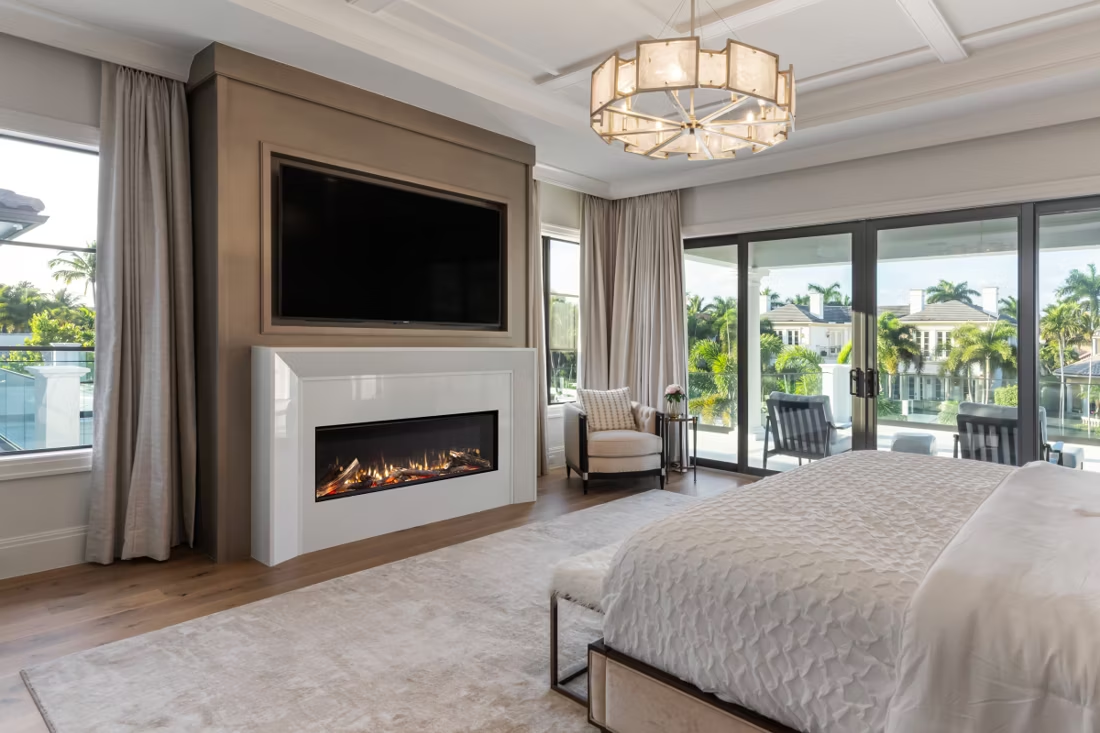
Yes—with an asterisk. Fireplaces are hot and TVs don't like heat. Either put a mantel between them to deflect rising warmth, or choose a fireplace with heat-management technology that creates a cool zone on the wall above—the wall stays around 125 degrees, barely warm, while the room still gets full heat. If you like clean lines and don't want a mantel, heat management is the answer.
Do electric fireplaces actually produce heat?
Yes—most put out around 4,800–5,000 BTUs from a standard outlet, which comfortably warms a bedroom, office, or den as a comfort-zone heater. What they won't do is carry a whole house the way wood, gas, or pellet can. Think of electric as ambiance-first with honest supplemental heat: flames on with no heat in July, flames plus warmth in January.
Should the dealer who sells my fireplace also install it?
Ideally, yes. A fireplace project involves vent pipe, gas line, electrical, and often tile or stone. Hire three or four separate trades and you own the liability and the game of telephone between them. One company selling and installing means one accountable party, start to finish—ask about factory training, on-time completion records, and what happens if an inspection fails.
Can I install a fireplace myself?
If you're putting a fire in your house on purpose, it's best to work with an expert. Unless you're genuinely experienced in framing, gas line, vent pipe, and the national code on clearances to combustibles, have a professional do it—and ideally the same company that sells you the fireplace, so warranty, service, and liability all live under one roof.
Stove and Fireplace Dealers in Carver County
Find your electric fireplace in Carver County.
Tell us about your room and what you want the fireplace to do—ambiance, zone heat, or both—and we'll match you with a trusted local dealer and a free Project Guide & Parts List for your Carver County installation.
Find Your Fireplace →