
Steady heat for Michigan's Thumb, one hopper at a time.
With a long, demanding Thumb-region winter, Tuscola County homes from Caro to Cass City need heat that doesn't demand a woodpile and doesn't quit. Find the right pellet stove or insert, and connect with a trusted local dealer.
Every Project Starts From One of These Five Situations
Reliable warmth through a long, hard winter.
Tuscola County sits in Michigan's Thumb, a flat, working landscape of corn and sugar beet fields between Saginaw Bay and the rest of the Thumb peninsula. With about 16,000 residents spread across small towns like Caro, Vassar, Cass City, Millington, and Reese, most homes here are rural or small-town, often on acreage, and often managed by people whose winter schedule is already full with farm chores or long commutes. Climate zone 5A puts Tuscola County's heating load in the same range as Madison, Wisconsin—a real, sustained heating season that runs from October well into April, with average winter lows around 15°F and lake-effect snow off Saginaw Bay adding to the mix.
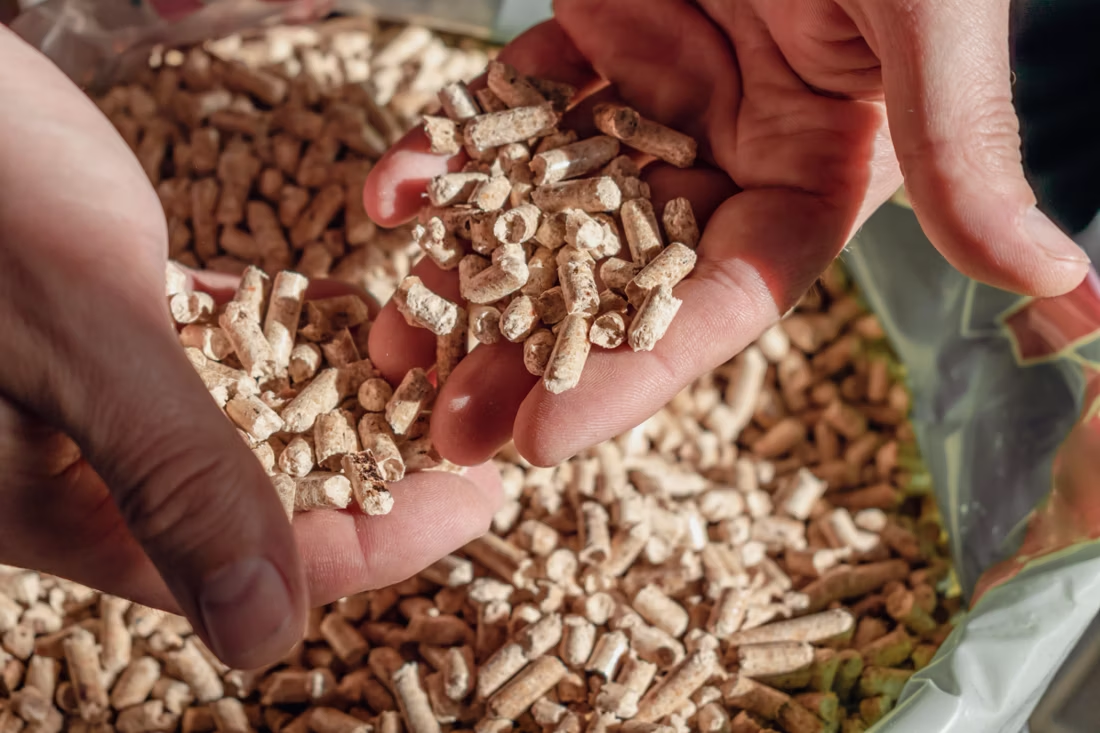
That's exactly the kind of climate where pellet heat earns its keep. A pellet stove or insert loads from a bag instead of a woodpile, runs on a thermostat instead of constant tending, and burns cleanly enough that Tuscola County has no air quality non-attainment issues or burn curtailment periods to work around. Local hardwood—oak, maple, birch, and ash—is the same feedstock behind regional pellet brands like Indeck Energy Services, Lignetics, and Somerset Pellet Fuel, all of which are available through Michigan dealers and retailers. For a farm household or a small-town home where nobody has time to split and stack four cords a winter, pellet heat delivers consistent, controllable warmth without the labor.
Three steps. No salesperson until you're ready.
Tell us about your project
Your zip code, your situation, and the fuel you're leaning toward—or let the answers point you to one.
See what's actually available
The brands dealers within 100 miles genuinely carry—real options, never a catalog mirage.
Get your dealer & Project Guide
A trusted local dealer, plus the free Project Guide & Parts List that names every component of the job.
Frequently Asked Questions
How much does a pellet stove or insert installation cost in Tuscola County?
Most pellet stove and insert installations in Tuscola County run in the $2,500 to $6,000 range, depending on the unit, whether it's a freestanding stove or an insert going into an existing masonry fireplace, and the venting work involved. A pellet insert into an existing fireplace with a straightforward through-wall vent kit tends to sit on the lower end. A freestanding stove in a new location—one that needs fresh hearth pad work and a longer vent run through an exterior wall or roof—runs higher. Because pellet stoves vent horizontally through a wall in most cases rather than requiring a full masonry chimney, installation is often less involved than a comparable wood stove project. A local dealer can give you a firm number after seeing your home.
What size pellet stove do I need for a Tuscola County home?
With a heating season as long and demanding as Tuscola County's, sizing matters. A pellet stove rated for 1,500 to 2,000 square feet works for most single-story ranch or farmhouse layouts common in the county, while larger or older farmhouses with less insulation often need a unit at the higher end of that range, or a second heat source for the coldest stretches in January and February. Homes on the higher end of square footage, or with open floor plans, should size up rather than down—an undersized unit will run at maximum output constantly and still fall behind on the coldest nights. A local retailer will size your specific home for free.
Pellet vs. wood—which makes more sense for a Thumb-region farm home?
Wood offers lower fuel costs if you have access to your own hardwood—oak, maple, birch, and ash are all common on Tuscola County properties—and it keeps working during a power outage, which matters when ice storms roll through the Thumb. Pellet stoves need electricity to run the auger and combustion blower, so they go down when the power does unless you add a battery backup. What pellet buys you in return is real convenience: no splitting, no stacking, no daily hauling of firewood into the house, and a thermostat that holds a steady temperature instead of a fire that needs tending every few hours. For farm households already stretched thin during calving or harvest season, that convenience is often the deciding factor. Homes that lose power frequently or want a guaranteed backup heat source sometimes keep a wood stove as well.
What's the difference between a pellet stove and a pellet insert?
A pellet stove is a freestanding unit that sits on the floor and vents through a wall or existing chimney chase—it can go almost anywhere in the house with the right clearances. A pellet insert is built to slide into an existing masonry fireplace opening, converting an old wood-burning fireplace into an automated, thermostat-controlled heat source while using the existing chimney or a liner for venting. For Tuscola County farmhouses with an older brick fireplace that's rarely used because it's inefficient, an insert is usually the better fit. Homes without an existing fireplace, or new construction, are typically better suited to a freestanding stove.
Do I need a permit to install a pellet stove in Tuscola County?
Most pellet stove and insert installations require a building permit, issued either through your local township or through the Tuscola County Building & Zoning Department for unincorporated areas—which office applies depends on where in the county you live. Most local dealers handle the permitting as part of the installation, so you generally don't have to navigate it yourself. Unlike some parts of the country, Tuscola County has no air quality non-attainment designation and no seasonal burn curtailment periods to plan around, so once the unit is permitted and installed, you're free to run it as your heating needs dictate.
Where can I buy pellet fuel in Tuscola County?
Regional hardwood pellet brands including Indeck Energy Services, Lignetics, and Somerset Pellet Fuel are sold through Michigan hearth dealers and farm supply stores, and many carry pellets year-round with better pricing if you buy a season's supply—typically 40-50 pound bags sold by the ton—in late summer or early fall before demand picks up. Buying early also avoids the scramble that happens across the Thumb once the first hard cold snap hits in November. Ask your local dealer whether they offer seasonal pre-buy pricing or delivery for bulk orders, which is common for rural customers who don't want to make repeated trips.
Will my pellet stove work if the power goes out?
Not on its own. A pellet stove's auger, igniter, and combustion blower all run on standard household electricity, so a power outage shuts the unit down even with a full hopper of fuel. This matters in Tuscola County, where ice storms and high winds off Saginaw Bay can knock out rural power lines for hours or, occasionally, days. Some homeowners pair a pellet stove with a small battery backup or generator sized to keep the stove running through an outage—worth discussing with your dealer if reliable heat during outages is a priority. If backup-free operation matters more than convenience, a wood stove or fireplace is worth considering alongside pellet as a second heat source.
How much maintenance does a pellet stove need?
Pellet stoves need more routine attention than a wood stove but less than you'd expect. Plan on emptying the ash pan every few days during heavy winter use, wiping the glass as needed, and vacuuming the burn pot and heat exchanger tubes every one to two weeks depending on pellet quality and how many hours the unit runs. An annual professional service—checking the auger motor, gaskets, blower, and venting—is recommended before each heating season, similar to servicing a furnace. Compared to splitting, stacking, and hauling cordwood, most Tuscola County pellet stove owners find the ash-pan-and-vacuum routine a manageable trade.
What's the best pellet stove for a cold Michigan winter?
For a heating season with 7,120 degree days, look for a pellet stove with a large hopper capacity—40 to 60 pounds—so it can run through a full overnight cycle without a refill, along with a heat output in the 40,000 to 50,000 BTU range for larger farmhouses. Models with a variable-speed auger and blower give you finer control over burn rate than older fixed-rate units, which matters when you're trying to hold a steady temperature through a Thumb-region cold front. Ask your local dealer which models pair well with the hardwood pellet brands sold locally, since burn quality and ash output can vary by pellet brand and stove design together.
What's the difference between an insert and a zero-clearance fireplace?
An insert is a fireplace that slides into a pre-existing wood-burning fireplace—if you don't have one, there's nothing to insert it into. A zero-clearance fireplace is built into a framed wall, which makes it the answer for remodels and new construction. Simple test: existing masonry fireplace means insert; blank or framed wall means zero-clearance.
Are pellet stoves loud?
They make some noise—there are two fans running plus an auger motor that turns as it feeds pellets. But there's a real range: premium models are engineered quiet, and the best offer a whisper-quiet mode you can comfortably watch TV next to. If noise matters in your room, ask to hear a stove running before you buy—it's a five-minute test that saves years of annoyance.
Does a fireplace add value to my home?
On average, a fireplace adds back to the home about the same amount you spent installing it. Add the monthly savings from heating the rooms you actually use instead of the whole house—often hundreds of dollars a year—and the value case is strong before you even count what a fire does for how your family uses the room.
Can I install a fireplace myself?
If you're putting a fire in your house on purpose, it's best to work with an expert. Unless you're genuinely experienced in framing, gas line, vent pipe, and the national code on clearances to combustibles, have a professional do it—and ideally the same company that sells you the fireplace, so warranty, service, and liability all live under one roof.
Stove and Fireplace Dealers in Tuscola County
Pellet Brands Stocked Around Tuscola County
Manufacturers will point you to the nearest stocking dealer.
Find your pellet stove in Tuscola County.
Tell us about your home and we'll match you with the right pellet stove or insert, plus a free Project Guide & Parts List—the exact parts, including the vent kit, and our recommended local dealer for your Tuscola County installation.》,
Find Your Fireplace →