
Ambiance and Heat, No Chimney Required in St. Clair Shores.
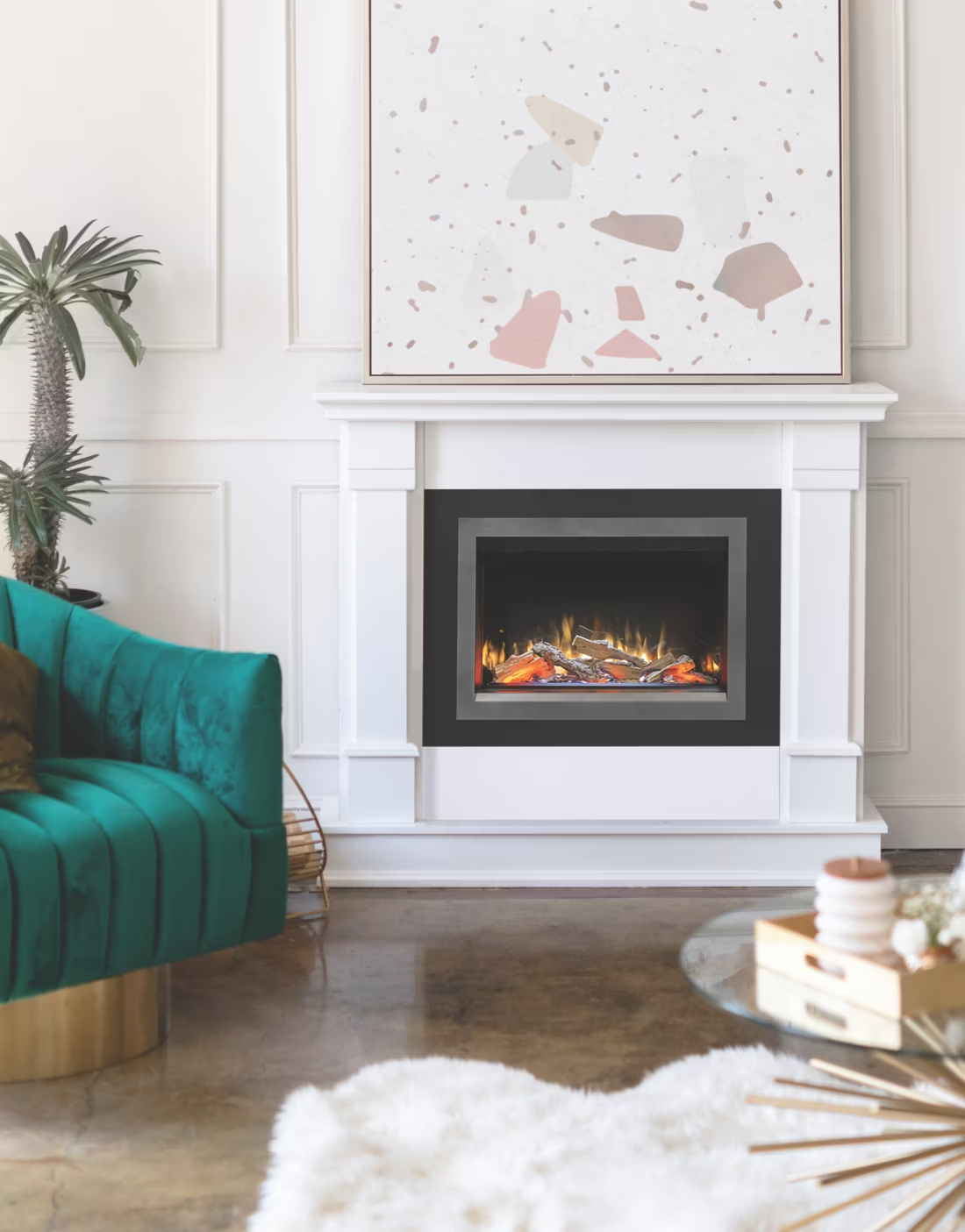
Electric fireplaces bring instant warmth and a realistic flame to St. Clair Shores homes and condos on tight canal lots—no venting, no gas line, no wood storage. Find the right unit and connect with a trusted local dealer.
Every Project Starts From One of These Five Situations
The easiest fireplace to add to a Lake St. Clair lot.
St. Clair Shores sits along Lake St. Clair in Macomb County, a dense grid of brick ranches, canal-front homes, and condos just north of Detroit. With winters as cold as those seen deep in Michigan and average winter lows around 17°F, this is a genuinely cold Michigan climate—but the housing stock here doesn't lend itself to wood heat. Narrow canal lots, shared walls in condo buildings, and a lack of any local firewood-cutting infrastructure (this is a lakefront suburb, not forest land) mean wood stoves are essentially absent, and pellet appliances are rare for the same reason: there's no local bulk-delivery culture for pellets the way there is in more rural parts of the state.
Electric fireplaces fill that gap well. DTE Electric serves the city, and most units here run on either a standard household outlet or a dedicated 240V circuit an electrician can add in an afternoon—no trenching a gas line, no masonry chimney, no combustion venting through a shared condo wall. For canal-front homes where exterior wall space is limited by dock views and window lines, or condos where the association won't allow venting penetrations, electric is often the only realistic fireplace option. It also works well as supplemental zone heat alongside a furnace during Michigan's long heating season, warming the room you're actually in without running the whole-house system harder.
Three steps. No salesperson until you're ready.
Tell us about your project
Your zip code, your situation, and the fuel you're leaning toward—or let the answers point you to one.
See what's actually available
The brands dealers within 100 miles genuinely carry—real options, never a catalog mirage.
Get your dealer & Project Guide
A trusted local dealer, plus the free Project Guide & Parts List that names every component of the job.
Frequently Asked Questions
How much does an electric fireplace cost to buy and install in St. Clair Shores?
Plug-in electric inserts and mantel packages typically run $400 to $2,500 for the unit itself, and if it plugs into an existing standard outlet, there's no installation cost beyond mounting. Built-in wall units or linear electric fireplaces that need a dedicated 240V circuit run higher—usually $1,500 to $4,000 for the unit plus $200 to $600 for a licensed electrician to run the new circuit. Homes converting an old, unused masonry fireplace to an electric insert tend to land in the middle of that range once trim and surround work is included.
Will an electric fireplace actually heat a room, or is it just for looks?
Most residential electric fireplaces use a 1,500-watt heater rated around 4,600 to 5,200 BTU, enough to noticeably warm a room in the 300 to 400 square foot range—a typical St. Clair Shores living room or den. Given how cold and long the local winters run, an electric unit is best thought of as zone heat that lets you turn down the furnace in the room you're using, not a replacement for central heat on the coldest January nights. The flame effect can also run independently of the heater, so you get the look without the added electric load in shoulder-season months.
Do I need a permit to install an electric fireplace in St. Clair Shores?
A simple plug-in unit that uses an existing outlet doesn't require a permit. If your installer adds a new dedicated 240V circuit or does any wiring work, that does require an electrical permit through the St. Clair Shores Building Department, and it needs to be pulled by a licensed electrician. Condo and canal-home owners should also check with their HOA or condo association before any wall-mounted install, since many associations here have rules about exterior wall modifications and mounting hardware near shared or load-bearing walls.
What's the difference between an electric insert, a wall-mount, and a built-in unit?
An electric insert is sized to slide into an existing masonry or wood-burning fireplace opening, which is a common conversion for older St. Clair Shores homes with a fireplace nobody uses anymore. A wall-mount is a slim linear unit hung directly on a wall like a large TV, popular in condos and newer canal-front builds where floor space is tight. A built-in is framed into new construction or a remodel, often flush with cabinetry or a custom surround. For most retrofits in this area, an insert into an old chimney opening is the simplest and least invasive option.
How much does it cost to run an electric fireplace with DTE's rates?
DTE Electric's residential rate in St. Clair Shores runs about $0.2013 per kWh, which is on the higher side nationally. Running a 1,500-watt heater at full output costs roughly $0.30 an hour, or about $2.40 for an 8-hour evening. Running the flame effect alone, without the heater engaged, draws only 20 to 30 watts and costs a fraction of a cent per hour—most homeowners here use the flame year-round for ambiance and only switch on the heater during the coldest stretches to keep the electric bill in check.
Why don't more homes in St. Clair Shores have wood or pellet stoves?
It comes down to the lot and the city, not the climate—winters here are plenty cold for wood heat. St. Clair Shores is a dense lakefront suburb with narrow canal lots, condo buildings, and no nearby forest land, so there's no local firewood-cutting infrastructure or cutting permit system the way there is in northern Michigan. Pellet stoves are similarly uncommon; while regional brands like Lignetics and Somerset Pellet Fuel are available in Michigan, there isn't a local bulk-delivery culture for pellets in this part of Macomb County. A small number of homeowners with detached garages or larger lots do install wood stoves, but for the typical St. Clair Shores home, electric or gas is the practical path.
Electric vs. gas fireplace—which makes more sense for my home?
Gas is standard and well-supported in St. Clair Shores, and for homes with an existing gas line and a masonry fireplace to convert, a direct-vent gas insert delivers more heat output and a more realistic flame at a lower per-hour running cost than electric heat at DTE's rates. Electric wins on installation simplicity—no gas line, no venting, no combustion byproducts—which matters most in condos, canal homes with limited exterior wall access, and rentals where a homeowner can't modify venting. Many local homeowners use gas as the primary fireplace in a main living space and add a plug-in electric unit in a bedroom or den for supplemental warmth without any construction at all.
Can I install an electric fireplace in my condo or canal-front home?
Yes—this is exactly the situation electric fireplaces solve well. Because there's no combustion, no venting, and no chimney required, electric units are usually the only fireplace option condo associations will approve, and they work fine on canal-front lots where exterior wall penetrations for gas venting aren't practical near the water side of the home. Check your association's rules on wall-mounted hardware and weight limits before purchase, but in most cases a licensed installer can have a linear wall-mount or insert in place in a single day.
What should I look for in an electric fireplace for a Michigan winter?
Look for a unit with a true 1,500-watt heater output (some cheaper models are heater-optional or underpowered) and a thermostat that lets you set a target temperature rather than just high/low settings, which matters over a long Michigan heating season with 6,632 degree days of demand. LED flame technology has improved enough that mid-range and higher units from brands sold by local dealers look convincing even up close, not just from across the room. If you're converting an old masonry fireplace, measure the firebox opening carefully—insert sizing is the single most common fitting issue local installers run into.
Can I put a TV above my fireplace?
Yes—with an asterisk. Fireplaces are hot and TVs don't like heat. Either put a mantel between them to deflect rising warmth, or choose a fireplace with heat-management technology that creates a cool zone on the wall above—the wall stays around 125 degrees, barely warm, while the room still gets full heat. If you like clean lines and don't want a mantel, heat management is the answer.
Does an electric fireplace need a vent or chimney?
No—that's its superpower. An electric fireplace needs a wall and an outlet, period. No vent pipe, no gas line, no clearances to design around, which is why it works in bedrooms, offices, apartments, and walls where venting a gas or wood unit would be impractical or impossible. Installation is typically the simplest and least expensive of any fireplace type.
How much should I budget for a fireplace?
For an average home—covering the fireplace, the vent pipe, and basic installation—a budget between $3,900 and $5,500 gives you a lot of options across wood, gas, and pellet. By the time you add finish work, gas line, and electrical, the average complete installation lands between $5,000 and $12,000 all-in. In a remodel or new build, a good rule is to put about 2.5% of the total project cost toward the fireplace.
Does a fireplace add value to my home?
On average, a fireplace adds back to the home about the same amount you spent installing it. Add the monthly savings from heating the rooms you actually use instead of the whole house—often hundreds of dollars a year—and the value case is strong before you even count what a fire does for how your family uses the room.
Nearby Dealers
Hearth shops serving St. Clair Shores and the surrounding area.
Electric Service in St. Clair Shores
An electric fireplace's heater draws about 1,500 watts—pennies per hour at local rates.
Dte Electric Company
Find your electric fireplace in St. Clair Shores.
Tell us a bit about your home and we'll match you with a trusted local dealer and send over your free Project Guide & Parts List—the exact unit, mounting or venting needs, and installer recommendation for your St. Clair Shores project.
Find Your Fireplace →