
The right electric fireplace for Macomb County living.
Zone heat and real ambiance for Sterling Heights condos, Clinton Township basements, and Warren ranch homes alike—no chimney, no gas line, no permit hassle. Find the right unit and connect with a trusted local dealer.
Every Project Starts From One of These Five Situations
Heat that plugs in, no permit required.
Macomb County stretches along the western shore of Lake St. Clair, from the dense suburbs of Warren and Sterling Heights through Clinton Township and Mount Clemens to the more rural stretches near Armada and Romeo. Winters here sit in climate zone 5A, with average lows around 20°F and roughly 6,100 heating degree days a year—a Great Lakes winter on par with Buffalo, NY, where lake-effect systems keep the cold locked in from December through March. With nearly half a million residents living in everything from 1950s brick ranches to newer condo developments, the county's housing stock varies enormously—and so does the case for electric heat.
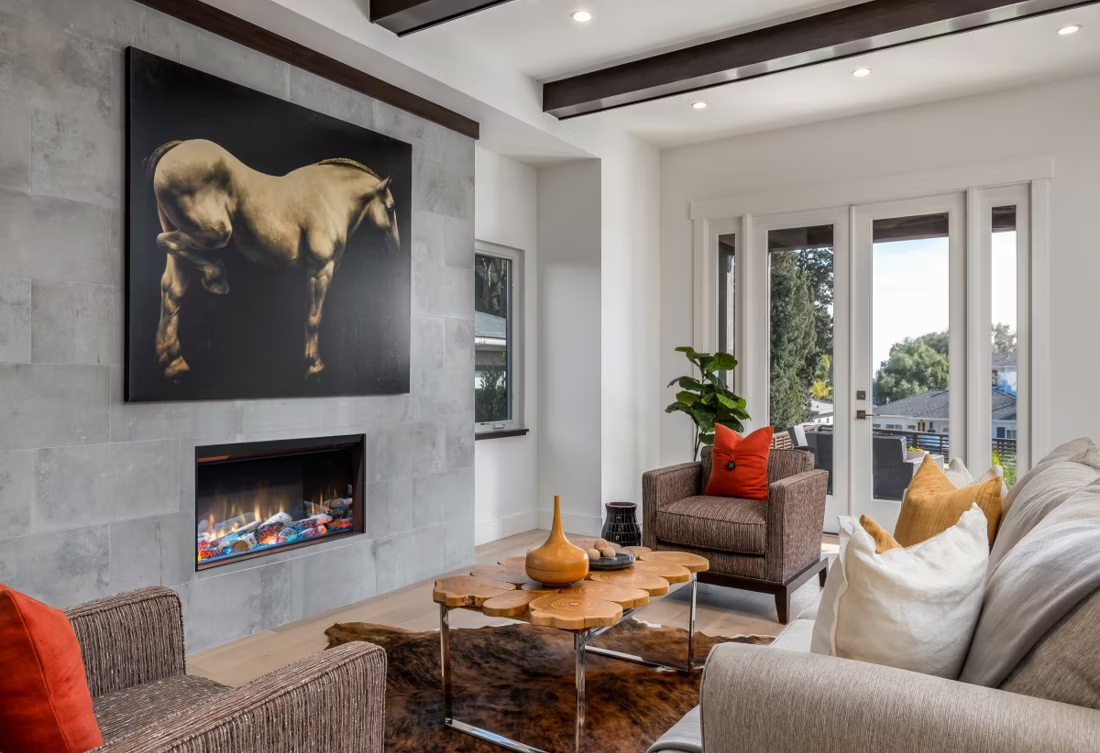
Electric fireplaces have become a go-to option across Macomb County for exactly the situations where wood and gas fall short: condos and townhomes in Sterling Heights and Shelby Township where an HOA won't allow a chimney or gas line, finished basements in Clinton Township and Chesterfield where running new venting isn't practical, and older homes throughout Warren and Roseville where a bedroom or den needs supplemental warmth without touching the furnace. A plug-in unit needs nothing more than a standard outlet; a built-in model needs only a dedicated circuit from a licensed electrician—no masonry, no flue, no county mechanical permit for the appliance itself.
Three steps. No salesperson until you're ready.
Tell us about your project
Your zip code, your situation, and the fuel you're leaning toward—or let the answers point you to one.
See what's actually available
The brands dealers within 100 miles genuinely carry—real options, never a catalog mirage.
Get your dealer & Project Guide
A trusted local dealer, plus the free Project Guide & Parts List that names every component of the job.
Frequently Asked Questions
How much does it cost to install an electric fireplace in Macomb County?
Costs vary widely by unit type. A freestanding or plug-in electric fireplace or stove that runs on a standard 120V outlet typically runs $300 to $1,800 installed, since there's often no electrical work required beyond setting the unit and mounting a surround. A built-in electric insert or wall unit that needs a dedicated 120V or 240V circuit run by a licensed electrician usually adds $300 to $800 in electrical labor on top of the unit cost, pushing a full built-in project to roughly $1,500 to $4,000 depending on the model, mantel or surround work, and whether the electrician has to open a wall. Local dealers serving Warren, Sterling Heights, and the rest of the county will quote a firm number after seeing your space.
Can an electric fireplace actually heat a room in Macomb County winters?
Most electric fireplaces top out around 5,000 to 5,200 BTU (roughly 1,500 watts), which is enough to noticeably warm a single room—a bedroom, den, or finished basement—but not enough to serve as primary heat when outdoor temperatures drop into the teens, which happens regularly across the county each winter. Think of it as zone heat that lets you turn the furnace down a few degrees in the room you're actually using, not a replacement for your home's heating system. For a three-season room or a large open-concept space, talk to a local dealer about whether you need a larger insert or multiple units.
Do I need a permit for an electric fireplace in Macomb County?
A plug-in electric fireplace that uses an existing outlet doesn't require a permit anywhere in Macomb County—it's treated like any other appliance. A built-in electric insert or wall-mounted unit that requires new wiring or a dedicated circuit does need an electrical permit, since that work falls under the jurisdiction's electrical code. Cities and townships handle this locally—Clinton Township, Sterling Heights, and Warren each run their own building departments, so check with your local office if your installer is running new circuits. Most licensed electricians who do this work regularly will pull the permit as part of the job.
What's the difference between a plug-in electric fireplace and a built-in electric insert?
A plug-in (or freestanding) electric fireplace is a self-contained unit—a stove, mantel package, or cabinet-style piece—that you plug into a standard wall outlet and place wherever it looks best. A built-in electric insert is designed to be recessed into a wall, an existing masonry fireplace opening, or a custom-framed niche, and it usually requires a dedicated circuit run by an electrician for full-size units. For Macomb County homeowners converting an old, unused masonry fireplace—common in older Roseville and St. Clair Shores homes—an insert that slides into the existing opening is often the cleanest upgrade. For a room with no fireplace at all, a freestanding unit is the simpler path.
Will an electric fireplace work during a power outage?
No—and this is the one honest tradeoff to flag. Electric fireplaces run entirely on grid power, so when DTE Energy service goes down during an ice storm or high-wind event, the unit goes dark along with everything else. If backup heat during outages matters to you—a real consideration in Macomb County, where winter storms off Lake St. Clair have knocked out power to tens of thousands of homes at once—a gas fireplace with battery-backup ignition or a generator-backed circuit is worth discussing with your dealer alongside the electric option.
How much does it cost to run an electric fireplace on DTE Energy rates?
Most electric fireplaces draw about 1,500 watts on the heat setting. At DTE Energy's typical residential rate, running one for a few hours each evening costs somewhere in the range of $10 to $25 a month, depending on how often you use it and the season's rate. Running the flame effect alone, without the heater engaged, draws only a fraction of that—often under 100 watts—so many Macomb County homeowners leave the ambiance on for hours without much impact on the bill.
What's the best electric fireplace for an older Macomb County home?
Many homes across Warren, Roseville, and Eastpointe are 1950s and '60s brick ranches with limited wall cavity depth and older electrical panels. For these homes, a slim, low-depth insert (often under 10 inches deep) fits into a shallow niche without major remodeling, and a model that can run on a standard 120V circuit avoids a panel upgrade. If the home has an old, capped masonry fireplace, a fireplace-insert-style electric unit sized to that opening is usually the most straightforward retrofit. A local dealer who's worked in the older Macomb County housing stock will know the common wall depths and panel constraints in these neighborhoods.
Electric vs. gas fireplace—which is right for my Macomb County home?
Gas fireplaces put out real, meaningful heat—often 20,000 to 30,000 BTU—and many models keep working during a power outage with battery-backup ignition, which matters given how often winter storms off Lake St. Clair take out local power. Electric fireplaces cost far less to install, need no gas line or venting, and go virtually anywhere a plug can reach, but they max out around 5,000 BTU and go dark in an outage. For a primary living room where you want real supplemental heat, gas is usually the stronger choice. For a bedroom, basement, condo, or any space where running gas line or venting isn't practical or allowed, electric wins on simplicity and cost.
What about wood or pellet stoves in Macomb County?
They're uncommon here, and for practical reasons. Macomb County's housing is overwhelmingly suburban—dense subdivisions in Sterling Heights and Clinton Township, condo and townhome developments throughout the county—where HOA rules, lot setbacks, and homes built without a masonry chimney or flue make solid-fuel appliances difficult to add. A few rural properties near Armada, Ray Township, and Bruce Township still burn oak, maple, or ash for supplemental heat, but for the large majority of Macomb County homeowners, electric and gas are the realistic options. If you're specifically looking for wood heat, a local dealer can tell you honestly whether your property and township allow it.
Can I put a TV above my fireplace?
Yes—with an asterisk. Fireplaces are hot and TVs don't like heat. Either put a mantel between them to deflect rising warmth, or choose a fireplace with heat-management technology that creates a cool zone on the wall above—the wall stays around 125 degrees, barely warm, while the room still gets full heat. If you like clean lines and don't want a mantel, heat management is the answer.
Do electric fireplaces actually produce heat?
Yes—most put out around 4,800–5,000 BTUs from a standard outlet, which comfortably warms a bedroom, office, or den as a comfort-zone heater. What they won't do is carry a whole house the way wood, gas, or pellet can. Think of electric as ambiance-first with honest supplemental heat: flames on with no heat in July, flames plus warmth in January.
Can a fireplace actually lower my heating bill?
Yes—by creating a comfort zone. A furnace heats every square foot of the house just to warm the one room you're in; a gas fireplace on low burns roughly a sixth of the gas a typical furnace does. Set the furnace around 55–60 degrees as a baseline, then heat the rooms your family actually uses. Families who heat this way commonly save $20–$60 a month.
Does a fireplace add value to my home?
On average, a fireplace adds back to the home about the same amount you spent installing it. Add the monthly savings from heating the rooms you actually use instead of the whole house—often hundreds of dollars a year—and the value case is strong before you even count what a fire does for how your family uses the room.
Stove and Fireplace Dealers in Macomb County
Find your electric fireplace in Macomb County.
Tell us about your home and we'll match you with the right electric fireplace or insert, plus a free Project Guide & Parts List with the exact parts and your recommended local dealer.
Find Your Fireplace →