
Find the right fireplace for your Macomb County home.
Fireplace resources for every city and township in Macomb County—from Warren and Sterling Heights down to New Baltimore and Richmond. Connect with a trusted local hearth retailer who knows what actually works in a suburban Detroit home.
Every Project Starts From One of These Five Situations
Suburban Detroit heating, done right, across Macomb County, Michigan.
Macomb County runs along the western shore of Lake St. Clair just northeast of Detroit—home to nearly 490,000 people spread across 27 cities and townships, from dense postwar neighborhoods in Warren and Roseville to newer subdivisions in Macomb Township and Chesterfield. Climate zone 5A puts winter lows around 20°F, with a heating load in the same range as Buffalo, New York. Natural gas infrastructure is nearly universal here, run primarily by DTE Energy, and it's the backbone of how most homes stay warm. Wood-burning fireplaces and stoves, by contrast, are the exception rather than the rule: subdivision lot sizes, HOA covenants, and modern gas service make wood installs uncommon outside the county's rural fringe—Ray, Armada, and Bruce Townships, where oak, maple, birch, and ash woodlots still support the occasional wood stove.
What you'll find on this hub: gas and electric hearth retailers, service technicians, and fuel/utility resources serving every community in the county—Warren, Sterling Heights, Clinton Township, Shelby Township, St. Clair Shores, Mount Clemens, Fraser, Roseville, New Baltimore, Utica, Armada, and Romeo among them. Pellet and wood appliances exist here too, but they're a minority choice given the housing stock and utility infrastructure—this hub is weighted toward the fuels that actually fit most Macomb County homes. Pick your fuel below to see local dealers, typical installation costs, and recommended units for your specific project.
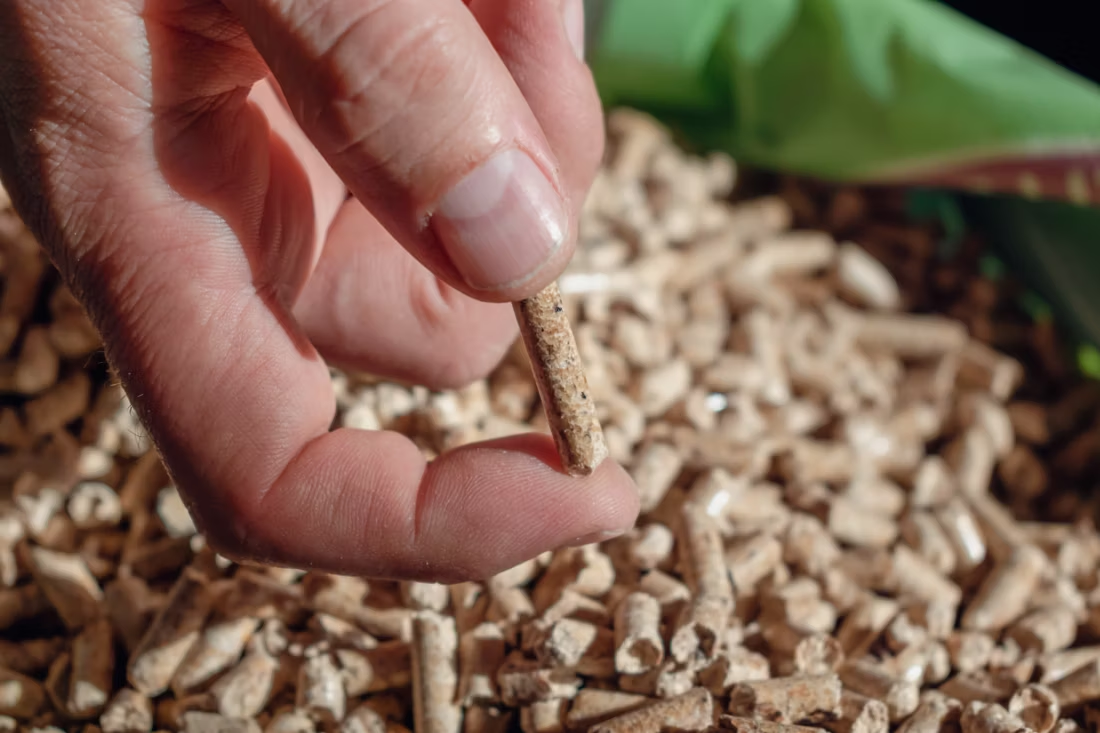
Four fuels. One honest answer for Macomb County.
Three steps. No salesperson until you're ready.
Tell us about your project
Your zip code, your situation, and the fuel you're leaning toward—or let the answers point you to one.
See what's actually available
The brands dealers within 100 miles genuinely carry—real options, never a catalog mirage.
Get your dealer & Project Guide
A trusted local dealer, plus the free Project Guide & Parts List that names every component of the job.
Frequently Asked Questions
Which fuel works best in Macomb County?
For most Macomb County homes, gas is the practical answer. DTE Energy's gas infrastructure reaches nearly every subdivision in the county, which makes a direct-vent gas fireplace or insert an easy retrofit with no chimney required. Electric is the common secondary choice—bedrooms, basements, condos in Sterling Heights or Clinton Township, and any spot where running a gas line isn't worth the cost. Wood is genuinely the exception here: subdivision lot sizes and HOA rules in most of the county's newer developments rule it out, though a handful of rural properties in Ray Township, Armada, and Bruce Township still burn oak, maple, and ash the traditional way. Pellet stoves see similarly light adoption—the regional pellet supply exists (Indeck Energy Services, Lignetics, Somerset Pellet Fuel), but the market here is small compared to gas and electric.
Do I need a permit to install a fireplace in Macomb County?
Yes, in most cases. Gas fireplace, insert, and stove installations require a building permit plus a separate gas line permit, and the gas connection itself has to be done by a licensed gas-fitter—DTE Energy also needs to sign off on new gas taps in some cases. Because Macomb County is made up of 27 separate cities and townships, permits are pulled through your local municipal building department rather than a single county office—Warren, Sterling Heights, Clinton Township, and the rest each run their own process. Electric fireplace installs typically don't need a permit unless you're hardwiring a built-in unit into a new circuit. Most local retailers handle the permit paperwork as part of the installation, so it's rarely something a homeowner has to manage solo.
Are there air quality restrictions on wood burning in Macomb County?
No—Macomb County has no recorded winter air quality advisories or wood-burning curtailment days, unlike some western basin communities that deal with inversions. That said, wood-burning appliances are uncommon here for a different reason: most of the county's housing stock sits in dense subdivisions where lot size, chimney clearances, and HOA covenants make wood installs impractical. The exception is the rural northern fringe—Ray, Armada, and Bruce Townships—where oak, maple, birch, and ash woodlots support the occasional wood stove without any regulatory hurdle.
Can one local hearth retailer handle both gas and electric?
Yes—most Macomb County hearth retailers are built around gas and electric, since that's what the majority of local customers are shopping for. Dealers along the Van Dyke corridor in Warren and Sterling Heights typically stock direct-vent gas fireplaces, gas inserts, and a range of electric units side by side, so you can compare install cost and heat output in one visit. A smaller number of dealers also carry wood or pellet stoves for rural-fringe customers, but that's usually a secondary line rather than the main showroom focus.
How does service work across a county with 27 different cities and townships?
Better than you'd expect for a county this size—with nearly 490,000 residents packed into a compact suburban footprint, most service technicians based in Sterling Heights, Warren, or Clinton Township can reach any address in the county within 20-30 minutes. That's a real advantage over rural counties where a technician might drive an hour each way. Gas fireplace inspections are the most common annual service call; electric units rarely need a technician at all. If you're on the rural fringe—Richmond, Armada, Romeo—expect a slightly longer drive time but still same-day service availability for most gas techs.
What's the typical cost range for gas and electric fireplace installation in Macomb County?
Gas fireplace, insert, or stove: roughly $4,000–$10,000 depending on whether it's a straightforward direct-vent retrofit or requires new gas line work from the meter. Homes already on DTE Energy service with a gas line nearby tend to land on the lower end. Electric fireplace: $200–$3,000 for the unit itself, with $400–$1,200 in labor for anything beyond a plug-and-play install—that covers most wall-mount, insert, and built-in electric jobs. Wood and pellet installs exist but are priced case-by-case given how infrequently they're installed in this county; a local retailer can quote those directly if you're on a rural property that's a genuine fit.
Wood, gas, pellet, or electric—how do I choose?
Match the fuel to your life, not the other way around. Wood: lowest fuel cost and total power-outage independence, but you're hauling and stacking. Gas: press a button, set a thermostat, no maintenance to speak of. Pellet: wood economics with automatic feeding, in exchange for weekly cleaning and a need for electricity. Electric: plugs in anywhere with honest supplemental heat. Nobody regrets the fuel that fits how they actually live.
How much should I budget for a fireplace?
For an average home—covering the fireplace, the vent pipe, and basic installation—a budget between $3,900 and $5,500 gives you a lot of options across wood, gas, and pellet. By the time you add finish work, gas line, and electrical, the average complete installation lands between $5,000 and $12,000 all-in. In a remodel or new build, a good rule is to put about 2.5% of the total project cost toward the fireplace.
Does a fireplace add value to my home?
On average, a fireplace adds back to the home about the same amount you spent installing it. Add the monthly savings from heating the rooms you actually use instead of the whole house—often hundreds of dollars a year—and the value case is strong before you even count what a fire does for how your family uses the room.
Can a fireplace actually lower my heating bill?
Yes—by creating a comfort zone. A furnace heats every square foot of the house just to warm the one room you're in; a gas fireplace on low burns roughly a sixth of the gas a typical furnace does. Set the furnace around 55–60 degrees as a baseline, then heat the rooms your family actually uses. Families who heat this way commonly save $20–$60 a month.
Stove and Fireplace Dealers in Macomb County
Listings include WhyFire partner dealers, dealers we have verified as authorized for the brands we recommend, and established local businesses that carry hearth products. Every listing shows which one it is. The ones marked Preferred run on WhyFire's software, so they can show you real pricing and book your appointment right here. No manufacturer pays for placement. How we verify dealers →
Bourlier's (Macombs)
Bourlier & Sons Inc
Fireside Hearth & Home - Utica
American Grill And Patio
AirMaster
Fireside Hearth & Home - Royal Oak
Pine Tree Furniture & Lighting
Quality Lumber & Bldg
Creekside Hearth, Patio, Bbq
Superior Heating & Cooling
Creative Design Build Associates
Marquis Fireplace Ltd.
D & S Masonry Inc
This Is It Shop's House Of Fire
Syles
Get matched with a Macomb County hearth dealer.
Tell us about your gas or electric fireplace project and we'll match you with a trusted local dealer, plus send a free Project Guide & Parts List—the exact parts, including the vent kit, and the local pro who can install it right.
Find Your Fireplace →