
Keep Your Family Warm and Safe—No Matter What
With winters as demanding as Minneapolis's and a wind that comes straight off the water, Presque Isle County has burned oak, maple, birch, and ash for generations. Find the right stove or insert and connect with a trusted local dealer from Rogers City to Onaway.
Every Project Starts From One of These Five Situations
Cordwood is still how this county gets through winter.
Presque Isle County sits on the Lake Huron shoreline in Michigan's northeastern Lower Peninsula, a mostly rural stretch of roughly 4,800 people spread across Rogers City, Onaway, Millersburg, Posen, and the townships in between. Winters run long here—Climate Zone 6A, an average winter low near 14°F, and a heating season as demanding as Minneapolis's, which puts the county in the same cold-climate range as that city. Add lake-effect wind and the ice storms that regularly roll in off Huron, and a lot of households here have never stopped depending on a wood stove.
The county sits within reach of the Mackinaw State Forest, so cutting your own firewood under a Michigan DNR permit is a normal part of life for a lot of rural households, and hardwood—oak, maple, birch, ash—is abundant and cheap to source locally. There are no air quality restrictions or non-attainment concerns on wood burning here, unlike counties that deal with winter inversions or wildfire smoke, so the limiting factor on your install is code compliance and proper venting, not local burn bans. New installations go through the Presque Isle County Building Department, and with Presque Isle Electric & Gas Co-op lines occasionally down after a Huron ice storm, a properly installed wood stove doubles as real backup heat, not just ambiance.
Three steps. No salesperson until you're ready.
Tell us about your project
Your zip code, your situation, and the fuel you're leaning toward—or let the answers point you to one.
See what's actually available
The brands dealers within 100 miles genuinely carry—real options, never a catalog mirage.
Get your dealer & Project Guide
A trusted local dealer, plus the free Project Guide & Parts List that names every component of the job.
Frequently Asked Questions
How much does a wood stove installation cost in Presque Isle County?
Installations in this part of northern Michigan typically run in the $3,500 to $8,500 range, depending on the stove, whether you already have a usable chimney, and whether a hearth pad needs to be built or upgraded to meet clearance requirements. Homes without an existing chimney—common in older farmhouses around Millersburg and Posen—run higher once Class A pipe and roof penetration are added in. Rural installs out toward Metz or the townships north of Onaway may carry a small travel charge, since dealers are concentrated closer to Rogers City.
What size wood stove do I need for my home?
With a heating season as demanding as Minneapolis's and consistent wind off Lake Huron, Presque Isle County homes generally need to size a step up from what a milder Michigan climate would suggest. A small stove (under 1,000 sq ft) suits a cabin or single room; medium stoves (1,000–2,000 sq ft) cover most farmhouses and ranch homes; large stoves (2,000+ sq ft) are common for whole-home heating in the older, less-insulated homes that make up a lot of the county's housing stock. Older balloon-frame farmhouses around Onaway and Millersburg often run drafty enough that a local dealer will recommend sizing up rather than down.
Where can I find certified wood stove installers near me?
Look for NFI (National Fireplace Institute) or CSIA (Chimney Safety Institute of America) credentials—these confirm training specific to wood-burning venting and clearances, not general contracting. Given the county's low population and rural spread, dealers tend to be based near Rogers City and cover the rest of the county on a route basis, so expect a modest trip charge if you're out toward Case or Bell Township. Stick with an installer who also sells the unit; it keeps warranty coverage and code sign-off with one accountable party instead of splitting the job between a big-box purchase and a separate installer.
What's the difference between a wood stove and a wood insert?
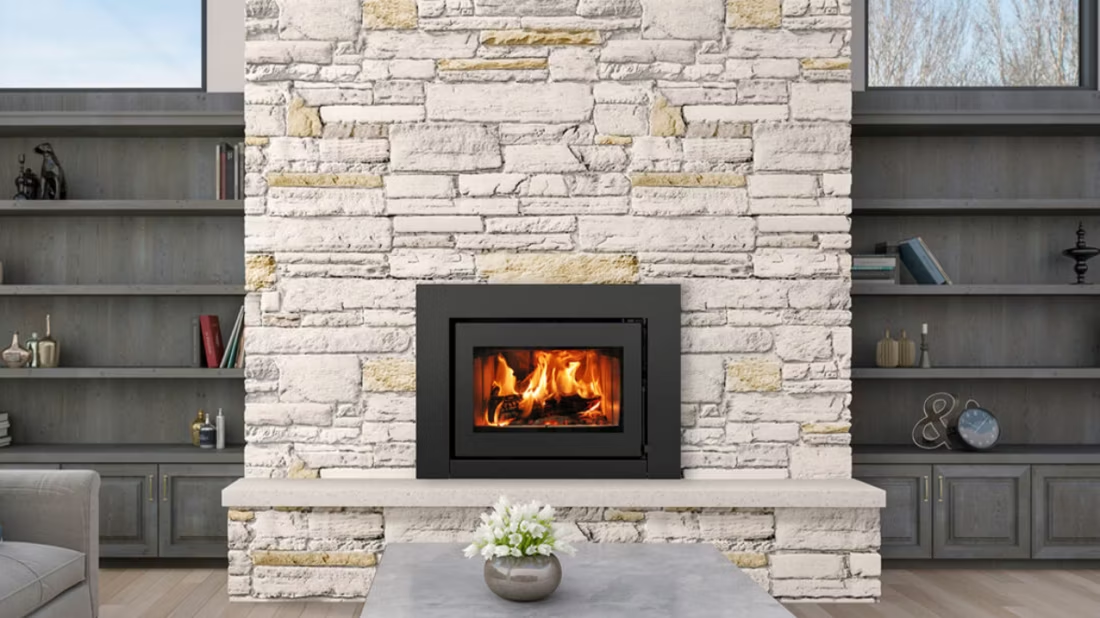
A wood stove is freestanding and sits on a hearth pad—it can go almost anywhere in a room with the right clearances. An insert slides into an existing masonry fireplace and uses the chimney you already have, which is a common upgrade in older lakeside and farmhouse construction around Rogers City and Posen where open fireplaces are common but inefficient. If your home already has a working chimney, an insert usually delivers more heat for less cost than tearing it out for a freestanding unit. Homes without an existing fireplace are better matched to a freestanding stove.
Do I need a permit to install a wood stove in Presque Isle County?
Yes—new wood stove installations require a building permit through the Presque Isle County Building Department, and the unit itself needs to meet current EPA emissions standards. Most local dealers handle the permit paperwork as part of the install. Unlike counties dealing with winter inversion advisories or wildfire smoke, Presque Isle County has no air quality restrictions on wood burning, so once your stove is permitted and installed correctly, there's no seasonal curtailment to worry about.
What's the best wood stove for Presque Isle County's climate?
With winter lows averaging 14°F and long stretches of lake-effect cold, a catalytic stove from a brand like Blaze King can hold a fire 20+ hours on a single load, which matters on the nights when the wind is coming straight off Huron. Because local hardwood is dominated by oak, maple, birch, and ash—all dense, high-BTU species—most stoves on the market perform well here as long as the wood is properly seasoned. For a primary-heat setup in an older farmhouse, ask a local dealer about sizing up given the drafty construction common in the county's older housing stock.
How often should my chimney be inspected and cleaned?
The CSIA recommends an annual inspection for any wood-burning appliance, and that's especially true here given how many households run a stove as primary or near-primary heat through a seven-month burn season. Plan on a sweep in late summer or early fall before the first cold snap. Homes burning multiple cords a winter—common on rural properties around Millersburg and Metz—may need a mid-season check if creosote builds up faster than expected. With emergency response times longer in the county's rural stretches, skipping an inspection is a risk not worth taking.
Where can I get firewood in Presque Isle County?
Local hardwood—oak, maple, birch, and ash—is plentiful, and a lot of households cut their own under a Michigan DNR firewood permit on state forest land within the Mackinaw State Forest, which reaches into the county. For those buying instead of cutting, local sellers around Rogers City and Onaway typically price cordwood by the standard 4×4×8 stack, with oak commanding a premium over birch or ash. Buy a season ahead if possible—wood cut and split in spring has time to season properly before the first hard freeze.
Wood stove vs. pellet stove—which is right for me?
Wood stoves run without electricity, which matters here given how often Presque Isle Electric & Gas Co-op lines go down after a Lake Huron ice storm—a wood stove keeps working when the power doesn't. Pellet stoves, using bagged pellets from regional suppliers like Indeck Energy Services, Lignetics, or Somerset Pellet Fuel, are more convenient to load and burn cleaner, but the auger and blower need electricity, so they go dark in an outage unless paired with a battery backup. For a rural property where self-cut firewood is already available, wood tends to win. For a household in town that wants low-maintenance heat and has reliable power, pellet is worth a look.
What's the difference between an insert and a zero-clearance fireplace?
An insert is a fireplace that slides into a pre-existing wood-burning fireplace—if you don't have one, there's nothing to insert it into. A zero-clearance fireplace is built into a framed wall, which makes it the answer for remodels and new construction. Simple test: existing masonry fireplace means insert; blank or framed wall means zero-clearance.
Do I have to leave the stove door cracked open to start a fire?
On many stoves, yes—a new fire needs extra air, and cracking the door a couple inches is how most stoves get it. But some modern stoves offer an automatic startup air system: engage it when you light, and timed air jets feed the fire for the first 20 minutes with the door fully shut, then close automatically. It's mechanical—like an egg timer, no electricity—and it means you can load it, light it, and walk away.
Does a fireplace add value to my home?
On average, a fireplace adds back to the home about the same amount you spent installing it. Add the monthly savings from heating the rooms you actually use instead of the whole house—often hundreds of dollars a year—and the value case is strong before you even count what a fire does for how your family uses the room.
How much should I budget for a fireplace?
For an average home—covering the fireplace, the vent pipe, and basic installation—a budget between $3,900 and $5,500 gives you a lot of options across wood, gas, and pellet. By the time you add finish work, gas line, and electrical, the average complete installation lands between $5,000 and $12,000 all-in. In a remodel or new build, a good rule is to put about 2.5% of the total project cost toward the fireplace.
Find your wood stove in Presque Isle County.
Tell us a bit about your home and heating goals, and we'll match you with a trusted local dealer and a free Project Guide & Parts List—the exact parts, vent kit, and recommended installer for your Presque Isle County wood project.
Find Your Fireplace →