
Warm the rooms your furnace can't reach.
Presque Isle County has a long heating season each year—on par with Minneapolis—so nobody's pretending an electric unit replaces the furnace. It's the fast, no-chimney way to add real warmth to a bonus room, a lakefront camp, or a cold corner of the house. Find the right unit and connect with a local installer.
Every Project Starts From One of These Five Situations
Supplemental heat that installs in an afternoon.
Presque Isle County is small—under 5,000 people spread across a rural stretch of Michigan's northeastern Lower Peninsula, from Rogers City on the Lake Huron shoreline inland to Onaway, Millersburg, and Posen. Winters are long: average lows sit around 14°F and the county logs a long, cold heating season each year, comparable in length to Minneapolis rather than to most of the Midwest. Wood—oak, maple, birch, ash off the county's own timber—and pellet stoves handle a lot of the heavy lifting for whole-home heat here. Electric fireplaces play a different role.
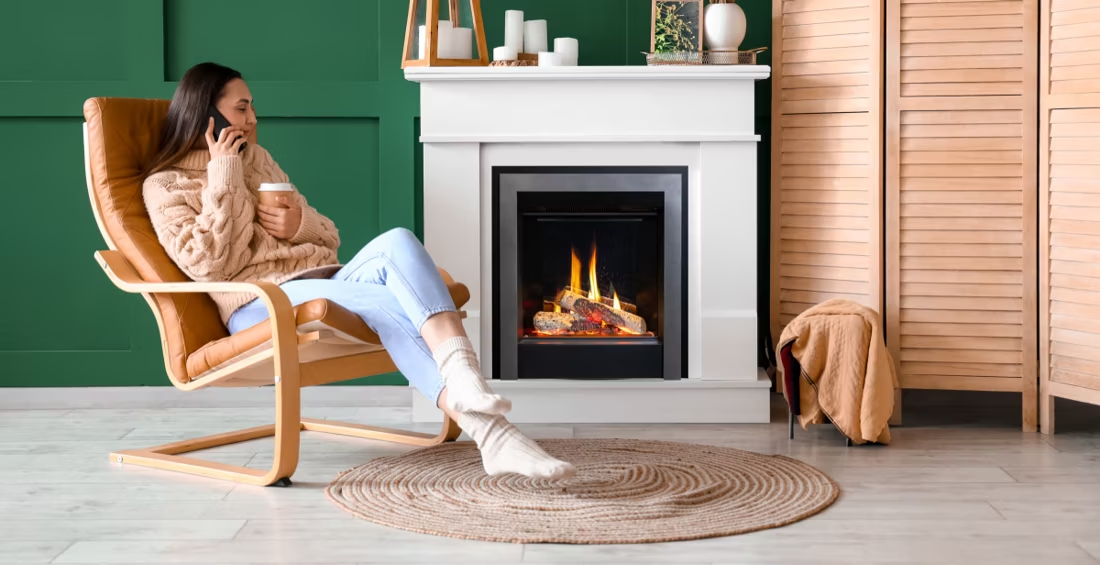
Because there's no flue, no chimney, and no gas line to run, an electric fireplace or insert can go into a finished basement, a sunroom addition, or one of the many seasonal cottages and camps around Grand Lake and the Huron shore without touching the structure of the house. Plug-in units run off a standard outlet; built-in wall units typically want a dedicated circuit, which is a job for a licensed electrician rather than a hearth crew. Either way, it's real, controllable zone heat with none of the wood-handling or venting work—you just have to be honest going in that it's a supplement, not a substitute, for a Presque Isle County winter.
Three steps. No salesperson until you're ready.
Tell us about your project
Your zip code, your situation, and the fuel you're leaning toward—or let the answers point you to one.
See what's actually available
The brands dealers within 100 miles genuinely carry—real options, never a catalog mirage.
Get your dealer & Project Guide
A trusted local dealer, plus the free Project Guide & Parts List that names every component of the job.
Frequently Asked Questions
How much does an electric fireplace installation cost in Presque Isle County?
Plug-in inserts and freestanding electric stoves are the cheapest entry point—often $150 to $800 for the unit, with no installation labor since they run on a standard 120V outlet. Built-in wall units or larger electric inserts that need a dedicated 20-amp or 240V circuit typically land between $1,500 and $4,000 installed once you factor in the unit, an electrician's time, and any framing or trim work. In a rural county like this, expect a service call charge if your electrician is coming out from Rogers City or Onaway to a camp on Grand Lake or further out toward Metz.
Will an electric fireplace heat my whole house in this climate?
No, and any installer being straight with you will say the same. With a long, cold heating season and average winter lows around 14°F, Presque Isle County's winters are genuinely long and cold—closer to Minneapolis or Duluth than to southern Michigan. A typical electric fireplace puts out about 5,000 BTU (roughly 1,500 watts), enough to noticeably warm a single room, not a whole house. Homes here rely on a furnace, boiler, or wood/pellet stove for primary heat, with electric units used for zone heat in specific rooms or as ambiance.
Can I put an electric fireplace in a seasonal cottage or lake camp without a chimney?
Yes—this is one of the most common uses of electric fireplaces in Presque Isle County. Camps and cottages around Grand Lake and the Lake Huron shoreline that get closed up for stretches of the off-season aren't good candidates for an unattended wood stove, and many don't have gas service run to them at all. A plug-in electric insert or mantel unit gives you heat and ambiance on demand when you open the place up, with nothing to maintain, clean, or inspect between visits.
Do I need an electrician to install an electric fireplace?
Depends on the unit. A basic plug-in electric fireplace or stove runs on a standard 120V household outlet—no electrician needed, just plug it in. Larger built-in wall units and some higher-output inserts draw enough current to need a dedicated circuit, and some 240V models need that voltage specifically. For those, a licensed electrician needs to run the circuit before the hearth dealer installs the unit itself. Local dealers serving the county can tell you which category a given model falls into before you buy.
What's the difference between an electric fireplace, insert, and stove?
An electric fireplace is typically a built-in unit set into a wall or mantel surround, styled to look like a traditional fireplace. An electric insert is sized to slide into an existing masonry or wood-burning fireplace opening, which is a common retrofit for older Presque Isle County farmhouses that have an unused fireplace they want heat and flame effect from again without touching the chimney. An electric stove is a freestanding cabinet unit, often styled after a wood stove, that just needs floor space and an outlet. All three use the same resistive-heat technology—the difference is purely form factor and how they fit your space.
Electric vs. wood—which makes more sense for my home here?
For most full-time homes in Presque Isle County, wood still does real work—the county has good access to oak, maple, birch, and ash, no air quality restrictions on burning, and a wood stove keeps running when the power goes out, which matters during winter ice storms on the co-op lines. Electric fireplaces can't offer that: no power, no flame, no heat. Where electric wins is convenience and zero maintenance—no ash, no chimney sweep, no wood to split or haul—for a room that just needs supplemental warmth or a camp that's only occupied part of the year. A lot of households here end up with both: wood or pellet for the cold months and reliability, electric for a spare room or a low-effort ambiance fire in the living room.
Electric vs. pellet stove—which is the better fit?
Pellet stoves burn bagged fuel from regional suppliers like Indeck Energy Services, Lignetics, or Somerset Pellet Fuel and put out real heat—several thousand BTU, enough to carry a room or a whole small home through a Presque Isle County winter. They need a vent, a hopper you load, and electricity to run the auger and blower. Electric fireplaces need only an outlet, produce far less heat, and are essentially maintenance-free, but they cost more per BTU to run and offer nothing during a power outage. If you want a genuine secondary heat source, pellet is the stronger choice. If you want a low-fuss accent with occasional warmth in a specific room, electric is simpler.
What does an electric fireplace cost to run through a Presque Isle County winter?
A typical 1,500-watt electric fireplace run on the heat setting for several hours a day costs a few dollars a week to operate at residential electric rates—most homes in the county get service through Presque Isle Electric & Gas Co-op. Run it for ambiance only, with the heater switched off, and the draw is minimal—most models pull only 30 to 100 watts for the flame effect alone. That's part of the appeal for cottage owners: you can run the flame display without heating an unoccupied room.
What should I look for in an electric fireplace for a cold rural county like this?
Look for a unit with a thermostat and adjustable heat output rather than a single on/off heat setting—that gives you finer control in a drafty older home. If it's going into a camp or cottage, prioritize a model with an independent flame-only mode so you can run ambiance without the heater. And confirm the amperage draw against your circuit before you buy anything larger than a basic plug-in unit—a local dealer can walk through your panel and outlet situation and steer you to a model that won't need extra electrical work.
Can I put a TV above my fireplace?
Yes—with an asterisk. Fireplaces are hot and TVs don't like heat. Either put a mantel between them to deflect rising warmth, or choose a fireplace with heat-management technology that creates a cool zone on the wall above—the wall stays around 125 degrees, barely warm, while the room still gets full heat. If you like clean lines and don't want a mantel, heat management is the answer.
How much does an electric fireplace cost to run?
With the heater on, a typical unit draws about 1,500 watts—at average electric rates that's roughly 20 cents an hour. Run the flame effect alone and it costs pennies; the flames are LED-driven and use about as much power as a light bulb. There's no pilot light, no fuel delivery, and essentially no maintenance.
Can a fireplace actually lower my heating bill?
Yes—by creating a comfort zone. A furnace heats every square foot of the house just to warm the one room you're in; a gas fireplace on low burns roughly a sixth of the gas a typical furnace does. Set the furnace around 55–60 degrees as a baseline, then heat the rooms your family actually uses. Families who heat this way commonly save $20–$60 a month.
How much should I budget for a fireplace?
For an average home—covering the fireplace, the vent pipe, and basic installation—a budget between $3,900 and $5,500 gives you a lot of options across wood, gas, and pellet. By the time you add finish work, gas line, and electrical, the average complete installation lands between $5,000 and $12,000 all-in. In a remodel or new build, a good rule is to put about 2.5% of the total project cost toward the fireplace.
Find your electric fireplace in Presque Isle County.
Tell us about your room, your home, or your camp and we'll match you with a trusted local dealer and send over a free Project Guide & Parts List—the right unit, the exact parts, and what it'll take to get it installed.
Find Your Fireplace →