
Keep Your Family Warm and Safe—No Matter What
Reliable wood heat for the Lake Superior snowbelt—from the village of Ontonagon to White Pine, Ewen, and Bergland. Find the right stove or insert, and connect with a trusted local dealer who knows this corner of the Upper Peninsula.
Every Project Starts From One of These Five Situations
Wood is survival heat on the Lake Superior shore.
Ontonagon County sits in IECC Climate Zone 7—one of the coldest zones in the continental United States—tucked against Lake Superior in the northwestern Upper Peninsula, with the Porcupine Mountains Wilderness State Park rising along its eastern edge. Lake-effect snow off Superior piles up fast here, and winter lows regularly sit well below zero for stretches at a time, not unlike conditions across the lake in Duluth, Minnesota. With a year-round population under 3,000 spread across small communities like Ontonagon, White Pine, Ewen, Greenland, Rockland, and Bergland, homes here are often spaced far apart, and help during a storm can take a while to arrive.
Much of the county sits well outside any natural gas pipeline network, and the electric grid—served by a small rural co-op—can go down for days during a big lake-effect system. That reality, combined with dense stands of oak, maple, birch, and ash across the Ottawa National Forest and surrounding private timberland, keeps wood heat central to how this county gets through winter. Many homes, especially older housing stock built during the area's copper-mining era in White Pine and Rockland, were designed around a wood stove or masonry fireplace long before central heat existed—and a modern EPA-certified stove or insert still does that job better than almost anything else when the power's out and it's fifteen below.
Three steps. No salesperson until you're ready.
Tell us about your project
Your zip code, your situation, and the fuel you're leaning toward—or let the answers point you to one.
See what's actually available
The brands dealers within 100 miles genuinely carry—real options, never a catalog mirage.
Get your dealer & Project Guide
A trusted local dealer, plus the free Project Guide & Parts List that names every component of the job.
Frequently Asked Questions
How much does a wood stove installation cost in Ontonagon County?
A typical wood stove installation in Ontonagon County runs between $4,000 and $9,000, depending on the stove model, whether new Class A chimney pipe is needed, and whether the hearth pad requires an upgrade to meet current clearance codes. The Ontonagon County Building Department requires a permit for new installations, and most local installers fold that paperwork into the project. Homes in more remote parts of the county—Bergland, Silver City, or the far end of the White Pine road—may see a modest travel surcharge added to the quote simply due to distance from the nearest certified installer.
What size wood stove or insert do I need for my home?
In a Zone 7 climate like Ontonagon County's, sizing tends to run larger than in milder parts of Michigan—a small stove (rated for up to 1,000 sq ft) suits a cabin or single room, a medium stove (1,000–2,000 sq ft) handles most year-round homes, and a large stove (2,000+ sq ft) is often needed for older, less-insulated houses common in mining-era towns like White Pine and Rockland. Homes with high ceilings or drafty original windows from that era typically need to size up a step. A local retailer will size your space for free during an in-home visit—oversizing leads to smoldering, creosote-heavy fires, while undersizing means you're still cold on the coldest nights.
Where can I find certified wood stove installers near me?
Look for NFI (National Fireplace Institute) or CSIA (Chimney Safety Institute of America) certification—both indicate real training in venting and clearance requirements for wood-burning appliances. Given how spread out Ontonagon County is, expect installers based near the village of Ontonagon or in nearby Gogebic County to cover the whole county, often with a travel charge for jobs out toward Bergland or Ewen. Skip general handyman installs for a wood stove—improper venting is the leading cause of chimney fires, and in a county this remote, a fire call means a long wait for the department to arrive.
What's the difference between a wood stove and a wood insert?
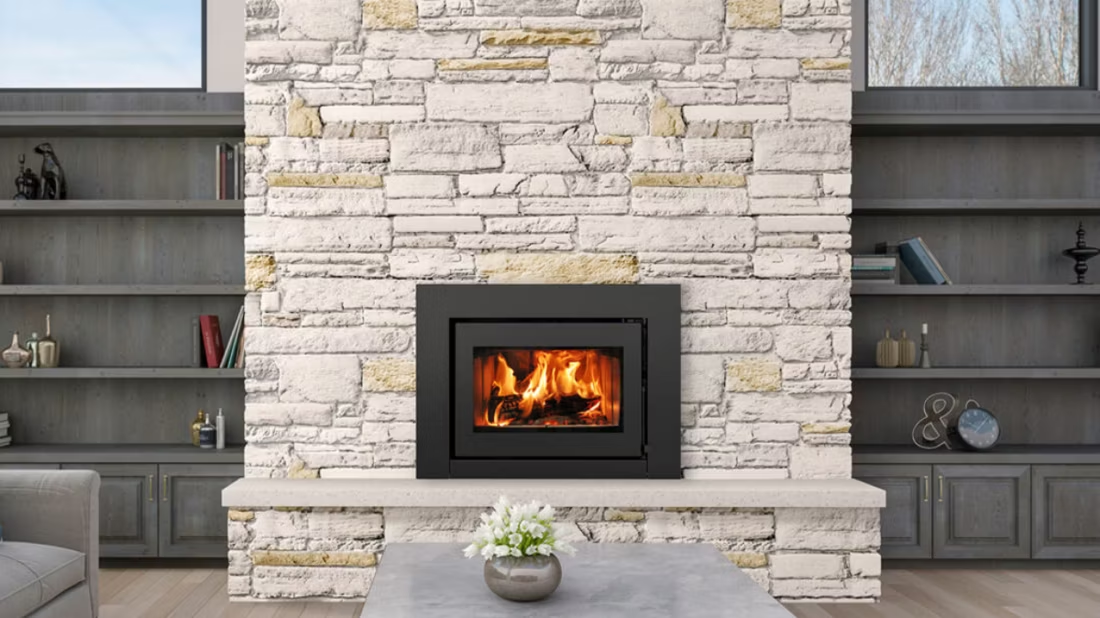
A wood stove is a freestanding unit installed on its own hearth pad with proper clearances—it works in nearly any room with the right setup. A wood insert slides into an existing masonry fireplace opening, using the chimney that's already there while converting a drafty open hearth into a sealed, high-efficiency heat source. Ontonagon County has plenty of older homes from the copper-mining era with original masonry fireplaces in White Pine and Rockland, and for those, an insert is usually the better upgrade—it keeps the existing chimney working for you instead of losing heat straight up the flue.
Do I need a permit to install a wood stove in Ontonagon County?
Yes—a building permit is required through the Ontonagon County Building Department for any new wood stove or insert installation, and the unit must meet current EPA 2020 NSPS emissions standards. Most local installers handle this paperwork as part of the job. Unlike some downstate Michigan counties with winter air-quality non-attainment issues, Ontonagon County has no air quality curtailment periods, so there's no restriction on burning during specific weather conditions here—just standard permitting and code compliance.
What's the best wood stove for Ontonagon County's climate?
For a Zone 7 climate with regular sub-zero nights and multi-day power outages from lake-effect storms, a catalytic stove from a brand like Blaze King is worth a serious look—these hold a fire 20+ hours on a single load of local hardwood like oak or maple, which matters when a storm knocks out the grid overnight. Birch and ash are also common and burn well once properly seasoned, though they don't hold a coal bed quite as long as oak. For a smaller cabin or a supplemental setup, a non-catalytic stove from Pacific Energy or Lopi is a simpler, lower-maintenance option. A local retailer can match the stove to your specific home and wood supply.
How often should my chimney be inspected and cleaned?
CSIA recommends an annual inspection for any wood-burning appliance, ideally in late summer before the first cold snap arrives off Lake Superior. Homes using wood as primary heat through an Ontonagon County winter—which can mean burning through several cords by spring—may need a mid-season cleaning if creosote builds up faster than expected. Given how spread out fire response can be in this county, keeping up with inspections isn't optional; it's the difference between a routine sweep and a call nobody wants to make.
Where can I get firewood or a cutting permit in Ontonagon County?
The Ottawa National Forest, which covers much of the county, and the Michigan DNR through Porcupine Mountains Wilderness State Park both issue personal-use firewood cutting permits, typically running around $20 per cord during a spring-through-fall cutting season. Local hardwood species—oak, maple, birch, and ash—are all common and split well once seasoned six months to a year. For homeowners who'd rather not cut their own, several small local suppliers deliver by the cord, though pricing and availability can vary more in a county this rural than in a bigger market.
Wood stove vs. pellet stove—which is right for me?
Wood stoves burn cordwood, work with zero electricity—a real advantage in Ontonagon County when lake-effect storms take down power for days—and pair naturally with cutting permits from the Ottawa National Forest right in the county. Pellet stoves, using bagged pellets from regional suppliers like Indeck Energy Services, Lignetics, or Somerset Pellet Fuel, are more convenient to load and burn cleaner, but they need electricity to run the auger and blower, so they go dark exactly when you might need heat most. For most year-round homes in this county, that outage risk tips the scale toward wood as primary heat, with pellet sometimes serving as a lower-maintenance option for a second living space.
Why is a fireplace insert so efficient?
An insert does two things: it seals the chimney completely, so you stop losing air you already paid to heat, and it radiates warmth into the room through the firebox and glass. Most add a heat-exchange fan that pulls cool room air underneath, wraps it around the hot firebox, and pushes it back out warm. Your home is more efficient before you've even lit the first fire.
Can a wood stove burn all night?
The right one can. If waking up to a warm house and live coals matters to you, say exactly that when you're shopping—firebox size and burn-rate control determine overnight performance far more than any number on a spec sheet. It's a much more useful question than asking about BTUs.
What is an in-home preview and do I need one?
It's a visit where a hearth professional measures your space, confirms the model you picked actually works in your home, and walks the specs—framing, gas line, venting, finish work—before anything is ordered. Some details you just can't know until you see the house. Never make a down payment without one; it's the single most-skipped step that burns buyers.
Does a fireplace add value to my home?
On average, a fireplace adds back to the home about the same amount you spent installing it. Add the monthly savings from heating the rooms you actually use instead of the whole house—often hundreds of dollars a year—and the value case is strong before you even count what a fire does for how your family uses the room.
Find your wood stove in Ontonagon County.
Tell us a bit about your home and we'll match you with a trusted local dealer and send over a free Project Guide & Parts List—the exact parts, including the vent kit, for a wood stove or insert built for Ontonagon County's winters.
Find Your Fireplace →