
Heat That Holds Up to Upper Peninsula Winters.
Wood, gas, pellet, and electric fireplace resources for every town in Ontonagon County—from the Lake Superior shoreline at Ontonagon to inland communities like Ewen and Bergland. Find the right unit for a zone 7 climate and connect with a trusted local hearth retailer.
Every Project Starts From One of These Five Situations
Climate zone 7 cold, straight off Lake Superior.
Ontonagon County sits on the south shore of Lake Superior in Michigan's western Upper Peninsula, home to the Porcupine Mountains Wilderness State Park and some of the last old-growth hardwood stands in the Midwest. The climate here is classified as zone 7—among the coldest in the contiguous United States, in the same range as International Falls, Minnesota or Duluth, Minnesota. Lake-effect snow off Superior piles up heavily through the winter, and the heating season routinely stretches from October into May. Wood heat has deep roots in the county's hardwood forests of oak, maple, birch, and ash, and a properly loaded catalytic stove is still how a lot of local farmhouses and cabins get through a January cold snap when the power lines come down under snow load.
What you'll find on this hub: hearth retailers, service technicians, and fuel suppliers covering every community in the county—from the village of Ontonagon on the lakeshore to Ewen, Bergland, Rockland, White Pine, and Greenland inland. With fewer than 3,000 residents spread across the county, most dealers and technicians travel in from the Houghton–Hancock or Ironwood corridor rather than keeping a storefront in every town. Pick your fuel below to see local dealers, typical installed costs, and recommended units for a zone 7 climate—whether you're heating a lakeshore cottage or a hunting camp near the Porkies.
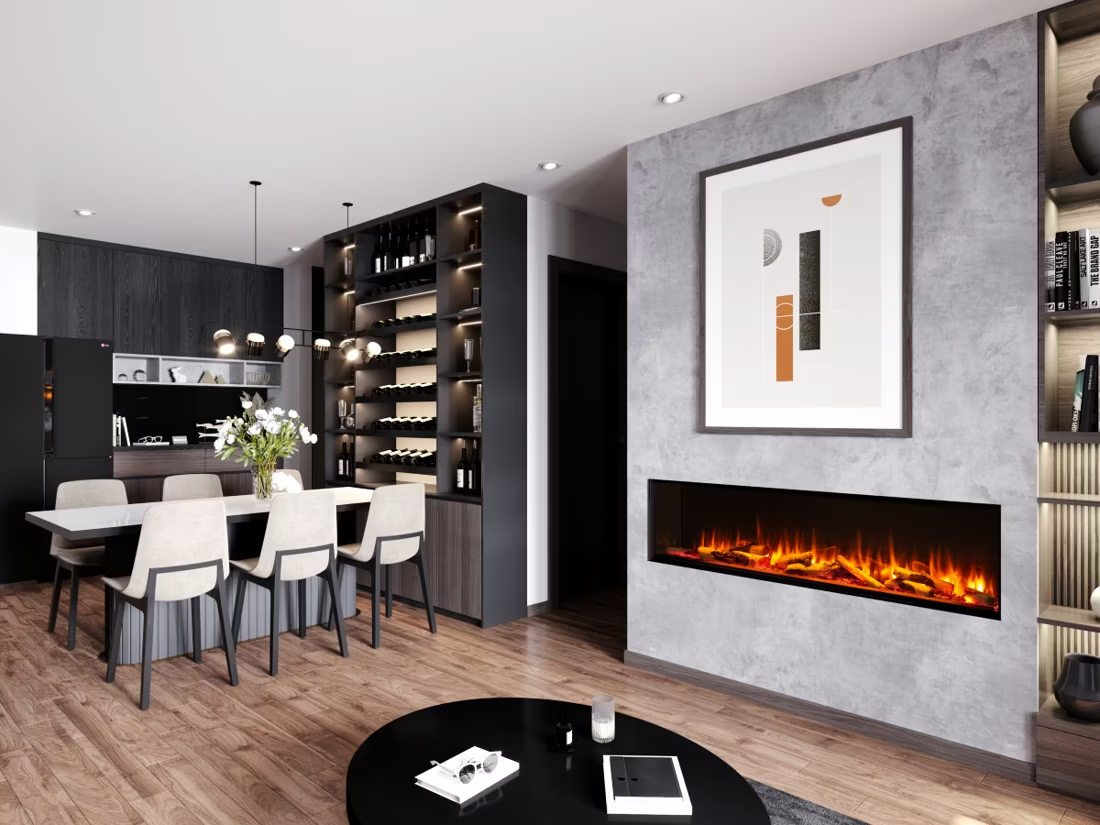
Four fuels. One honest answer for Ontonagon County.
Three steps. No salesperson until you're ready.
Tell us about your project
Your zip code, your situation, and the fuel you're leaning toward—or let the answers point you to one.
See what's actually available
The brands dealers within 100 miles genuinely carry—real options, never a catalog mirage.
Get your dealer & Project Guide
A trusted local dealer, plus the free Project Guide & Parts List that names every component of the job.
Frequently Asked Questions
Which fuel works best in Ontonagon County?
It depends on the home and how remote it sits. Wood is the backbone fuel here—oak, maple, birch, and ash cordwood is abundant in the hardwood stands around the Porcupine Mountains, and a well-loaded catalytic stove can carry a farmhouse through a zone 7 cold snap without leaning on the grid, which matters when lake-effect snow off Superior knocks out power for days at a time. Gas is mostly propane in this corner of the Upper Peninsula—tank delivery rather than a utility main—and it's the go-to for homeowners who want instant heat without splitting wood. Pellet fits homeowners who want wood-style ambiance with less labor; Indeck Energy Services, Lignetics, and Somerset Pellet Fuel all move product into the region, so supply isn't the constraint it can be in more remote counties. Electric fireplaces are supplemental only—with zone 7 design temperatures, resistance heat can't carry a house through a January cold snap, but it's a reasonable secondary-room or ambiance option. Most year-round Ontonagon County homes end up running wood or pellet as primary heat with gas or electric backup.
Do I need a permit to install a fireplace in Ontonagon County?
In most cases, yes. New wood stoves, wood inserts, gas fireplaces, gas inserts, and pellet stoves typically require a building permit through the local municipality or the Ontonagon County building department, depending on whether the home sits inside an incorporated village or unincorporated township. Wood-burning appliances need to meet current EPA 2020 NSPS emissions standards, and gas installs generally require a separate permit for the propane line and hookup work, handled by a licensed installer. Electric fireplaces are usually permit-free unless the install involves hardwiring a built-in unit or adding a new circuit. Most local hearth retailers pull the permit as part of the installation, so you're not filing paperwork yourself.
Are there air quality restrictions on wood burning in Ontonagon County?
No—Ontonagon County doesn't have the winter inversion or non-attainment issues that trigger burn advisories in some western basin counties. Open, windy conditions off Lake Superior tend to disperse smoke rather than trap it. That said, an EPA-certified stove still matters here on its own merits: with a heating season that can run six or seven months in a zone 7 climate, a certified catalytic or non-cat unit burns cleaner, uses less cordwood per BTU, and builds up far less creosote than an old pre-1988 stove—worth factoring in even without a regulatory push.
Can one local hearth retailer handle all four fuel types?
It's less common in a county this sparsely populated—Ontonagon County's roughly 3,000 residents don't support a large retail footprint, so most homeowners end up working with a multi-fuel dealer based out of the Houghton–Hancock or Ironwood area that travels in for consultations and installs. These dealers typically carry wood, gas, and pellet as a core lineup, with electric fireplaces as an add-on rather than a focus. If you're cross-shopping fuels, ask upfront what the dealer stocks versus what they can special-order—lead times run longer out here than in denser markets, so planning a few weeks ahead of your target install date helps.
How does service work in rural parts of Ontonagon County?
Expect technicians to travel—chimney sweeps, gas service techs, and pellet stove techs serving Ontonagon County typically base out of the Houghton–Hancock area or Ironwood and cover the whole county on a route basis, from the Lake Superior shoreline near Ontonagon village out to Ewen, Bergland, and Greenland. A modest travel fee, often in the $50–$100 range, is common for the more remote townships. Because lake-effect snow events can close roads and knock out power for days, it's worth scheduling annual service in late summer or early fall rather than waiting for the first hard freeze, and keeping a wood stove or fireplace as a power-outage backup even if your primary heat is gas or pellet.
What's the typical cost range for fireplace installation across all fuel types in Ontonagon County?
Wood stove or insert installation runs roughly $4,500–$9,500 for a typical install, higher if new chimney construction is needed for an older UP farmhouse. Gas fireplace, insert, or stove installs run about $4,500–$10,500, with propane tank and line work adding to the cost on homes without existing service. Pellet stove or insert installs typically land around $4,500–$7,500. Electric fireplace units run $200–$3,000 for the unit itself, plus $400–$1,200 in labor for anything beyond a plug-and-play placement. Because of zone 7 design temperatures, retailers here often size units toward the higher end of a manufacturer's BTU range to make sure the appliance can actually carry the house on the coldest nights, which can push installed cost slightly above what you'd see in a milder climate.
Can a fireplace actually lower my heating bill?
Yes—by creating a comfort zone. A furnace heats every square foot of the house just to warm the one room you're in; a gas fireplace on low burns roughly a sixth of the gas a typical furnace does. Set the furnace around 55–60 degrees as a baseline, then heat the rooms your family actually uses. Families who heat this way commonly save $20–$60 a month.
Wood, gas, pellet, or electric—how do I choose?
Match the fuel to your life, not the other way around. Wood: lowest fuel cost and total power-outage independence, but you're hauling and stacking. Gas: press a button, set a thermostat, no maintenance to speak of. Pellet: wood economics with automatic feeding, in exchange for weekly cleaning and a need for electricity. Electric: plugs in anywhere with honest supplemental heat. Nobody regrets the fuel that fits how they actually live.
Can I install a fireplace myself?
If you're putting a fire in your house on purpose, it's best to work with an expert. Unless you're genuinely experienced in framing, gas line, vent pipe, and the national code on clearances to combustibles, have a professional do it—and ideally the same company that sells you the fireplace, so warranty, service, and liability all live under one roof.
Should the dealer who sells my fireplace also install it?
Ideally, yes. A fireplace project involves vent pipe, gas line, electrical, and often tile or stone. Hire three or four separate trades and you own the liability and the game of telephone between them. One company selling and installing means one accountable party, start to finish—ask about factory training, on-time completion records, and what happens if an inspection fails.
Stove and Fireplace Dealers in Ontonagon County
Listings include WhyFire partner dealers, dealers we have verified as authorized for the brands we recommend, and established local businesses that carry hearth products. Every listing shows which one it is. The ones marked Preferred run on WhyFire's software, so they can show you real pricing and book your appointment right here. No manufacturer pays for placement. How we verify dealers →
Superior Block
Earth Sense Energy Systems - Sayner
Trappers Fireplace Gallery
Fireside Hearth & Home Minocqua Dnm
Hearth Xpressions
Stove & Fireplace Works
Dahlquist Heating & Cooling
Find your fireplace project in Ontonagon County.
Get matched with a trusted local dealer and a free Project Guide & Parts List—the exact parts, including the vent kit, sized for a zone 7 Upper Peninsula winter, plus our recommended local dealer for your project in Ontonagon County.
Find Your Fireplace →