
Steady pellet heat for Montmorency County's long winters.
Hopper-fed warmth for Michigan's elk country—from Atlanta and Hillman to the camps around Fletcher Pond. Find the right pellet stove or insert, and connect with a trusted local dealer.
Every Project Starts From One of These Five Situations
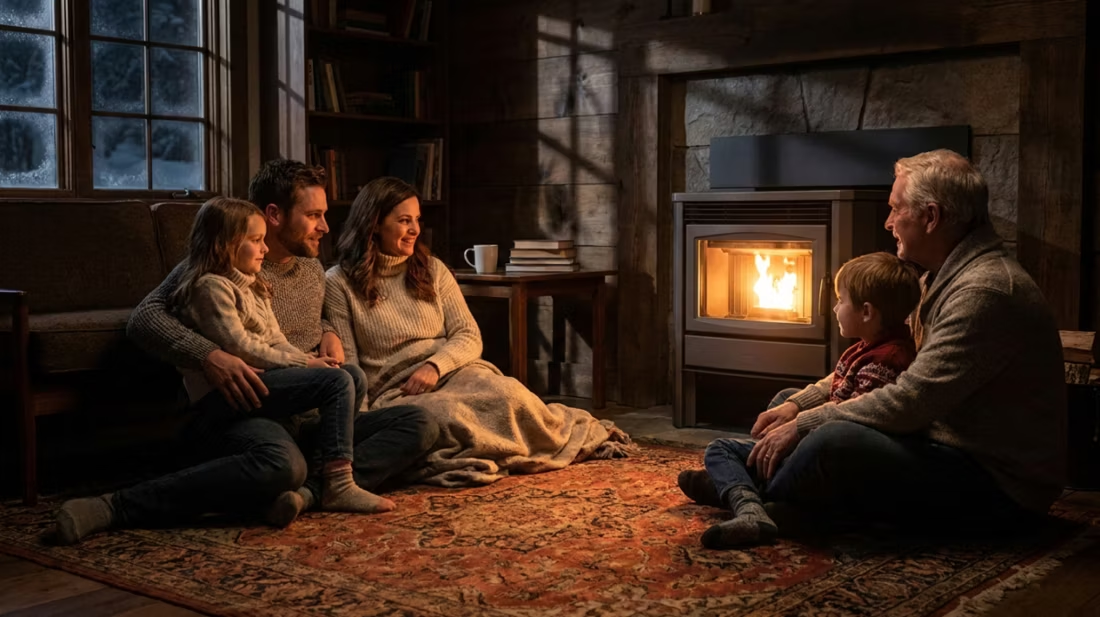
Consistent heat, without tending a wood pile.
Montmorency County sits in Michigan's northern Lower Peninsula, deep in climate zone 6A—cold enough that surrounding state forest land doubles as range for Michigan's only wild elk herd, managed by the DNR across Montmorency, Otsego, and Cheboygan counties. With fewer than 2,500 year-round residents spread across Atlanta, Hillman, Lewiston, and the shoreline of Fletcher Pond, this is a county built around cabins, camps, and second homes as much as full-time houses—and winter here runs long, with cold stretches and snow depths that put it closer to Duluth, Minnesota, than to most of southern Michigan.
For homeowners who want steady, thermostat-controlled heat without splitting and stacking cordwood, pellet stoves and inserts have become a practical fit—especially for full-time residences in Atlanta and Hillman, where hopper-fed convenience beats tending a stove through a full winter. Regional suppliers like Lignetics, Indeck Energy Services, and Somerset Pellet Fuel sell hardwood pellets milled from the same oak, maple, birch, and ash that fill Montmorency County's woodlots, and with no local air quality restrictions on solid-fuel burning, pellet heat is an easy, clean-burning choice for year-round or seasonal use.
Three steps. No salesperson until you're ready.
Tell us about your project
Your zip code, your situation, and the fuel you're leaning toward—or let the answers point you to one.
See what's actually available
The brands dealers within 100 miles genuinely carry—real options, never a catalog mirage.
Get your dealer & Project Guide
A trusted local dealer, plus the free Project Guide & Parts List that names every component of the job.
Frequently Asked Questions
How much does a pellet stove installation cost in Montmorency County?
There's no single published install-cost figure for this county, and pricing swings with the stove model, whether you're converting an existing masonry fireplace to a pellet insert, and how much venting or electrical work your home needs. Freestanding pellet stoves are usually the least expensive to install since they only need a small-diameter vent through an exterior wall rather than a full chimney. Homes in Atlanta, Hillman, or out around Fletcher Pond that need a new dedicated circuit for the stove's auger and blower motor will run higher. Rather than guess, request your free Project Guide & Parts List—it lays out the parts, vent kit, and a matched local dealer's estimate for your specific home.
What size pellet stove do I need for my home?
Zone 6A winters mean Montmorency County homes generally need more heating capacity per square foot than homes farther south in Michigan. A small pellet stove, roughly up to 1,000 square feet, suits a hunting camp or seasonal cabin near Fletcher Pond. Medium units, 1,000 to 2,000 square feet, cover most year-round homes in Atlanta or Hillman. Larger units handle bigger, less-insulated farmhouses common on county acreage. Older camps with minimal insulation typically need to size up a notch compared to a newer, tightly built home of the same square footage.
Where can I find a certified pellet stove installer near me?
Montmorency County's population is under 2,500, spread thin across Atlanta, Hillman, Lewiston, and Briley Township, so it's common for hearth dealers and NFI-certified installers to be based in nearby Alpena or Gaylord rather than in the county itself. That's normal for a rural county this size—what matters is working with a dealer who's actually installed pellet stoves in homes like yours, not just sold them. A qualified installer will size the vent run correctly, run any new electrical circuit the auger and blower need, and set the unit up for cold-climate burn conditions.
What's the difference between a pellet stove and a pellet insert?
A pellet stove is a freestanding unit that vents through a small hole in an exterior wall—it doesn't need an existing chimney, which makes it a good fit for cabins and camps around Montmorency County that were never built with a fireplace. A pellet insert slides into an existing masonry fireplace opening and uses, or relines, the existing chimney, which suits older farmhouses in Hillman or Atlanta with a fireplace that's mostly decorative today. Either way, both use the same hopper-and-auger mechanics and burn the same hardwood pellets.
Do I need a permit to install a pellet stove in Montmorency County?
Yes—new pellet stove and insert installations require a building permit, issued through the Montmorency County Building Department for anything outside city limits, which covers most of the county given how rural it is. The permit process checks clearances, venting termination points, and electrical work for the stove's auger and blower. Most local dealers handle the paperwork as part of the installation, so it's worth asking upfront whether that's included in your quote.
What's the best pellet stove for Montmorency County's climate?
For zone 6A winters, look for a pellet stove with a large hopper—40 to 60 pounds—so it can run overnight and through a full day without a refill, which matters when temperatures drop hard around Fletcher Pond and out along the county's back roads. Because pellet stoves depend on electricity to run the auger, ignition, and combustion blower, a battery backup or small generator is worth budgeting for in a county where winter power outages aren't rare. A local dealer stocking Lignetics-compatible units can walk you through hopper size and backup power options for your specific home.
How often does a pellet stove need cleaning and maintenance?
Pellet stoves need regular ash removal from the burn pot—typically every few days during heavy winter use—plus a full cleaning of the exhaust venting, auger, and combustion blower once a season. Because pellet stoves burn much cleaner than cordwood, there's no chimney sweep required the way there is for a wood stove, but the mechanical parts, including the auger motor, igniter, and blower, do need occasional service. Plan on an annual professional cleaning before burning season starts, especially for stoves running daily through a full Montmorency County winter.
Where can I buy pellets in Montmorency County?
Hardwood pellets from brands like Lignetics, Indeck Energy Services, and Somerset Pellet Fuel are typically sold through farm stores, hardware stores, and hearth dealers in Alpena, Gaylord, and other towns bordering the county, since Montmorency County itself has limited retail. Given how rural the area is, most full-time pellet-stove owners buy a season's supply—often a ton or more—in late summer or early fall, before demand climbs and before snow makes hauling pallets home more of a chore.
Pellet stove vs. wood stove—which is right for me?
Wood is the more self-sufficient option—it doesn't need electricity, which matters for camps and cabins around Fletcher Pond or out in Briley and Vienna townships where power can go out for a stretch in a hard winter storm. Montmorency County's oak, maple, birch, and ash make good firewood as well as good pellet feedstock, so both fuels are genuinely well suited to this county. Pellet stoves win on convenience—set a thermostat, load a hopper, skip the splitting and stacking—but they need a generator or battery backup to keep running through an outage. Many full-time residents here choose pellet for daily convenience and keep a wood stove or fireplace as backup; seasonal camp owners often lean wood for that same off-grid reliability.
Why is my open fireplace making my house colder?
Open fireplaces suck—literally. As the fire burns, it consumes air your furnace already paid to heat and pulls it out through the chimney, so the house is actually colder after the fire goes out than before you lit it. An insert fixes this: it seals the chimney, puts fixed glass across the front, and turns that hole in your house into a real heat source.
What does it take to replace an existing fireplace?
Fireplaces are like icebergs—bigger behind the wall than in front of it. Replacement means removing the surrounding tile or stone (the finish material laps onto the fireplace face), pulling the old unit, setting the new one in the same enclosure, and re-finishing the wall. A hearth professional can determine what's behind your wall without demolition during an in-home preview.
Can a fireplace actually lower my heating bill?
Yes—by creating a comfort zone. A furnace heats every square foot of the house just to warm the one room you're in; a gas fireplace on low burns roughly a sixth of the gas a typical furnace does. Set the furnace around 55–60 degrees as a baseline, then heat the rooms your family actually uses. Families who heat this way commonly save $20–$60 a month.
Does a fireplace add value to my home?
On average, a fireplace adds back to the home about the same amount you spent installing it. Add the monthly savings from heating the rooms you actually use instead of the whole house—often hundreds of dollars a year—and the value case is strong before you even count what a fire does for how your family uses the room.
Pellet Brands Stocked Around Montmorency County
Manufacturers will point you to the nearest stocking dealer.
Find your pellet stove in Montmorency County.
Tell us about your home in Montmorency County and we'll match you with a trusted local pellet stove dealer—and send you a free Project Guide & Parts List with the exact parts, vent kit, and installer recommendation for your project.
Find Your Fireplace →