
Heat your Northern Michigan home right, from Atlanta to Lewiston.
Wood, gas, pellet, and electric fireplace resources for Montmorency County's small towns, lake cottages, and deep-woods homes—from the county seat in Atlanta out to Hillman, Lewiston, and the surrounding townships. Find the right unit and get matched with a trusted local dealer.
Every Project Starts From One of These Five Situations
Deep-woods heating across Montmorency County, Michigan.
Montmorency County is one of Michigan's least populated counties—about 2,488 residents spread across roughly 555 square miles of the northern Lower Peninsula, much of it Mackinaw State Forest. Winters here run long and severe (climate zone 6A, with cold stretches that rival Duluth, MN), and a large share of the housing stock is seasonal—cabins and cottages ringing Fletcher Pond, Lake Emma, and Big Bear Lake that need reliable heat for hunting season, snowmobile weekends, or year-round retirement. Oak, maple, birch, and ash stands cover the county, and self-cut firewood—often pulled under a Michigan DNR permit on state forest land—has been the backbone of local heating for generations.
What you'll find on this hub: hearth retailers, service technicians, and fuel suppliers covering every community in the county—Atlanta, Hillman, Lewiston, and the townships of Albert, Avery, Briley, Loud, Rust, and Vienna. Because the county's population is so small, many dealers and techs travel in from nearby Alpena or Gaylord rather than keeping a storefront in-county. Pick your fuel below to see local dealers, install costs, and recommended units for your specific project—whether that's a hardwired great room on a year-round home or a wood stove keeping a hunting cabin livable through a Montmorency County winter.
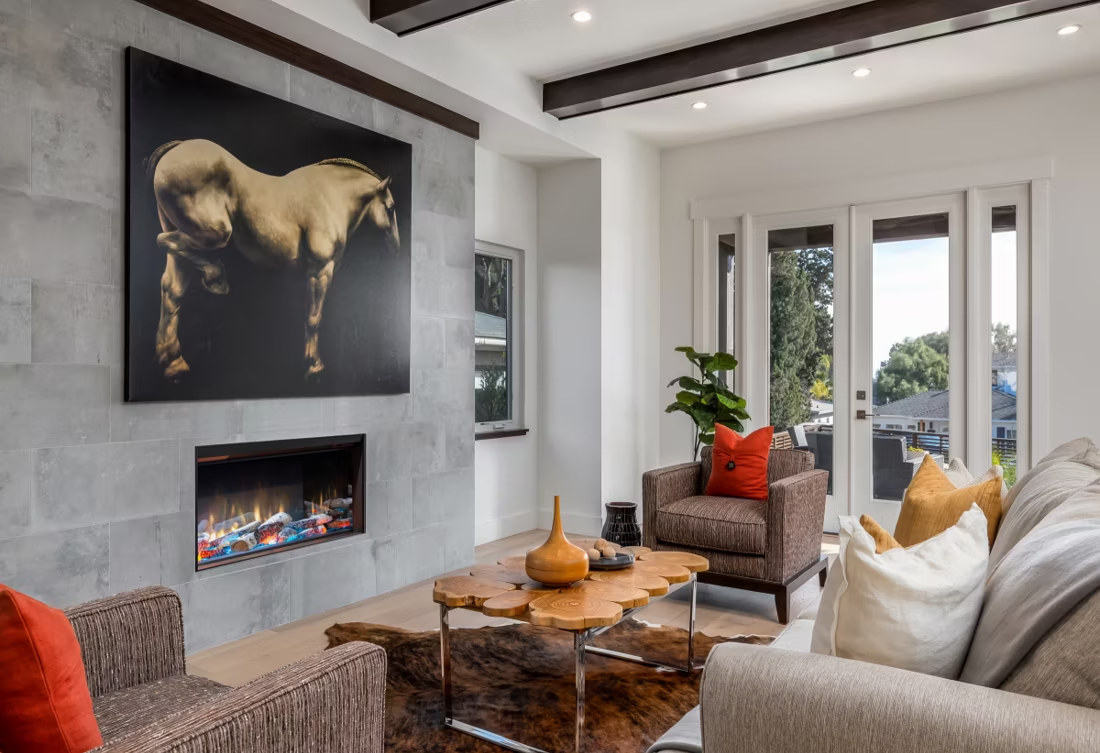
Four fuels. One honest answer for Montmorency County.
Wood
See what's available near Montmorency County.
Find your wood stove →Gas
See what's available near Montmorency County.
Find your gas fireplace →Pellet
See what's available near Montmorency County.
Find your pellet stove →Electric
See what's available near Montmorency County.
Find your electric fireplace →Three steps. No salesperson until you're ready.
Tell us about your project
Your zip code, your situation, and the fuel you're leaning toward—or let the answers point you to one.
See what's actually available
The brands dealers within 100 miles genuinely carry—real options, never a catalog mirage.
Get your dealer & Project Guide
A trusted local dealer, plus the free Project Guide & Parts List that names every component of the job.
Frequently Asked Questions
Which fuel works best for a home in Montmorency County?
It depends on whether the home is year-round or seasonal. Wood remains the backbone fuel in Montmorency County—oak, maple, birch, and ash are all locally abundant, DNR permits on Mackinaw State Forest land keep fuel costs near zero for anyone willing to cut and split, and a good catalytic stove will carry a fire through the county's harshest cold stretches without power. Gas—almost always propane here, since piped natural gas is limited in rural parts of the county—is the convenience choice for year-round homes and for camp owners who want heat on with a switch after a week away. Pellet is a strong middle option: no chainsaw required, and regional supply from brands like Indeck Energy Services and Lignetics keeps it available at local dealers. Electric fireplaces are common as supplemental or ambiance heat in cottages and bedrooms, but given how cold Montmorency County winters run, they're rarely anyone's sole heat source. Many homes here pair wood or pellet as primary heat with propane or electric as backup.
Do I need a permit to install a fireplace or stove in Montmorency County?
In most cases, yes. New wood stoves, wood inserts, gas fireplaces, gas inserts, gas stoves, and pellet stoves generally require a building permit through the Montmorency County Building Department. Wood-burning appliances should be EPA-certified for a clean, efficient burn—this matters even without local air quality restrictions, since a certified stove uses far less wood per BTU than an old smoke-dragon, which adds up fast if you're hauling and splitting your own firewood. Propane installations need a separate gas line permit and a licensed propane technician for the tank and line connection. Electric fireplaces typically skip the permit process unless they're hardwired into a new circuit. Most local retailers pull the permit as part of the installation, so you're not usually handling that paperwork yourself.
Are there wood-burning or air quality restrictions in Montmorency County?
No—Montmorency County has no designated air quality nonattainment areas and no history of winter inversion advisories, unlike some downstate Michigan counties or the Klamath Basin-type geography that traps smoke. That means no burn-ban days to plan around for wood heat here. That said, an EPA-certified stove is still worth choosing on its own merits: it burns cleaner and uses noticeably less firewood per heating season than an older uncertified unit, which matters when your wood supply comes from a DNR cutting permit and a lot of physical labor rather than a delivery truck.
Can one local retailer handle wood, gas, pellet, and electric?
Given Montmorency County's small population, most dealers serving the county are based just outside it—in Alpena or Gaylord—and the larger multi-fuel showrooms in those towns typically carry all four fuel types, which is useful if you want to compare a wood insert against a pellet stove side by side before deciding. Smaller shops closer to the county, if any, tend to specialize in one or two fuels, often wood and propane given local demand. If you're outfitting a hunting camp or lake cottage and aren't sure what fits, a multi-fuel dealer can walk through trade-offs for a seasonal-use property specifically, which differ from year-round heating math.
How does hearth service work across a rural county this size?
Technicians generally travel in from Alpena, Gaylord, or Grayling to cover Atlanta, Hillman, Lewiston, and the outlying townships, so expect a modest trip fee for service calls, particularly around Fletcher Pond, Lake Emma, or Big Bear Lake where seasonal cottages cluster. Scheduling chimney sweeps and gas inspections in late summer or early fall—before hunting season and before lake cottages get winterized—is easier than trying to book an emergency mid-winter call when a hard freeze hits. If your property sits empty part of the week or season, it's worth asking your technician about carbon monoxide detector checks and battery backups for propane ignition systems as part of the same visit.
What does installation cost across the different fuel types in Montmorency County?
Costs run in line with rural northern Michigan pricing, with some jobs landing higher if a technician has to travel a long distance or if a seasonal cottage needs extra chimney or venting work. Wood stove or insert: roughly $4,000–$8,500 for a typical install, more if new chimney construction is involved. Propane fireplace, insert, or stove: roughly $4,000–$10,000 depending on gas line and venting work; lower if propane service already reaches the home. Pellet stove or insert: roughly $4,000–$7,000 for a standard install. Electric fireplace: $200–$3,000 for the unit itself, plus $400–$1,200 in labor for anything beyond a plug-in installation. See the county + fuel pages above for detail tied to specific local dealer pricing.
Can I install a fireplace myself?
If you're putting a fire in your house on purpose, it's best to work with an expert. Unless you're genuinely experienced in framing, gas line, vent pipe, and the national code on clearances to combustibles, have a professional do it—and ideally the same company that sells you the fireplace, so warranty, service, and liability all live under one roof.
Can a fireplace actually lower my heating bill?
Yes—by creating a comfort zone. A furnace heats every square foot of the house just to warm the one room you're in; a gas fireplace on low burns roughly a sixth of the gas a typical furnace does. Set the furnace around 55–60 degrees as a baseline, then heat the rooms your family actually uses. Families who heat this way commonly save $20–$60 a month.
How much should I budget for a fireplace?
For an average home—covering the fireplace, the vent pipe, and basic installation—a budget between $3,900 and $5,500 gives you a lot of options across wood, gas, and pellet. By the time you add finish work, gas line, and electrical, the average complete installation lands between $5,000 and $12,000 all-in. In a remodel or new build, a good rule is to put about 2.5% of the total project cost toward the fireplace.
Does a fireplace add value to my home?
On average, a fireplace adds back to the home about the same amount you spent installing it. Add the monthly savings from heating the rooms you actually use instead of the whole house—often hundreds of dollars a year—and the value case is strong before you even count what a fire does for how your family uses the room.
Stove and Fireplace Dealers in Montmorency County
Listings include WhyFire partner dealers, dealers we have verified as authorized for the brands we recommend, and established local businesses that carry hearth products. Every listing shows which one it is. The ones marked Preferred run on WhyFire's software, so they can show you real pricing and book your appointment right here. No manufacturer pays for placement. How we verify dealers →
Fairview Hardware
Fireside Hearth & Leisure
Premium Sound
Alpena Supply Co.
Get matched with a local hearth dealer in Montmorency County.
Tell us your fuel and your town—Atlanta, Hillman, Lewiston, or a township in between—and we'll match you with a trusted local dealer and send a free Project Guide & Parts List: the exact parts, including the vent kit, and the dealer we recommend for your project.
Find Your Fireplace →