
Find dependable pellet heat for Lake County's long, snowy winters.
Steady, thermostat-controlled warmth for the cold season that stretches from October well into April across Lake County—from Baldwin to Luther to Idlewild. Get matched with a trusted local dealer who sizes, installs, and vents it correctly.
Every Project Starts From One of These Five Situations
Consistent heat for a county built on the forest.
Lake County sits in Michigan's northern Lower Peninsula, threaded by the Manistee National Forest and dotted with the small lakes and hunting camps that give the county its name. It's sparsely populated—the year-round communities this page serves add up to a small fraction of what you'd find in a suburban county—and the winters are the real kind: climate zone 6A, with snow on the ground for months and the cold settling in the way it does in Duluth, Minnesota, rather than easing off like it does farther south. The oak, maple, birch, and ash that fill the surrounding woods are the same species that end up, chipped and compressed, in the pellet bags sold at feed stores and hardware stores across the county.
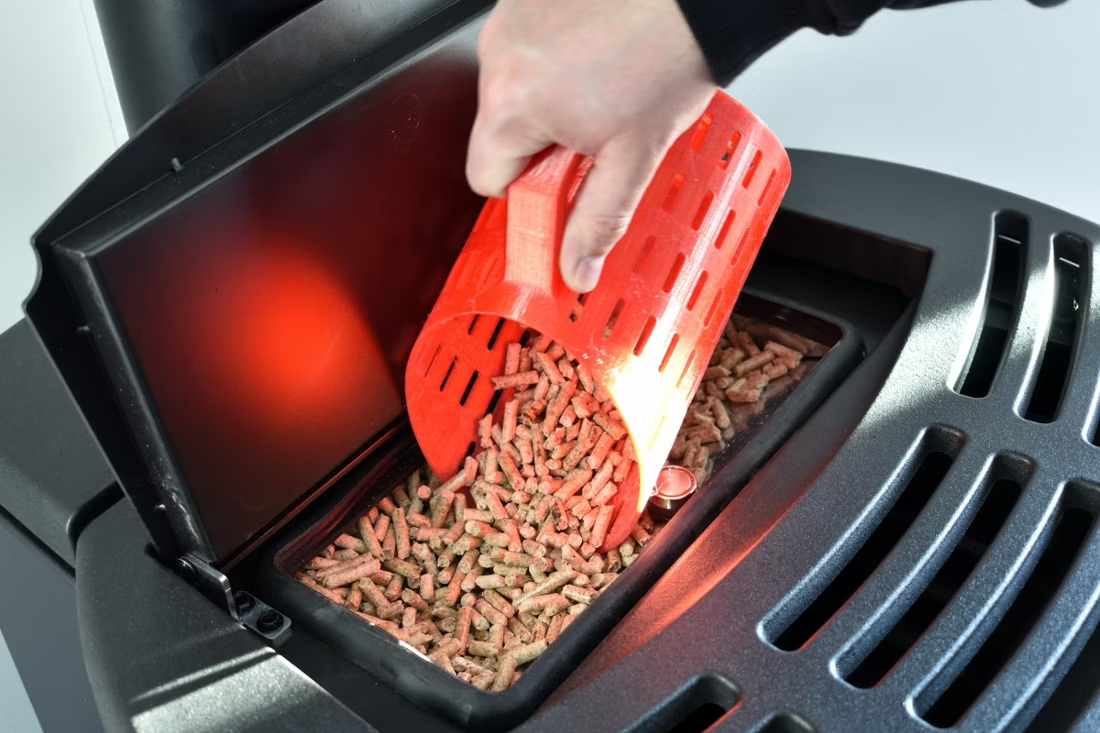
Pellet stoves have found a real niche here for a simple reason: a lot of Lake County housing stock is seasonal—cabins and lake cottages that need heat that's easy to manage on and off, without the daily tending a wood stove demands. Regional pellet producers including Indeck Energy Services, Lignetics, and Somerset Pellet Fuel supply the hardwood pellets that stock local suppliers, and Lake County has no air quality non-attainment status and no winter burn curtailment on the books—meaning a pellet stove here runs on its own schedule, not around inversion advisories. The tradeoff is that pellet stoves need electricity to run the auger and blower, which matters in a rural county where outages can run long after a winter storm.
Three steps. No salesperson until you're ready.
Tell us about your project
Your zip code, your situation, and the fuel you're leaning toward—or let the answers point you to one.
See what's actually available
The brands dealers within 100 miles genuinely carry—real options, never a catalog mirage.
Get your dealer & Project Guide
A trusted local dealer, plus the free Project Guide & Parts List that names every component of the job.
Frequently Asked Questions
How much does a pellet stove installation cost in Lake County?
Most pellet stove installations run in the neighborhood of $3,000 to $6,000, depending on the unit, whether it's a freestanding stove or an insert into an existing fireplace, and how much venting work is required. Because Lake County is thinly populated, dealers carrying and installing pellet equipment are more likely to be based out of a neighboring hub like Cadillac or Big Rapids, so it's worth asking whether a travel charge applies to installs out toward Idlewild, Chase, or Luther. A trusted local dealer will give you a firm number after seeing your home, chimney or wall situation, and venting path.
What size pellet stove do I need for my home in Lake County?
Sizing depends on square footage, insulation, and whether the pellet stove is your primary heat or a supplement to a furnace. In a 6A climate like Lake County's, a lot of local sizing questions come down to whether you're heating a year-round, well-insulated house or a seasonal cabin near one of the county's lakes that gets cold-soaked between visits—cabins generally need more heating capacity per square foot to recover quickly once you're back on-site and firing it up. A local dealer can walk your space and size it correctly rather than guessing off a chart.
Where can I find certified pellet stove installers near me?
Look for NFI-certified installers, and don't assume the nearest big-box store employs one. Given how few full-service hearth dealers operate inside Lake County itself, your best match may come from a certified installer covering the wider region around Baldwin and the Manistee National Forest corridor. Working with a certified pro matters more than usual here, since pellet stoves rely on properly sized combustion-air and exhaust venting to run efficiently—get that wrong and you'll fight the stove all winter.
What's the difference between a pellet stove and a pellet insert?
A pellet stove is a freestanding unit that sits on its own hearth pad and vents through a wall or existing chimney chase—it can go almost anywhere with the right clearances. A pellet insert is built to slide into an existing masonry fireplace opening, turning an old wood-burning fireplace into a hopper-fed, thermostat-controlled heat source. For Lake County homes and cabins with an existing fireplace, an insert is often the simpler retrofit; new construction or rooms without a fireplace usually call for a freestanding stove instead.
Do I need a permit to install a pellet stove in Lake County?
Yes—a building permit through the Lake County Building Department is standard for a new pellet stove or insert installation, and most local installers handle that paperwork as part of the job. Because Lake County has no air quality non-attainment designation and no winter curtailment periods, there's no burn-ban consideration to plan around once the stove is installed—you're only dealing with the one-time permitting and inspection step.
Will my pellet stove work during a power outage?
Not without help. Pellet stoves depend on electricity to run the auger that feeds fuel and the blower that pushes heat into the room, so a standard unit shuts down when the power goes out. In a rural county like Lake, where outages after a winter storm can stretch longer than in denser areas, that's worth planning for—a small battery backup or a generator sized to run the stove is a common workaround local dealers can spec out. If off-grid reliability is the priority, a wood stove that needs no electricity may be a better fit for a primary heat source.
Where can I buy pellet fuel in Lake County?
Regional producers including Indeck Energy Services, Lignetics, and Somerset Pellet Fuel supply hardwood pellets that stock feed stores, hardware stores, and farm supply outlets across northern Michigan. Given the county's rural roads and the distance between towns, most year-round burners stock up a season's worth of bags before the snow settles in rather than making frequent runs—your local dealer can tell you which nearby retailers carry pellets reliably through the winter.
How often should my pellet stove be serviced?
Plan on a full cleaning and inspection once a year, ideally before the heating season starts—the burn pot, auger, exhaust venting, and hopper all need attention, and a stove that's run hard through a long Lake County winter will need it more than one used lightly. Scheduling service in late summer or early fall also avoids the awkward situation of a technician trying to reach a rural property after a heavy snow.
Pellet vs. wood—which is right for my Lake County home?
Wood, cut and split from the oak, maple, birch, and ash common around the Manistee National Forest, works without electricity and delivers real backup heat during an outage—a genuine advantage in a rural county where power can stay off for a while after a storm. Pellet stoves trade that off-grid resilience for convenience: load the hopper, set the thermostat, and walk away, with less ash and no splitting or stacking. For a year-round home with reliable power, pellet is often the easier daily-use choice; for a cabin or camp where self-sufficiency matters more than convenience, wood still has the edge.
Why is my open fireplace making my house colder?
Open fireplaces suck—literally. As the fire burns, it consumes air your furnace already paid to heat and pulls it out through the chimney, so the house is actually colder after the fire goes out than before you lit it. An insert fixes this: it seals the chimney, puts fixed glass across the front, and turns that hole in your house into a real heat source.
Why is a fireplace insert so efficient?
An insert does two things: it seals the chimney completely, so you stop losing air you already paid to heat, and it radiates warmth into the room through the firebox and glass. Most add a heat-exchange fan that pulls cool room air underneath, wraps it around the hot firebox, and pushes it back out warm. Your home is more efficient before you've even lit the first fire.
How much should I budget for a fireplace?
For an average home—covering the fireplace, the vent pipe, and basic installation—a budget between $3,900 and $5,500 gives you a lot of options across wood, gas, and pellet. By the time you add finish work, gas line, and electrical, the average complete installation lands between $5,000 and $12,000 all-in. In a remodel or new build, a good rule is to put about 2.5% of the total project cost toward the fireplace.
Can I install a fireplace myself?
If you're putting a fire in your house on purpose, it's best to work with an expert. Unless you're genuinely experienced in framing, gas line, vent pipe, and the national code on clearances to combustibles, have a professional do it—and ideally the same company that sells you the fireplace, so warranty, service, and liability all live under one roof.
Pellet Brands Stocked Around Lake County
Manufacturers will point you to the nearest stocking dealer.
Find your pellet stove in Lake County.
Tell us about your home and we'll match you with a trusted local dealer and send over a free Project Guide & Parts List—sized for Lake County's long winters, with the exact parts and vent kit your install needs.
Find Your Fireplace →