
Find your gas fireplace for Lake County's long, snowy winters.
From Baldwin to Luther, Irons, and the lake cottages ringing Big Star and Pettibone, Lake County winters run long and deep with lake-effect snow off Lake Michigan. Get matched with a local dealer who knows what actually works out here.
Every Project Starts From One of These Five Situations
Instant heat for a county built around lake cottages and cold winters.
Lake County sits about 25 miles inland from Lake Michigan in the northwestern Lower Peninsula, most of it wrapped in the Manistee National Forest. Climate zone 6A means winters here run long—heavy, wind-driven lake-effect snow, stretches of sub-zero nights, and a season that doesn't loosen its grip until well into spring. With a year-round population around 1,299, this is a county of small, close-knit communities—Baldwin (the county seat), Luther, Irons, and the historic Idlewild resort area—plus a large share of seasonal cabins scattered around Big Star Lake, Wolf Lake, Bass Lake, and Pettibone Lake.
Because Lake County is so rural, there's no widespread natural gas utility infrastructure reaching most homes and cottages outside a small cluster of village lots—propane, delivered and stored in a tank on the property, is the practical default for gas heat throughout the county. That's not a downside for a gas fireplace: propane units perform identically to natural gas ones, and for a lake cottage that sits empty all week, the appeal of flipping a switch for instant heat and ambiance—no hauling wood, no waiting for a fire to catch before a weekend arrival—is exactly the point. With no local air quality restrictions on burning, the choice between gas and wood here comes down to convenience versus tradition, not regulation.
Three steps. No salesperson until you're ready.
Tell us about your project
Your zip code, your situation, and the fuel you're leaning toward—or let the answers point you to one.
See what's actually available
The brands dealers within 100 miles genuinely carry—real options, never a catalog mirage.
Get your dealer & Project Guide
A trusted local dealer, plus the free Project Guide & Parts List that names every component of the job.
Frequently Asked Questions
How much does a gas fireplace installation cost in Lake County?
A propane fireplace or insert installation in Lake County typically runs $4,000 to $9,500, and a full built-in gas fireplace with new venting and a propane line run can reach $11,000 depending on the tank situation. Homes and cabins that already have a propane tank and line in place—common around the lake communities where propane already serves a furnace or water heater—land toward the lower end. New propane tank installation, buried line runs to a cottage set back from the road, or venting through thick log or timber construction pushes costs higher. Local dealers will give a firm number after seeing the site.
Can I convert my existing wood fireplace to gas?
Yes, and it's a common upgrade for older cabins around Big Star Lake, Wolf Lake, and Bass Lake that were built decades ago with a masonry fireplace as the centerpiece. A propane insert typically slides into the existing firebox, using a stainless liner run through the chimney you already have, for somewhere between $4,500 and $9,000 depending on the model and whether a new propane line needs to be run to the fireplace. It keeps the look of the original hearth while giving weekend owners heat and ambiance at the flip of a switch instead of a stack of split oak or maple to haul in.
Do I need natural gas, or does propane work for a gas fireplace here?
Propane is the standard fuel for gas fireplaces across almost all of Lake County. Natural gas mains don't reach most of the county's rural roads and lake communities, so homeowners and cottage owners rely on propane delivered by regional suppliers and stored in an above-ground or buried tank on the property. Nearly every gas fireplace, insert, and stove sold today can be configured for propane with the correct orifice and regulator, so fuel availability isn't a limiting factor—it just means budgeting for a tank if the property doesn't already have one.
Will my gas fireplace work during a power outage?
Most direct-vent gas fireplaces with intermittent pilot ignition run on AA batteries as backup, so they'll light and heat the room even with the power out—worth knowing given how often lake-effect snow and downed lines can knock out electric co-op service in this part of the county during winter. Valor fireplaces go a step further: their pilot assembly generates its own electricity through the thermocouple, so there are no batteries to remember or replace. For a cabin that sits closed up for stretches between visits, that self-powering design is a real advantage—ask your local dealer which ignition system a given model uses.
What's the difference between a gas fireplace, gas insert, and gas stove?
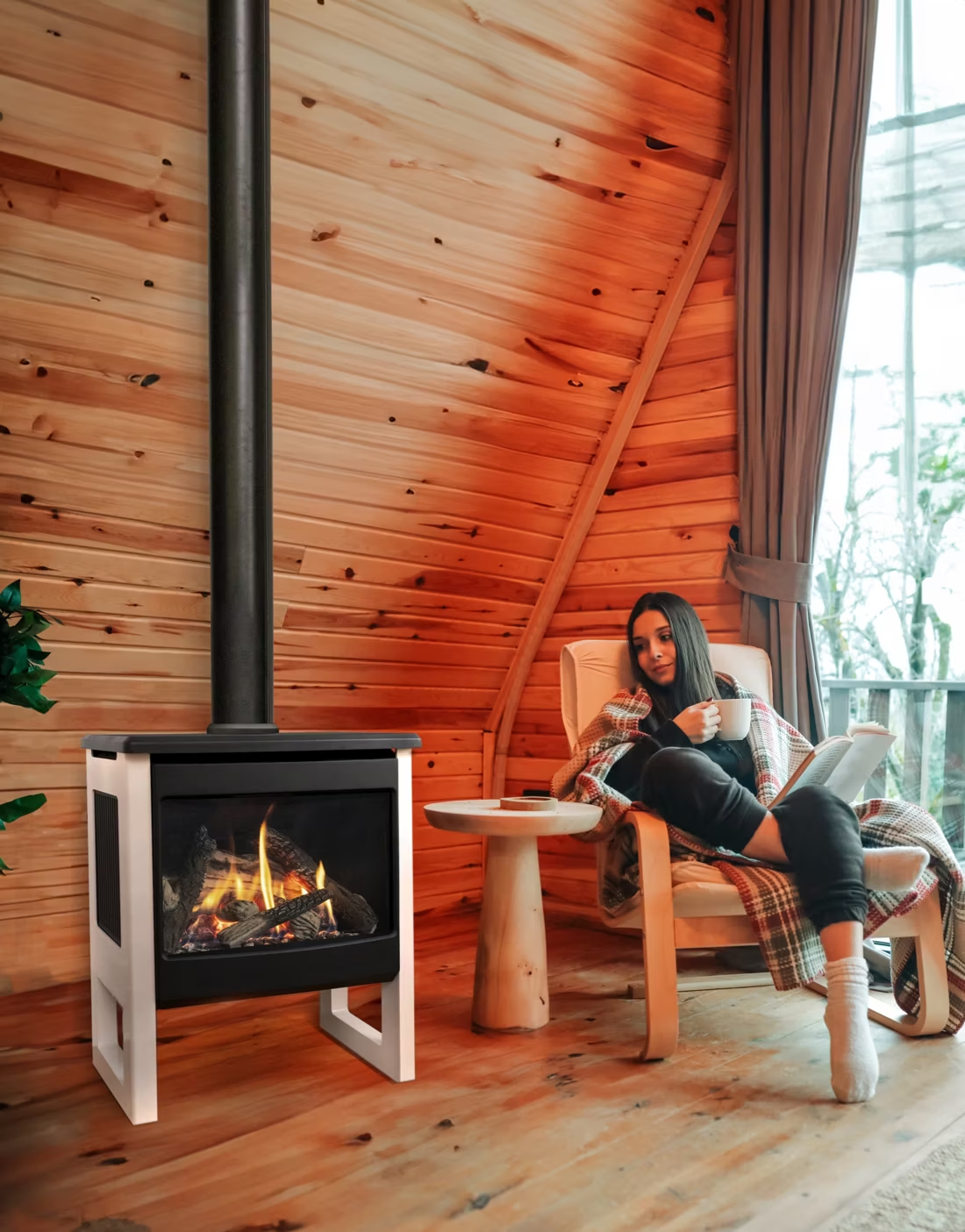
A gas fireplace is a fully framed-in, built-in unit, typically chosen for new cabin construction or a major remodel. A gas insert slides into an existing masonry firebox, which makes it the natural fit for the older lake cottages scattered through Lake County that already have a stone or brick fireplace. A gas stove is a freestanding cast-iron or steel unit that sits on the floor on its own hearth pad—a good option for a smaller cabin or bunkhouse that never had a fireplace built in to begin with. Which one fits depends mostly on what's already in the structure.
Do I need a permit to install a gas fireplace in Lake County?
Yes—a building permit and a permit covering the propane gas line are both required for a new gas fireplace installation, issued through the Lake County Building Department in Baldwin. Most hearth dealers pull these permits as part of the installation, so homeowners rarely have to deal with the paperwork directly. The gas line connection itself needs to be handled by a licensed gas-fitter, which is one reason to work with an established local dealer rather than a general handyman—they coordinate the propane hookup, venting, and inspection as one job.
What's the difference between vented and vent-free gas fireplaces?
Vented (direct-vent) units draw combustion air from outside and exhaust it back outside through sealed pipe, which is why they're the most common and most widely recommended option, including for the cabins and homes across Lake County. Vent-free units burn fuel directly into the room without outside venting—legal in Michigan under strict room-sizing and oxygen-sensor rules, and sometimes considered for older cottages with no practical chimney or wall path for venting. But for a home that's occupied through Lake County's long, closed-window winter, a sealed direct-vent unit is the safer, more universally recommended choice, and it's what most local dealers will steer you toward first.
How often should my gas fireplace be serviced?
An annual inspection is standard—checking the burner, pilot assembly, venting, and gas connections, plus cleaning the glass. For seasonal cabins around the lakes that sit closed for months, it's worth scheduling that inspection in spring before the property reopens for the season, or in fall right before it closes up, rather than waiting until you're standing there with company arriving. Expect to pay roughly $150 to $250 for the visit, and any local gas appliance technician serving the Baldwin area can handle it.
Gas vs. wood—which is right for a Lake County cabin?
Wood is the traditional choice here for a reason—the Manistee National Forest surrounds much of the county, oak, maple, birch, and ash are all common and split easily, and a wood stove keeps working even if the power and propane delivery both get delayed by a heavy lake-effect storm. Gas wins on convenience: no wood to stack or haul to a cottage that only gets visited on weekends, instant heat the moment you walk in from the cold, and no ash cleanup before you head home. Plenty of Lake County properties end up with both—a wood stove or insert as the workhorse heat source, and a small gas unit in a den or bedroom for quick, no-fuss warmth.
Why is a fireplace insert so efficient?
An insert does two things: it seals the chimney completely, so you stop losing air you already paid to heat, and it radiates warmth into the room through the firebox and glass. Most add a heat-exchange fan that pulls cool room air underneath, wraps it around the hot firebox, and pushes it back out warm. Your home is more efficient before you've even lit the first fire.
What's the difference between radiant and convective fireplace heat?
Most fireplaces are a thin metal box—they heat fine, but you rely on the fan to move the warmth into the room. Radiant models use a thick cast-ceramic firebox, about an inch and a quarter thick, that soaks up the fire's heat and radiates roughly 25–30% more warmth into the room with no fan running. If you watch TV in the same room or want heat in a power outage, radiant is worth asking about.
Does a fireplace add value to my home?
On average, a fireplace adds back to the home about the same amount you spent installing it. Add the monthly savings from heating the rooms you actually use instead of the whole house—often hundreds of dollars a year—and the value case is strong before you even count what a fire does for how your family uses the room.
Can I install a fireplace myself?
If you're putting a fire in your house on purpose, it's best to work with an expert. Unless you're genuinely experienced in framing, gas line, vent pipe, and the national code on clearances to combustibles, have a professional do it—and ideally the same company that sells you the fireplace, so warranty, service, and liability all live under one roof.
Find your gas fireplace in Lake County.
Tell us about your home or cabin and we'll match you with a trusted local dealer and send over a free Project Guide & Parts List—the exact parts, including the vent kit, for your gas fireplace project in Lake County.
Find Your Fireplace →