
Steady, automatic heat for Iosco County's long Lake Huron winters.
With a long winter heating season similar to Burlington, Vermont and average winter lows near 13°F, Iosco County homes need heat that keeps running without constant tending. A pellet stove or insert loads once and burns for hours—find the right unit and get matched with a trusted local dealer.
Every Project Starts From One of These Five Situations
Automated heat built for a 7,400-degree-day winter.
Iosco County sits along Lake Huron's shoreline in northeastern Michigan—Tawas City, East Tawas, Oscoda, and Whittemore, with roughly 8,600 year-round residents and a much larger seasonal population drawn by the bay and the AuSable River. Climate zone 6A here means a winter comparable to Burlington, Vermont, with a long, demanding heating season and average lows around 13°F. The oak, maple, birch, and ash forests that surround the county have long supported cordwood heating, but a lot of Iosco County housing stock is seasonal cottages and retiree homes near the water where hauling and splitting cordwood isn't practical or wanted. That's where pellet heat fits.
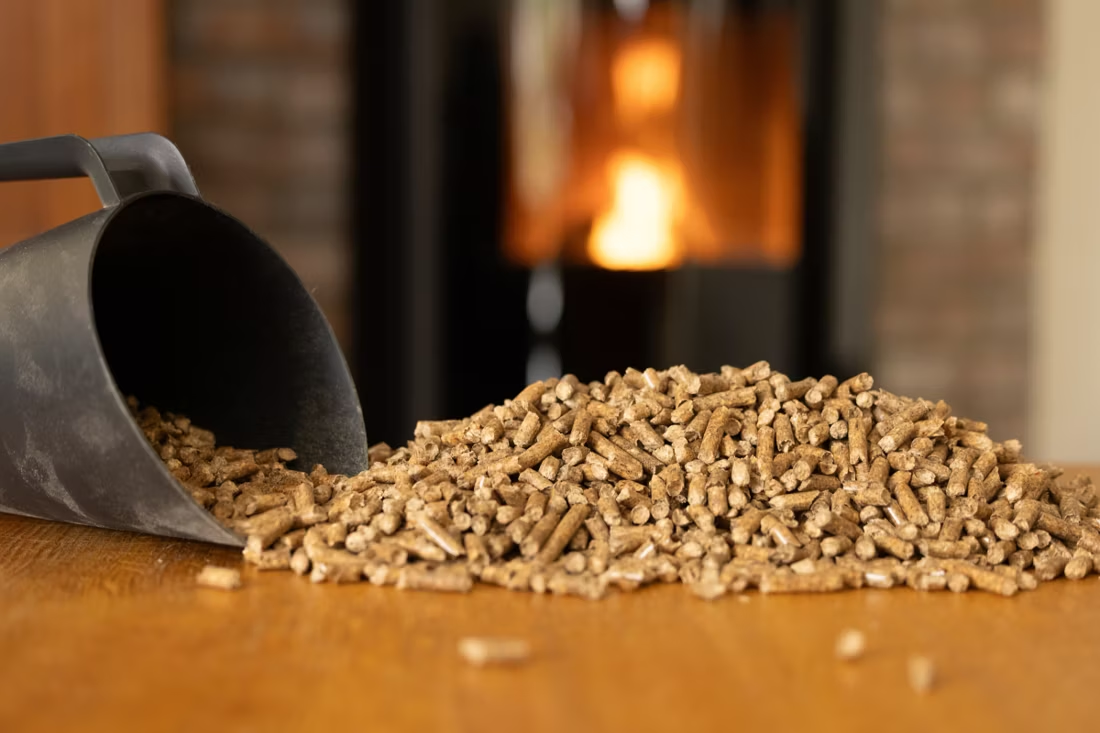
A pellet stove loads from a bag rather than a woodpile, runs on a thermostat, and vents through a small wall pipe instead of a full masonry chimney—a real advantage for lake cottages and additions that were never built with a chimney in mind. Regional pellet fuel producers including Indeck Energy Services, Lignetics, and Somerset Pellet Fuel supply the farm and hardware stores that stock premium PFI-certified bags across this part of the state, so fuel supply isn't a concern going into a Michigan winter. Iosco County reports no local air quality restrictions on solid-fuel appliances, which keeps the permitting and operating side of pellet heat straightforward compared to counties dealing with winter inversion or non-attainment rules.
Three steps. No salesperson until you're ready.
Tell us about your project
Your zip code, your situation, and the fuel you're leaning toward—or let the answers point you to one.
See what's actually available
The brands dealers within 100 miles genuinely carry—real options, never a catalog mirage.
Get your dealer & Project Guide
A trusted local dealer, plus the free Project Guide & Parts List that names every component of the job.
Frequently Asked Questions
How much does a pellet stove installation cost in Iosco County?
Most pellet stove and insert installations run in the range hearth retailers typically quote for direct-vent PL-pipe work—usually somewhere between $3,500 and $7,000 depending on the unit, hearth pad requirements, and how far the vent run has to travel through an exterior wall. Older Tawas-area and Oscoda cottages built without a chimney are often cheaper to fit for pellet than for wood or gas, since the vent pipe is small and doesn't require masonry work. A licensed local installer will give you a firm number after seeing the space in person.
What size pellet stove do I need for my home?
Sizing depends on square footage, ceiling height, and how well the home is insulated—and in Iosco County that varies a lot between a well-insulated year-round home and an older lake cottage near Tawas Bay with thinner walls and single-pane windows. As a starting point, small units (up to 1,000 sq ft) suit a cottage or single main room, mid-size units (1,000–2,000 sq ft) cover most year-round homes, and larger units handle open-concept or poorly insulated spaces. Given the county's long, Burlington-Vermont-style heating season, it's worth sizing toward the upper end of any recommendation rather than the lower end—a stove that's slightly oversized and run on a low setting outperforms one that's maxed out every night in January.
Pellet stove vs. wood stove—which is right for me?
Wood stoves burn cordwood—plentiful in Iosco County given the local oak, maple, birch, and ash—and keep working with no electricity, which matters for rural homes and Lake Huron shoreline properties where lake-effect storms can knock out power for days. Pellet stoves trade that self-sufficiency for convenience: no splitting or stacking, more even heat output, and a simple thermostat instead of tending a fire. The tradeoff is that pellet stoves need electricity to run the auger and combustion blower, so they stop working in an outage unless paired with a battery backup. For a full-time home where convenience matters most, pellet wins. For a rural property where storm-related outages are a real concern, many owners keep a wood stove as backup even after installing pellet.
Do I need a permit to install a pellet stove in Iosco County?
Yes—a building permit is required for a new pellet stove or insert installation, typically through the Iosco County Building Department for unincorporated areas or the relevant city office in Tawas City and East Tawas. Because Iosco County has no reported air quality restrictions or non-attainment concerns, there are no burn curtailment periods or seasonal operating limits to worry about once the unit is installed—the permitting is about safe installation, not ongoing operating rules. Most local dealers handle the permit paperwork as part of the install.
How does pellet stove venting work compared to a wood stove or fireplace?
Pellet stoves vent through a small-diameter PL (pellet vent) pipe that typically runs horizontally through an exterior wall rather than up through a full masonry chimney. That's a meaningful advantage for Iosco County's stock of lake cottages and additions built without a chimney—a pellet install often avoids the roof penetration and Class A chimney costs that a comparable wood stove installation would require. It also means pellet units can go in interior rooms or additions that would be difficult or impossible to vent for a wood-burning appliance.
What should I look for in a pellet stove for this climate?
With average winter lows around 13°F and a heating season that runs long by Michigan standards, prioritize hopper capacity and continuous BTU output over aesthetics alone. A larger hopper means fewer refills during the coldest stretches and better performance overnight without waking up to a cold house. Ask your local dealer about models with a thermostat-controlled auger feed, since that combination handles Iosco County's swing between mild lake-effect days and hard cold snaps better than a fixed-feed unit.
How often do I need to refill the hopper, and how much fuel will I burn?
Most residential pellet stoves burn through a 40-pound bag every 24 to 30 hours on a moderate setting, though a well-insulated Iosco County home running the stove as primary heat through a full Michigan winter can go through several tons of pellets per season. Hopper capacity determines how often you're reloading day-to-day—larger hoppers can run 24+ hours between fills, which matters if you're away at a Tawas Bay cottage part of the week and want the stove to keep running on its own settings.
Where can I buy pellet fuel in Iosco County?
Regional producers including Indeck Energy Services, Lignetics, and Somerset Pellet Fuel supply premium PFI-certified pellets to farm and hardware stores throughout this part of Michigan, and most hearth dealers carry or can order bags directly. Pricing runs in the neighborhood of $250 to $300 per ton across the Midwest, with premium hardwood blends at the higher end and economy softwood blends cheaper but slightly ashier. Buying a season's supply early in the fall, before the first cold snap, is common practice locally and helps avoid the price bumps that can hit in December and January.
Pellet stove vs. gas fireplace—which is right for my home?
Gas offers instant on-off operation with no fuel storage and no ash to manage, which appeals to homeowners who want zero-maintenance heat. Pellet stoves require you to keep bags on hand and empty the ash pan periodically, but they deliver a real, visible flame and don't depend on a gas or propane line being run to the house—a relevant factor for some of Iosco County's more rural or shoreline parcels. If your home already has gas service and you want the simplest possible operation, gas is worth a look. If you want a genuine wood-fire look and heat output without cutting and hauling cordwood, pellet is usually the better fit.
What do I measure to size a fireplace insert?
Four numbers tell you what fits: the front width, the front height, the back width, and the overall depth of your existing fireplace opening. Grab a tape measure, jot those down, and snap a photo of the wall—those two things do more to move your project forward than anything else you can do today.
How often does a pellet stove need cleaning?
A clean pellet stove is a happy pellet stove. Plan on cleaning the burn pot about once a week when you're burning regularly—ash and clinkers gum up the air holes just like a pellet barbecue. Most pellet stove problems trace back to skipped cleaning that nobody explained up front. Some designs make it easy with a trapdoor burn pot: pull a lever and the gunk drops into the ash pan.
How much should I budget for a fireplace?
For an average home—covering the fireplace, the vent pipe, and basic installation—a budget between $3,900 and $5,500 gives you a lot of options across wood, gas, and pellet. By the time you add finish work, gas line, and electrical, the average complete installation lands between $5,000 and $12,000 all-in. In a remodel or new build, a good rule is to put about 2.5% of the total project cost toward the fireplace.
Can I install a fireplace myself?
If you're putting a fire in your house on purpose, it's best to work with an expert. Unless you're genuinely experienced in framing, gas line, vent pipe, and the national code on clearances to combustibles, have a professional do it—and ideally the same company that sells you the fireplace, so warranty, service, and liability all live under one roof.
Stove and Fireplace Dealers in Iosco County
Pellet Brands Stocked Around Iosco County
Manufacturers will point you to the nearest stocking dealer.
Find your pellet stove in Iosco County.
Tell us about your home and we'll match you with a trusted local dealer and send over a free Project Guide & Parts List—a plan for your pellet stove or insert project in Iosco County, with the exact parts, vent kit, and recommended installer.But wait—additional invalid key added by mistake above; ignoring.}]}]}
Find Your Fireplace →