
Instant heat for Iosco County's lake cottages and cabins.
No gas line, no chimney, no torn-up slab—just plug-in or hardwired warmth for the seasonal cottages and cabins scattered along Tawas Bay and the Lake Huron shoreline. Find the right unit and connect with a trusted local dealer.
Every Project Starts From One of These Five Situations
The easiest upgrade for a seasonal cottage.
Iosco County sits along the Lake Huron shoreline in Michigan's northeast Lower Peninsula, anchored by Tawas City, East Tawas, and Oscoda, with Whittemore and Hale further inland. Year-round population is small—just over 8,600—but the county's housing stock leans heavily toward seasonal cottages and cabins that fill up each summer and again during deer season and snowmobile weekends. Winters here are long and genuinely cold: Iosco sits in climate zone 6A with 7,456 heating degree days and an average winter low of 13°F, putting the heating load in roughly the same range as Burlington, Vermont. A lot of the older cottages along US-23 and the Tawas Bay shore were built without natural gas service, masonry chimneys, or ductwork reaching every room.
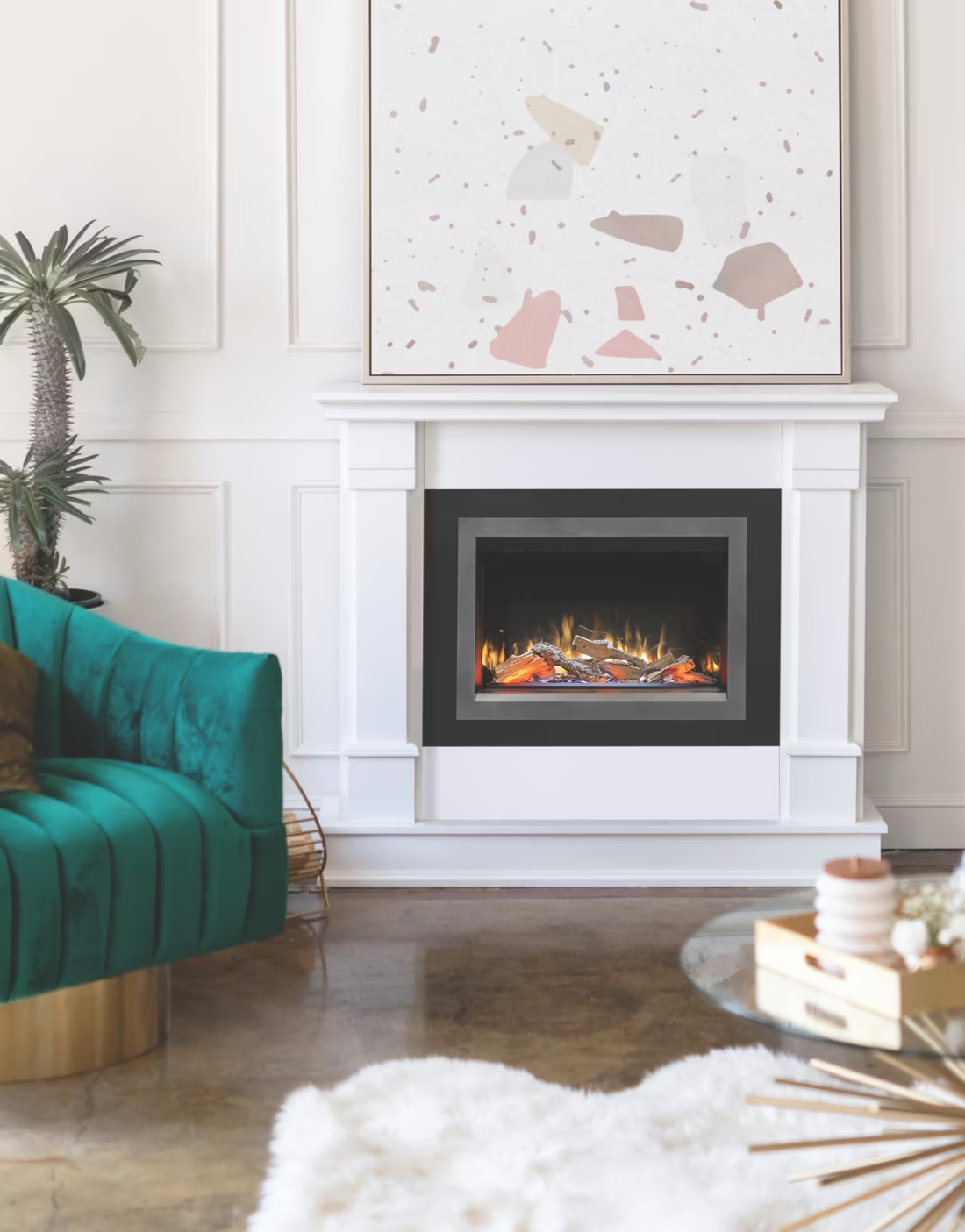
That's exactly the gap electric fireplaces fill well here. A 120-volt plug-in insert or a hardwired 240-volt unit puts real, thermostat-controlled heat into one room—a bunkhouse, a lakeside sunroom, a bedroom addition—without running gas line, building a chimney, or breaking into a slab foundation. Electric heat is realistically a supplement to a home's furnace or wood stove rather than a whole-house solution; on Consumers Energy's residential rates, running resistance heat as the only source through a 7,456-HDD winter gets expensive fast. But for zone heating a specific room, converting a drafty old masonry fireplace you no longer want to feed wood into, or adding ambiance to a cottage that only sees weekend use, electric is often the simplest, least invasive option available.
Three steps. No salesperson until you're ready.
Tell us about your project
Your zip code, your situation, and the fuel you're leaning toward—or let the answers point you to one.
See what's actually available
The brands dealers within 100 miles genuinely carry—real options, never a catalog mirage.
Get your dealer & Project Guide
A trusted local dealer, plus the free Project Guide & Parts List that names every component of the job.
Frequently Asked Questions
How much does an electric fireplace installation cost in Iosco County?
Plug-in electric fireplace inserts and mantels typically run $200 to $700 installed—most just need an existing outlet and a few hours of a handyman's or electrician's time. Built-in linear electric fireplaces or units requiring a new dedicated 240-volt circuit cost more, usually $1,500 to $4,000, depending on framing, trim work, and whether an electrician has to run new wire from the panel. Some of the older cottages along the Tawas Bay shoreline still have fuse-box-era panels that need an upgrade before a larger unit can be added, which adds to the bill. A local dealer will give you a firm quote after seeing your panel and the room you want to heat.
What size electric fireplace do I need for a lake cottage?
Most electric fireplace heaters are rated around 1,500 watts, which comfortably supplements heat in a 400 to 1,000 square foot space depending on ceiling height and insulation. Older Iosco County cottages with low ceilings, single-pane windows, and minimal wall insulation lose heat faster, so size toward the upper end of that range if you're heating anything more than a single small room. Given an average winter low of 13°F and 7,456 heating degree days, don't expect an electric fireplace to carry a whole cottage on its own—it's meant to take the edge off a specific room while your furnace, propane heater, or wood stove handles the rest of the house.
Do I need a permit to install an electric fireplace in Iosco County?
A simple plug-in unit generally doesn't require a permit since it's using an existing outlet. If your installer needs to run a new dedicated circuit for a hardwired 240-volt unit, that work requires an electrical permit—inside Tawas City or East Tawas city limits that goes through the city, and in unincorporated areas around Whittemore, Hale, or Oscoda Township it goes through the county. Most licensed electricians who install these units pull the permit as part of the job, so it's rarely something you have to coordinate yourself.
What's the difference between an electric fireplace, insert, and mantel?
An electric insert is a self-contained heater-and-flame unit sized to slide into an existing masonry fireplace opening or a built-in wall cutout—it's the most common choice for converting an old wood-burning fireplace you no longer want to feed. A mantel package pairs that same insert with a surrounding cabinet or frame, so it works as a standalone furniture piece in a room with no existing fireplace. A built-in electric fireplace is framed into a wall during a remodel, similar to how a gas unit would be installed, but without any venting to worry about. For most Iosco County homes with an existing masonry opening, an insert is the simplest and least expensive route.
Can an electric fireplace be my primary heat source in a climate this cold?
Not economically, and it's worth being honest about that. Iosco County's 7,456 heating degree days and 13°F average winter low mean a home needs a real heating system—propane furnace, forced-air electric, or a wood stove—running through the winter. Electric fireplaces put out real heat, but resistance heating at Consumers Energy's residential rates is one of the more expensive ways to heat a whole home over a long Michigan winter. Where electric fireplaces earn their keep is zone heating: taking the chill off a bedroom, sunroom, or bunkhouse without running the whole-house system harder than it needs to.
What's the best electric fireplace for a cold-climate cottage?
Look for units with a full-power 1,500-watt heater and a built-in thermostat, rather than ambiance-only models with weak or no heat output—brands like Dimplex and Napoleon make electric inserts and mantels sized for real supplemental heat rather than just flame effect. For a cottage that only gets used on weekends, a unit with a remote and programmable timer lets you warm a room quickly on arrival rather than running it constantly. If you're converting an existing wood-burning fireplace, ask your local dealer about insert models sized to your exact firebox opening so you don't lose the surround or mantel you already have.
Do electric fireplaces need venting like a wood or gas unit does?
No—electric fireplaces produce no combustion byproducts, so there's no chimney, flue, or vent pipe required at all. That makes them the simplest retrofit option for Iosco County cottages that were never built with a masonry chimney or gas line, and it also means no smoke, no creosote, and no indoor air quality tradeoffs to weigh. The only infrastructure question is electrical, not venting: does the room have (or need) a circuit sized for the unit you want.
Can I convert my old wood-burning fireplace to electric?
Yes, and it's a common project in this part of the county. Many Iosco County cottages were built with a masonry fireplace burning locally available oak, maple, birch, or ash, but current owners don't want the firewood handling, ash cleanup, or chimney maintenance that comes with it. An electric insert sized to your existing firebox opening slides in, plugs into (or gets wired to) a nearby outlet, and keeps the look of your mantel and surround while eliminating the need to burn anything or maintain the flue. It's a straightforward weekend project for most local dealers and doesn't require touching the chimney structure itself.
Electric vs. pellet stove—which makes more sense for my cottage?
An electric fireplace is simpler to live with—no fuel to store, no hopper to fill, no auger or exhaust to maintain, and no combustion byproducts. A pellet stove, using pellets from suppliers like Indeck Energy Services, Lignetics, or Somerset Pellet Fuel, puts out considerably more heat and can genuinely serve as a home's primary or backup heat source. The catch is that pellet stoves also need electricity to run their auger and blower, so neither option keeps working through a power outage the way a wood stove does. For a cottage where you mainly want clean, low-maintenance ambiance and light supplemental heat, electric is the easier choice. For a home where you want serious heat output and don't mind managing a fuel hopper, pellet is worth a look.
Can I put a TV above my fireplace?
Yes—with an asterisk. Fireplaces are hot and TVs don't like heat. Either put a mantel between them to deflect rising warmth, or choose a fireplace with heat-management technology that creates a cool zone on the wall above—the wall stays around 125 degrees, barely warm, while the room still gets full heat. If you like clean lines and don't want a mantel, heat management is the answer.
Does an electric fireplace need a vent or chimney?
No—that's its superpower. An electric fireplace needs a wall and an outlet, period. No vent pipe, no gas line, no clearances to design around, which is why it works in bedrooms, offices, apartments, and walls where venting a gas or wood unit would be impractical or impossible. Installation is typically the simplest and least expensive of any fireplace type.
What is an in-home preview and do I need one?
It's a visit where a hearth professional measures your space, confirms the model you picked actually works in your home, and walks the specs—framing, gas line, venting, finish work—before anything is ordered. Some details you just can't know until you see the house. Never make a down payment without one; it's the single most-skipped step that burns buyers.
Can I install a fireplace myself?
If you're putting a fire in your house on purpose, it's best to work with an expert. Unless you're genuinely experienced in framing, gas line, vent pipe, and the national code on clearances to combustibles, have a professional do it—and ideally the same company that sells you the fireplace, so warranty, service, and liability all live under one roof.
Stove and Fireplace Dealers in Iosco County
Find your electric fireplace in Iosco County.
Tell us a bit about your cottage or home and we'll match you with the right electric fireplace, insert, or mantel—plus a free Project Guide & Parts List with the exact parts, any electrical circuit requirements, and your recommended local dealer.
Find Your Fireplace →