
Real heat and ambiance for Genesee County's long winters.
With a long, cold heating season and winter lows averaging 16°F, Genesee County homes lean on layered heat sources. An electric fireplace adds supplemental warmth and zone heating without venting or gas lines—matched to a trusted local dealer who installs it right.
Every Project Starts From One of These Five Situations
No venting, no gas line, no chimney—just plug in and go.
Genesee County sits in climate zone 5A, with winters that stretch from late fall well into March and average lows around 16°F. That's a similar heating load to Madison, Wisconsin—enough cold to make supplemental heat genuinely useful in bedrooms, converted garages, and additions that central HVAC struggles to keep even. For homes in Flint, Grand Blanc, Fenton, Davison, and the county's smaller townships, electric fireplaces have become a practical option precisely because they skip the venting and gas-line work that wood or gas units require.
Genesee County has no notable air quality restrictions on hearth appliances, so the appeal of electric here isn't regulatory—it's simplicity and flexibility. Electric units plug into a standard outlet or, for larger built-ins, a dedicated 120V or 240V circuit, and install into a wall, mantel surround, or existing masonry opening in an afternoon rather than a multi-day project. For renters, condo owners, and homeowners in older Flint-area housing stock where adding a chimney or gas line isn't practical, electric is often the only realistic fireplace option—and modern units produce enough real heat output (typically 4,000-5,000 BTU) to genuinely take the edge off a cold room.
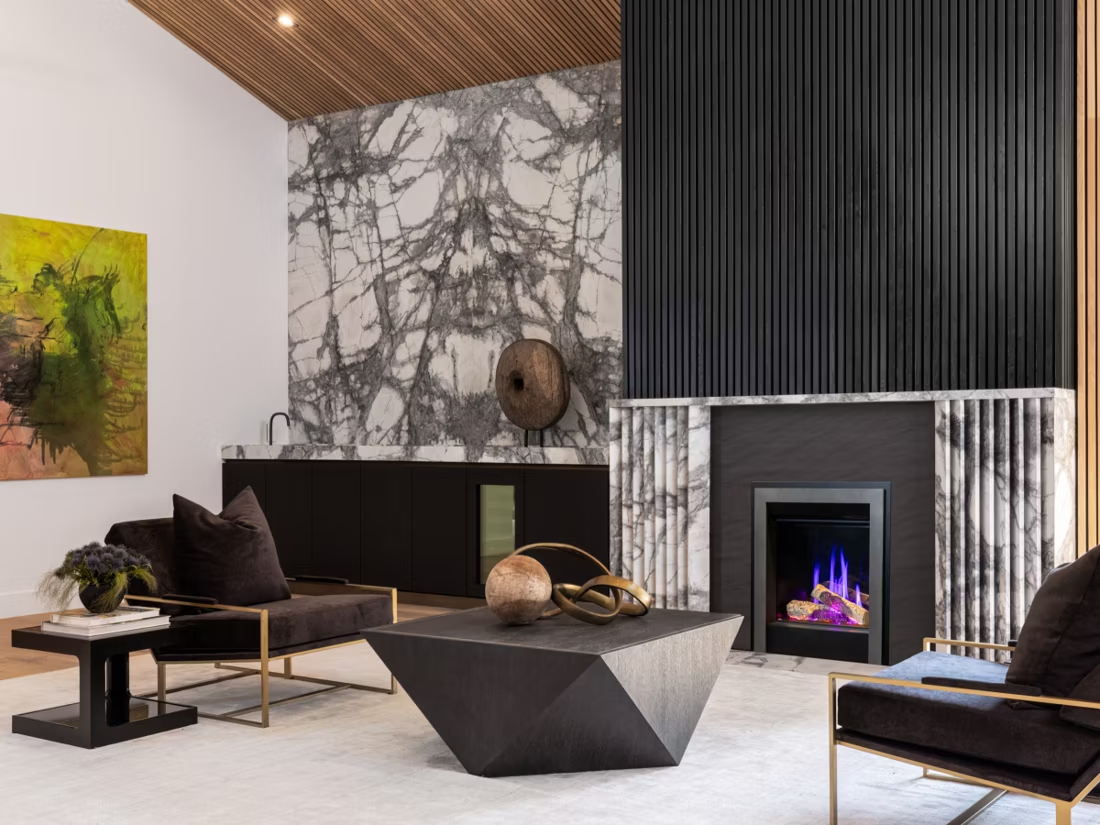
Three steps. No salesperson until you're ready.
Tell us about your project
Your zip code, your situation, and the fuel you're leaning toward—or let the answers point you to one.
See what's actually available
The brands dealers within 100 miles genuinely carry—real options, never a catalog mirage.
Get your dealer & Project Guide
A trusted local dealer, plus the free Project Guide & Parts List that names every component of the job.
Frequently Asked Questions
How much does an electric fireplace installation cost in Genesee County?
A typical electric fireplace or insert installation in Genesee County runs $400 to $1,200. Plug-in units at the low end need no electrical work at all—just clearance and a wall outlet. Built-in units or larger inserts that require a dedicated circuit run higher, since you're paying an electrician to run new wiring, sometimes through finished walls or joist bays in older Flint and Burton-area homes. Recessed or wall-mounted units in new construction or a remodel tend to land in the middle of that range once framing and trim work are included.
Do I need a permit to install an electric fireplace in Genesee County?
Most plug-in electric fireplaces don't require a permit since there's no new wiring or structural change involved—you're using an existing outlet. If a licensed electrician is running a new dedicated circuit for a built-in unit, that electrical work typically requires a permit through your local municipal building department (Flint, Grand Blanc Township, Fenton, and the other jurisdictions across the county each handle their own permitting). A qualified installer or electrician will know when a permit applies and pull it as part of the job.
Will an electric fireplace actually heat a room, or is it just for looks?
Modern electric fireplaces do produce real heat—most units are rated around 4,000-5,000 BTU, comparable to a small space heater, and can noticeably warm a single room of 200-400 square feet. They won't replace a furnace in a Genesee County winter, where lows average 16°F and the heating season runs long and cold, but they're genuinely useful as zone heat for a bedroom, den, or converted garage where running the furnace harder isn't efficient. Many units let you run the flame visual with the heater off, which is worth knowing if you want ambiance without the electric bill bump.
Can I convert my existing wood or gas fireplace to electric?
Yes—electric inserts are designed to slide into an existing masonry fireplace opening or zero-clearance firebox, and it's one of the simpler conversions available. There's no venting to cap or remove in most cases, since the insert doesn't produce combustion byproducts. This is a common project for older homes in Flint and the surrounding townships with fireplaces that were bricked up, damaged, or simply never used because the chimney needs expensive repair—the electric insert gives back the look and some heat without touching the chimney.
What's the difference between a plug-in electric fireplace and a built-in unit?
A plug-in electric fireplace is a freestanding or wall-mount unit that runs off a standard 120V outlet—no electrician needed, and you can move it if you relocate. A built-in unit is designed to be recessed into a wall or custom surround, often wired to a dedicated circuit for higher heat output, and installed by an electrician alongside finish carpentry. For renters or anyone who wants flexibility, plug-in makes sense. For a permanent focal point in a Genesee County living room remodel, a built-in unit generally looks more intentional and performs a bit better on heat output.
How does electric compare to wood heat for a Genesee County home?
Genesee County has plenty of oak, maple, birch, and ash available for wood burning, and wood remains a standard heating choice here, especially as backup heat during power outages. Electric fireplaces can't provide that outage backup since they require power to run, which matters in a county that sees its share of winter ice storms and downed lines. Where electric wins is simplicity and cleanliness: no ash, no creosote, no chimney maintenance, and no wood storage. Many homeowners here use wood or gas as their primary or backup heat source and add electric units in secondary rooms where running a flue isn't practical.
Does an electric fireplace increase my electric bill much?
Running an electric fireplace's heater on high typically costs somewhere in the range of 10-20 cents per hour depending on your local electric rate and the unit's wattage, similar to running a space heater. Most homeowners in Genesee County use them for a few hours in the evening in a single room rather than as all-day heat, which keeps the added cost modest. Running just the flame effect with the heater off uses only a few watts, essentially negligible on a monthly bill.
Are electric fireplaces a good fit for renters or condos in Genesee County?
Yes—this is one of the more common reasons homeowners and renters in Flint's apartment and condo stock choose electric. Plug-in units require no permit, no venting, and no permanent alteration to the unit, which makes them one of the only fireplace options available where a landlord or HOA won't allow chimney or gas line work. Wall-mount units mount with brackets that can be removed without patching beyond a few screw holes, which matters if you're not planning to stay long-term.
Electric vs. gas—which makes more sense for my Genesee County home?
Gas fireplaces deliver higher heat output, real flame, and (with the right ignition system) can run during a power outage—a real advantage in a county where winter storms sometimes take down lines. Electric fireplaces install faster and cheaper, need no gas line or venting, and work in spaces where gas simply isn't an option, like an upper-floor bedroom or a rental unit. For a primary living space where you want serious supplemental heat, gas is usually the stronger choice in this climate. For a bedroom, basement, or secondary room where ease of installation matters more than max BTU output, electric is often the better fit.
Can I put a TV above my fireplace?
Yes—with an asterisk. Fireplaces are hot and TVs don't like heat. Either put a mantel between them to deflect rising warmth, or choose a fireplace with heat-management technology that creates a cool zone on the wall above—the wall stays around 125 degrees, barely warm, while the room still gets full heat. If you like clean lines and don't want a mantel, heat management is the answer.
Does an electric fireplace need a vent or chimney?
No—that's its superpower. An electric fireplace needs a wall and an outlet, period. No vent pipe, no gas line, no clearances to design around, which is why it works in bedrooms, offices, apartments, and walls where venting a gas or wood unit would be impractical or impossible. Installation is typically the simplest and least expensive of any fireplace type.
What is an in-home preview and do I need one?
It's a visit where a hearth professional measures your space, confirms the model you picked actually works in your home, and walks the specs—framing, gas line, venting, finish work—before anything is ordered. Some details you just can't know until you see the house. Never make a down payment without one; it's the single most-skipped step that burns buyers.
Does a fireplace add value to my home?
On average, a fireplace adds back to the home about the same amount you spent installing it. Add the monthly savings from heating the rooms you actually use instead of the whole house—often hundreds of dollars a year—and the value case is strong before you even count what a fire does for how your family uses the room.
Stove and Fireplace Dealers in Genesee County
Listings include WhyFire partner dealers, dealers we have verified as authorized for the brands we recommend, and established local businesses that carry hearth products. Every listing shows which one it is. The ones marked Preferred run on WhyFire's software, so they can show you real pricing and book your appointment right here. No manufacturer pays for placement. How we verify dealers →
Macsood’s Pool & Patio
Autumn-Glo Fireplace Studio
Macksood's
Cjw Chimney & Fireplace
Pine Tree Heating & Ac
Get matched with an electric fireplace dealer in Genesee County.
Tell us about your space and we'll put together a free Project Guide & Parts List—the right electric fireplace or insert for your room, plus a trusted local dealer to install it.
Find Your Fireplace →