
Real Flame Look, No Chimney, No Gas Line.
Zone heat and ambiance for Genesee County homes—install in an afternoon, plug into a standard outlet, and connect with a trusted local dealer.
Every Project Starts From One of These Five Situations
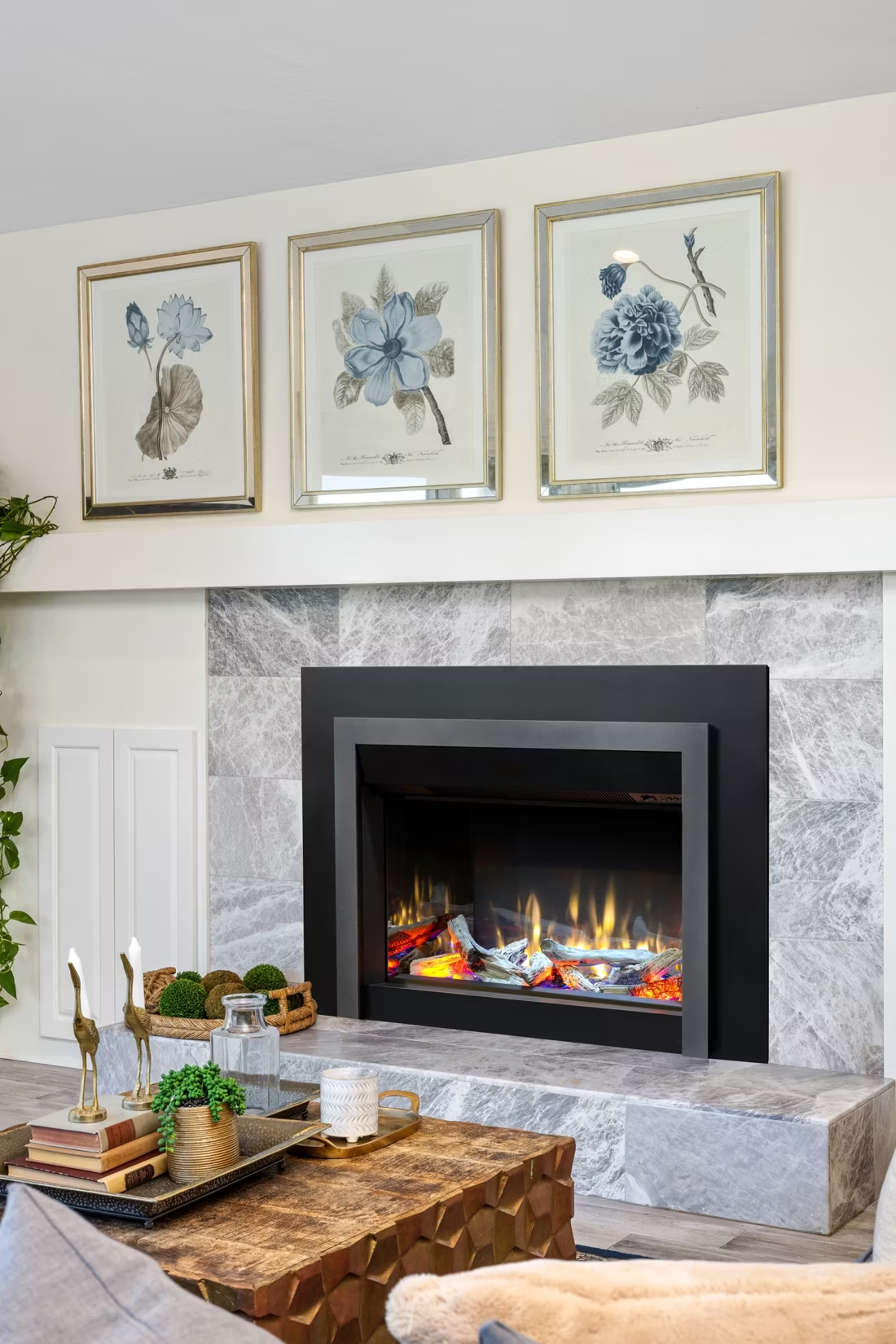
The easiest fireplace to add to a Genesee County home.
Swartz Creek sits in mid-Michigan's Genesee County, where winters average lows near 16°F and the area logs a heating season on par with Madison, Wisconsin. That's a real Midwest cold season, but it isn't a climate where every house needs, or can easily add, a wood-burning chimney or a new gas line. Plenty of homes around Swartz Creek—ranches off Miller Road, newer builds near Elms Road, condos without existing hearths—simply never had a fireplace, which is exactly the gap electric units fill.
An electric fireplace or insert needs no venting and no chimney, and in most cases skips the combustion permitting that wood and gas installs require—just a wall, a standard outlet, and sometimes a dedicated 20-amp circuit for a larger unit. That makes it the fastest fireplace project to add to a bonus room, finished basement, or bedroom, and a practical retrofit for older Genesee County homes converting an unused masonry firebox. Consumers Energy serves Swartz Creek at a residential rate of about 20.1 cents per kWh—above the national average—so most local owners run electric fireplaces as supplemental zone heat rather than a whole-house furnace replacement, saving on the coldest stretches by heating just the room they're in.
Three steps. No salesperson until you're ready.
Tell us about your project
Your zip code, your situation, and the fuel you're leaning toward—or let the answers point you to one.
See what's actually available
The brands dealers within 100 miles genuinely carry—real options, never a catalog mirage.
Get your dealer & Project Guide
A trusted local dealer, plus the free Project Guide & Parts List that names every component of the job.
Frequently Asked Questions
How much does it cost to install an electric fireplace in Swartz Creek?
Costs vary widely by unit type. A plug-in electric insert that slides into an existing masonry firebox typically runs $150 to $600 and can often be self-installed. A wall-mount linear unit with trim and mounting hardware runs $800 to $2,500. A built-in electric fireplace with a custom surround, requiring an electrician to run a dedicated circuit, typically lands between $2,500 and $5,000. Unlike wood or gas installs, there's no chimney or venting work to price in—the bulk of the cost is the unit itself and, for larger installs, electrical labor.
Do I need a permit to install an electric fireplace in Swartz Creek or Genesee County?
Usually not for the fireplace itself—there's no combustion appliance or venting to inspect the way there is with wood or gas units. If your installation requires a new dedicated electrical circuit (common for larger wall-mount or built-in models), an electrical permit may apply depending on the scope of the work, and a licensed electrician should pull it if needed. Plug-in units on an existing circuit generally require no permit at all, which is part of why electric is often the quickest fireplace project in Genesee County.
How much does it cost to run an electric fireplace on Consumers Energy rates?
At Consumers Energy's residential rate of roughly 20.1 cents per kWh, a typical 1,500-watt heater setting costs about $0.30 an hour to run, or around $7 for a full 24 hours of continuous heat. Most owners don't run the heater constantly, though—flame-only mode (no heat) draws under 100 watts, costing pennies per hour, which is how most Swartz Creek households actually use theirs outside of the coldest weeks. Used as supplemental zone heat in one room rather than whole-house heat, the operating cost stays modest even at Michigan's above-average electric rate.
Can I put an electric fireplace into an existing wood-burning fireplace opening?
Yes, and it's one of the most common electric fireplace projects in older Swartz Creek homes with an existing masonry firebox. An electric insert slides into the opening, plugs into an outlet or gets hardwired, and delivers flame-effect ambiance and zone heat without chimney maintenance, ash cleanup, or an annual sweep. It's typically the fastest and least expensive fireplace conversion available, and it works whether or not the old chimney is still structurally sound for burning.
What's the difference between an electric insert, a wall-mount, and a mantel package?
An insert is built to fit into an existing masonry firebox, replacing a wood-burning setup. A wall-mount linear unit hangs flat against a wall like a television, which fits the open-concept layouts common in newer Genesee County builds. A mantel package pairs the electric unit with a freestanding cabinet—no existing fireplace required, and it's portable, which makes it a popular choice for renters in and around Swartz Creek who want to take it with them when they move.
Will an electric fireplace actually heat a room during a Michigan winter, or is it just for looks?
Most electric fireplaces include a roughly 1,500-watt heating element rated for 400 to 1,000 square feet, which is enough to noticeably warm a bedroom, den, or basement rec room during a Genesee County cold snap. But with average winter lows around 16°F, it's supplemental heat—not a substitute for the furnace on the coldest days. The flame effect runs independently of the heater on most models, so plenty of Swartz Creek owners run it for ambiance alone in fall and spring and switch on the heat setting once temperatures drop.
Electric vs. gas fireplace—which is right for my Swartz Creek home?
Gas delivers more real heat output and can serve as genuine supplemental heating for a whole room, but it requires a gas line and venting, pushing install costs higher. Electric skips the venting and gas work entirely, installs in a fraction of the time, and costs less upfront, though running it as primary heat costs more per BTU at Consumers Energy's rate than burning gas. For homes in established Swartz Creek neighborhoods already plumbed for natural gas, a gas insert may be worth the extra investment. For homes without gas service, rentals, or a room like a basement office or spare bedroom where ambiance and light heat are the goal, electric is usually the simpler, faster fit.
Will my electric fireplace work during a power outage?
No—electric fireplaces need power to run, both for the heater and the flame effect. Genesee County sees occasional winter outages from ice storms, and unlike a wood stove or a gas fireplace with battery-backup ignition, an electric unit goes dark along with everything else in the house. If backup heat during outages matters to you, it's worth asking a local dealer about pairing an electric fireplace in one room with a wood or gas option elsewhere in the home.
What should I look for in an electric fireplace for Swartz Creek's climate?
Confirm the unit has a true 1,500-watt heater—many budget models top out at 750 watts and won't do much on a cold Genesee County evening. A built-in thermostat helps regulate cycling instead of running full-blast constantly. Since you'll likely run flame-only mode for a good part of the year, realistic flame technology is worth paying up for. Dimplex, Napoleon, and Amantii are commonly stocked by hearth dealers serving the mid-Michigan area, and a local dealer can match wattage and unit size to your specific room.
Can I put a TV above my fireplace?
Yes—with an asterisk. Fireplaces are hot and TVs don't like heat. Either put a mantel between them to deflect rising warmth, or choose a fireplace with heat-management technology that creates a cool zone on the wall above—the wall stays around 125 degrees, barely warm, while the room still gets full heat. If you like clean lines and don't want a mantel, heat management is the answer.
Do electric fireplaces actually produce heat?
Yes—most put out around 4,800–5,000 BTUs from a standard outlet, which comfortably warms a bedroom, office, or den as a comfort-zone heater. What they won't do is carry a whole house the way wood, gas, or pellet can. Think of electric as ambiance-first with honest supplemental heat: flames on with no heat in July, flames plus warmth in January.
Can I install a fireplace myself?
If you're putting a fire in your house on purpose, it's best to work with an expert. Unless you're genuinely experienced in framing, gas line, vent pipe, and the national code on clearances to combustibles, have a professional do it—and ideally the same company that sells you the fireplace, so warranty, service, and liability all live under one roof.
What is an in-home preview and do I need one?
It's a visit where a hearth professional measures your space, confirms the model you picked actually works in your home, and walks the specs—framing, gas line, venting, finish work—before anything is ordered. Some details you just can't know until you see the house. Never make a down payment without one; it's the single most-skipped step that burns buyers.
Nearby Dealers
Hearth shops serving Swartz Creek and the surrounding area. Every listing shows whether it is a WhyFire partner, a dealer we have verified as authorized for the brands we recommend, or a local business carrying hearth products. No manufacturer pays for placement. How we verify dealers →
Macksood's
Macsood’s Pool & Patio
Autumn-Glo Fireplace Studio
Cjw Chimney & Fireplace
Jw Fireplace
Electric Service in Swartz Creek
An electric fireplace's heater draws about 1,500 watts—pennies per hour at local rates.
Consumers Energy Co
Find your electric fireplace in Swartz Creek.
Tell us about your room and we'll match you with the right electric fireplace or insert, hand you a free Project Guide & Parts List, and connect you with a trusted local Genesee County dealer.
Find Your Fireplace →