
Real Fireplace Warmth, Without the Chimney.
Zone heat and ambiance for Argentine Township homes—no venting, no wood stacking, no gas line. Find the right unit and get matched with a trusted local dealer.
Every Project Starts From One of These Five Situations
Supplemental heat and ambiance for mid-Michigan homes.
Argentine Township sits in Genesee County at 873 feet, with winters that average a low of 15°F and a long, demanding heating season—in the same range as Minneapolis, MN. Most homes here already lean on a furnace, propane, or a wood stove fed by the oak, maple, birch, and ash that fill the wooded lots around Lobdell Lake and Byram Lake. Electric fireplaces don't compete with that primary heat source—they fill a different role: warming a finished basement, a lake cottage, a sunroom addition, or a family room without running new ductwork or cutting a hole for a flue.
Consumers Energy serves Argentine Township, and at $0.2013 per kWh, the residential rate runs above the national average—enough that running an electric fireplace as your only heat source for a whole home gets expensive fast. It's also worth knowing that rural power lines through wooded township roads see their share of ice and wind outages each winter, and an electric fireplace, unlike a wood stove, goes dark the moment the power does. For zone heating, ambiance, and safety in a home that already has a working primary heat source, though, electric fireplaces are a genuinely good fit—no chimney, no combustion, no annual sweep.
Three steps. No salesperson until you're ready.
Tell us about your project
Your zip code, your situation, and the fuel you're leaning toward—or let the answers point you to one.
See what's actually available
The brands dealers within 100 miles genuinely carry—real options, never a catalog mirage.
Get your dealer & Project Guide
A trusted local dealer, plus the free Project Guide & Parts List that names every component of the job.
Frequently Asked Questions
How much does an electric fireplace installation cost in Argentine?
A plug-in freestanding electric fireplace or a basic insert into an existing fireplace opening typically runs $300 to $2,500 installed, since most plug into a standard outlet with no electrical work required. A built-in wall-mounted or linear unit that needs a dedicated circuit, recessed wiring, and a custom surround runs higher—usually $1,500 to $4,000 once an electrician is involved. Older farmhouses in the township with existing masonry fireplace openings are often good insert candidates; additions and finished basements without an existing hearth usually go the wall-mount route.
Can an electric fireplace heat my whole house?
Not economically, no. With a long, demanding heating season and a Consumers Energy rate of about $0.2013 per kWh, running electric resistance heat as your primary source through an Argentine winter costs far more than propane or wood. Most electric fireplaces top out around 5,000 BTU of supplemental heat—enough to take the chill off one room, not enough to replace a furnace. Treat it as zone heat: warm the room you're in, and let your furnace or wood stove handle the rest of the house.
How is an electric fireplace different from a space heater?
Most electric fireplaces use the same 1,500-watt resistance element as a standard space heater, so the heat output and running cost are comparable. What you're paying extra for is the flame effect, the built-in mantel or surround, thermostat control, and the fact that it looks like a permanent fixture rather than a plug-in appliance shoved in a corner. For a family room or lake cottage where appearance matters as much as warmth, that difference is often worth it.
Do I need a permit for an electric fireplace in Argentine Township?
A plug-in freestanding or insert unit that runs off an existing outlet generally doesn't require a permit. A built-in unit that needs a new dedicated circuit does typically require an electrical permit, since that work has to be pulled and inspected as electrical work rather than a fireplace installation. Local retailers and licensed electricians handling the wiring can confirm requirements with the Genesee County or Argentine Township building department before work starts.
What type of electric fireplace fits my home best?
Older homes in the township with an existing wood-burning fireplace opening are often good candidates for an electric insert, which slides into that opening and reuses the mantel and surround you already have. Additions, finished basements, and rooms without an existing hearth usually do better with a wall-mounted linear unit, which needs no chimney or opening at all. For a lake cottage near Lobdell or Byram Lake going for a cabin look, a freestanding stove-style electric unit can mimic a wood stove's silhouette without the flue.
Will my electric fireplace work if the power goes out?
No—electric fireplaces need power to run, and township power lines through wooded areas see outages during winter ice and wind events, sometimes for a day or more. If backup heat during an outage matters to you, that job is better handled by a wood stove burning local oak or maple, which needs no electricity at all. Plenty of Argentine homes run both: a wood stove for storm backup and self-sufficiency, an electric fireplace for everyday ambiance and zone heat.
What does it actually cost to run an electric fireplace here?
At the Consumers Energy residential rate of $0.2013 per kWh, a typical 1,500-watt electric fireplace costs about 30 cents an hour to run on full heat—roughly $1.50 for a five-hour evening, or about $9 for a full week of nightly use. Most units let you run the flame effect alone without the heater engaged, which draws only a few watts and costs pennies a month—a common choice once the room is already warm.
Electric vs. wood—which is right for my Argentine home?
Wood, split from the oak, maple, birch, and ash common around Genesee County, delivers real heat output, works with no electricity, and can carry a home through a multi-day power outage—but it means stacking, hauling, and an annual chimney sweep. Electric offers instant on-off operation, zero maintenance, no combustion byproducts, and safe use in a rental or lake cottage, but it depends entirely on grid power and costs more per BTU at local rates. Most Argentine households that want both end up with a wood stove for backup heat and self-sufficiency, and an electric unit for daily ambiance in a room the wood stove doesn't reach.
How much maintenance does an electric fireplace need?
Very little. There's no chimney to sweep, no ash to haul, and no annual gas-line inspection required. Occasional dusting of the unit, an LED bulb replacement every several years if the flame effect dims, and a check of the cord and outlet for wear covers most of it. That low-maintenance profile is a big part of why electric units work well in second homes and rental cottages around the township's lakes, where nobody's checking on the unit weekly.
Can I put a TV above my fireplace?
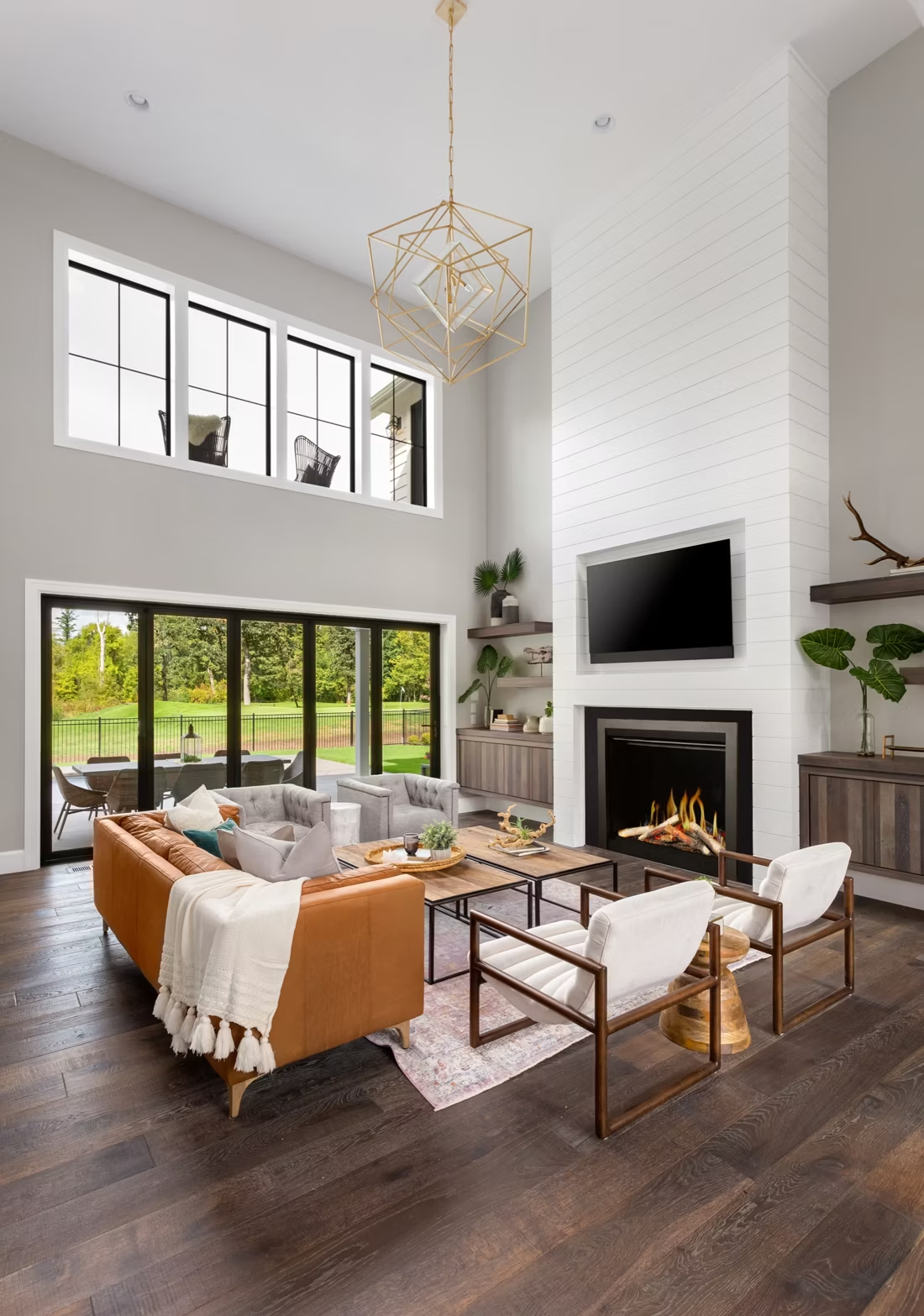
Yes—with an asterisk. Fireplaces are hot and TVs don't like heat. Either put a mantel between them to deflect rising warmth, or choose a fireplace with heat-management technology that creates a cool zone on the wall above—the wall stays around 125 degrees, barely warm, while the room still gets full heat. If you like clean lines and don't want a mantel, heat management is the answer.
Do electric fireplaces actually produce heat?
Yes—most put out around 4,800–5,000 BTUs from a standard outlet, which comfortably warms a bedroom, office, or den as a comfort-zone heater. What they won't do is carry a whole house the way wood, gas, or pellet can. Think of electric as ambiance-first with honest supplemental heat: flames on with no heat in July, flames plus warmth in January.
Can I install a fireplace myself?
If you're putting a fire in your house on purpose, it's best to work with an expert. Unless you're genuinely experienced in framing, gas line, vent pipe, and the national code on clearances to combustibles, have a professional do it—and ideally the same company that sells you the fireplace, so warranty, service, and liability all live under one roof.
Should the dealer who sells my fireplace also install it?
Ideally, yes. A fireplace project involves vent pipe, gas line, electrical, and often tile or stone. Hire three or four separate trades and you own the liability and the game of telephone between them. One company selling and installing means one accountable party, start to finish—ask about factory training, on-time completion records, and what happens if an inspection fails.
Nearby Dealers
Hearth shops serving Argentine and the surrounding area. Every listing shows whether it is a WhyFire partner, a dealer we have verified as authorized for the brands we recommend, or a local business carrying hearth products. No manufacturer pays for placement. How we verify dealers →
Cjw Chimney & Fireplace
Jw Fireplace
Autumn-Glo Fireplace Studio
Lighting Hearth & Home By Gross Electric
Fireside Hearth & Home- Brighton
Brighton Stone & Fireplace
Macksood's
Macsood’s Pool & Patio
Nature’s Flame
Electric Service in Argentine
An electric fireplace's heater draws about 1,500 watts—pennies per hour at local rates.
Consumers Energy Co
Find your electric fireplace in Argentine.
Tell us a bit about your home and we'll put together a free Project Guide & Parts List—the right electric unit for your space, matched with a trusted local dealer who can install it correctly.
Find Your Fireplace →