
Reliable pellet heat for the long Emmet County winter.
Emmet County sees a heating season on par with Duluth, Minnesota and winter lows averaging 15°F, with lake-effect snow off Little Traverse Bay stretching the season further than most of Michigan. Find the right pellet stove or insert and connect with a trusted local dealer.
Every Project Starts From One of These Five Situations
Consistent warmth without the wood pile.
Emmet County sits at the northern tip of Michigan's Lower Peninsula, wrapped by Lake Michigan and Little Traverse Bay, and covering communities from Petoskey and Harbor Springs down to Pellston and Alanson. At climate zone 6A with a heating load in the same range as Duluth, Minnesota, the county's winters run long, and lake-effect bands off the bay can dump snow well after inland Michigan has dried out. With a year-round population of roughly 10,600 that swells seasonally with second-home owners drawn to Petoskey and Harbor Springs, a lot of the housing stock here sits empty for stretches of the coldest months.
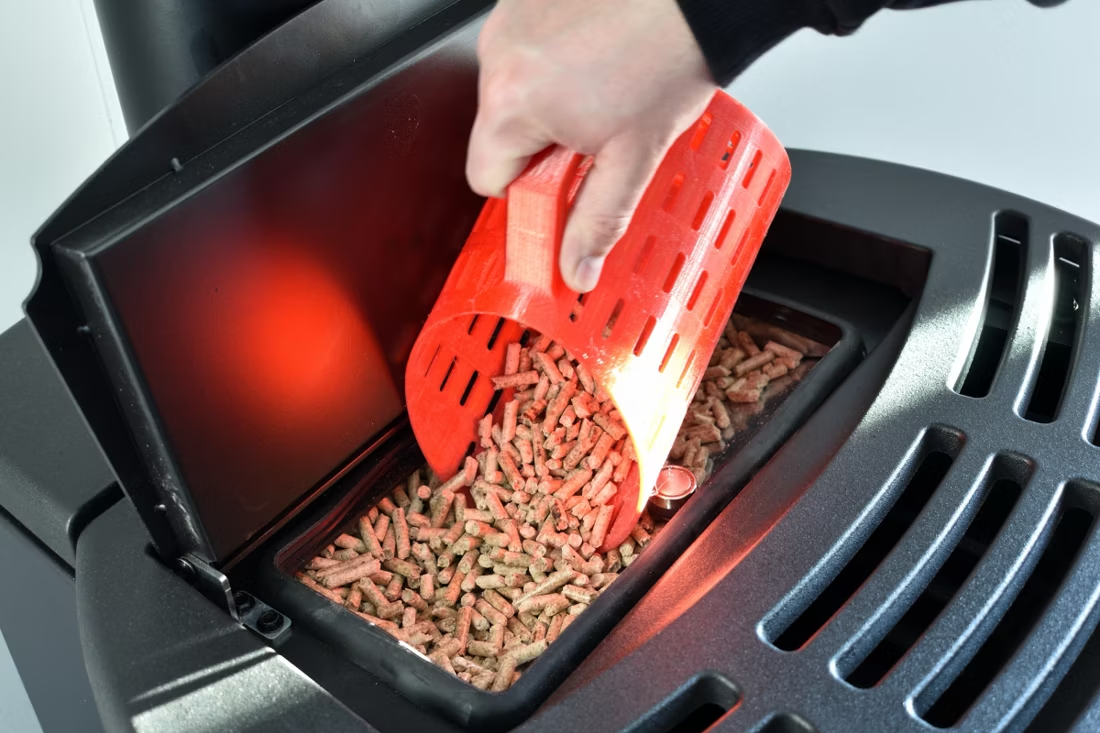
That combination—long heating seasons and homes that aren't always occupied—is exactly where pellet stoves earn their keep. Unlike a wood stove that needs oak, maple, birch, or ash split, stacked, and fed by hand, a pellet stove runs off a hopper and auger system you can set on a thermostat and walk away from. Regional pellet supply is solid here too, with Lignetics, Indeck Energy Services, and Somerset Pellet Fuel all distributing bagged pellets through dealers and hardware suppliers in the area, so keeping a stove fed through a full Emmet County winter doesn't mean chasing fuel from county to county.
Three steps. No salesperson until you're ready.
Tell us about your project
Your zip code, your situation, and the fuel you're leaning toward—or let the answers point you to one.
See what's actually available
The brands dealers within 100 miles genuinely carry—real options, never a catalog mirage.
Get your dealer & Project Guide
A trusted local dealer, plus the free Project Guide & Parts List that names every component of the job.
Frequently Asked Questions
How much does a pellet stove installation cost in Emmet County?
Most pellet stove installations in Emmet County run $3,000 to $6,000 all-in, including the unit, venting, and labor. Pellet stoves vent through a simple PL-rated pipe that can run horizontally through an exterior wall in most cases, which keeps installation costs well below a masonry chimney project for a comparable wood stove. Pellet inserts going into an existing fireplace opening tend to land in the middle of that range once the surround and venting adapter are factored in. Exact pricing depends on your dealer, the stove's hopper capacity, and whether new electrical work is needed for the auger and blower circuit—get a firm quote from a local installer after an in-home look at your setup.
What size pellet stove do I need for a home in Emmet County?
Sizing depends on square footage, insulation, and ceiling height, but Emmet County's cold, long heating season pushes most homeowners toward the middle-to-large end of the sizing chart even for modest floor plans. A stove rated for 1,200-1,800 square feet handles most year-round homes in Petoskey or Harbor Springs with typical insulation, while older lake cottages around the bay—often drafty, single-pane, and built for summer use—may need a larger unit or supplemental heat to stay comfortable through a stretch of single-digit nights. A local dealer can size the stove properly based on your home's actual heat loss rather than square footage alone.
Where do I get pellets, and how much should I store for winter?
Bagged hardwood pellets from brands like Lignetics and Somerset Pellet Fuel are available through hearth dealers and hardware suppliers across Emmet County, with Indeck Energy Services also supplying pellet fuel regionally. A typical home burning a pellet stove as primary heat through a full Emmet County winter—given the county's long, Duluth-caliber heating season—uses somewhere between 2 and 3.5 tons of pellets per season, depending on stove size and how much of the home it's heating. Pellets store best kept dry, off a concrete floor, and away from moisture; a garage or basement works, but avoid stacking bags directly against an exterior wall where condensation can wick through the packaging.
Pellet stove vs. wood stove—which makes more sense here?
Wood stoves burn cordwood split from local oak, maple, birch, or ash, work without electricity, and are the better choice if you want backup heat during a power outage—which lake-effect storms make more likely in Emmet County than in most of the state. Pellet stoves need electricity to run the auger and combustion blower, so a battery backup or generator matters if you're relying on one as primary heat. In exchange, pellet stoves are far less hands-on: no splitting, stacking, or hauling, more consistent thermostat-controlled output, and less ash to manage. For part-time residents in Petoskey or Harbor Springs who want to keep a home at a set temperature without checking on it constantly, pellet is usually the more practical fit.
Do I need a permit to install a pellet stove in Emmet County?
Yes—new pellet stove installations require a building permit through the Emmet County Building Department, and installations within city limits in Petoskey or Harbor Springs may go through the local municipal building office instead. Permitting covers the venting path, clearances to combustibles, and hearth pad requirements. Most local hearth dealers handle the permit application as part of the installation, so this is generally not something homeowners need to navigate on their own—but confirm with your installer that it's included before work starts.
How much maintenance does a pellet stove actually need?
Pellet stoves need more frequent light maintenance than wood stoves, but far less heavy work. Plan on emptying the ash pan every few days during regular use, cleaning the burn pot weekly to keep the auger feeding properly, and a full teardown cleaning of the venting and heat exchanger once a season—usually before the first cold snap in late fall. Given Emmet County's long burn season, stoves running daily from October into April will need that mid-season attention more than a stove used only occasionally. Most local dealers offer an annual service visit that covers the full cleaning and a safety check of the auger motor and blower.
What's a good pellet stove for Emmet County's climate?
With a heating season on par with Duluth, Minnesota and winter lows averaging 15°F, look for a pellet stove with a larger hopper capacity—60 to 130 pounds—so it can run overnight or for a couple of days unattended without refilling, which matters for the second-home owners common around Petoskey and Harbor Springs. Automatic ignition (no manual lighting) and a thermostat or remote control are worth prioritizing if the home sits empty for stretches, since you can set it and trust it to maintain temperature. Ask a local dealer which models they stock and service directly—parts availability and local service support matter more with pellet stoves than with simpler wood-burning units, since the auger, igniter, and blower are all mechanical components that eventually need attention.
When should I buy pellets and schedule installation before winter?
Order pellets and schedule any installation work by early fall in Emmet County—lake-effect snow off Little Traverse Bay can arrive well ahead of the calendar, and pellet supply from regional producers like Lignetics and Somerset Pellet Fuel tends to tighten as cold weather sets in across the Great Lakes region. Booking an installer in September or early October, before the seasonal rush, also gets you ahead of the wait times that build up once temperatures drop and everyone wants a working stove at the same time.
Is a pellet stove a good fit for a seasonal or vacation home?
Often, yes—a meaningful share of Emmet County's housing around Petoskey and Harbor Springs sits empty for stretches of the winter, and a pellet stove's thermostat control makes it easier to maintain a set temperature in an unattended home than a wood stove that needs to be fed by hand. The tradeoff is that pellet stoves need continuous power to run the auger and blower, so a home relying on one for freeze protection during absences should have a battery backup or small generator, since lake-effect storms in this part of Michigan do knock out power. Talk to a local dealer about battery backup options if the stove will be running unattended.
Why is a fireplace insert so efficient?
An insert does two things: it seals the chimney completely, so you stop losing air you already paid to heat, and it radiates warmth into the room through the firebox and glass. Most add a heat-exchange fan that pulls cool room air underneath, wraps it around the hot firebox, and pushes it back out warm. Your home is more efficient before you've even lit the first fire.
What does it take to replace an existing fireplace?
Fireplaces are like icebergs—bigger behind the wall than in front of it. Replacement means removing the surrounding tile or stone (the finish material laps onto the fireplace face), pulling the old unit, setting the new one in the same enclosure, and re-finishing the wall. A hearth professional can determine what's behind your wall without demolition during an in-home preview.
Does a fireplace add value to my home?
On average, a fireplace adds back to the home about the same amount you spent installing it. Add the monthly savings from heating the rooms you actually use instead of the whole house—often hundreds of dollars a year—and the value case is strong before you even count what a fire does for how your family uses the room.
Can I install a fireplace myself?
If you're putting a fire in your house on purpose, it's best to work with an expert. Unless you're genuinely experienced in framing, gas line, vent pipe, and the national code on clearances to combustibles, have a professional do it—and ideally the same company that sells you the fireplace, so warranty, service, and liability all live under one roof.
Stove and Fireplace Dealers in Emmet County
H2Oasis Inc / Fireside Hearth & Leisure Of Petoskey
Pellet Brands Stocked Around Emmet County
Manufacturers will point you to the nearest stocking dealer.
Find your pellet stove in Emmet County.
Tell us a bit about your home and we'll match you with the right pellet stove or insert, plus a free Project Guide & Parts List—the exact parts, including venting, and a trusted local dealer to install it.
Find Your Fireplace →