
Heat That Holds Up Through Emmet County Winters.
Wood, gas, pellet, and electric fireplace resources for Petoskey, Harbor Springs, and every township around Little Traverse Bay and the Straits—matched with a local hearth retailer who can actually get the job done before the lake-effect snow starts.
Every Project Starts From One of These Five Situations
Lake-effect winters along Little Traverse Bay.
Emmet County sits at the northern tip of Michigan's Lower Peninsula, wrapped by Lake Michigan on one side and the Straits of Mackinac on the other. With just over 10,600 residents spread across Petoskey, Harbor Springs, and a string of small townships, the county is rural at its core but sees heavy seasonal traffic from resort visitors who want a wood stove or gas fireplace running the moment they arrive. Climate zone 6A and roughly 7,788 heating degree days put Emmet County in the same range as Minneapolis for total heating load, with average winter lows around 15°F and heavy lake-effect snow off the bay adding to the burn. Hardwood is everywhere—oak, maple, birch, and ash from the county's forests supply the cordwood that's kept homes warm here for generations.
What you'll find on this hub: hearth retailers, service technicians, and fuel suppliers covering the whole county—from Petoskey and Harbor Springs down through Alanson, Pellston, Levering, Conway, and Cross Village. Pick your fuel below to see local dealers, real installation cost ranges, and recommended units for a lake-effect climate. Whether you're heating a year-round home in Petoskey or a seasonal cottage near Cross Village, this is the starting point.
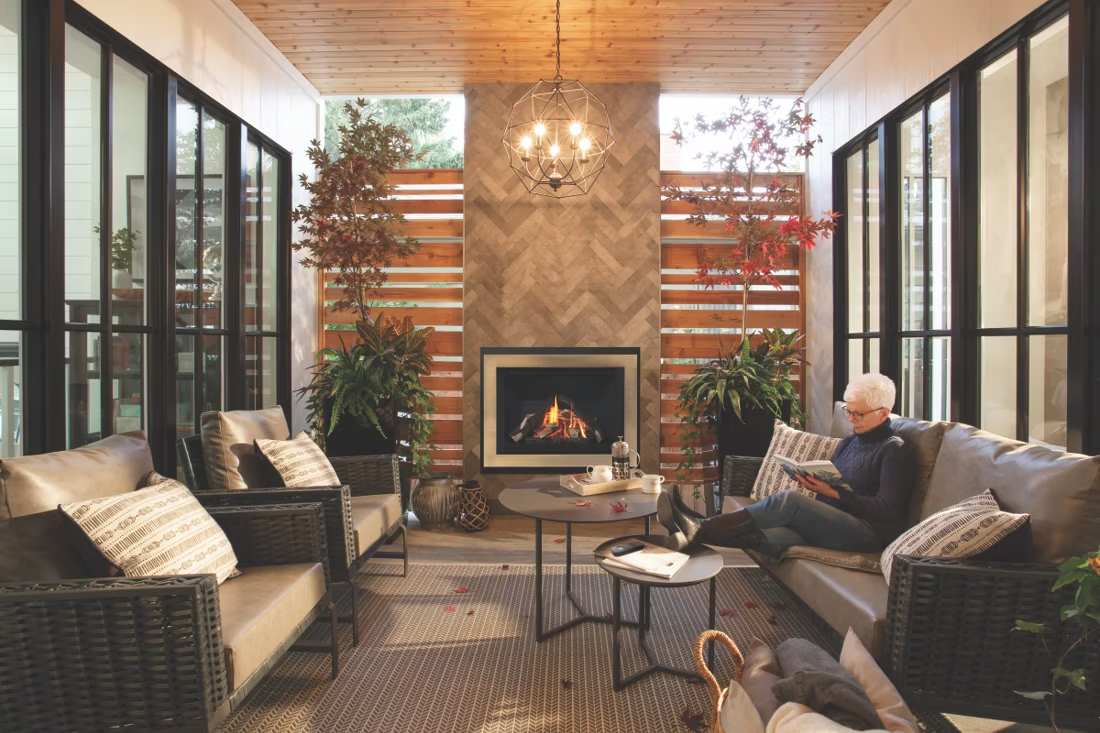
Four fuels. One honest answer for Emmet County.
Three steps. No salesperson until you're ready.
Tell us about your project
Your zip code, your situation, and the fuel you're leaning toward—or let the answers point you to one.
See what's actually available
The brands dealers within 100 miles genuinely carry—real options, never a catalog mirage.
Get your dealer & Project Guide
A trusted local dealer, plus the free Project Guide & Parts List that names every component of the job.
Frequently Asked Questions
Which fuel works best in Emmet County?
It depends on the home and how it's used. Wood remains a strong choice here—oak, maple, birch, and ash are all cut locally, and a catalytic or non-cat wood stove can carry a home through a January stretch of 15°F lows without straining a budget. Gas is popular in Petoskey and Harbor Springs where natural gas service reaches (SEMCO Energy serves much of this stretch of northern Michigan); outside those service areas, propane fills the gap for gas fireplaces and inserts. Pellet stoves are a solid middle option—regional supply from Indeck Energy Services, Lignetics, and Somerset Pellet Fuel keeps bags reasonably priced and available through the winter, and pellet units are useful for the many seasonal cottages around the bay that need heat without a woodpile to manage. Electric fireplaces show up mostly as supplemental heat in bedrooms, sunrooms, or resort rentals—not primary heat given the 7,788 heating degree day load. Most year-round Emmet County homes lean on wood or pellet as the main heater, with gas or propane in secondary living spaces.
Do I need a permit to install a fireplace in Emmet County?
In most cases, yes. New wood stoves, wood inserts, gas fireplaces, gas inserts, gas stoves, and pellet stoves typically require a building permit through your local township or the Emmet County building department, and wood-burning appliances need to meet current EPA 2020 NSPS emissions standards. Gas installations also need a licensed gas-fitter for the line work, whether you're on natural gas in Petoskey or propane out toward Pellston or Cross Village. Electric fireplaces generally skip the permit unless it's a built-in unit requiring new wiring or a dedicated circuit. Most local hearth retailers pull the permit as part of the installation, so you're rarely doing that paperwork yourself.
Are there air quality restrictions on wood burning in Emmet County?
No—Emmet County isn't a non-attainment area, and there are no mandatory burn curtailment days like you'd find in some western basin counties. That said, the lake-effect humidity here makes seasoned wood especially important: oak and ash burned before they're properly dried tend to smoke heavily and creosote up a chimney fast. New wood stove installs still need to meet EPA 2020 NSPS standards, and a well-seasoned, well-installed stove burns clean enough that smoke complaints are rare even in tighter Petoskey and Harbor Springs neighborhoods.
Can one local hearth retailer handle all four fuel types?
Many hearth retailers serving Emmet County carry three or four fuel types, since the customer base ranges from year-round wood burners in Alanson to seasonal cottage owners in Cross Village who want a plug-in electric unit for a weekend visit. Dealers based in Petoskey typically service the whole county and often stock wood, gas, and pellet units with electric fireplaces as a smaller side offering. If you're deciding between fuels, a multi-fuel dealer can show you working displays and walk through what actually fits your home's venting, your propane or natural gas access, and your firewood supply—rather than pushing whatever they happen to specialize in.
How does service work in rural areas of Emmet County?
Most chimney sweeps and gas techs are based in or near Petoskey and travel out to Harbor Springs, Alanson, Pellston, Levering, and Cross Village for service calls—expect a modest travel fee, often $40–$80, for the farther-out stops. Because Emmet County has a strong seasonal-home population, techs get busy fast in September and October as cottage owners close up for winter or open up for hunting season; booking your annual sweep or gas inspection early in the fall avoids the mid-winter scramble. If your property sits outside natural gas service, keep in mind propane delivery schedules can slip during heavy lake-effect snow events, so it's worth confirming your tank level before a cold snap rather than after.
What's the typical cost range for fireplace installation across all fuel types in Emmet County?
Costs vary by fuel and by how much chimney or venting work is involved. Wood stove or insert installation: roughly $4,000–$8,500 for a typical install, higher if new masonry chimney work is needed. Gas fireplace, insert, or stove: about $4,000–$10,000, with the low end for homes already on natural gas or an existing propane line, and the high end for new gas line runs. Pellet stove or insert: generally $4,000–$7,000 installed. Electric fireplace: $200–$3,000 for the unit itself, plus $300–$1,000 in labor for anything beyond a simple plug-in, such as a built-in or wall-mount with a dedicated circuit. Exact numbers depend on the retailer and the specific home—the county + fuel pages above break down local pricing in more detail.
Can a fireplace actually lower my heating bill?
Yes—by creating a comfort zone. A furnace heats every square foot of the house just to warm the one room you're in; a gas fireplace on low burns roughly a sixth of the gas a typical furnace does. Set the furnace around 55–60 degrees as a baseline, then heat the rooms your family actually uses. Families who heat this way commonly save $20–$60 a month.
How much should I budget for a fireplace?
For an average home—covering the fireplace, the vent pipe, and basic installation—a budget between $3,900 and $5,500 gives you a lot of options across wood, gas, and pellet. By the time you add finish work, gas line, and electrical, the average complete installation lands between $5,000 and $12,000 all-in. In a remodel or new build, a good rule is to put about 2.5% of the total project cost toward the fireplace.
Can I install a fireplace myself?
If you're putting a fire in your house on purpose, it's best to work with an expert. Unless you're genuinely experienced in framing, gas line, vent pipe, and the national code on clearances to combustibles, have a professional do it—and ideally the same company that sells you the fireplace, so warranty, service, and liability all live under one roof.
What is an in-home preview and do I need one?
It's a visit where a hearth professional measures your space, confirms the model you picked actually works in your home, and walks the specs—framing, gas line, venting, finish work—before anything is ordered. Some details you just can't know until you see the house. Never make a down payment without one; it's the single most-skipped step that burns buyers.
Stove and Fireplace Dealers in Emmet County
Listings include WhyFire partner dealers, dealers we have verified as authorized for the brands we recommend, and established local businesses that carry hearth products. Every listing shows which one it is. The ones marked Preferred run on WhyFire's software, so they can show you real pricing and book your appointment right here. No manufacturer pays for placement. How we verify dealers →
H20asis Inc
H2Oasis Inc / Fireside Hearth & Leisure Of Petoskey
Match with a hearth pro serving Emmet County.
Tell us about your home and we'll match you with a trusted local dealer and send a free Project Guide & Parts List—the exact parts, including the vent kit, and the dealer we recommend for your project in Emmet County.
Find Your Fireplace →