
Steady heat for Chippewa County's hardest winters.
With 8,456 heating degree days and winter lows averaging 8°F, Chippewa County sits among the coldest counties in the Lower 48. Find the right pellet stove for Sault Ste. Marie and the surrounding townships, and connect with a trusted local dealer.
Every Project Starts From One of These Five Situations
Consistent warmth, without splitting a single log.
Chippewa County occupies the eastern tip of Michigan's Upper Peninsula, wrapped by Lake Superior to the north and the St. Marys River along its border with Ontario. It's a Climate Zone 7 county—the same severe-cold designation you'd find in International Falls, Minnesota—with 8,456 heating degree days a year and a winter average low of just 8°F. For roughly 17,300 residents spread across Sault Ste. Marie, Kinross, Pickford, Rudyard, and the county's rural stretches, heating season runs long and the margin for a heating system that underperforms is thin.
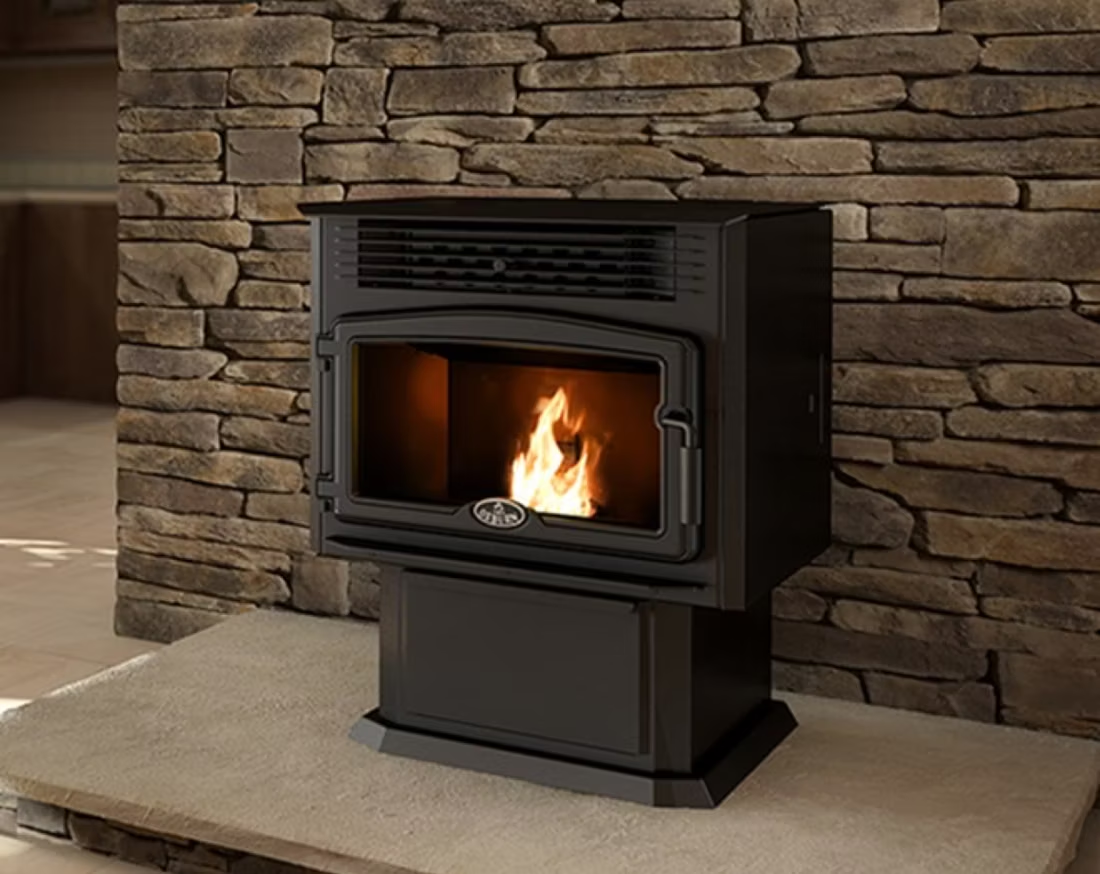
Pellet stoves have become a practical option here for the same reasons they work well anywhere winters run long: a hopper full of hardwood pellets burns clean, holds a consistent thermostat-controlled temperature overnight, and doesn't require splitting, stacking, or seasoning cordwood the way oak, maple, birch, and ash firewood does. Regional pellet suppliers—including Indeck Energy Services, Lignetics, and Somerset Pellet Fuel—keep the eastern U.P. reasonably well supplied, which matters in a county where the nearest big-box store can be a long drive. The one caveat worth planning for: pellet stoves run on electricity for the auger and blower, and Chippewa County sees its share of Lake Superior-driven ice and wind events that knock out power. A battery backup or small generator is worth budgeting alongside the stove itself.
Three steps. No salesperson until you're ready.
Tell us about your project
Your zip code, your situation, and the fuel you're leaning toward—or let the answers point you to one.
See what's actually available
The brands dealers within 100 miles genuinely carry—real options, never a catalog mirage.
Get your dealer & Project Guide
A trusted local dealer, plus the free Project Guide & Parts List that names every component of the job.
Frequently Asked Questions
How much does a pellet stove installation cost in Chippewa County?
Pellet stove installations typically run in the $3,000 to $6,500 range in a county like this, depending on the stove's hopper capacity, whether the venting runs through an exterior wall (the common setup for pellet units) versus an existing masonry chimney, and whether a hearth pad or floor protection needs to be added for code compliance. Larger, high-output units built for extended run times in severe-cold climates like Chippewa County's tend to sit at the upper end. Local dealers will give you a firm number after seeing your home, since travel distance to more rural parts of the county—Pickford, Rudyard, the areas east toward Drummond Island—can also factor into the final quote.
What size pellet stove do I need for my home in Chippewa County?
With 8,456 heating degree days, Chippewa County homes need more heating capacity than most of the country to hold a comfortable indoor temperature through January and February. As a rough guide: a small pellet stove (under 1,000 sq ft) suits a single room, cabin, or supplemental-heat setup; a medium stove (1,000–2,000 sq ft) covers most main living areas; and a large stove (2,000+ sq ft) can serve as primary heat for a well-insulated whole home. Older farmhouses and homes near Lake Superior with more exposure to wind should generally size up rather than down. A local dealer can size your space accurately during an in-home visit—this is one of the areas where a real assessment beats a general square-footage chart.
Where can I find a certified pellet stove installer near me?
Look for installers with NFI (National Fireplace Institute) certification, which covers proper venting, clearance-to-combustibles, and hearth requirements for pellet appliances. Given Chippewa County's rural geography—Sault Ste. Marie at one end, Pickford, Rudyard, and Kinross spread out from there—expect some dealers to charge a modest travel fee for installs further from the Soo. Choosing a dealer who both sells and installs the unit simplifies warranty coverage if something needs service down the road, which matters in a climate where the stove is running for the better part of seven months.
What's the difference between a pellet stove and a pellet insert?
A pellet stove is a freestanding unit that sits on a hearth pad and vents through an exterior wall or existing chimney—it can go almost anywhere in a room with the right clearances. A pellet insert is built to slide into an existing masonry fireplace opening, converting an old wood-burning fireplace into a hopper-fed, thermostat-controlled heat source. For Chippewa County homes with an existing fireplace that's rarely used because tending a wood fire isn't practical day to day, an insert is often the more convenient upgrade. Homes without an existing fireplace typically go with a freestanding stove instead.
Do I need a permit to install a pellet stove in Chippewa County?
Yes—a building permit is generally required for a new pellet stove installation, issued through the Chippewa County building department for unincorporated areas, or the local municipality if you're inside Sault Ste. Marie city limits. The stove itself needs to carry an EPA certification. Most local dealers handle the permit application and inspection scheduling as part of the installation, so you typically aren't navigating that process solo. Because Chippewa County doesn't have the wood-smoke air quality restrictions you'd see in western states, there's no seasonal curtailment to plan around—but the permit and inspection step still applies.
What's the best pellet stove for a severe-cold climate like Chippewa County's?
For a Climate Zone 7 county with an 8°F average winter low, look for pellet stoves with larger hopper capacities (40+ lbs) and higher maximum BTU output—models from Harman, Lopi, and England's Stove Works are commonly installed in cold-climate U.P. homes for this reason, since a bigger hopper means fewer overnight refills on the coldest nights. Pair that with hardwood pellets—oak, maple, birch, and ash blends are common from regional producers like Indeck Energy Services, Lignetics, and Somerset Pellet Fuel—which tend to burn hotter and leave less ash than softwood pellets. A local dealer can match hopper size and BTU output to your home's square footage and insulation.
How often does a pellet stove need to be cleaned and serviced?
Plan on cleaning the ash pan and burn pot every few days during heavy winter use, a deeper cleaning of the exhaust vent and hopper monthly, and a full professional service once a year—typically in late summer before the heating season ramps up in September or October. Chippewa County's long heating season means pellet stoves here log more running hours than in milder parts of the state, so sticking to that annual service schedule matters for both efficiency and safety. Local dealers and stove shops in the Sault Ste. Marie area typically offer this service.
Where can I buy pellets locally in Chippewa County?
Regional pellet producers including Indeck Energy Services, Lignetics, and Somerset Pellet Fuel supply hardwood pellets—often blends of oak, maple, birch, and ash—to dealers and hardware stores across the eastern Upper Peninsula. Given the county's rural spread and long winters, many households buy pellets by the pallet (roughly a ton) early in the season rather than by the bag, both for cost savings and to avoid running short during a stretch of subzero weather. Your local hearth dealer can point you to the closest reliable supplier and give you a sense of current pricing.
Pellet stove vs. wood stove—which makes more sense in Chippewa County?
Wood stoves work without electricity, which is a real advantage in a Lake Superior county where ice storms and high winds cause periodic outages—you can keep burning cordwood (oak, maple, birch, and ash are all common locally) through a multi-day power loss. Pellet stoves need electricity to run the auger and blower, so they're not a standalone backup heat source unless paired with a battery backup or generator. What pellet stoves offer in return is thermostat-controlled, consistent heat with far less daily labor—no splitting, stacking, or hauling cordwood, and less frequent chimney maintenance. For a primary heat source in a home with reliable power, pellet often wins on convenience. For true off-grid resilience through Chippewa County's harshest storms, many homeowners keep a wood stove as backup even if pellet is their daily-use unit.
Why is a fireplace insert so efficient?
An insert does two things: it seals the chimney completely, so you stop losing air you already paid to heat, and it radiates warmth into the room through the firebox and glass. Most add a heat-exchange fan that pulls cool room air underneath, wraps it around the hot firebox, and pushes it back out warm. Your home is more efficient before you've even lit the first fire.
What's the difference between an insert and a zero-clearance fireplace?
An insert is a fireplace that slides into a pre-existing wood-burning fireplace—if you don't have one, there's nothing to insert it into. A zero-clearance fireplace is built into a framed wall, which makes it the answer for remodels and new construction. Simple test: existing masonry fireplace means insert; blank or framed wall means zero-clearance.
How much should I budget for a fireplace?
For an average home—covering the fireplace, the vent pipe, and basic installation—a budget between $3,900 and $5,500 gives you a lot of options across wood, gas, and pellet. By the time you add finish work, gas line, and electrical, the average complete installation lands between $5,000 and $12,000 all-in. In a remodel or new build, a good rule is to put about 2.5% of the total project cost toward the fireplace.
Does a fireplace add value to my home?
On average, a fireplace adds back to the home about the same amount you spent installing it. Add the monthly savings from heating the rooms you actually use instead of the whole house—often hundreds of dollars a year—and the value case is strong before you even count what a fire does for how your family uses the room.
Stove and Fireplace Dealers in Chippewa County
Pellet Brands Stocked Around Chippewa County
Manufacturers will point you to the nearest stocking dealer.
Find your pellet stove in Chippewa County.
Tell us a bit about your home and heating goals, and we'll match you with a trusted local dealer serving Chippewa County—plus a free Project Guide & Parts List with the exact parts, including the vent kit, for your pellet stove project.
Find Your Fireplace →