
Electric fireplace warmth for Chippewa County's long, cold winters.
Zone heat and ambiance for the Eastern U.P.—from Sault Ste. Marie to Kinross and the townships along Lake Superior. Find the right electric unit for the room you actually spend time in, and connect with a trusted local dealer.
Every Project Starts From One of These Five Situations
Reliable warmth, without the venting.
Chippewa County sits at the far eastern tip of Michigan's Upper Peninsula, with Sault Ste. Marie on the St. Marys River facing its sister city across the Canadian border. Lake Superior and Lake Huron both push lake-effect snow through the county most winters, and the numbers back up how tough the season is: climate zone 7, an average winter low around 8°F, and a winter heating load in the range of Duluth, MN or International Falls, MN, among the highest of any county in the Lower 48. That reality shapes how electric fireplaces actually get used here.
With heating demand this severe, most Chippewa County homes lean on propane furnaces, wood, or a combination of both for whole-house heat—the oak, maple, birch, and ash that fill the county's forestland (much of it Hiawatha National Forest land) have supported a wood-heat culture for generations. Electric fireplaces fill a different role: they're a clean, no-venting way to add ambiance and supplemental warmth to a finished basement, a Lake Superior camp, a condo, or a living room where running a flue isn't practical. Cloverland Electric Cooperative serves most of the county, and because resistance heat is relatively expensive per BTU compared to propane or wood at this heating load, the smart approach is zone heating a specific room rather than treating an electric unit as your furnace replacement.
Three steps. No salesperson until you're ready.
Tell us about your project
Your zip code, your situation, and the fuel you're leaning toward—or let the answers point you to one.
See what's actually available
The brands dealers within 100 miles genuinely carry—real options, never a catalog mirage.
Get your dealer & Project Guide
A trusted local dealer, plus the free Project Guide & Parts List that names every component of the job.
Frequently Asked Questions
How much does an electric fireplace installation cost in Chippewa County?
Plug-in, freestanding electric fireplaces that run off a standard 120V outlet typically cost $300 to $1,500 for the unit itself, with no real installation cost beyond placement. Built-in linear electric fireplaces or electric inserts that require a dedicated circuit run higher—often $1,500 to $4,000 once you include the unit, a wall opening or mantel surround, and an electrician's time to run a new 20-amp circuit. Costs trend toward the higher end for older Chippewa County homes with limited panel capacity, since some installs require a panel upgrade before a dedicated circuit can be added.
Can an electric fireplace actually heat my home in Chippewa County's climate?
Not on its own, and any local dealer will tell you that upfront. Most electric fireplace heaters top out around 4,600–5,000 BTU—comparable to a good space heater—which is enough to noticeably warm a single room but nowhere near enough to offset a home's heating load with winter lows in the single digits and a heating season as demanding as Chippewa County's. In Chippewa County, electric units are almost always installed as supplemental zone heat or pure ambiance, layered on top of a propane furnace, boiler, or wood stove that carries the real heating load through the Eastern U.P. winter.
Do I need a permit to install an electric fireplace in Chippewa County?
Generally no, if you're installing a plug-in unit that uses an existing outlet—there's no gas line, no venting, and no chimney work involved. Built-in units that require a new dedicated circuit are electrical work, which typically needs a permit and inspection through your local building department, and should be done by a licensed electrician rather than a DIY circuit run. Most hearth dealers who sell built-in electric units either employ a licensed electrician or coordinate directly with one as part of the installation.
What's the difference between a built-in electric fireplace and an electric insert?
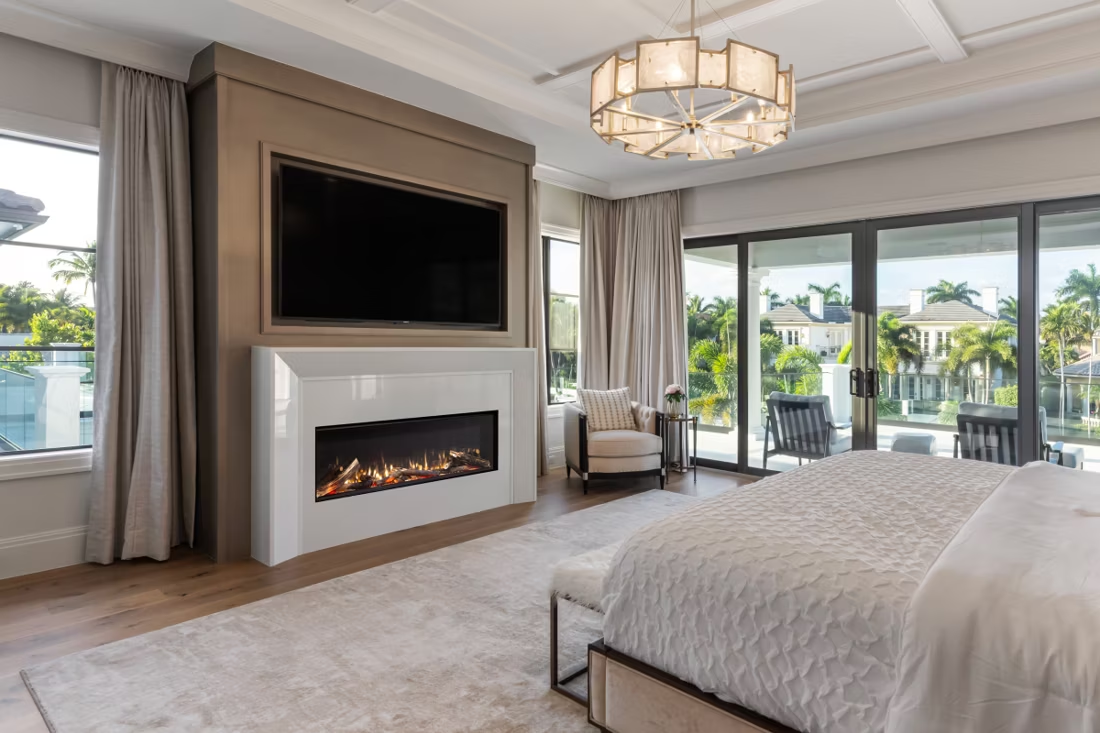
A built-in (or linear) electric fireplace is designed to be framed into a wall or a custom surround—it's the choice for new construction, basement finishing projects, or a media wall in a Chippewa County living room. An electric insert is sized to slide into an existing masonry or wood fireplace opening, letting you convert a fireplace you no longer want to burn wood in into a flameless, no-maintenance heat source. For homes in the county with an old, drafty masonry fireplace that's rarely used, an insert is often the simpler upgrade since it reuses the existing opening without any venting changes.
Will my electric fireplace work during a power outage?
No—and this matters more in Chippewa County than in most places. Electric fireplaces need household power to run both the heater and the flame effect, so a lake-effect snowstorm or ice event that knocks out Cloverland Electric Cooperative service also shuts the fireplace down completely. That's the tradeoff for the no-venting convenience. If backup heat during outages is a real concern for your household—which it often is out toward Pickford, Rudyard, or the townships farther from Sault Ste. Marie—a wood stove or propane unit with battery-backup ignition is worth having in addition to an electric fireplace, not instead of one.
What size electric fireplace do I need for my space?
Electric fireplaces are sized by linear width for built-ins (typically 30" to 74" wide) and by heater output for the room you're warming. As a rule of thumb, most models are rated to supplement heat in roughly 400 to 1,000 square feet—plenty for a bedroom, den, or finished basement rec room, but not a whole floor. In Chippewa County's older, sometimes drafty farmhouse and camp construction, err toward the higher end of a unit's rated coverage rather than the low end, and treat the heater function as a bonus rather than your primary comfort plan for the room.
Electric vs. wood—which is right for my Chippewa County home?
Wood remains the backbone of supplemental and backup heat across much of the county, thanks to abundant local oak, maple, birch, and ash and a long tradition of self-sufficient heating in the Eastern U.P. Wood stoves keep working when the power goes out—a real advantage given how often winter storms off Lake Superior interrupt service. Electric fireplaces trade that resilience for convenience: no ash, no chimney, no wood to split and stack, and a clean look that works in a condo, a finished basement, or a room where a flue simply isn't an option. Many Chippewa County households end up with both—wood or propane carrying the real heating load, and electric providing instant, no-mess ambiance in a secondary room.
What will an electric fireplace cost to run on my Cloverland Electric Cooperative bill?
Most electric fireplaces draw about 1,500 watts (roughly 5,000 BTU) on the heat setting and closer to 100–150 watts with the heater off and just the flame effect running. At typical rural cooperative rates, running the heater steadily costs somewhere in the range of $0.20 to $0.30 per hour, while flame-only ambiance runs a few cents per hour. Given how demanding Chippewa County's winter heating season is, running an electric unit as your main source of warmth in a room for hours every day through winter adds up—which is exactly why most local homeowners use them for evenings and supplemental warmth rather than all-day heating.
Where can I find a certified installer for a built-in electric fireplace near me?
For plug-in units, installation is as simple as placement—no certification needed. For built-in linear fireplaces or inserts requiring a dedicated circuit, look for a hearth dealer who either employs a licensed electrician or works directly with one, since that circuit work needs to be done to code and inspected. A local dealer covering Sault Ste. Marie and the surrounding townships can also walk you through surround materials, mantel options, and whether your existing fireplace opening will accept an insert without modification.
Do electric fireplaces actually produce heat?
Yes—most put out around 4,800–5,000 BTUs from a standard outlet, which comfortably warms a bedroom, office, or den as a comfort-zone heater. What they won't do is carry a whole house the way wood, gas, or pellet can. Think of electric as ambiance-first with honest supplemental heat: flames on with no heat in July, flames plus warmth in January.
Can I put a TV above my fireplace?
Yes—with an asterisk. Fireplaces are hot and TVs don't like heat. Either put a mantel between them to deflect rising warmth, or choose a fireplace with heat-management technology that creates a cool zone on the wall above—the wall stays around 125 degrees, barely warm, while the room still gets full heat. If you like clean lines and don't want a mantel, heat management is the answer.
How much should I budget for a fireplace?
For an average home—covering the fireplace, the vent pipe, and basic installation—a budget between $3,900 and $5,500 gives you a lot of options across wood, gas, and pellet. By the time you add finish work, gas line, and electrical, the average complete installation lands between $5,000 and $12,000 all-in. In a remodel or new build, a good rule is to put about 2.5% of the total project cost toward the fireplace.
Can I install a fireplace myself?
If you're putting a fire in your house on purpose, it's best to work with an expert. Unless you're genuinely experienced in framing, gas line, vent pipe, and the national code on clearances to combustibles, have a professional do it—and ideally the same company that sells you the fireplace, so warranty, service, and liability all live under one roof.
Stove and Fireplace Dealers in Chippewa County
Find your electric fireplace in Chippewa County.
Tell us about your room and your home, and we'll match you with a trusted local dealer and send over a free Project Guide & Parts List—the exact unit, surround, and circuit needs for your Chippewa County project.
Find Your Fireplace →