
Keep Your Family Warm and Safe—No Matter What
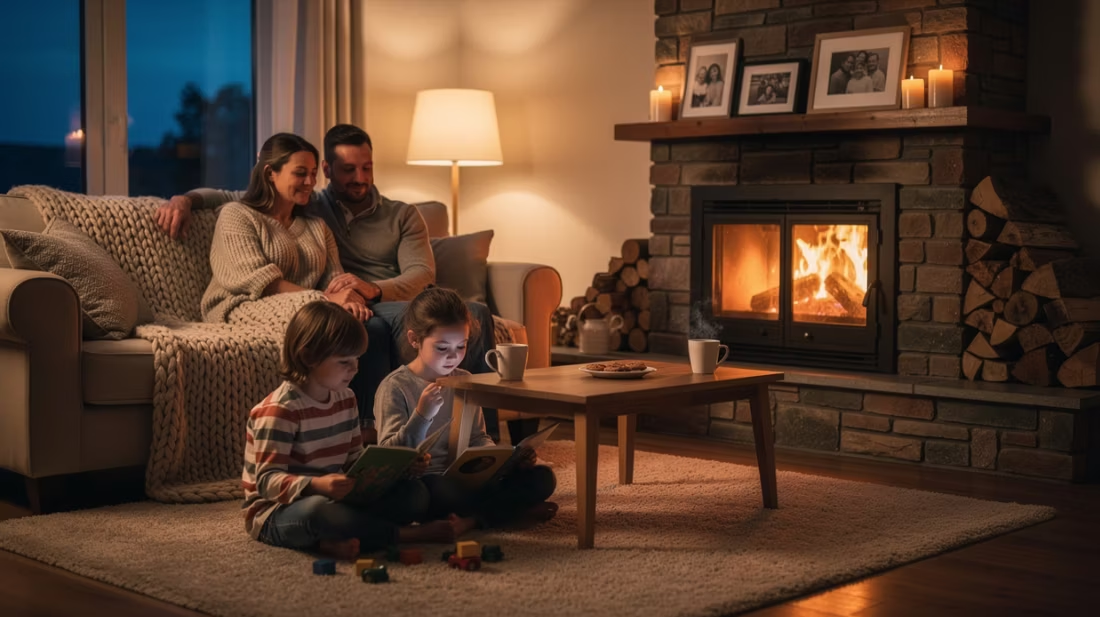
With a long, hard winter heating season and winter lows averaging 14°F around Lake Charlevoix and Lake Michigan, wood heat is a working necessity here, not a decoration. Find the right stove or insert and connect with a trusted local dealer.
Every Project Starts From One of These Five Situations
Wood heat that matches a Northern Michigan winter.
Charlevoix County sits at the top of Michigan's Lower Peninsula, wrapped around Lake Charlevoix and fronting Lake Michigan, with a year-round population of just under 10,700 spread across Charlevoix, Boyne City, East Jordan, and Beaver Island—the last of which is reachable only by ferry or small plane much of the year. With a long, hard winter heating season and an average winter low of 14°F, the county runs colder and longer than places like Klamath Falls, Oregon, closer in feel to Duluth, Minnesota, than to anywhere in the Lower 48's milder zones. Lake-effect snow can bury the county for days at a stretch, and that same lake effect knocks out power more often than residents downstate ever deal with.
That combination—long winters, frequent outages, and a landscape thick with oak, maple, birch, and ash—is why wood heat has stayed central here rather than fading into ambiance. Cutting permits through the Huron-Manistee National Forests run $10 to $20 per cord during the May-through-October season, and with no air quality non-attainment designation for the county, there are no winter burn curtailments to plan around. The right stove or insert means real heat when a nor'easter off Lake Michigan takes the grid down, lower propane or electric bills through a seven-month heating season, and—for the county's many seasonal cabins and cottages—a heat source that works whether or not anyone remembered to leave the furnace running.
Firewood Cutting Permits Near Charlevoix County
Three steps. No salesperson until you're ready.
Tell us about your project
Your zip code, your situation, and the fuel you're leaning toward—or let the answers point you to one.
See what's actually available
The brands dealers within 100 miles genuinely carry—real options, never a catalog mirage.
Get your dealer & Project Guide
A trusted local dealer, plus the free Project Guide & Parts List that names every component of the job.
Frequently Asked Questions
How much does a wood stove installation cost in Charlevoix County?
A typical wood stove or insert installation in Charlevoix County runs roughly $4,000 to $9,000, depending on the unit, whether new Class A chimney pipe is needed, and any hearth pad work required for code clearances. New construction or a home without an existing flue tends to land at the higher end once full through-roof venting is included. If you're on Beaver Island, factor in a ferry or air-freight surcharge for materials and a longer lead time for scheduling—most island installers coordinate delivery around the ferry schedule rather than same-week service.
What size wood stove do I need for a Charlevoix County home?
Sizing depends on square footage, insulation, and whether the stove is your primary or backup heat. Many homes here are older lake cottages with thinner walls and single-pane windows original to the build, which pushes sizing up compared to a similarly sized new-construction home. As a rough guide: stoves rated for up to 1,000 square feet suit a cabin or single main room, 1,000 to 2,000 square feet covers most year-round houses in Charlevoix, Boyne City, or East Jordan, and 2,000-plus square foot units handle larger, better-insulated homes intended to run on wood as primary heat through the full winter. A local dealer will walk your home before recommending a model—undersizing is the most common mistake on drafty older cottages near the lake.
Where can I find certified wood stove installers near me?
Look for NFI (National Fireplace Institute) or CSIA (Chimney Safety Institute of America) certification—both indicate real training in venting and clearance work specific to wood-burning appliances. Local hearth retailers serving Charlevoix, Boyne City, and East Jordan typically employ certified installers and can reach most of the county without a major travel charge. Beaver Island is the exception: expect installers to build in ferry time and possibly a multi-day trip window rather than a single-day visit. Skip general handyman or contractor installs for a wood stove—improper clearances and venting are the leading cause of chimney fires, and it's not a place to save money on labor.
What's the difference between a wood stove and a wood insert?
A wood stove is freestanding, sits on a hearth pad, and can be installed almost anywhere with the right clearances and a new chimney run. A wood insert slides into an existing masonry fireplace and uses that chimney, converting an old open hearth into a sealed, high-efficiency heater. Charlevoix County has plenty of older homes and lake cottages with existing masonry fireplaces that were never efficient to begin with—for those, an insert is usually the better upgrade. Newer builds or additions without an existing fireplace are better suited to a freestanding stove.
Do I need a permit to install a wood stove in Charlevoix County?
Yes—new wood stove and insert installations require a building permit through the Charlevoix County Building Department, and the unit itself needs to meet current EPA emissions standards. Most local installers handle the permit paperwork as part of the job, so it's rarely something you have to manage yourself. The county carries no air quality non-attainment designation, so unlike some western states, there are no seasonal burn curtailment days to work around here—you can burn as needed once the unit is installed and inspected.
What's the best wood stove for Charlevoix County's climate?
With a long, hard winter heating season and regular stretches well below freezing, a catalytic stove from a brand like Blaze King makes sense for anyone burning wood as a primary or near-primary heat source—these hold a fire 20-plus hours on a load, which matters when a lake-effect system parks over the county for several days straight. Local hardwoods—oak, maple, and birch especially—burn dense and hot once seasoned, and pair well with either catalytic or non-catalytic models from Pacific Energy or Lopi for smaller homes and cabins that just need supplemental heat. A local dealer can match burn time and BTU output to your specific square footage and insulation level.
How often should my chimney be inspected and cleaned?
The CSIA recommends an annual inspection for any wood-burning appliance, and in Charlevoix County that's best scheduled in late summer before the burning season stretches from roughly October through April. Homes using wood as a primary heat source—common on Beaver Island and in the more rural stretches around East Jordan—often need a mid-season cleaning if creosote builds up faster than expected. Given how long and hard the burning season runs here, skipping a year isn't worth the risk, especially on the island where an emergency response is a longer wait.
Where can I get firewood in Charlevoix County?
Local suppliers around Charlevoix, Boyne City, and East Jordan sell seasoned cordwood—mostly oak, maple, birch, and ash, all common species in the county's hardwood stands—with prices varying by species and whether it's split and stacked. For self-cutting, permits through the Huron-Manistee National Forests run $10 to $20 per cord and are valid during the May-through-October cutting season, which lines up well with getting wood cut, split, and seasoned before the first hard freeze. Given the length of the heating season here, most full-time wood burners plan on cutting or buying well ahead of October.
Wood stove vs. pellet stove—which is right for me?
Wood stoves burn cordwood, work without any electricity, and are the better choice for backup heat during the outages that lake-effect storms off Lake Michigan can trigger for days at a time. Pellet stoves—using regional brands like Lignetics or Somerset Pellet Fuel—are simpler to load and burn cleaner with less ash, but the auger and blower need electricity, so they go dark exactly when the power does. For year-round Charlevoix County homes and especially for Beaver Island or other outage-prone areas, wood is usually the more dependable primary or backup source. For an in-town home with reliable power that just wants low-maintenance daily heat, pellet is a reasonable alternative—a local dealer can walk through both.
What does it take to replace an existing fireplace?
Fireplaces are like icebergs—bigger behind the wall than in front of it. Replacement means removing the surrounding tile or stone (the finish material laps onto the fireplace face), pulling the old unit, setting the new one in the same enclosure, and re-finishing the wall. A hearth professional can determine what's behind your wall without demolition during an in-home preview.
What's the difference between an insert and a zero-clearance fireplace?
An insert is a fireplace that slides into a pre-existing wood-burning fireplace—if you don't have one, there's nothing to insert it into. A zero-clearance fireplace is built into a framed wall, which makes it the answer for remodels and new construction. Simple test: existing masonry fireplace means insert; blank or framed wall means zero-clearance.
Does a fireplace add value to my home?
On average, a fireplace adds back to the home about the same amount you spent installing it. Add the monthly savings from heating the rooms you actually use instead of the whole house—often hundreds of dollars a year—and the value case is strong before you even count what a fire does for how your family uses the room.
How much should I budget for a fireplace?
For an average home—covering the fireplace, the vent pipe, and basic installation—a budget between $3,900 and $5,500 gives you a lot of options across wood, gas, and pellet. By the time you add finish work, gas line, and electrical, the average complete installation lands between $5,000 and $12,000 all-in. In a remodel or new build, a good rule is to put about 2.5% of the total project cost toward the fireplace.
Find your wood stove in Charlevoix County.
Tell us about your home and heating goals, and we'll match you with a trusted local dealer and send over a free Project Guide & Parts List—sized to your space, with the vent kit and install parts spelled out, so you're not guessing at what a wood stove or insert project in Charlevoix County actually requires.
Find Your Fireplace →