
Instant warmth for Charlevoix County's lake homes and year-round houses.
No chimney, no gas line, no venting to plan around—just plug-in or hardwired heat and ambiance for cottages on Lake Charlevoix, condos downtown, and full-time houses in Boyne City and East Jordan. Find the right unit and connect with a trusted local dealer.
Every Project Starts From One of These Five Situations
Reliable ambiance without a chimney or gas line to worry about.
Charlevoix County sits on Lake Michigan's eastern shore in climate zone 6A, with 7,284 heating degree days and winter lows averaging 14°F—a heating load in the same range as Burlington, Vermont. Only about 10,657 people live here full-time, but the county's housing stock skews heavily toward seasonal cottages, marina-district condos in downtown Charlevoix, and lake homes around Boyne City and East Jordan that sit empty for stretches of the winter. A lot of that housing was never built with a masonry chimney or a gas hookup, which is exactly the gap electric fireplaces fill.
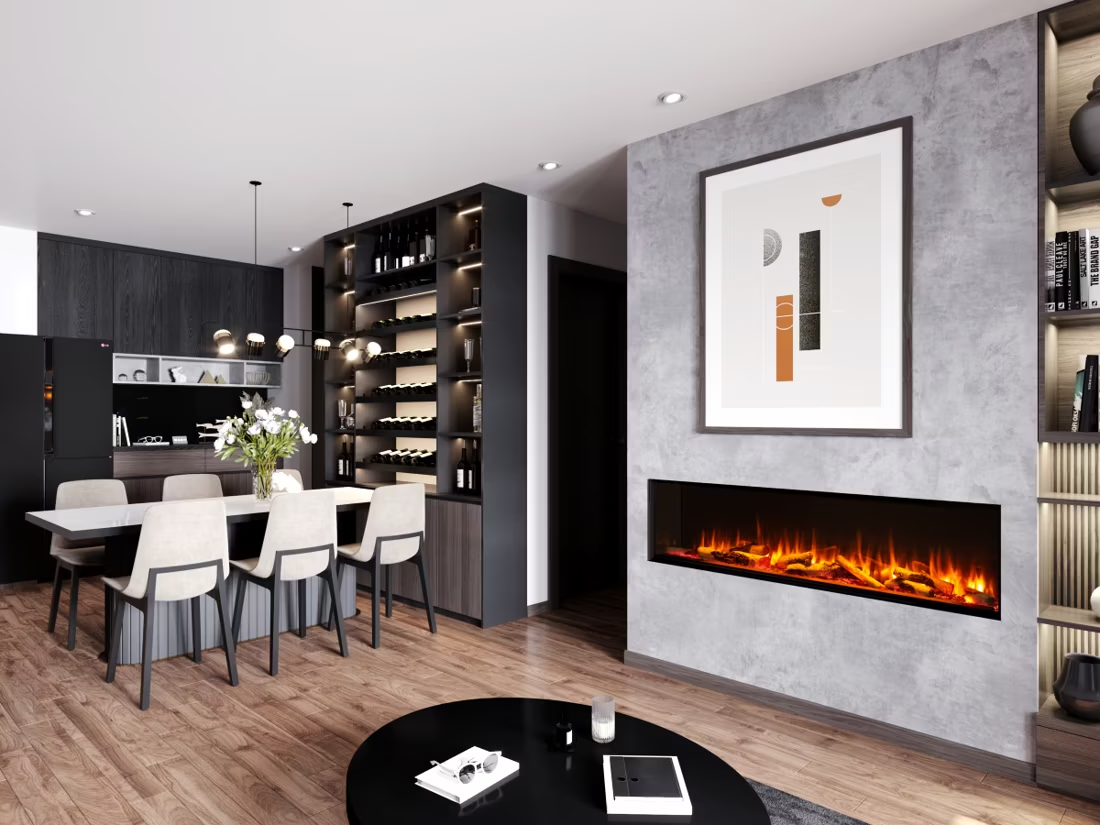
Electric units plug into a standard outlet or a dedicated circuit, need no venting, and can be switched on remotely or left running unattended without the fire-safety concerns of a wood stove—a real advantage for owners who are back in downstate Michigan or out of state for weeks at a time. In a 7,284-HDD climate, an electric fireplace is not going to replace your propane or oil furnace as primary heat, but it does a good job of zone-heating a living room or bedroom and adding the visual warmth people want in a lake cottage without the wood handling or the annual chimney sweep.
Three steps. No salesperson until you're ready.
Tell us about your project
Your zip code, your situation, and the fuel you're leaning toward—or let the answers point you to one.
See what's actually available
The brands dealers within 100 miles genuinely carry—real options, never a catalog mirage.
Get your dealer & Project Guide
A trusted local dealer, plus the free Project Guide & Parts List that names every component of the job.
Frequently Asked Questions
How much does an electric fireplace installation cost in Charlevoix County?
Plug-in electric inserts and freestanding units run $500 to $1,200 installed, since most simply drop into an existing opening or mount to a wall using a standard outlet. Built-in wall units or custom mantel packages that require a licensed electrician to run a dedicated 20-amp circuit typically land between $1,500 and $2,500, depending on how far the unit is from the panel and whether drywall or trim work is needed. Cottages and condos being renovated for seasonal use often add the fireplace during a broader remodel, which can shift costs depending on what other electrical work is happening at the same time.
Can an electric fireplace heat my whole Charlevoix County home?
Not reliably in this climate. Most electric fireplaces are rated for 400 to 1,000 square feet of supplemental zone heat, and with winter lows averaging 14°F and 7,284 heating degree days, that's nowhere near enough to carry a full house on its own. They work well paired with a propane furnace, oil-fired boiler, or wood stove as the primary heat source—the electric unit handles the room you're actually sitting in, while the main system keeps the rest of the house above freezing, which matters for cottages that sit unoccupied through the coldest stretches of winter.
Do I need a permit to install an electric fireplace in Charlevoix County?
A simple plug-in unit typically doesn't require a permit since it uses an existing outlet like any other appliance. If you're adding a built-in unit that needs a new dedicated circuit, that electrical work generally does require a permit—through the city if you're inside Charlevoix, Boyne City, or East Jordan limits, or through the county building department if you're in unincorporated Charlevoix County. Local dealers who install built-in units usually coordinate the electrician and the permit as part of the job, so you're not stuck tracking it down yourself.
What's the difference between an electric fireplace, insert, and stove?
An electric fireplace is typically a built-in or wall-mounted unit designed to look like a framed hearth—common in new construction or remodels of lake homes without an existing fireplace. An electric insert is sized to slide into an existing masonry or wood-stove opening, which is a common upgrade for older Charlevoix County cottages that have a fireplace shell but no interest in dealing with wood or a gas line. An electric stove is a freestanding cabinet-style unit that mimics a wood stove's look and can go almost anywhere near an outlet. For most seasonal properties here, an insert into an existing opening is the simplest path.
Are electric fireplaces good for vacation homes and cottages that sit empty part of the year?
Yes—this is one of the strongest cases for electric heat in Charlevoix County. There's no pilot light, no wood to stock, and no combustion byproducts to worry about while a cottage on Lake Charlevoix or a condo near the marina sits unoccupied for weeks. Many current models pair with an app or a simple timer so you can have the unit running and warm before you arrive for a weekend, and there's no risk of a chimney fire or carbon monoxide buildup in an empty structure—a real consideration for owners who aren't checking on the property daily.
What should I look for in an electric fireplace for this climate?
Since electric units don't have to fight combustion or venting requirements, the decision comes down more to heat output and how the flame looks. Brands like Dimplex and Napoleon offer models with 5,000-BTU heaters adequate for a single room, along with LED flame effects realistic enough to run for ambiance alone, with the heater switched off, during the shoulder seasons when a cottage doesn't need extra heat. If remote monitoring matters to you—which it often does for seasonal owners—look for a model with app or smart-plug compatibility rather than a basic on/off switch.
Electric vs. wood—which is right for my Charlevoix County home?
Wood heat has deep roots here—oak, maple, birch, and ash are all common locally, and Forest Service permits through the Huron-Manistee National Forests run $10 to $20 per cord during the May-to-October cutting season, which keeps self-cut firewood cheap for full-time residents. Wood also keeps working during a power outage, which matters through Up North winters. Electric can't do that—it goes dark the moment the power does—but it wins on convenience, safety for unattended cottages, and simplicity for condos or renovated spaces where a chimney was never installed. Many households here end up with both: wood or propane for real heat, electric for the room they actually live in day to day.
How much does it cost to run an electric fireplace in Charlevoix County?
Most of Charlevoix County is served by Great Lakes Energy Cooperative, with Consumers Energy serving some areas closer to the county line. A typical 1,500-watt electric fireplace running on the heater setting costs somewhere around 15 to 25 cents per hour at current residential rates, depending on your rate schedule—noticeably cheaper per hour than running a whole-house furnace, which is part of why it works well as supplemental zone heat rather than a full heating replacement. Running the flame effect alone, with the heater off, costs only a fraction of that.
Electric vs. pellet stove—which makes more sense for a lake cottage?
Pellet stoves burn bagged pellets from regional suppliers like Indeck Energy Services, Lignetics, or Somerset Pellet Fuel, and they put out real, substantial heat—enough to serve as a primary or near-primary heat source in a 7,284-HDD climate. But they need a hopper refilled, occasional ash cleanout, and electricity to run the auger and blower, so they're not a fit for a cottage that sits unattended for long stretches. Electric fireplaces need none of that upkeep and can run unattended indefinitely, but they only supply zone heat, not whole-home warmth. For a full-time house, pellet often wins on heat output; for a seasonal cottage where low-maintenance and safety when you're away matter more, electric is usually the better call.
Can I put a TV above my fireplace?
Yes—with an asterisk. Fireplaces are hot and TVs don't like heat. Either put a mantel between them to deflect rising warmth, or choose a fireplace with heat-management technology that creates a cool zone on the wall above—the wall stays around 125 degrees, barely warm, while the room still gets full heat. If you like clean lines and don't want a mantel, heat management is the answer.
Do electric fireplaces actually produce heat?
Yes—most put out around 4,800–5,000 BTUs from a standard outlet, which comfortably warms a bedroom, office, or den as a comfort-zone heater. What they won't do is carry a whole house the way wood, gas, or pellet can. Think of electric as ambiance-first with honest supplemental heat: flames on with no heat in July, flames plus warmth in January.
Does a fireplace add value to my home?
On average, a fireplace adds back to the home about the same amount you spent installing it. Add the monthly savings from heating the rooms you actually use instead of the whole house—often hundreds of dollars a year—and the value case is strong before you even count what a fire does for how your family uses the room.
How much should I budget for a fireplace?
For an average home—covering the fireplace, the vent pipe, and basic installation—a budget between $3,900 and $5,500 gives you a lot of options across wood, gas, and pellet. By the time you add finish work, gas line, and electrical, the average complete installation lands between $5,000 and $12,000 all-in. In a remodel or new build, a good rule is to put about 2.5% of the total project cost toward the fireplace.
Find your electric fireplace in Charlevoix County.
Tell us about your home or cottage and we'll put together a free Project Guide & Parts List—the right electric fireplace or insert for your space, the exact parts list, and a trusted local dealer to install it.
Find Your Fireplace →