
Find the right pellet stove for Cass County's long winters.
Thermostat-controlled, low-mess heat for a county that logs nearly 6,730 heating degree days a year. Get matched with a trusted local dealer who can size and install it right.
Every Project Starts From One of These Five Situations
Consistent heat, without the daily wood-splitting.
Cass County sits in the far southwest corner of Michigan, in climate zone 5A, with an average winter low around 16 degrees and roughly 6,729 heating degree days a year—a season on par with Madison, Wisconsin, that stretches from late fall well into March. Homes here run hard-wood stock of oak, maple, birch, and ash, and plenty of Cass County residents already burn cordwood. But a growing number are turning to pellet stoves for the parts of the season when convenience matters more than the ritual of a wood fire: thermostat-set heat, a hopper that only needs loading once or twice a day, and none of the splitting, stacking, or ash volume that a full wood-burning season demands.
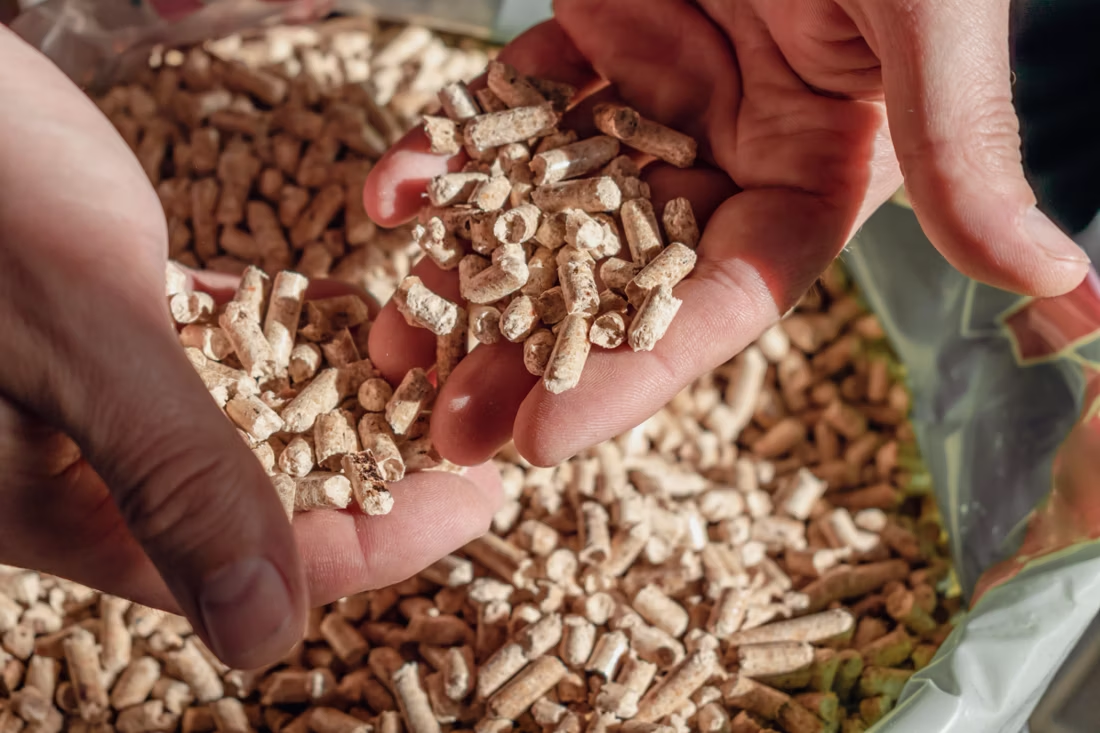
Pellet fuel is a straightforward supply chain in this part of Michigan—bags are stocked seasonally at regional retailers and farm stores, with brands like Indeck Energy Services, Lignetics, and Somerset Pellet Fuel commonly available in the area. Because Cass County has no air quality non-attainment concerns or burn-ban history, pellet stoves here are chosen mainly for comfort and cost control rather than any regulatory push. A pellet stove or insert, correctly sized by a local dealer, gives a Cassopolis or Dowagiac household steady background heat through a long Michigan winter with far less daily labor than cordwood.
Three steps. No salesperson until you're ready.
Tell us about your project
Your zip code, your situation, and the fuel you're leaning toward—or let the answers point you to one.
See what's actually available
The brands dealers within 100 miles genuinely carry—real options, never a catalog mirage.
Get your dealer & Project Guide
A trusted local dealer, plus the free Project Guide & Parts List that names every component of the job.
Frequently Asked Questions
How much does a pellet stove installation cost in Cass County?
Most pellet stove and insert installations in this part of Michigan land between roughly $4,000 and $7,500, depending on whether the unit is a freestanding stove or an insert going into an existing masonry fireplace, and whether new venting has to be run. Inserts converting an existing wood fireplace tend to be on the lower end because the masonry opening and hearth are already in place. A freestanding stove in a room without an existing chimney runs higher once wall-through venting and a hearth pad are added. A local dealer will give you a firm number after seeing your space, but plan around that range as a starting point.
What size pellet stove do I need for a Cass County home?
With average winter lows around 16 degrees and nearly 6,729 heating degree days, most Cass County homes need a mid-size unit rather than the smaller stoves sold for milder climates. A stove rated for 1,000 to 1,600 square feet is typical for a single main living area; larger, more open floor plans or drafty older farmhouses common around Cassopolis and Marcellus often need a unit at the higher end of that range, or a second heat source for the coldest stretches in January and February. A local dealer will look at your square footage, insulation, and ceiling height before recommending a specific model—sizing by square footage alone can leave you short on the coldest nights.
Where do I buy pellet fuel in Cass County, and how much does it cost?
Pellet fuel is sold by the 40-pound bag, typically stacked in tons (a ton is 50 bags) for the winter. Regional brands including Indeck Energy Services, Lignetics, and Somerset Pellet Fuel are commonly stocked at farm and hardware stores throughout southwest Michigan, with pricing that generally tracks regional hardwood pellet averages. Buying a full ton or more ahead of the season—rather than picking up a few bags at a time—usually gets a better per-bag price and avoids the scramble when a January cold snap drives up local demand.
Does a pellet stove work during a power outage?
Not without backup power. Pellet stoves rely on an electric auger to feed fuel and a blower to distribute heat, so a standard unit shuts down when the power drops. This matters in Cass County, where winter storms occasionally knock out rural power for stretches of hours or longer. Homeowners who want heat during outages typically pair a pellet stove with a small battery backup or generator, or keep a wood-burning stove as a true off-grid backup—cordwood is not hard to source in a county with this much oak, maple, and ash on the ground. Ask your local dealer about battery backup options if outage resilience matters to you.
Do I need a permit to install a pellet stove in Cass County?
Yes—a building permit is generally required for a new pellet stove installation, whether it's a freestanding unit or an insert, since it involves venting through an exterior wall or existing chimney. Most local hearth dealers handle the permitting as part of the installation, coordinating with the local building department so you don't have to file anything yourself. Pellet stoves vent through a smaller-diameter pipe than wood stoves and don't require a full masonry chimney, which usually makes the permitting and inspection process more straightforward than a wood stove install.
What's the best pellet stove for a Cass County winter?
For a climate with lows regularly near 16 degrees and a heating season that runs six-plus months, look for a pellet stove with a larger hopper capacity—40 to 80 pounds—so you're not reloading multiple times a day during the coldest stretches. Automatic ignition and a thermostat-controlled feed rate are worth prioritizing too, since they let the stove modulate output as temperatures swing through a typical southwest Michigan winter rather than running full-blast around the clock. A local dealer can match hopper size and BTU output to your specific square footage and how many hours a day you want between reloads.
How often does a pellet stove need to be cleaned and serviced?
Pellet stoves need more frequent light cleaning than wood stoves but far less heavy maintenance. Plan on emptying the ash pan every few days during regular use, cleaning the burn pot weekly to keep the fire feeding evenly, and a full professional service once a year—ideally before the season starts in the fall—to check the auger motor, exhaust blower, and venting. Because pellet stoves burn more consistently than cordwood, they produce far less creosote, but the mechanical components (auger, igniter, blower) are what tend to need attention over time. A local dealer or service technician can handle the annual inspection.
Pellet stove vs. wood stove—which is right for my Cass County home?
Wood stoves work without electricity, burn fuel that's often free or low-cost given how much oak, maple, birch, and ash grows in this part of Michigan, and give the classic visible fire—but they require splitting, stacking, and daily tending. Pellet stoves offer thermostat-set convenience, a smaller fuel footprint, and less daily labor, but need electricity to run and depend on bagged fuel you buy rather than cut yourself. For a Cass County homeowner without easy wood access or the time for cordwood handling, pellet is often the better fit. For a rural property with wood on the land already and a priority on off-grid resilience, wood still has an edge. Plenty of local homes end up with both.
Can I convert an existing wood fireplace to a pellet insert?
Yes, and it's a common project for older Cass County homes with an existing masonry fireplace. A pellet insert slides into the existing firebox opening and vents through a smaller liner run inside the old chimney, which is usually simpler and less invasive than the venting work a wood insert requires. Cost typically falls toward the lower end of the installation range since the masonry structure and hearth are already in place. The conversion keeps the look of the original fireplace while adding thermostat control and dramatically better fuel efficiency than an open masonry hearth ever provided.
What's the difference between an insert and a zero-clearance fireplace?
An insert is a fireplace that slides into a pre-existing wood-burning fireplace—if you don't have one, there's nothing to insert it into. A zero-clearance fireplace is built into a framed wall, which makes it the answer for remodels and new construction. Simple test: existing masonry fireplace means insert; blank or framed wall means zero-clearance.
Why is my open fireplace making my house colder?
Open fireplaces suck—literally. As the fire burns, it consumes air your furnace already paid to heat and pulls it out through the chimney, so the house is actually colder after the fire goes out than before you lit it. An insert fixes this: it seals the chimney, puts fixed glass across the front, and turns that hole in your house into a real heat source.
Can I install a fireplace myself?
If you're putting a fire in your house on purpose, it's best to work with an expert. Unless you're genuinely experienced in framing, gas line, vent pipe, and the national code on clearances to combustibles, have a professional do it—and ideally the same company that sells you the fireplace, so warranty, service, and liability all live under one roof.
Should the dealer who sells my fireplace also install it?
Ideally, yes. A fireplace project involves vent pipe, gas line, electrical, and often tile or stone. Hire three or four separate trades and you own the liability and the game of telephone between them. One company selling and installing means one accountable party, start to finish—ask about factory training, on-time completion records, and what happens if an inspection fails.
Pellet Brands Stocked Around Cass County
Manufacturers will point you to the nearest stocking dealer.
Get your Cass County pellet stove Project Guide & Parts List.
Tell us about your home and heating goals, and we'll match you with a trusted local dealer and send a free Project Guide & Parts List—the exact parts, vent kit, and recommended installer for your Cass County pellet project.
Find Your Fireplace →