
Instant heat and glow for Cass County's lake-cottage winters.
With more than 40 lakes, a lot of seasonal cottages, and 6,729 heating degree days of cold to plan around, Cass County homeowners lean on electric fireplaces for supplemental heat and instant ambiance without a chimney. I'll match you with a trusted local dealer who knows the wiring and the room.
Every Project Starts From One of These Five Situations
No chimney, no cordwood, no fuel storage—just an outlet.
Cass County covers roughly 490 square miles of southwest Michigan lake country, right up against the Indiana border, and it's built around water—Diamond Lake, Donnell Lake, Christiana Lake, and dozens more give the county its unofficial reputation as one of Michigan's densest concentrations of lakes. A lot of the county's 10,287 residents split time between year-round homes in Dowagiac, Cassopolis, and Edwardsburg and seasonal cottages that were never built with a masonry chimney or a gas line in mind. That's exactly the gap electric fireplaces fill: a wall-mount or built-in insert gives a cottage real flame-effect ambiance and a few thousand BTUs of supplemental heat on a shoulder-season evening, with no venting, no wood to split, and no propane tank to keep filled.
Winters here are genuinely cold—6,729 heating degree days and average lows near 16°F put Cass County in climate zone 5A, on par with Madison, WI—so it's worth being honest about what electric can and can't do. An electric fireplace is a supplemental or accent heat source, not a substitute for the furnace or heat pump carrying the load through a Michigan January. Most of the county is served by Indiana Michigan Power, with Midwest Energy & Communications—an electric cooperative headquartered right in Cassopolis—covering a large rural footprint too. Standard plug-in units run fine on an existing 120V outlet; larger built-in inserts with higher wattage heaters often call for a dedicated 20-amp circuit, which means a licensed electrician and a permit through the county building department.
Three steps. No salesperson until you're ready.
Tell us about your project
Your zip code, your situation, and the fuel you're leaning toward—or let the answers point you to one.
See what's actually available
The brands dealers within 100 miles genuinely carry—real options, never a catalog mirage.
Get your dealer & Project Guide
A trusted local dealer, plus the free Project Guide & Parts List that names every component of the job.
Frequently Asked Questions
How much does an electric fireplace installation cost in Cass County?
A basic wall-mount or freestanding electric unit that plugs into an existing outlet typically runs $400 to $1,200 installed, including mounting and any minor wall prep. A built-in electric insert with a custom mantel or surround, especially one that needs a new dedicated circuit run by an electrician, lands closer to $1,500 to $2,500. Lake cottages around Diamond Lake or Magician Lake sometimes add a bit to that if the electrical panel is older and needs an upgrade to support the new circuit—a local dealer will flag that during the site visit.
Will an electric fireplace actually heat my home in a Cass County winter?
Not as a primary heat source, and any dealer being straight with you will say so. With 6,729 heating degree days and average lows around 16°F, Cass County winters need a furnace or heat pump doing the real work. Most electric fireplace heaters top out around 5,000 BTUs, enough to take the edge off a single room or supplement a zone that runs cold, but not enough to carry a whole house through a January cold snap. Where they earn their keep is exactly that supplemental role—plus the ambiance a lake cottage or den doesn't get from a furnace vent.
Do I need a permit or an electrician to install an electric fireplace?
A basic plug-in unit on an existing outlet doesn't need a permit. A built-in insert that requires a new dedicated circuit does, and that work has to be done by a licensed electrician and permitted through the Cass County building department, whether the home is in Cassopolis proper or out in the unincorporated township. It's a smaller, faster permit process than a wood stove or gas line install, but skipping it on a hardwired unit is a real risk at resale, especially on lake properties where inspections tend to be thorough.
What size electric fireplace do I need?
For a main living room in a year-round home, a 40 to 50-inch insert or wall-mount rated for a 400-square-foot space is typical. For a seasonal cottage on Donnell Lake or Christiana Lake used mostly in warmer months, a smaller unit focused on ambiance rather than heat output is usually the better fit, since the space isn't being heated hard through winter anyway. A local dealer will size the unit to the room and to how you actually use the property, not just the square footage on paper.
Are electric fireplaces a good fit for manufactured and modular homes in Cass County?
Yes—it's one of the more common installs in the rural parts of the county, where manufactured homes are common and a masonry chimney or new gas line simply isn't practical. Electric units avoid the clearance and venting requirements that come with wood or gas, and most manufactured-home electrical panels can handle a standard plug-in unit without modification. A dealer familiar with manufactured-home wiring will confirm your panel's capacity before recommending anything larger than a basic plug-in model.
How much does it cost to run an electric fireplace through a Cass County winter?
Running a typical 1,500-watt electric fireplace for a few hours an evening through a Michigan heating season generally adds somewhere in the range of $15 to $40 a month to an electric bill, depending on your rate through Indiana Michigan Power or Midwest Energy & Communications and how often the heater element is actually running versus just the flame effect on its own. That's substantially less than keeping a whole room warm with electric baseboard heat, since most models let you run the visual flame without the heater engaged.
Electric vs. gas vs. wood—which makes the most sense for my Cass County home?
It comes down to the home. Wood, burned as local oak, maple, birch, or ash, makes sense for a full-time rural residence with room to store cordwood and a masonry chimney already in place. Gas suits a year-round home wanting real supplemental heat with the flip of a switch, provided a gas line is available. Electric wins for lake cottages used seasonally, condos, and manufactured homes where venting isn't practical and the priority is ambiance plus light supplemental warmth rather than carrying the heating load. Plenty of Cass County households end up with a furnace for the cold months and an electric unit for the family room or a cottage on the water.
How much maintenance does an electric fireplace need?
Very little compared to wood or gas. There's no chimney to sweep and no annual gas-line inspection—just occasional dusting of the heater vents and, eventually, replacing the LED light strip that drives the flame effect, which typically lasts well over a decade of regular use. That low-maintenance profile is a big part of why electric units are popular in seasonal cottages around the county's lakes, where owners aren't on-site every week to keep up with upkeep.
Can I install an electric fireplace myself, or should I hire a dealer?
A basic plug-in wall-mount unit is genuinely a DIY-friendly project for most homeowners. Where it's worth bringing in a local dealer or electrician is a built-in insert, anything requiring a new circuit, or a custom mantel surround that needs to meet clearance specs. A local pro will also know whether your specific panel and service, especially in older Cassopolis or Dowagiac homes, can handle the added draw without an upgrade—a detail that's easy to miss buying a unit off a big-box shelf.
Can I put a TV above my fireplace?
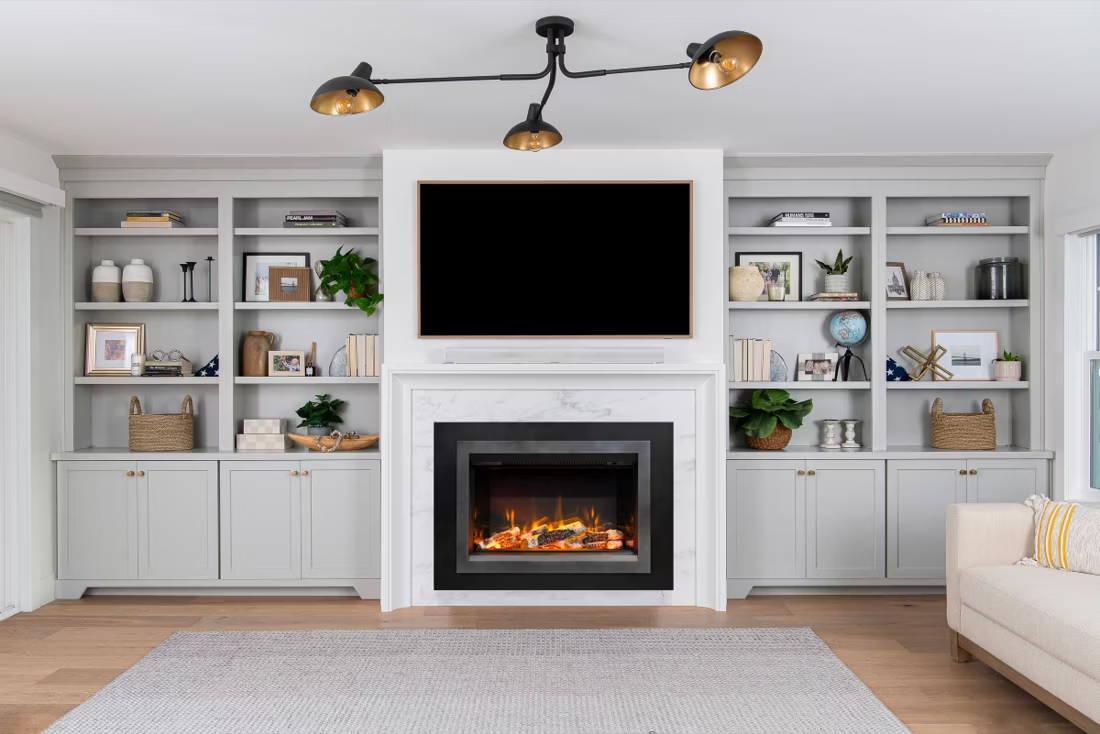
Yes—with an asterisk. Fireplaces are hot and TVs don't like heat. Either put a mantel between them to deflect rising warmth, or choose a fireplace with heat-management technology that creates a cool zone on the wall above—the wall stays around 125 degrees, barely warm, while the room still gets full heat. If you like clean lines and don't want a mantel, heat management is the answer.
Does an electric fireplace need a vent or chimney?
No—that's its superpower. An electric fireplace needs a wall and an outlet, period. No vent pipe, no gas line, no clearances to design around, which is why it works in bedrooms, offices, apartments, and walls where venting a gas or wood unit would be impractical or impossible. Installation is typically the simplest and least expensive of any fireplace type.
Can a fireplace actually lower my heating bill?
Yes—by creating a comfort zone. A furnace heats every square foot of the house just to warm the one room you're in; a gas fireplace on low burns roughly a sixth of the gas a typical furnace does. Set the furnace around 55–60 degrees as a baseline, then heat the rooms your family actually uses. Families who heat this way commonly save $20–$60 a month.
Does a fireplace add value to my home?
On average, a fireplace adds back to the home about the same amount you spent installing it. Add the monthly savings from heating the rooms you actually use instead of the whole house—often hundreds of dollars a year—and the value case is strong before you even count what a fire does for how your family uses the room.
Get your free Project Guide & Parts List for an electric fireplace in Cass County.
Tell me about your home or cottage—year-round or seasonal, existing panel capacity, the room you're heating—and I'll match you with a trusted local dealer and send over a free Project Guide & Parts List with the exact unit, wiring needs, and recommended installer for your electric fireplace project.
Find Your Fireplace →