
Keep Your Family Warm and Safe—No Matter What
Most homes on Peabody's tight residential lots heat with gas or electric. But a working fireplace insert or backup wood stove still makes sense for the right house—here's an honest look at when it does.
Every Project Starts From One of These Five Situations
A dense North Shore suburb, not wood country.
Peabody sits about 13 miles north of Boston in Essex County, on tight residential lots with winters comparable to Boston's—roughly a six-month heating season—and average winter lows near 20°F—cold enough to matter, but nowhere near the exposed, off-grid conditions that make wood a primary heat source in places like Duluth, MN or rural Maine. There's no national forest or public cutting land within the city, and the housing stock is dominated by Colonials, Capes, and triple-deckers built for gas or oil service, not wood-fired heat.
That's why wood ranks as a niche fuel choice here rather than a standard one. The homeowners who do install a wood stove or insert in Peabody are usually working with an existing masonry fireplace in an older home, want a non-electric backup heat source for nor'easter power outages, or simply want the ambiance of a real fire. Oak, maple, birch, and ash are the common local hardwoods, sold by the cord through regional firewood dealers and tree services rather than cut on public land—there's no Forest Service permit office involved the way there would be out West.
Three steps. No salesperson until you're ready.
Tell us about your project
Your zip code, your situation, and the fuel you're leaning toward—or let the answers point you to one.
See what's actually available
The brands dealers within 100 miles genuinely carry—real options, never a catalog mirage.
Get your dealer & Project Guide
A trusted local dealer, plus the free Project Guide & Parts List that names every component of the job.
Frequently Asked Questions
How much does a wood stove or insert cost to install in Peabody?
Expect somewhere in the $4,000 to $8,500 range for a wood stove or insert installed into an existing masonry fireplace in a Peabody home, depending on chimney condition, liner work, and hearth pad requirements. Because wood is a less common project locally than gas conversions or electric inserts, fewer installers in the immediate area specialize in it full-time, so it's worth confirming a contractor has recent wood-burning appliance experience rather than assuming every hearth company handles it routinely. Homes without an existing chimney will run higher once Class A pipe and roof penetration are added.
Why is wood heat so uncommon in Peabody compared to other parts of New England?
Peabody is a built-out, densely zoned city with small lots and no adjacent public forest land, unlike rural Essex County towns or western Massachusetts. Most homes were built or renovated around gas and electric service, and there's no local firewood-cutting culture tied to nearby national forest or state land the way there is in places like the Berkshires or northern New England. Wood still works technically—the climate is cold enough—but the infrastructure and habits around it (cutting permits, dedicated wood lots, generational wood-heat households) just aren't part of daily life here the way gas and electric are.
Do I need a permit to install a wood stove in Peabody?
Yes—any new wood-burning appliance requires a building permit through the Peabody Building Department, and the installation must meet current Massachusetts State Building Code clearance and venting requirements. The Peabody Fire Department typically needs to sign off on chimney and appliance work as well, particularly for older homes where the existing masonry chimney hasn't been inspected in years. Most established hearth contractors handle this paperwork as part of the installation, but confirm it's included before signing a contract.
What firewood is available locally, and how much does it cost?
Oak, maple, birch, and ash are the common hardwoods sold by cord dealers and tree services around the North Shore. Seasoned hardwood typically runs $300 to $400 per cord delivered in the Peabody area—on the higher end for New England because there's no public cutting land nearby to offset supply with self-cut wood, the way there is in more rural parts of the state. Oak and maple are the preferred choices for long, hot burns; birch lights easily and is good for kindling and shoulder-season fires.
When does a wood stove actually make sense for a Peabody home?
The clearest case is a home with an existing masonry fireplace that currently just burns wood inefficiently and loses most of its heat up the flue—converting it to a wood-burning insert turns a decorative feature into a real heat source. The other common case is backup heat: nor'easters and ice storms can knock out power in this area for days, and unlike a gas furnace with an electric igniter or a pellet stove with an auger, a wood stove keeps working with zero electricity. Outside of those two situations, most Peabody homeowners are better served by gas or electric options.
Wood vs. gas—which is more practical in Peabody?
Gas is the practical default for most Peabody homes: instant on-off operation, no wood handling or ash cleanup, and broad availability of installers and service techs in the area. Wood requires sourcing and stacking cordwood, annual chimney maintenance, and daily tending during burn season—real commitments most homeowners here don't take on unless they specifically want the backup-heat capability or the experience of a real fire. If your household never loses power for long and just wants reliable warmth, gas is almost always the simpler answer.
Wood vs. pellet stove—does pellet make more sense here?
Not particularly. Pellet stoves are also a niche choice in Peabody—brands like Lignetics, New England Wood Pellet, and Maine Woods Pellet Co are sold regionally, but pellet appliances still need electricity to run the auger and blower, so they offer no advantage over gas during a power outage, and less advantage than wood. If backup heat during a storm is the goal, a wood stove is the more reliable choice of the two. If convenience and clean burning matter more than outage resilience, most Peabody homeowners lean toward gas rather than either wood or pellet.
How often does a wood stove chimney need to be inspected in Peabody?
The CSIA recommends an annual inspection for any wood-burning appliance, and that holds true here—especially since many Peabody installations go into older masonry chimneys that may not have been used regularly in years. Plan on a sweep and Level 1 inspection each late summer or early fall before burn season. Given how few Peabody homes burn wood as a primary heat source, most chimneys here see lighter seasonal use than a rural full-time wood-heat household, but skipping the annual check is still the most common cause of preventable chimney fires.
Wood vs. electric heat—what about during a power outage?
This is really where wood earns its keep in Peabody. Electric heat sources served by the City of Peabody Municipal Light Plant, at roughly $0.157 per kWh, are affordable and simple day to day, but they stop working the moment the power goes out—which happens periodically here during nor'easters and summer thunderstorms. A wood stove or insert keeps producing real, radiant heat with no electricity at all. For everyday convenience and low upfront cost, electric wins easily; for genuine off-grid backup warmth, wood is the only option between the two that actually delivers it.
Why is my open fireplace making my house colder?
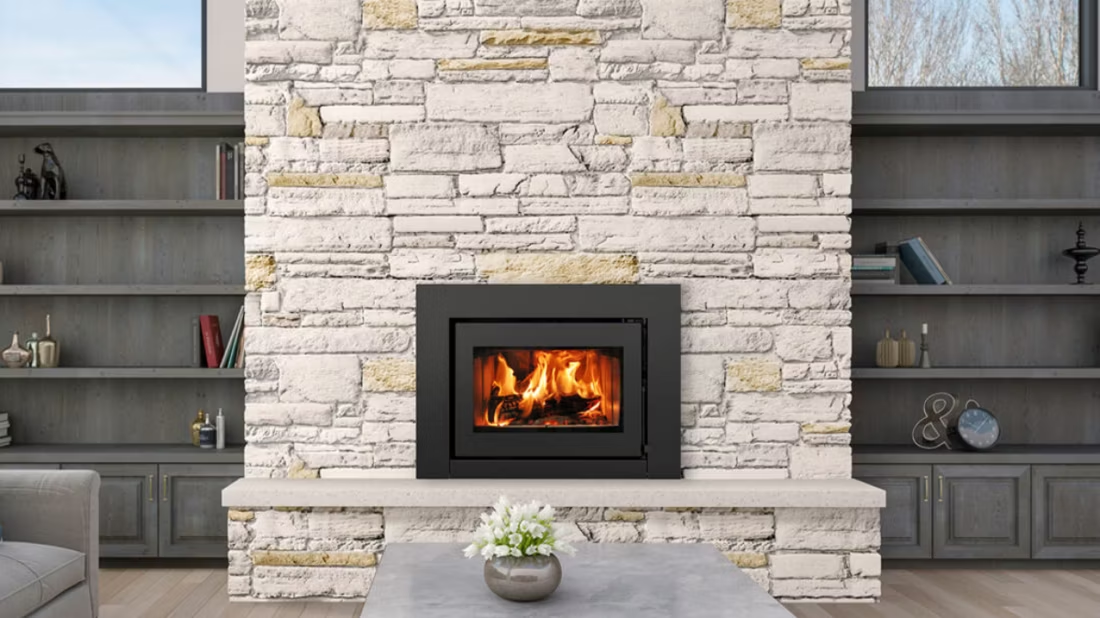
Open fireplaces suck—literally. As the fire burns, it consumes air your furnace already paid to heat and pulls it out through the chimney, so the house is actually colder after the fire goes out than before you lit it. An insert fixes this: it seals the chimney, puts fixed glass across the front, and turns that hole in your house into a real heat source.
Why is a fireplace insert so efficient?
An insert does two things: it seals the chimney completely, so you stop losing air you already paid to heat, and it radiates warmth into the room through the firebox and glass. Most add a heat-exchange fan that pulls cool room air underneath, wraps it around the hot firebox, and pushes it back out warm. Your home is more efficient before you've even lit the first fire.
How much should I budget for a fireplace?
For an average home—covering the fireplace, the vent pipe, and basic installation—a budget between $3,900 and $5,500 gives you a lot of options across wood, gas, and pellet. By the time you add finish work, gas line, and electrical, the average complete installation lands between $5,000 and $12,000 all-in. In a remodel or new build, a good rule is to put about 2.5% of the total project cost toward the fireplace.
Can I install a fireplace myself?
If you're putting a fire in your house on purpose, it's best to work with an expert. Unless you're genuinely experienced in framing, gas line, vent pipe, and the national code on clearances to combustibles, have a professional do it—and ideally the same company that sells you the fireplace, so warranty, service, and liability all live under one roof.
Nearby Dealers
Hearth shops serving Peabody and the surrounding area. Every listing shows whether it is a WhyFire partner, a dealer we have verified as authorized for the brands we recommend, or a local business carrying hearth products. No manufacturer pays for placement. How we verify dealers →
Sunline Patio & Fireside
American Chimney Sweeps Inc. Stove Shop
M & M Chimney
Advantage Fireplace, Inc
Boston Fine Home Details
Euroline Tile
Eurosweep
Sweepnman Fireplace Center
The Fireplace Center
Norwood Fireplace
Find your wood fireplace in Peabody.
Tell us about your home and your reason for considering wood—backup heat, an existing fireplace, or ambiance—and we'll match you with a trusted local dealer plus a free Project Guide & Parts List, including the exact parts and vent kit for your project.
Find Your Fireplace →