
The zero-venting fireplace upgrade for Peabody homes.
No chimney, no gas line, no masonry work—just plug it in. Find the right electric fireplace or insert for your Peabody home and connect with a trusted local dealer.
Every Project Starts From One of These Five Situations
Real flame look, no chimney required.
Peabody sits on Massachusetts's North Shore in Essex County, a dense mix of triple-deckers, condos, capes, and mid-century colonials built long before modern venting codes were standard. With average winter lows around 20°F and a heating season that runs a good five to six months, the city sees a genuine New England heating season—but a lot of that housing stock is multi-family or renovated with no working masonry chimney, and there's little practical space or infrastructure here for firewood storage and delivery the way there is in more rural parts of the state. That's a big reason wood stoves and pellet appliances see almost no traction in Peabody, while gas and electric—fuels that don't require a flue or a cord of wood in the driveway—are what homeowners actually install.
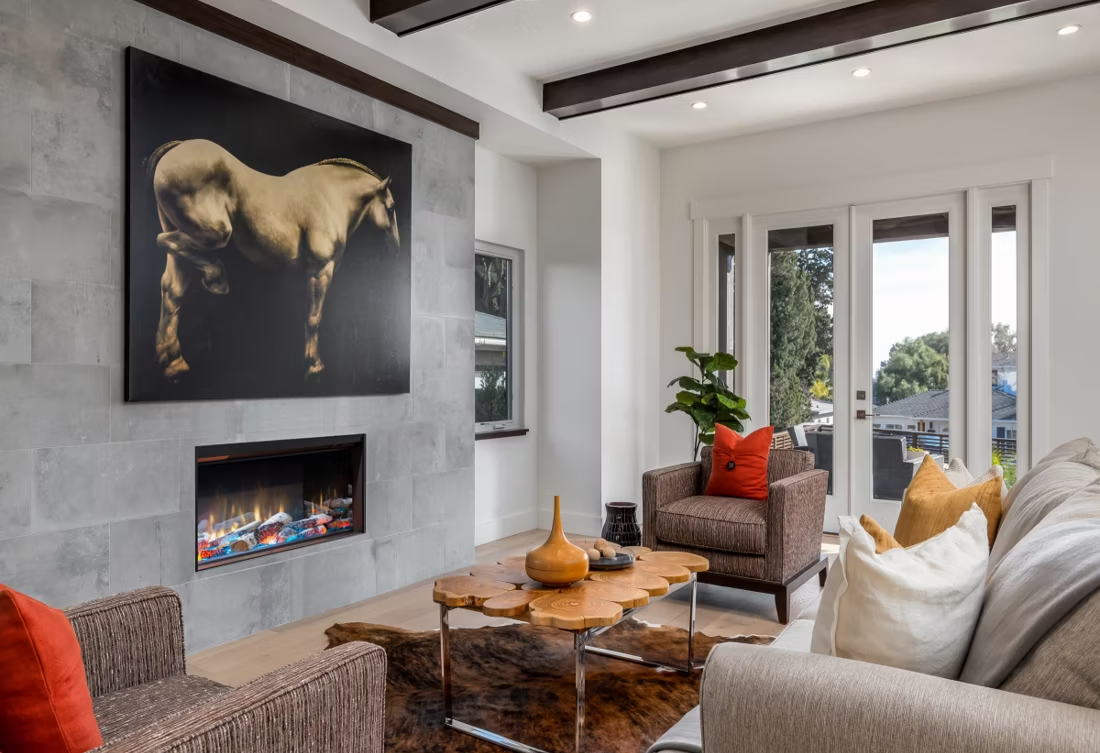
Electric fireplaces and inserts plug into a standard outlet (larger built-ins sometimes need a dedicated 240V circuit run by an electrician), produce no combustion byproducts, and can go almost anywhere—inside an existing fireplace opening, built into a media wall, or as a freestanding unit. Peabody is one of the relatively few Massachusetts communities served by its own municipal light plant rather than an investor-owned utility like Eversource or National Grid; the City of Peabody's residential rate runs about $0.1571 per kWh, which keeps the cost of running a 1,500-watt electric insert for evening zone heat in a bedroom or den reasonably modest.
Three steps. No salesperson until you're ready.
Tell us about your project
Your zip code, your situation, and the fuel you're leaning toward—or let the answers point you to one.
See what's actually available
The brands dealers within 100 miles genuinely carry—real options, never a catalog mirage.
Get your dealer & Project Guide
A trusted local dealer, plus the free Project Guide & Parts List that names every component of the job.
Frequently Asked Questions
How much does an electric fireplace installation cost in Peabody?
A basic plug-in electric fireplace or insert, dropped into an existing opening or media wall cutout, typically runs $500 to $1,500 installed once you factor in the unit and minor carpentry—there's no venting or gas line to run, so labor is far lower than a gas or wood project. Built-in units that require a new dedicated 240V circuit, custom framing, or a full mantel surround run higher, often $1,500 to $4,000+ depending on the finish work. Because there's no combustion involved, electric is consistently the least expensive hearth fuel to install in Peabody's older housing stock.
Do I need a permit to install an electric fireplace in Peabody?
A simple plug-in unit set into an existing fireplace opening generally doesn't require a permit—it's treated like any other appliance you plug in. If your project involves running a new dedicated circuit for a larger built-in unit, that electrical work needs a permit through the City of Peabody's building department and must be done by a licensed Massachusetts electrician. Local dealers who handle installation typically coordinate that permit as part of the job.
Will an electric fireplace heat my whole house?
No—electric fireplaces are supplemental zone heaters, not whole-home heat sources. Most units top out around 1,500 watts (roughly 5,100 BTU), enough to noticeably warm a single room in the 300–400 square foot range, not a whole Peabody colonial or triple-decker unit on a 20°F January night. They're best used to take the edge off a specific room—a den, bedroom, or finished basement—while your furnace or heat pump handles the rest of the house.
Why don't more homes in Peabody use wood or pellet stoves?
Peabody's housing stock—dense triple-deckers, condos, and older homes without functioning masonry chimneys—makes wood and pellet appliances impractical for most residents here, and there's no local cutting-permit infrastructure or easy firewood storage the way there is in the more rural parts of Essex County. Because of that, wood and pellet stoves see very little installation activity in Peabody. Gas and electric are the two fuels that actually make sense given the city's building stock, and electric in particular works well anywhere a chimney or gas line isn't an option.
What's the difference between an electric fireplace and an electric insert?
An electric fireplace is typically a self-contained unit—freestanding, wall-mounted, or built into a new media wall or mantel surround—designed for homes without an existing fireplace opening. An electric insert is sized to slide into an existing masonry or zero-clearance firebox, which is common in older Peabody homes that have a fireplace opening they no longer use for wood but want to keep functional and attractive. Inserts are a popular choice for homeowners who inherited an old wood-burning fireplace and don't want the maintenance or chimney work that comes with it.
How much does it cost to run an electric fireplace in Peabody?
At the City of Peabody's residential rate of about $0.1571 per kWh, a standard 1,500-watt electric fireplace running on its heat setting costs roughly $0.24 per hour to operate. Used for supplemental heat a few hours each evening through the winter—say four hours a night—that works out to around $25 to $35 a month, noticeably cheaper than running central heat to warm one extra room.
Will my electric fireplace work during a power outage?
No—electric fireplaces require utility power to run, so they'll go dark along with everything else during an outage. That's worth factoring in for Peabody homes that lose power during Nor'easters or ice storms, since a gas fireplace with battery-backup ignition would keep producing heat when a purely electric unit can't. If backup heat during outages is a priority, ask a local dealer about pairing an electric fireplace for everyday ambiance with a gas or propane unit elsewhere in the house.
Electric vs. gas—which is right for my Peabody home?
Gas fireplaces put out real heat output and flame, but need a gas line, venting, and permitting through the city—a bigger project, especially in a condo or a home without existing gas service. Electric fireplaces skip all of that: no venting, no gas line, minimal permitting, and lower install costs, but they're limited to supplemental heat and won't run without power. For Peabody condos, rentals, or older homes without a chimney or gas hookup, electric is often the only realistic way to get fireplace ambiance without a major renovation.
Where can I find a local dealer for electric fireplaces in Peabody?
Local hearth and electrical retailers serving the Peabody and North Shore area carry electric fireplace and insert lines and can size a unit correctly for your room and circuit. Find My Fireplace matches you with a trusted local dealer rather than pointing you to a big-box aisle, so the unit you get is one a local pro can actually install and stand behind.
How much does an electric fireplace cost to run?
With the heater on, a typical unit draws about 1,500 watts—at average electric rates that's roughly 20 cents an hour. Run the flame effect alone and it costs pennies; the flames are LED-driven and use about as much power as a light bulb. There's no pilot light, no fuel delivery, and essentially no maintenance.
Can I put a TV above my fireplace?
Yes—with an asterisk. Fireplaces are hot and TVs don't like heat. Either put a mantel between them to deflect rising warmth, or choose a fireplace with heat-management technology that creates a cool zone on the wall above—the wall stays around 125 degrees, barely warm, while the room still gets full heat. If you like clean lines and don't want a mantel, heat management is the answer.
Can a fireplace actually lower my heating bill?
Yes—by creating a comfort zone. A furnace heats every square foot of the house just to warm the one room you're in; a gas fireplace on low burns roughly a sixth of the gas a typical furnace does. Set the furnace around 55–60 degrees as a baseline, then heat the rooms your family actually uses. Families who heat this way commonly save $20–$60 a month.
Can I install a fireplace myself?
If you're putting a fire in your house on purpose, it's best to work with an expert. Unless you're genuinely experienced in framing, gas line, vent pipe, and the national code on clearances to combustibles, have a professional do it—and ideally the same company that sells you the fireplace, so warranty, service, and liability all live under one roof.
Nearby Dealers
Hearth shops serving Peabody and the surrounding area. Every listing shows whether it is a WhyFire partner, a dealer we have verified as authorized for the brands we recommend, or a local business carrying hearth products. No manufacturer pays for placement. How we verify dealers →
Sunline Patio & Fireside
American Chimney Sweeps Inc. Stove Shop
M & M Chimney
Advantage Fireplace, Inc
Boston Fine Home Details
Euroline Tile
Eurosweep
Sweepnman Fireplace Center
The Fireplace Center
Norwood Fireplace
Electric Service in Peabody
An electric fireplace's heater draws about 1,500 watts—pennies per hour at local rates.
City Of Peabody - (Ma)
Find your electric fireplace in Peabody.
Tell us about your home and we'll match you with a trusted local Peabody dealer and send over a free Project Guide & Parts List—the exact unit, circuit requirements, and installation plan for your space.
Find Your Fireplace →