
Automatic heat for North Lakeville's long, damp winters.
A hopper full of pellets and a thermostat setting—that's the pitch for Plymouth County homes tired of splitting and stacking wood. Find the right stove or insert and connect with a trusted local dealer.
Every Project Starts From One of These Five Situations
Consistent heat without cutting or splitting wood.
North Lakeville sits in a 5A climate zone with a long, true New England heating season and average winter lows around 17°F—a solid six-plus months of cold weather, though nothing like the wood-heat culture of northern Maine or Vermont. There's no air quality non-attainment designation here and no winter burn bans to navigate, which means the choice between pellet, wood, and gas comes down to convenience and cost rather than regulation.
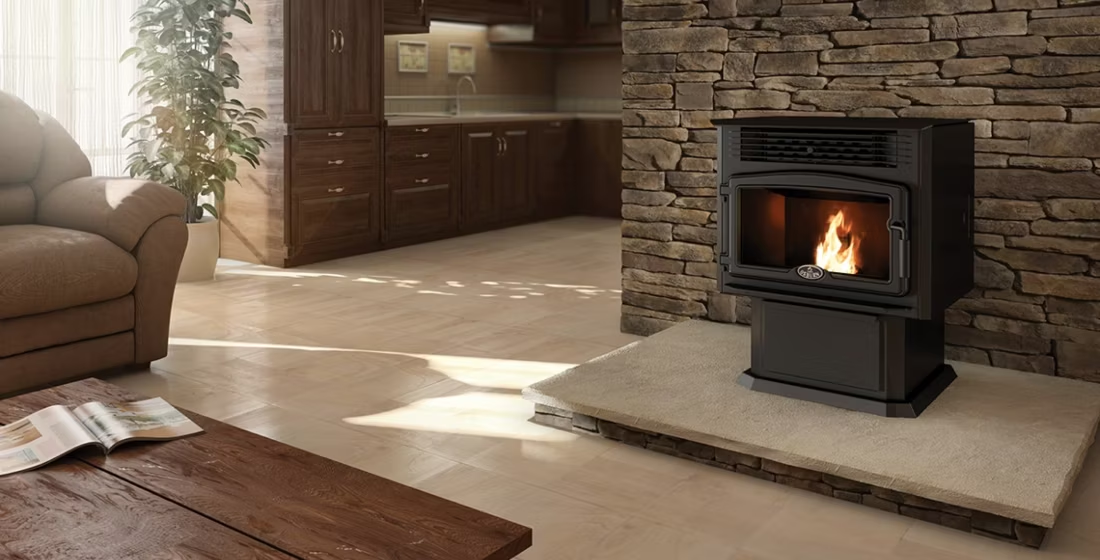
That's exactly where pellet stoves earn their keep. A hopper-fed unit runs for 24 to 72 hours on a single load, holds a steady temperature better than cordwood, and skips the splitting, stacking, and creosote buildup that come with a wood stove. Regional pellet brands like New England Wood Pellet and Maine Woods Pellet Co. are made close enough to home that supply and pricing stay stable through a Massachusetts winter, and Lignetics bags are easy to find at hardware stores and farm supply stores throughout Plymouth County.
Three steps. No salesperson until you're ready.
Tell us about your project
Your zip code, your situation, and the fuel you're leaning toward—or let the answers point you to one.
See what's actually available
The brands dealers within 100 miles genuinely carry—real options, never a catalog mirage.
Get your dealer & Project Guide
A trusted local dealer, plus the free Project Guide & Parts List that names every component of the job.
Frequently Asked Questions
How much does a pellet stove installation cost in North Lakeville?
Most pellet stove installations in this part of Plymouth County run $3,500 to $7,000, depending on the unit and the venting path. A freestanding stove vented through an exterior wall with PL vent pipe sits on the lower end. A pellet insert going into an existing masonry fireplace—which requires a stainless liner sized for pellet exhaust—typically lands in the middle to upper end once the liner and surround panel are factored in. Homes without an existing chimney or a nearby exterior wall for venting will run higher due to added framing and vent routing. A local dealer will give you a firm number after seeing the install location.
What size pellet stove do I need for a North Lakeville home?
With winter lows averaging around 17°F and a full New England heating season, most single-family homes in the 1,500–2,200 square foot range do well with a mid-size pellet stove rated for 40,000–60,000 BTUs, assuming reasonable insulation. Smaller capes and older homes with less insulation may need a unit on the higher end of that range to keep up on the coldest nights, while a well-insulated newer build might get by with less. Because pellet stoves run most efficiently near their rated output rather than throttled way down, a local dealer sizing the unit to your actual square footage—not just a rule of thumb—matters more here than with wood.
Where can I buy pellets locally near North Lakeville?
New England Wood Pellet and Maine Woods Pellet Co. are both widely stocked at hardware stores, Agway locations, and farm supply retailers across the Middleborough and Taunton corridor, and Lignetics bags show up at most big-box hardware chains as well. Premium softwood pellets (lower ash content, cleaner burn) typically run somewhat more per ton than standard hardwood blends. Buying a season's supply—usually 2 to 3 tons for a primary-heat home—in late summer or early fall tends to get better pricing and availability than waiting until December, when regional supply tightens.
Do I need a permit to install a pellet stove in North Lakeville?
Yes. Installations in North Lakeville fall under the Town of Lakeville Building Department, which requires a permit for any new venting through a wall or roof, plus an inspection to confirm clearances and vent termination meet code. Because pellet stoves vent through smaller-diameter PL pipe rather than a full masonry chimney, the permit process is usually quicker than a wood stove install. Most local hearth dealers pull the permit and schedule the inspection as part of the installation, so it's rarely something homeowners have to manage themselves.
Will my pellet stove still work if the power goes out?
Not on its own. Pellet stoves rely on an electric auger to feed fuel and a blower to move heat into the room, so a power outage stops the stove even with a full hopper. NSTAR Electric serves North Lakeville, and outages here are typically weather-related—nor'easters and summer storms both take lines down in Plymouth County. Some homeowners pair a pellet stove with a small battery backup or generator specifically to keep the auger and igniter running through an outage; if backup heat during power loss matters to you, a wood stove or vent-free propane unit as a secondary source is worth discussing with a local dealer.
Pellet stove vs. wood stove—which makes more sense here?
Wood is genuinely accessible in this part of Massachusetts—oak, maple, birch, and ash are the common local species, and there's no shortage of firewood suppliers or wooded property owners looking to sell a few cords. Wood stoves also keep working with no electricity, which matters during Plymouth County's occasional nor'easter-driven outages. Pellet stoves trade that off for convenience: no splitting or stacking, more consistent heat output, easier ignition, and less creosote and chimney maintenance. For a primary living space where you want set-it-and-forget-it heat, pellet usually wins; for backup heat that survives an outage, wood still has the edge.
Should I get a pellet insert or a freestanding pellet stove?
If you already have a working masonry fireplace, a pellet insert is usually the better fit—it slides into the existing firebox, uses a smaller vent liner run up the chimney, and keeps your mantel and surround intact. If you don't have an existing fireplace, a freestanding stove vented through a nearby exterior wall is typically simpler and less expensive to install than building a new chase for an insert. Either way, pellet units need a nearby electrical outlet for the auger and blower, which is worth flagging to your installer if the intended location is far from existing wiring.
How often does a pellet stove need to be cleaned and serviced?
Ash pans should be emptied every few days to weekly depending on use, and the burn pot needs a quick scrape every day or two during heavy heating season to keep airflow and combustion efficient. Beyond that, plan on a full annual service—cleaning the exhaust venting, checking the auger motor and blower, and inspecting gaskets—ideally in late summer before the heating season starts. Skipping the annual service is the most common reason pellet stoves start smoking back into the room or losing heat output partway through a Massachusetts winter.
What's a good pellet stove brand for a North Lakeville home?
Most homeowners here do well with mid-size units from Harman, Lopi, or Quadra-Fire, all of which are common enough in New England that parts and service techs aren't hard to find. Harman stoves in particular have a long track record in cold-climate Northeast installs and tend to hold resale value if you ever sell the house. Whichever brand you land on, it's worth confirming with your local dealer which regional pellet brand—Lignetics, New England Wood Pellet, or Maine Woods Pellet Co.—burns cleanest in that specific model, since burn pot design varies enough that pellet fit matters.
Why is my open fireplace making my house colder?
Open fireplaces suck—literally. As the fire burns, it consumes air your furnace already paid to heat and pulls it out through the chimney, so the house is actually colder after the fire goes out than before you lit it. An insert fixes this: it seals the chimney, puts fixed glass across the front, and turns that hole in your house into a real heat source.
What's the difference between an insert and a zero-clearance fireplace?
An insert is a fireplace that slides into a pre-existing wood-burning fireplace—if you don't have one, there's nothing to insert it into. A zero-clearance fireplace is built into a framed wall, which makes it the answer for remodels and new construction. Simple test: existing masonry fireplace means insert; blank or framed wall means zero-clearance.
Can I install a fireplace myself?
If you're putting a fire in your house on purpose, it's best to work with an expert. Unless you're genuinely experienced in framing, gas line, vent pipe, and the national code on clearances to combustibles, have a professional do it—and ideally the same company that sells you the fireplace, so warranty, service, and liability all live under one roof.
How much should I budget for a fireplace?
For an average home—covering the fireplace, the vent pipe, and basic installation—a budget between $3,900 and $5,500 gives you a lot of options across wood, gas, and pellet. By the time you add finish work, gas line, and electrical, the average complete installation lands between $5,000 and $12,000 all-in. In a remodel or new build, a good rule is to put about 2.5% of the total project cost toward the fireplace.
Nearby Dealers
Hearth shops serving North Lakeville and the surrounding area. Every listing shows whether it is a WhyFire partner, a dealer we have verified as authorized for the brands we recommend, or a local business carrying hearth products. No manufacturer pays for placement. How we verify dealers →
August West Chimney Co. & Fireplace Conc
Woodstove & Fireplaces Unlimited
Mr. Chimney Woodstoves & Fireplaces
Acushnet Alternative Heating
South Shore Fireplace Inc
Hearth Heating, Inc
Plymouth Fireplace
Backyard Living
Mr. Chimney's Stove Shoppe
Flue Brothers Chimney Sweeps
The Fireplace Store @ Aspinwall Plumbing - Marshfield
Eurosweep
Pellet Brands Stocked Around North Lakeville
Manufacturers will point you to the nearest stocking dealer.
Find your pellet stove in North Lakeville.
Tell us about your home and heating goals, and we'll match you with a trusted local dealer plus a free Project Guide & Parts List—sized venting, the right stove for your space, and no big-box guesswork.
Find Your Fireplace →