
Pellet stoves are the exception on Nantucket, not the rule.
Thirty miles out in the Atlantic, propane and electric do most of the heating work. If pellet heat still makes sense for your home—a workshop, a guest cottage, a specific room—we'll match you with a dealer who can actually get it installed here.
Every Project Starts From One of These Five Situations
The Steamship Authority decides what heats your home.
Nantucket is an island roughly 30 miles off Cape Cod, and every pound of building material, fuel, and appliance hardware that reaches a home here first has to clear a ferry crossing on the Steamship Authority. That single fact shapes heating choices more than climate does. The island sits in Climate Zone 5A—cold, damp winters with plenty of wind off the water—but there's no local air quality restriction on solid-fuel burning (none reported for the county), so it isn't smoke rules keeping pellet stoves off the island. It's logistics and, in the historic core, the Historic District Commission's review of any new exterior venting or roof penetration on the gray-shingled homes that define downtown and 'Sconset.
With a wintertime population that drops into the low hundreds once the seasonal crowds leave, there simply isn't the year-round demand to support a local pellet supply chain the way a mainland New England town would. Islanders who heat with solid fuel more often burn oak, maple, birch, or ash in a wood fireplace or stove—species that grow locally or come over by truck-and-ferry as cordwood—rather than committing storage space in a historic cottage to pallets of 40-lb pellet bags that also have to cross on a boat. Most Nantucket homes instead rely on propane (trucked and ferried in, since there's no natural gas main on the island) or the electric grid, which arrives via undersea cable and is often backed up by a generator for nor'easter outages. A pellet stove isn't impossible here—it's just a special-order project rather than an off-the-shelf one, and a local or Cape Cod-based dealer needs to plan the freight before anything else.
Three steps. No salesperson until you're ready.
Tell us about your project
Your zip code, your situation, and the fuel you're leaning toward—or let the answers point you to one.
See what's actually available
The brands dealers within 100 miles genuinely carry—real options, never a catalog mirage.
Get your dealer & Project Guide
A trusted local dealer, plus the free Project Guide & Parts List that names every component of the job.
Frequently Asked Questions
Can you even get a pellet stove installed on Nantucket?
Yes, but it's a special-order project rather than a stock item at a local shop. Nantucket doesn't have year-round retail demand to keep pellet stoves on a showroom floor, so a dealer—typically one based on the Cape who already services island clients—orders the unit, arranges freight on the Steamship Authority, and schedules the install around a ferry slot. It's entirely doable; it just takes more lead time than picking one up at a hearth shop on the mainland.
How would I actually get bagged pellets delivered to the island?
Pellets ship the same way most bulk goods reach Nantucket—by truck to a mainland terminal, then across on a Steamship Authority freight boat. Brands sold regionally in New England, including Lignetics, New England Wood Pellet, and Maine Woods Pellet Co, are all realistic options, but you're paying for freight on top of the pellets themselves, and you need enough dry storage in your home or outbuilding to keep a season's supply on hand rather than restocking weekly the way you might on the mainland.
Why do so few Nantucket homes use pellet stoves?
It comes down to storage, freight, and service access rather than any local ordinance against them. A pellet stove needs a steady supply of 40-lb bags stored somewhere dry, and historic Nantucket homes—many with small footprints and no basement—often don't have the space to spare. Add the cost and hassle of ferrying pellets over compared to a propane truck that can fill a tank in one visit, and most islanders default to propane or electric instead. Pellet heat still works for a garage, workshop, or standalone guest cottage where a homeowner is committed to managing the fuel supply.
Will the Historic District Commission allow a pellet stove vent pipe?
Any exterior venting visible from a public way—including a pellet stove's wall or roof vent—is subject to review by Nantucket's Historic District Commission if the home sits within the historic district, which covers most of the island. This isn't unique to pellet stoves; the same review applies to gas fireplace venting and most exterior alterations. A local installer familiar with HDC review can usually route venting discreetly and knows what documentation the commission expects, which is one more reason to work with a dealer who already has island experience rather than a mainland-only contractor.
Is propane or electric a better fit than pellet for a Nantucket home?
For most islanders, yes. Propane is trucked and ferried in and is the standard heating fuel here since there's no natural gas main on Nantucket, so a propane fireplace or stove taps into infrastructure that's already common in island homes. Electric options tie into the grid that arrives via undersea cable, with many homes running a backup generator for the nor'easters that knock out power. Both skip the bagged-fuel storage and freight planning that a pellet stove requires, which is why they're the default for year-round and seasonal homes alike.
Does it make sense to install a pellet stove in a garage or guest cottage?
This is where pellet heat on Nantucket actually pencils out for some homeowners—a detached workshop, garage, or small guest cottage that doesn't need to be tied into the whole-house propane or electric system. A single pellet stove can heat that space efficiently, and because it's a standalone building, the historic district and fuel-storage constraints that apply to the main house are often easier to work around. It's a smaller, self-contained project—the kind a mainland dealer can plan a single freight shipment around.
What do most Nantucket homeowners actually heat with?
Propane and electric dominate. With no natural gas main serving the island, propane delivered by truck and ferry is the closest thing Nantucket has to a standard heating fuel, often paired with a generator for backup power during winter storms. Wood fireplaces burning locally available oak, maple, birch, or ash are also common for ambiance and supplemental heat in older homes. Pellet stoves are the outlier—present on the island, but chosen deliberately rather than by default.
What pellet stove brands can a dealer bring out to Nantucket?
Regional New England pellet brands like Lignetics, New England Wood Pellet, and Maine Woods Pellet Co supply the fuel side, and most major pellet stove manufacturers can be special-ordered through a Cape Cod-based hearth dealer who already handles island freight logistics. The brand isn't usually the limiting factor—it's finding a dealer willing to coordinate the ferry shipment and schedule an install crew for a single-unit island job, which is exactly the kind of match we make.
Pellet vs. propane vs. electric—which makes the most sense on Nantucket?
Propane wins on convenience since it's already the island's default heating fuel, with delivery infrastructure that exists specifically because there's no natural gas main here. Electric wins on simplicity for a supplemental unit, provided you're comfortable relying on the grid or have generator backup for storm outages. Pellet only makes sense when a homeowner has a specific standalone use—a workshop, garage, or guest cottage—and is willing to manage bagged fuel storage and occasional freight shipments. For a primary residence in the historic district, propane or electric is almost always the more practical starting point.
Why is my open fireplace making my house colder?
Open fireplaces suck—literally. As the fire burns, it consumes air your furnace already paid to heat and pulls it out through the chimney, so the house is actually colder after the fire goes out than before you lit it. An insert fixes this: it seals the chimney, puts fixed glass across the front, and turns that hole in your house into a real heat source.
How often does a pellet stove need cleaning?
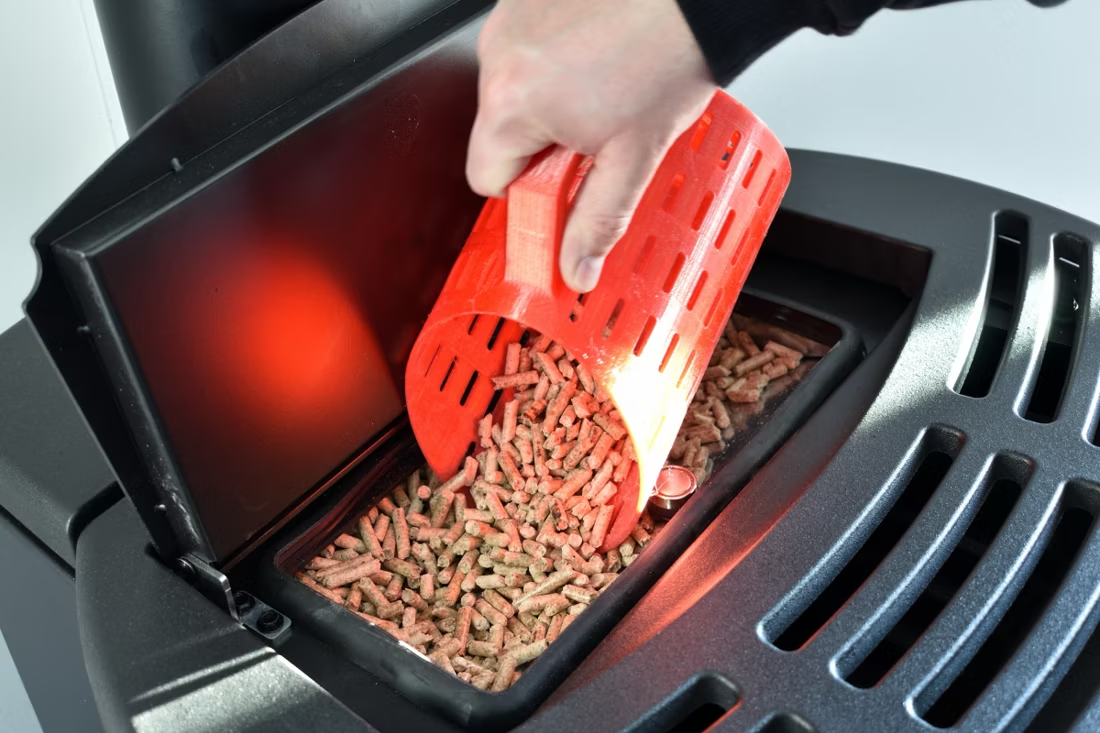
A clean pellet stove is a happy pellet stove. Plan on cleaning the burn pot about once a week when you're burning regularly—ash and clinkers gum up the air holes just like a pellet barbecue. Most pellet stove problems trace back to skipped cleaning that nobody explained up front. Some designs make it easy with a trapdoor burn pot: pull a lever and the gunk drops into the ash pan.
How much should I budget for a fireplace?
For an average home—covering the fireplace, the vent pipe, and basic installation—a budget between $3,900 and $5,500 gives you a lot of options across wood, gas, and pellet. By the time you add finish work, gas line, and electrical, the average complete installation lands between $5,000 and $12,000 all-in. In a remodel or new build, a good rule is to put about 2.5% of the total project cost toward the fireplace.
Can a fireplace actually lower my heating bill?
Yes—by creating a comfort zone. A furnace heats every square foot of the house just to warm the one room you're in; a gas fireplace on low burns roughly a sixth of the gas a typical furnace does. Set the furnace around 55–60 degrees as a baseline, then heat the rooms your family actually uses. Families who heat this way commonly save $20–$60 a month.
Pellet Brands Stocked Around Nantucket County
Manufacturers will point you to the nearest stocking dealer.
Find out if pellet heat fits your Nantucket home.
Tell us about your project—main house, workshop, or guest cottage—and we'll send a free Project Guide & Parts List with the exact parts, including the vent kit, and match you with a trusted dealer who knows how to get a pellet install planned, freighted, and permitted for the island.”}
Find Your Fireplace →