
Plug-in warmth that fits Nantucket's historic rules.
No chimney, no gas line, no exterior venting to fight through the Historic District Commission—just plug-in warmth for island homes, from Town to Siasconset to Madaket. Find the right unit and connect with a trusted local dealer.
Every Project Starts From One of These Five Situations
The fireplace that skips the chimney fight.
Nantucket's year-round population is small—county figures put it under 500 residents—but the island's housing stock is dominated by historic homes and seasonal properties, many governed by the Nantucket Historic District Commission (HDC), which reviews anything visible from a public way: rooflines, exterior siding, and yes, chimneys and flue penetrations. For a homeowner without existing masonry to work with, adding a vented gas or wood-burning fireplace can mean a slow HDC application process before a single brick gets laid. Electric fireplaces sidestep that entirely—no exterior venting, no roof penetration, nothing for the commission to weigh in on—which is why they've become a practical default across the island's antique capes, shingled cottages, and newer construction alike.
Nantucket's Zone 5A climate is milder than inland New England thanks to the moderating effect of the Atlantic, so a fireplace here is more often supplemental zone heat than a primary heat source—a role electric fills well. Wood and pellet stoves, by contrast, are essentially absent on the island: there's no public land open to firewood cutting, no local sawmill supply chain, and every log or bag of pellets (brands like Lignetics or New England Wood Pellet, common on the mainland) would have to arrive on the same ferry that brings groceries and lumber. The oak, maple, birch, and ash that do get burned locally mostly come from storm cleanup and landscaping work, used occasionally for ambiance in a handful of original masonry fireplaces rather than as a heating strategy. Electric fireplaces don't need any of that supply chain—just an outlet or a dedicated circuit—which makes them the low-friction choice for guest cottages, condos, rental properties, and any home without a chimney already in place.
Three steps. No salesperson until you're ready.
Tell us about your project
Your zip code, your situation, and the fuel you're leaning toward—or let the answers point you to one.
See what's actually available
The brands dealers within 100 miles genuinely carry—real options, never a catalog mirage.
Get your dealer & Project Guide
A trusted local dealer, plus the free Project Guide & Parts List that names every component of the job.
Frequently Asked Questions
How much does an electric fireplace installation cost on Nantucket?
A basic plug-in electric fireplace or insert typically runs $300 to $1,500 installed, while a built-in wall unit with custom framing, trim carpentry, and a dedicated electrical circuit can run $2,500 to $6,000 depending on the scope of work. Because electric units skip gas lines, chimneys, and venting entirely, labor costs run lower than gas or wood installs—though island contractors often carry a premium tied to ferry-dependent material delivery and scheduling, which affects nearly every trade on Nantucket. A local dealer can quote your specific project after seeing the space.
What size electric fireplace do I need for my Nantucket home?
Electric fireplaces are rated in BTUs, typically 4,000 to 5,000, which covers roughly 400 to 1,000 square feet depending on ceiling height and insulation. Most Nantucket homes—especially the antique capes and shingled cottages that make up much of the historic core—use an electric fireplace as zone heat in a single room, like a living room, primary bedroom, or den, paired with the home's existing heat pump, oil furnace, or propane system for whole-house heat. A local dealer can size the unit correctly based on your floor plan and how the room is insulated.
Does an electric fireplace need Historic District Commission approval?
In most cases, no. Because electric fireplaces install entirely inside the home and require no flue, no exterior venting, and no roof or wall penetration, they generally fall outside HDC review, which governs anything visible from a public way. That said, if your project involves new exterior-visible electrical service or panel upgrades, it's worth a heads-up to your contractor or the Nantucket Building Department. This is one of the biggest practical advantages of electric on an island where adding a simple chimney can turn into a multi-month approval process.
Does an electric fireplace actually put out heat, or is it just for looks?
It puts out real, if modest, heat. Most electric fireplaces produce 4,000 to 5,000 BTUs—comparable to a good space heater—and are built as supplemental zone heat rather than a whole-home heat source. In Nantucket's Zone 5A climate, with winters milder than inland cities like Worcester or Boston thanks to the Atlantic's moderating effect, an electric fireplace in a well-insulated room can meaningfully take the edge off on shoulder-season evenings. It won't replace your furnace during a January nor'easter, but it earns its keep the rest of the year.
Why don't more people on Nantucket use wood or pellet stoves?
It's mostly logistics, not air quality—Nantucket has no air quality restrictions on burning. The island simply has no public land open to firewood cutting, no local sawmill supply chain, and every cord of wood or bag of pellets (brands like Lignetics or New England Wood Pellet, common on the mainland) would need to arrive by the same ferry that brings groceries and building materials. Add HDC scrutiny on new chimneys and exterior venting, and the math rarely favors wood or pellet appliances here. The small number of wood-burning fireplaces on the island are almost all original masonry fireplaces in older homes, occasionally fed with oak, maple, birch, or ash for ambiance rather than heat. Electric fills the gap for anyone without an existing chimney to work with.
Should I choose gas or electric for my Nantucket fireplace?
Propane is the standard 'gas' option on the island since there's no natural gas main serving Nantucket—tanks are trucked in off the ferry and refilled on a delivery schedule, with above-ground or buried tanks common in yards across the island. A gas fireplace needs that propane infrastructure, a gas line, and for most models a vented flue through a wall or roof—exactly the kind of exterior alteration the HDC scrutinizes closely. Electric fireplaces skip all of it: no tank, no gas line, no venting, just an outlet or a dedicated circuit for larger built-ins. For homeowners without existing propane service, electric is usually the faster and simpler path.
Will my electric fireplace work during a power outage?
No—electric fireplaces need a working outlet or circuit, so they'll go dark during an outage. That matters on Nantucket, where nor'easters and late-season tropical storms can knock out power for a day or more. Many island homeowners pair an electric fireplace, used for everyday ambiance and zone heat, with a portable or whole-house generator for backup, which is common practice here given the island's storm exposure. If backup heat during outages is a priority, ask a local dealer whether your chosen unit can run cleanly on a generator circuit.
Insert, built-in, or freestanding—which electric fireplace fits my home?
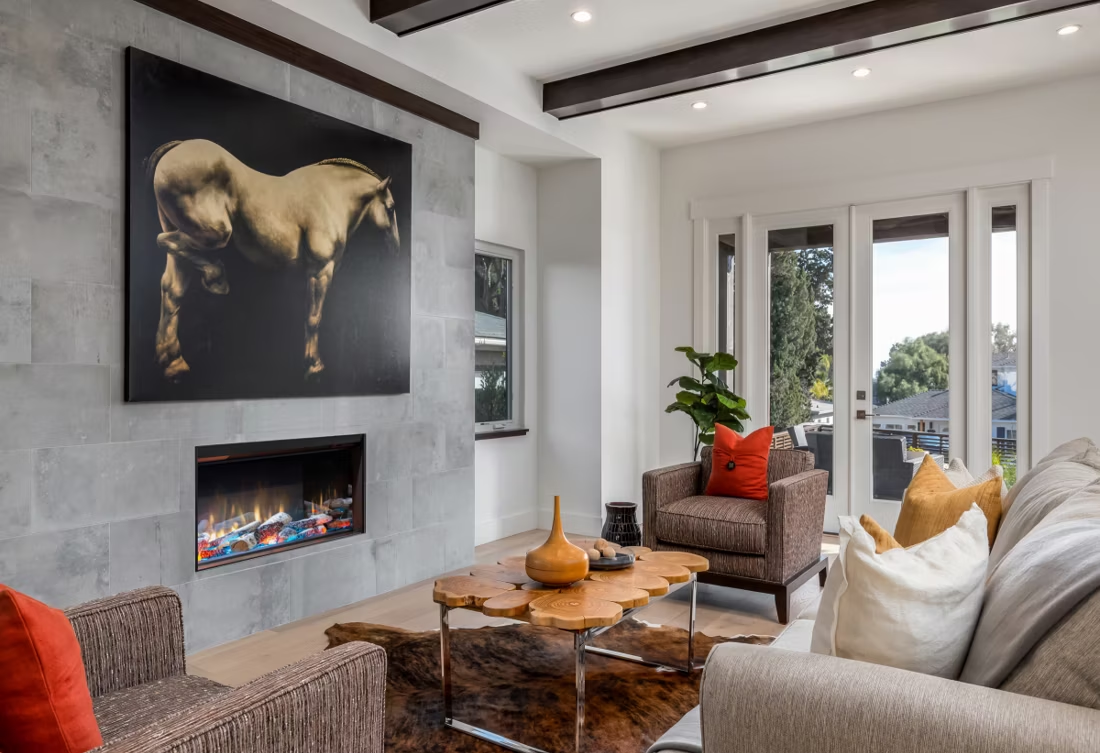
An electric insert drops into an existing fireplace opening, which suits Nantucket's older homes that have a masonry firebox no longer used for wood burning. A built-in, or linear, unit gets framed into a wall during a remodel or new build, which is popular in the island's newer construction and condo developments. A freestanding or mantel-style unit needs nothing beyond an outlet, making it a favorite for seasonal rental cottages and guest houses where owners want ambiance without any construction. A local dealer can help match the format to your home, whether it's a two-hundred-year-old sea captain's house or new construction off Milestone Road.
Does Nantucket's salt air cause maintenance problems for electric fireplaces?
Salt air is hard on exposed metal—chimney caps, flue liners, and gas venting components all take a beating from the island's marine environment over time. Electric fireplaces mostly avoid that problem since there's no venting, flue, or chimney exposed to the weather; the unit itself lives indoors. Maintenance is limited to dusting, occasionally replacing an LED light strip or heating element on older models, and keeping the electrical connection up to code. For waterfront or exposed properties around the island, that's a meaningfully lower-maintenance choice than anything requiring outdoor venting.
Can I put a TV above my fireplace?
Yes—with an asterisk. Fireplaces are hot and TVs don't like heat. Either put a mantel between them to deflect rising warmth, or choose a fireplace with heat-management technology that creates a cool zone on the wall above—the wall stays around 125 degrees, barely warm, while the room still gets full heat. If you like clean lines and don't want a mantel, heat management is the answer.
Do electric fireplaces actually produce heat?
Yes—most put out around 4,800–5,000 BTUs from a standard outlet, which comfortably warms a bedroom, office, or den as a comfort-zone heater. What they won't do is carry a whole house the way wood, gas, or pellet can. Think of electric as ambiance-first with honest supplemental heat: flames on with no heat in July, flames plus warmth in January.
Can a fireplace actually lower my heating bill?
Yes—by creating a comfort zone. A furnace heats every square foot of the house just to warm the one room you're in; a gas fireplace on low burns roughly a sixth of the gas a typical furnace does. Set the furnace around 55–60 degrees as a baseline, then heat the rooms your family actually uses. Families who heat this way commonly save $20–$60 a month.
How much should I budget for a fireplace?
For an average home—covering the fireplace, the vent pipe, and basic installation—a budget between $3,900 and $5,500 gives you a lot of options across wood, gas, and pellet. By the time you add finish work, gas line, and electrical, the average complete installation lands between $5,000 and $12,000 all-in. In a remodel or new build, a good rule is to put about 2.5% of the total project cost toward the fireplace.
Find your electric fireplace on Nantucket.
Tell us about your home and we'll match you with the right electric fireplace or insert—and send you a free Project Guide & Parts List with your recommended local dealer.
Find Your Fireplace →