
Warmth and ambiance, no chimney needed, across Middlesex County.
From Cambridge condos to Concord colonials, Middlesex County's dense mix of historic homes, triple-deckers, and modern high-rises has made electric fireplaces the most installable heat-and-ambiance option in the county. Find the right unit and get matched with a trusted local dealer.
Every Project Starts From One of These Five Situations
In Middlesex County, housing stock makes electric the practical choice.
Middlesex County is home to 887,535 people packed into cities and towns that range from Cambridge triple-deckers and Somerville brick rowhouses to the 18th-century colonials of Concord and Lexington. Winters here are genuinely cold—climate zone 5A, an average winter low of 19°F, and a heating load roughly on par with Madison, Wisconsin. That's cold enough that a fireplace needs to do real work, not just look nice, for a good chunk of the year.
Wood stoves and pellet stoves rarely make sense in this county's housing stock—most Middlesex homes are attached, sit in historic districts, or belong to condo buildings where adding a chimney, flue, or hopper simply isn't possible, which is why both are marked not applicable for this county. Electric is different: a 120V plug-in insert or 240V built-in linear unit needs no venting, no gas line, and no masonry work, making it the only realistic upgrade for a Cambridge or Somerville condo, a Waltham apartment, or a Lexington colonial where the historical commission won't approve exterior chimney changes. Eversource, the primary electric utility across most of the county, keeps these units running on a standard household circuit—no fuel delivery, no tank, no cord of wood to stack.
Three steps. No salesperson until you're ready.
Tell us about your project
Your zip code, your situation, and the fuel you're leaning toward—or let the answers point you to one.
See what's actually available
The brands dealers within 100 miles genuinely carry—real options, never a catalog mirage.
Get your dealer & Project Guide
A trusted local dealer, plus the free Project Guide & Parts List that names every component of the job.
Frequently Asked Questions
How much does an electric fireplace installation cost in Middlesex County?
Most electric fireplace projects in Middlesex County run from around $300 for a simple plug-in insert into an existing mantel opening up to $2,000-$2,500 for a larger built-in linear unit with custom surround work and a dedicated 240V circuit. Condo and apartment installs in cities like Cambridge, Somerville, and Malden tend to land on the lower end since there's no venting or masonry work involved—usually just an electrician's visit to confirm the circuit can handle the load. Larger great-room installs in single-family homes in towns like Newton or Concord, especially ones requiring new millwork or a dedicated line, sit at the higher end.
Will an electric fireplace still work during a power outage?
No—and this is worth knowing before you buy, especially given how cold Middlesex County winters get. Electric fireplaces run on household current, so a New England nor'easter that knocks out power takes the fireplace out with it, unlike a wood stove or a battery-backed gas unit. If backup heat during outages matters to your household, some homeowners in the county pair an electric fireplace (for daily ambiance and supplemental heat) with a separate backup plan—a generator, a battery system, or the home's furnace. A local dealer can walk through the tradeoffs based on how often your specific street loses power.
Do I need a permit to install an electric fireplace in Middlesex County?
In most cases, a plug-in electric insert that uses an existing outlet doesn't require a permit—it's treated like any other appliance. If your install requires a new dedicated 240V circuit or any new wiring, Massachusetts state electrical code requires a licensed electrician to pull an electrical permit through your city or town's building department, whether that's Cambridge, Lowell, Framingham, or a smaller Middlesex town. Most local dealers coordinate this as part of the install rather than leaving you to schedule inspections yourself.
Electric insert, built-in, or wall-mount—which type fits my home?
An electric insert drops into an existing fireplace opening and is the most common choice for Middlesex County's older homes—the triple-deckers and colonials that already have a masonry firebox but no working chimney. A built-in electric fireplace is framed into a wall during a remodel and works well for condos or newer construction without an existing opening. A wall-mount unit hangs like a large flat panel and is popular in Cambridge and Somerville apartments where floor space and existing openings are both limited. All three deliver similar heat output; the choice mostly comes down to what your existing wall or fireplace opening looks like.
Can I install an electric fireplace in a historic home or condo building?
Yes—this is exactly where electric tends to win in Middlesex County. Towns like Concord, Lexington, and parts of Cambridge have historical commissions that restrict exterior changes, including new chimneys or vent penetrations, which rules out gas and wood options for many older properties. Because electric units need no venting, they don't trigger exterior-alteration review the way a new chimney or direct-vent gas line would. Condo associations generally allow them for the same reason—no shared-wall or roof penetration involved. Always check your specific building's bylaws, but electric is the path of least resistance for most historic and multi-unit properties in the county.
What's the difference between a 120V and 240V electric fireplace?
A 120V unit plugs into a standard household outlet and typically produces around 1,500 watts of heat—enough to warm a single room, which covers most condo and apartment installs across the county. A 240V unit requires a dedicated circuit installed by an electrician and can produce significantly more heat output, making it a better fit for larger rooms in single-family homes in towns like Newton, Framingham, or Waltham. Most standalone inserts and wall-mounts are 120V; larger built-in linear fireplaces are more often 240V. A local dealer will confirm which your room size actually needs.
What does it cost to run an electric fireplace in Middlesex County?
Massachusetts carries some of the higher residential electric rates in the country, so running costs matter more here than in cheaper-power states. A typical 1,500-watt electric fireplace run on high for an evening costs roughly 40 to 50 cents an hour at current Eversource rates—reasonable for occasional ambiance and supplemental heat in a single room, but not cheap as a full-time primary heat source across a winter with a heating load on par with Madison, Wisconsin. Most Middlesex County homeowners use electric fireplaces to supplement a furnace or heat pump on the coldest evenings rather than replace central heat entirely.
What are the best electric fireplace brands for Middlesex County homes?
Dimplex, Napoleon, and SimpliFire are the brands most local Massachusetts dealers carry, and all three make units well suited to the county's mix of housing types—realistic flame technology for the built-ins that become a focal point in a Newton or Concord living room, and slim wall-mount or insert models sized for Cambridge and Somerville apartments. Amantii is another option seen locally for larger linear installs. Since Find My Fireplace doesn't sell hardware or take manufacturer money to favor one brand, the honest answer is that the right brand depends on your room size, mounting situation, and whether you want a 120V plug-in or 240V hardwired unit—a local dealer can show you options in person rather than off a spec sheet.
Electric vs. gas—which is right for my home?
Gas fireplaces put out real heat—enough to serve as genuine supplemental heat on a 19-degree Middlesex County night—but require a gas line or propane tank and, for most installs, some venting work. Electric fireplaces install almost anywhere with no venting and lower upfront cost, but produce less heat and cost more per hour to run given Massachusetts electric rates. For homes already on natural gas with an existing chimney or an easy gas line run, gas is often the better long-term heat source. For condos, historic homes under commission review, or anyone who just wants ambiance and a bit of supplemental warmth without construction, electric is the simpler and often only realistic option.
Do electric fireplaces actually produce heat?
Yes—most put out around 4,800–5,000 BTUs from a standard outlet, which comfortably warms a bedroom, office, or den as a comfort-zone heater. What they won't do is carry a whole house the way wood, gas, or pellet can. Think of electric as ambiance-first with honest supplemental heat: flames on with no heat in July, flames plus warmth in January.
Can I put a TV above my fireplace?
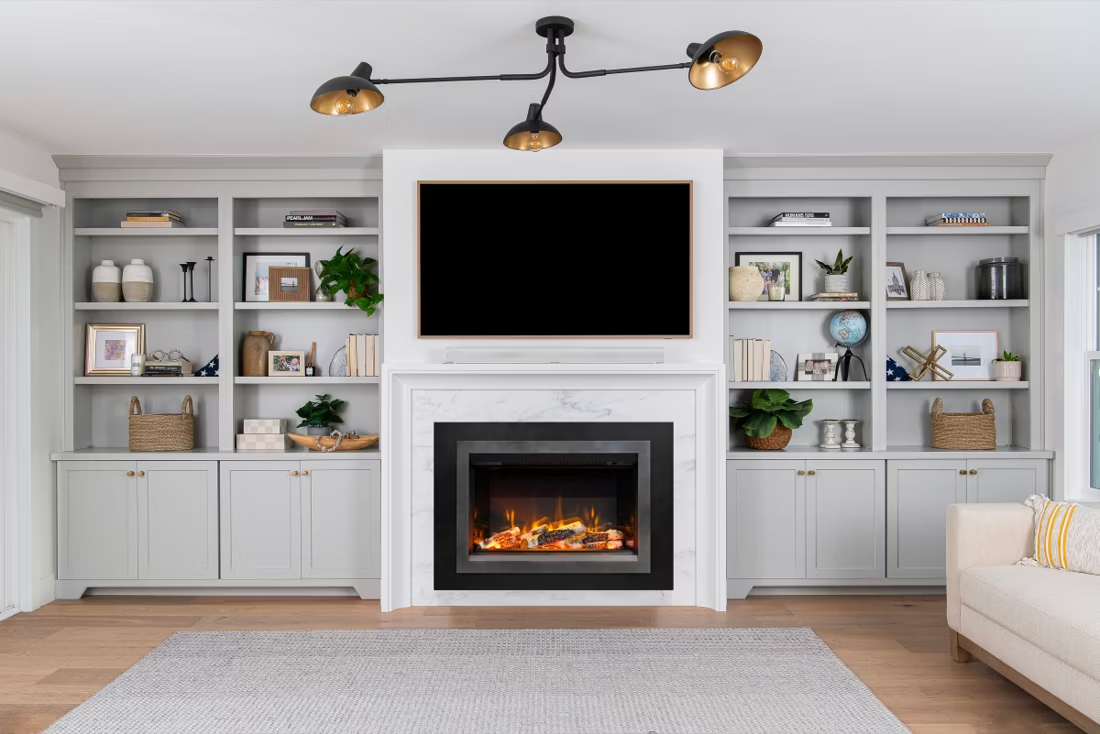
Yes—with an asterisk. Fireplaces are hot and TVs don't like heat. Either put a mantel between them to deflect rising warmth, or choose a fireplace with heat-management technology that creates a cool zone on the wall above—the wall stays around 125 degrees, barely warm, while the room still gets full heat. If you like clean lines and don't want a mantel, heat management is the answer.
What is an in-home preview and do I need one?
It's a visit where a hearth professional measures your space, confirms the model you picked actually works in your home, and walks the specs—framing, gas line, venting, finish work—before anything is ordered. Some details you just can't know until you see the house. Never make a down payment without one; it's the single most-skipped step that burns buyers.
Can a fireplace actually lower my heating bill?
Yes—by creating a comfort zone. A furnace heats every square foot of the house just to warm the one room you're in; a gas fireplace on low burns roughly a sixth of the gas a typical furnace does. Set the furnace around 55–60 degrees as a baseline, then heat the rooms your family actually uses. Families who heat this way commonly save $20–$60 a month.
Stove and Fireplace Dealers in Middlesex County
Listings include WhyFire partner dealers, dealers we have verified as authorized for the brands we recommend, and established local businesses that carry hearth products. Every listing shows which one it is. The ones marked Preferred run on WhyFire's software, so they can show you real pricing and book your appointment right here. No manufacturer pays for placement. How we verify dealers →
M & M Chimney
Boston Fine Home Details
West Sport Gas
Natick Fireplace
Euroline Tile
Sweepnman Fireplace Center
Norwood Fireplace
Sunline Patio & Fireside
American Chimney Sweeps Inc. Stove Shop
Hearthside Fireplace & Patio
Eurosweep
Find your electric fireplace in Middlesex County.
Tell us a bit about your home—condo, colonial, or new construction—and we'll match you with a trusted local dealer and send over a free Project Guide & Parts List for your electric fireplace project in Middlesex County.
Find Your Fireplace →