
Warm up without a chimney, gas line, or wood pile.
With a long, cold heating season and winter lows near 15°F, Littleton Common homes need real zone heat—not just ambiance. Find the right electric fireplace or insert and connect with a trusted local dealer.
Every Project Starts From One of These Five Situations
Simple heat for a historic village center.
Littleton Common is the old colonial-era heart of Littleton, a small Middlesex County village built around its town common and a stock of 18th- and 19th-century homes, many with original masonry fireplaces that haven't burned wood in decades. Winters here are genuinely cold—average lows around 15°F and a long, cold heating season that stretches deep into spring—but plenty of homeowners want fireplace warmth and glow in a den, home office, or finished basement without opening up a chimney, running a gas line, or dealing with permits and inspections.
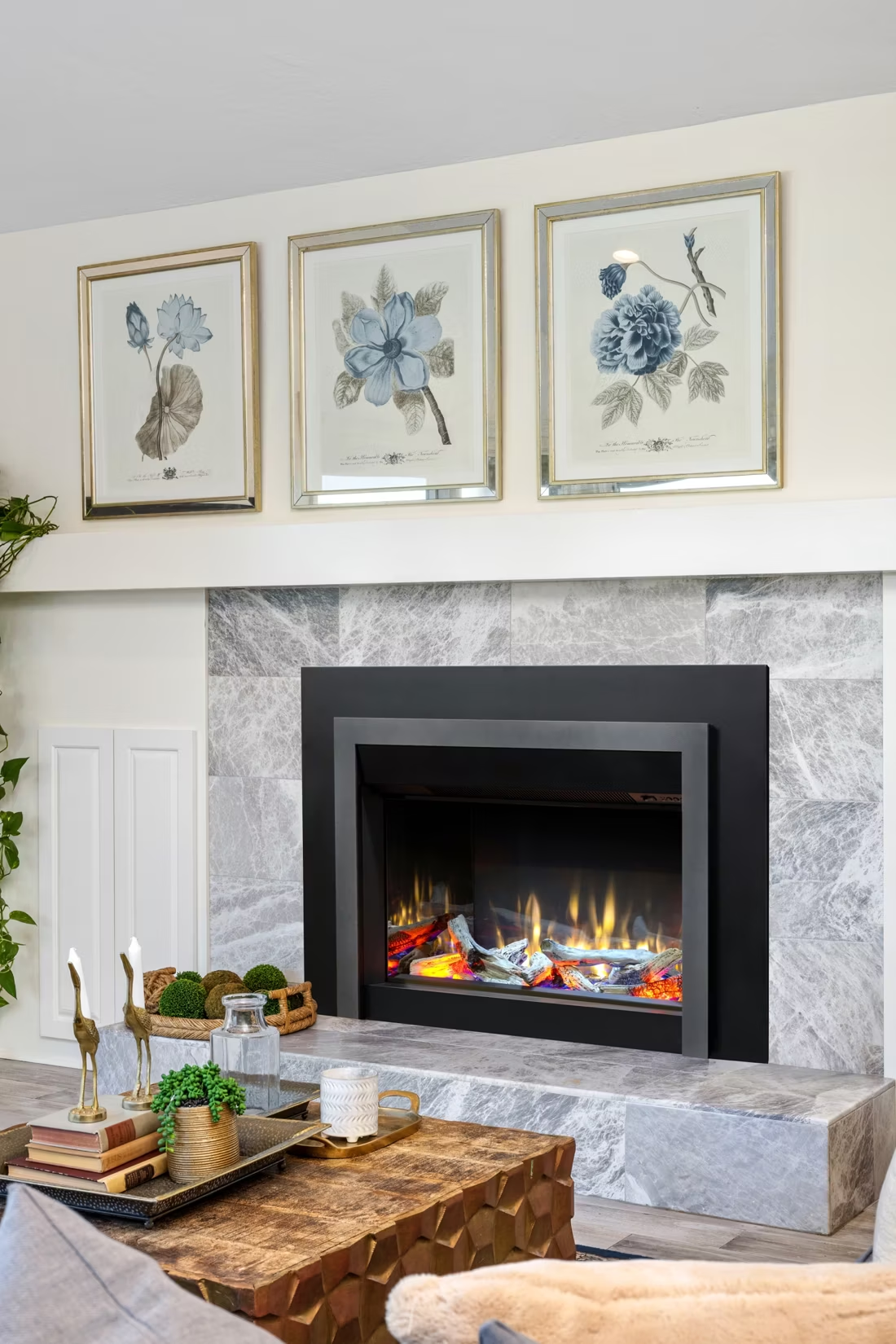
That's where electric comes in. A modern electric insert or built-in unit can drop into an existing masonry firebox, mount flush in a wall, or sit as a freestanding stove, drawing on standard household current. It's worth knowing that electricity costs vary a lot within town: Massachusetts Electric (National Grid) runs about 23.07 cents/kWh and Fitchburg Gas & Electric (Unitil) about 23.97 cents/kWh, while homes served by the Town of Littleton's own municipal light department pay roughly 14.12 cents/kWh—nearly 40 percent less. Electric fireplaces are best understood as supplemental zone heat (typically 1,500 watts, around 5,000 BTU) rather than a replacement for your furnace or heat pump, which matters when you're planning where the heat actually needs to go.
Three steps. No salesperson until you're ready.
Tell us about your project
Your zip code, your situation, and the fuel you're leaning toward—or let the answers point you to one.
See what's actually available
The brands dealers within 100 miles genuinely carry—real options, never a catalog mirage.
Get your dealer & Project Guide
A trusted local dealer, plus the free Project Guide & Parts List that names every component of the job.
Frequently Asked Questions
How much does an electric fireplace installation cost in Littleton Common?
Plug-in electric inserts and freestanding stoves start around $250 to $900 installed, since they just need an existing 120V outlet and no permit at all. Built-in wall units or mantel-surround fireplaces that require a dedicated circuit, in-wall wiring, or carpentry to frame an opening typically run $1,500 to $4,000, depending on whether an electrician needs to run new wiring from your panel. Converting an existing masonry firebox into an electric insert—common in the older colonial homes around the Common—usually lands in the $1,000 to $2,500 range since there's no chimney liner or gas line to deal with, just a surround kit and an outlet or short wiring run behind the firebox.
Does it matter which electric utility serves my home?
Yes, more than most homeowners expect. Littleton has three electric providers depending on exactly where your home sits: Massachusetts Electric Co (National Grid) at about 23.07 cents/kWh, Fitchburg Gas & Electric (Unitil) at about 23.97 cents/kWh, and the Town of Littleton's own municipal light department at about 14.12 cents/kWh. Running a 1,500-watt electric fireplace for six hours a day all winter costs roughly $60 to $65 a month on National Grid or Unitil service, but closer to $38 a month if you're on Littleton's municipal light. Check your bill or ask your installer to confirm which utility actually serves your address before you budget for running costs.
Do I need a permit to install an electric fireplace in Littleton Common?
In most cases, no. A plug-in electric insert or stove that runs off an existing outlet doesn't require a building permit since there's no gas line, venting, or chimney work involved. If your installer needs to add a new dedicated circuit or run wiring to a wall-mounted unit, that electrical work typically requires a permit through the Littleton Building Department and should be pulled by a licensed electrician—this is usually a same-day inspection rather than the multi-step process required for a wood or gas installation.
Will an electric fireplace actually heat my room, or is it just for looks?
A quality electric fireplace with a built-in heater puts out roughly 4,700 to 5,200 BTU (about 1,500 watts), which is enough to noticeably warm a single room of 400 to 600 square feet—a den, home office, or finished basement room in one of the Common's older homes. It won't replace your furnace or heat pump on a 15°F night, but it works well as zone heat: turn down the thermostat a couple degrees and let the fireplace carry the room you're actually using. Many units also let you run the flame effect with the heater off, which is popular for shoulder-season ambiance in fall and spring.
Can I put an electric insert into my home's existing fireplace?
Yes, and it's one of the most common projects for the colonial-era homes around Littleton Common that have an old masonry fireplace no longer in regular use. An electric insert slides into the existing firebox opening, typically needs only a nearby outlet or a short wiring run, and requires no chimney liner, no sweep, and no annual inspection. It's a straightforward way to bring a dormant fireplace back to life for warmth and ambiance without touching the chimney at all—a real plus in older homes where a chimney may need costly repair work before it could safely handle wood or gas again.
Electric vs. wood—which makes more sense for my home?
Littleton Common sits in oak, maple, birch, and ash country, and plenty of nearby homes still burn wood as either a primary or backup heat source—it keeps working in a power outage, which electric can't. But wood means an annual chimney sweep, ash cleanup, and sourcing or stacking cordwood, while electric means flipping a switch with zero maintenance. For a home that already has central heat and just wants supplemental warmth and atmosphere in one room—without cutting firewood or worrying about creosote—electric is usually the simpler choice. For homes without reliable backup heat during New England's winter storms, wood is worth a serious look.
Electric vs. gas—which is right for my home?
Gas fireplaces put out more real heat (many direct-vent units produce 20,000 to 40,000 BTU) and can serve as genuine supplemental or even primary zone heat, but they require venting, a gas line, and typically a $4,000-plus installation with permits. Electric units are far cheaper to install, need no venting or gas line, and can go almost anywhere with an outlet—but they max out around 5,000 BTU per unit and cost more per BTU to run given Littleton's residential electric rates. For a quick ambiance-and-light-heat upgrade in a bedroom or office, electric is the easier and cheaper path. For a room you want to genuinely heat through a New England winter, gas is worth comparing.
How much maintenance does an electric fireplace need?
Very little. There's no chimney to sweep, no gas line to inspect, and no ash to clean out. Maintenance is mostly dusting the unit, occasionally cleaning the glass front, and replacing the LED light strip after several years of heavy use—most manufacturers rate LEDs for 20,000-plus hours. If the built-in heater fan gets noisy or stops blowing warm air, that's usually a sign the heating element or fan motor needs replacing, which a local dealer can typically service or swap without removing the whole unit.
What size or style of electric fireplace fits my home in Littleton Common?
For the smaller, older homes typical around the Common, a 26- to 36-inch insert or wall-mounted unit usually fits proportionally into a standard fireplace opening or a den wall without overwhelming the room. Larger open-concept additions or finished basements can handle a 50-inch or wider linear unit for more visual impact, though the heating output stays roughly the same regardless of screen size—bigger units mostly buy you a larger flame display, not more warmth. A local dealer can measure your specific opening or wall space and recommend a size that matches both your room and your existing fireplace surround.
Can I put a TV above my fireplace?
Yes—with an asterisk. Fireplaces are hot and TVs don't like heat. Either put a mantel between them to deflect rising warmth, or choose a fireplace with heat-management technology that creates a cool zone on the wall above—the wall stays around 125 degrees, barely warm, while the room still gets full heat. If you like clean lines and don't want a mantel, heat management is the answer.
Do electric fireplaces actually produce heat?
Yes—most put out around 4,800–5,000 BTUs from a standard outlet, which comfortably warms a bedroom, office, or den as a comfort-zone heater. What they won't do is carry a whole house the way wood, gas, or pellet can. Think of electric as ambiance-first with honest supplemental heat: flames on with no heat in July, flames plus warmth in January.
Can I install a fireplace myself?
If you're putting a fire in your house on purpose, it's best to work with an expert. Unless you're genuinely experienced in framing, gas line, vent pipe, and the national code on clearances to combustibles, have a professional do it—and ideally the same company that sells you the fireplace, so warranty, service, and liability all live under one roof.
What is an in-home preview and do I need one?
It's a visit where a hearth professional measures your space, confirms the model you picked actually works in your home, and walks the specs—framing, gas line, venting, finish work—before anything is ordered. Some details you just can't know until you see the house. Never make a down payment without one; it's the single most-skipped step that burns buyers.
Nearby Dealers
Hearth shops serving Littleton Common and the surrounding area. Every listing shows whether it is a WhyFire partner, a dealer we have verified as authorized for the brands we recommend, or a local business carrying hearth products. No manufacturer pays for placement. How we verify dealers →
Sweepnman Fireplace Center
West Sport Gas
On Duty Chimney Masonry Stove
M & M Chimney
Natick Fireplace
Stove Keepers
The Stove Shoppe & Fences Unlimited
Boston Fine Home Details
All Basics Stove Shop
The Stove Shoppe-Windham
Euroline Tile
Hearthside Fireplace & Patio
Norwood Fireplace
Electric Service in Littleton Common
An electric fireplace's heater draws about 1,500 watts—pennies per hour at local rates.
Massachusetts Electric Co
Fitchburg Gas & Elec Light Co
Town Of Littleton - (Ma)
Find your electric fireplace in Littleton Common.
Tell us a bit about your home and which utility serves your address, and we'll match you with the right electric fireplace or insert—plus a free Project Guide & Parts List and a trusted local dealer to install it.
Find Your Fireplace →