
Add Real Fireplace Warmth to Any Newton Home—No Chimney Required.
From the triple-deckers of Nonantum to the colonials of Waban, electric fireplaces fit where wood and gas often can't. Find the right unit and connect with a trusted local dealer.
Every Project Starts From One of These Five Situations
The easiest fireplace upgrade for Newton's condos and colonials.
Newton is a city of 13 historic villages—Auburndale, Chestnut Hill, Newtonville, Waban, and the rest—built out mostly before 1950, which means a housing stock full of triple-deckers, brick colonials, and condo conversions that were never designed around a masonry chimney. At 111 feet elevation with winters that average a 19°F low and a long, demanding heating season, Newton is genuinely cold enough to want supplemental heat in a bedroom, sunroom, or finished basement, but not so cold that a household needs to burn cordwood the way a home in Burlington, VT does. That combination—real cold, but limited or restricted venting options in many buildings—is exactly where electric fireplaces earn their keep.
Electric service in Newton comes primarily through NSTAR Electric Company (operating as Eversource), with residential rates running roughly 20 to 24 cents per kWh—among the higher rates in New England. That makes an electric fireplace a poor choice as a whole-home heat source, but a smart one for zone heating a single room or adding real flame ambiance to a condo, apartment, or historic-district home where cutting a new flue or running a gas line isn't practical. No masonry, no venting, no wood storage—just a unit that plugs in or ties into a dedicated circuit, often installed in an afternoon.
Three steps. No salesperson until you're ready.
Tell us about your project
Your zip code, your situation, and the fuel you're leaning toward—or let the answers point you to one.
See what's actually available
The brands dealers within 100 miles genuinely carry—real options, never a catalog mirage.
Get your dealer & Project Guide
A trusted local dealer, plus the free Project Guide & Parts List that names every component of the job.
Frequently Asked Questions
How much does an electric fireplace installation cost in Newton?
Plug-in electric inserts and freestanding units that run on a standard 15- or 20-amp household circuit typically cost $300 to $1,200 installed, since there's no dedicated wiring or permitting involved. Built-in electric fireplaces—the kind set into a wall or a custom mantel surround, common in Newton Centre and Chestnut Hill remodels—usually run $1,500 to $3,500 once you factor in a licensed electrician running a dedicated circuit and any carpentry for the surround. Retrofitting an existing but non-functional masonry firebox (common in Newton's older colonials) with an electric insert tends to land in the middle of that range.
Will an electric fireplace work in my condo or triple-decker without violating my association rules?
In most cases, yes—that's the main reason electric fireplaces are popular in Newton's condo buildings and multi-family triple-deckers in Nonantum and West Newton. Because there's no chimney, flue, or exterior vent termination, there's typically no exterior alteration to get past a condo association or a historic district review, which matters in village centers like Newton Corner where façade changes are scrutinized. Always confirm with your building's bylaws before cutting into a wall for a built-in unit, but a plug-in or wall-mount model generally requires no association approval at all.
What will it cost to run an electric fireplace given Newton's electric rates?
At NSTAR/Eversource's residential rate of roughly 20 to 24 cents per kWh, a typical 1,500-watt electric fireplace running on high costs about 30 to 36 cents per hour. Run four hours a night through a Massachusetts winter, that's roughly $35 to $45 a month—reasonable for zone heat in one room, but expensive as a whole-home heating strategy given Newton's long, demanding heating season. Most Newton homeowners use theirs for ambiance and to take the edge off a chilly room, running the furnace or heat pump for the rest of the house.
How much heat can I actually expect from an electric fireplace?
Most electric fireplaces top out around 5,000 BTU (about 1,500 watts), enough to comfortably heat a single room of 400 to 500 square feet—a den, a finished basement, a primary bedroom. That's realistic supplemental heat, not a replacement for central heating in a Newton winter that regularly sees 19°F overnight lows. If you're hoping to heat an entire floor or an open-concept addition, talk to a local dealer about zoning the space with more than one unit rather than oversizing a single fireplace.
What's the difference between an electric insert, a built-in, and a wall-mount unit?
An electric insert is sized to slide into an existing fireplace opening—the natural choice for Newton's pre-war colonials that have a masonry firebox but no interest in burning wood or running gas line to it. A built-in is designed to be framed into a wall during a remodel, often finished with a custom mantel, and is the most common choice in newer condo renovations. A wall-mount unit hangs directly on the wall like a flat-screen TV and needs only a nearby outlet, making it the fastest and least invasive option for renters or anyone not ready to open up drywall.
Do I need a permit to install an electric fireplace in Newton?
A simple plug-in unit on an existing 15- or 20-amp circuit generally doesn't require a permit. A built-in unit that needs a new dedicated circuit, however, requires an electrical permit through the City of Newton Inspectional Services Department, and the wiring must be done by a Massachusetts-licensed electrician. Most local dealers coordinate the electrician and the permit as part of the installation, so it's rarely something homeowners have to manage themselves.
Should I get an electric fireplace or a gas fireplace in Newton?
Natural gas service (through Eversource Gas and National Grid) is widely available across Newton, and a direct-vent gas fireplace will out-produce an electric unit on real heat output while typically costing less to run per BTU than electricity at Newton's 20-to-24-cent rates. But gas requires venting and a gas line, which can be a dealbreaker in a condo, a historic-district façade, or an interior room with no path to an exterior wall. Electric wins on install simplicity and flexibility; gas wins on heat output and lower operating cost. Many Newton homeowners choose gas for a primary living space and electric for a bedroom or basement where running new gas line isn't practical.
What are some well-regarded electric fireplace brands for a Newton home?
Dimplex, Napoleon, and Amantii are commonly installed brands in the Boston area and offer realistic flame technology across insert, built-in, and wall-mount formats. For a retrofit into an existing masonry opening in an older Newton home, look at insert-style units sized to your specific firebox dimensions rather than a generic size—a local dealer can measure your opening and match the right model rather than guessing from a big-box display unit.
Will my electric fireplace still work if the power goes out?
No—and this is worth planning around. Unlike a wood stove or a battery-backed gas fireplace, an electric fireplace has no function without grid power, so it won't provide backup heat during a Nor'easter-driven outage. If backup heating during storms is a real priority for your Newton household, ask a local dealer about pairing an electric fireplace for everyday ambiance with a separate gas or battery-backup heating source for outage resilience.
Can I put a TV above my fireplace?
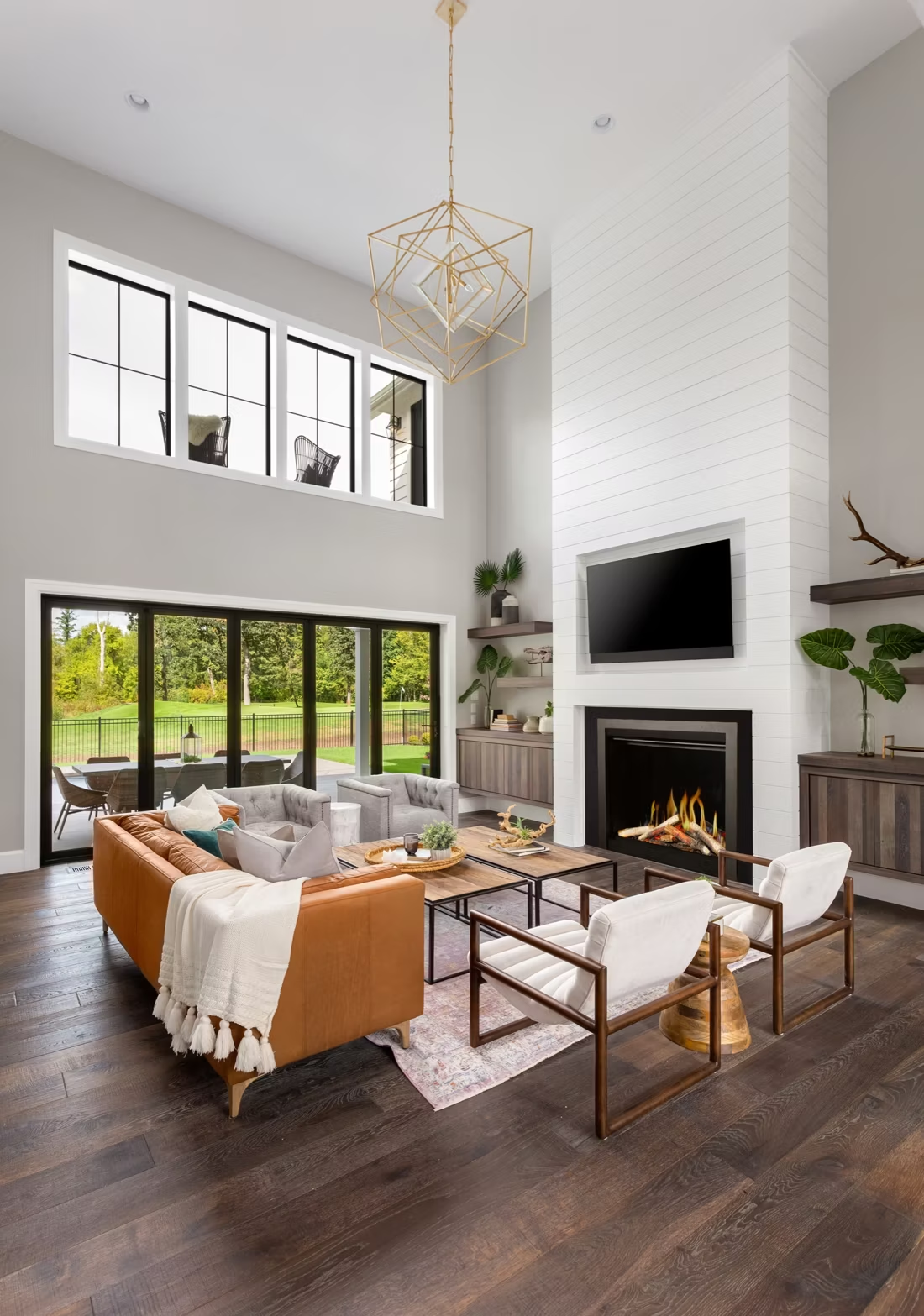
Yes—with an asterisk. Fireplaces are hot and TVs don't like heat. Either put a mantel between them to deflect rising warmth, or choose a fireplace with heat-management technology that creates a cool zone on the wall above—the wall stays around 125 degrees, barely warm, while the room still gets full heat. If you like clean lines and don't want a mantel, heat management is the answer.
Do electric fireplaces actually produce heat?
Yes—most put out around 4,800–5,000 BTUs from a standard outlet, which comfortably warms a bedroom, office, or den as a comfort-zone heater. What they won't do is carry a whole house the way wood, gas, or pellet can. Think of electric as ambiance-first with honest supplemental heat: flames on with no heat in July, flames plus warmth in January.
Does a fireplace add value to my home?
On average, a fireplace adds back to the home about the same amount you spent installing it. Add the monthly savings from heating the rooms you actually use instead of the whole house—often hundreds of dollars a year—and the value case is strong before you even count what a fire does for how your family uses the room.
What is an in-home preview and do I need one?
It's a visit where a hearth professional measures your space, confirms the model you picked actually works in your home, and walks the specs—framing, gas line, venting, finish work—before anything is ordered. Some details you just can't know until you see the house. Never make a down payment without one; it's the single most-skipped step that burns buyers.
Nearby Dealers
Hearth shops serving Newton and the surrounding area. Every listing shows whether it is a WhyFire partner, a dealer we have verified as authorized for the brands we recommend, or a local business carrying hearth products. No manufacturer pays for placement. How we verify dealers →
Boston Fine Home Details
Euroline Tile
Natick Fireplace
Norwood Fireplace
West Sport Gas
Eurosweep
M & M Chimney
Hearthside Fireplace & Patio
Sunline Patio & Fireside
Backyard Living
American Chimney Sweeps Inc. Stove Shop
Sweepnman Fireplace Center
Electric Service in Newton
An electric fireplace's heater draws about 1,500 watts—pennies per hour at local rates.
Nstar Electric Company
Fitchburg Gas & Elec Light Co
Massachusetts Bay Trans Authority
Get matched with the right electric fireplace for your Newton home.
Tell us about your Newton home—condo, colonial, or triple-decker—and we'll pair you with a trusted local dealer, plus a free Project Guide & Parts List with the exact electric fireplace or insert specs, wiring requirements, and recommended installer for your project.
Find Your Fireplace →