
Keep Your Family Warm and Safe—No Matter What
Malden's density and gas infrastructure make wood a niche choice, not the default. For the homeowners who still want a stove or insert, we'll connect you with a trusted local dealer who knows what's realistic for a Malden lot.
Every Project Starts From One of These Five Situations
Malden's triple-deckers leave little room for wood.
Malden packs roughly 65,000 residents into just over five square miles, making it one of the most densely built cities in Middlesex County. Its housing stock is dominated by triple-deckers, tightly-spaced colonials, and condo conversions with narrow side yards—the kind of lot lines that make chimney clearances, wood storage, and combustible-material setbacks genuinely difficult to satisfy. At 24 feet of elevation and with winter lows averaging 23°F, Malden's climate (a moderate winter heating load) is meaningfully milder than inland New England—nothing like the cold that drives wood heat as a necessity in places like Burlington, VT or Duluth, MN. Add in the natural gas mains that run under most Malden streets, and it's easy to see why wood stoves never became the default heat source here.
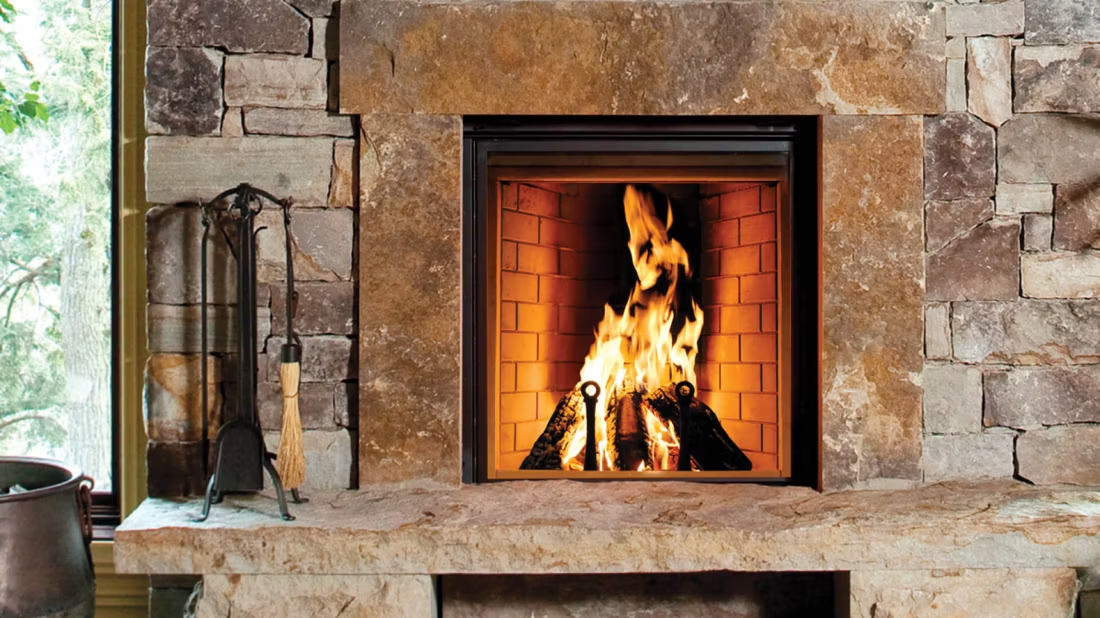
That said, wood heat isn't extinct in Malden. A number of the city's older single-family homes—the Victorian and early-1900s colonials near Malden Center and the Middlesex Fells—still have working masonry fireplaces, and a wood insert can turn one of those into genuine supplemental heat or backup warmth during a storm-driven outage. There's no meaningful private woodlot inside city limits, so firewood here is a delivered commodity—oak, maple, birch, and ash sourced from tree services and wholesalers out in rural Middlesex County or southern New Hampshire, not cut on-site. Any new installation still has to clear the Massachusetts State Fire Code (527 CMR) and a permit through Malden's Building Department, the same as anywhere else in the Commonwealth.
Three steps. No salesperson until you're ready.
Tell us about your project
Your zip code, your situation, and the fuel you're leaning toward—or let the answers point you to one.
See what's actually available
The brands dealers within 100 miles genuinely carry—real options, never a catalog mirage.
Get your dealer & Project Guide
A trusted local dealer, plus the free Project Guide & Parts List that names every component of the job.
Frequently Asked Questions
Does it even make sense to install a wood stove in a Malden home?
For a good share of Malden housing—triple-deckers with shared walls, condos, homes on small lots—it genuinely doesn't pencil out: there's nowhere to store cordwood, and clearance-to-combustible rules get hard to satisfy on a tight side yard. But if you own a detached single-family home with some yard space, especially one of Malden's older colonials with an existing masonry chimney, a wood stove or insert is still a legitimate option. It's a smaller slice of the market here than in a rural New Hampshire town, but it's not off the table. A local dealer walking your property is the fastest way to find out which category your home falls into.
What drives the cost of a wood stove install in a city like Malden?
The two biggest cost swings are chimney condition and venting complexity. Many Malden homes with existing masonry fireplaces need a new stainless liner before a wood insert can go in safely—older Malden Victorians and colonials often have chimneys that were never sized or lined for a modern high-efficiency stove. If you're installing a freestanding stove without an existing chimney, you're looking at a full Class A pipe run through tight roof lines and close neighboring structures, which adds labor. An insert into a sound, already-lined chimney tends to land on the lower end of a typical regional range, while a full stove-plus-new-chimney job in a home with no existing masonry runs considerably higher. A local installer can give you a firm number after seeing your chimney in person.
Do I need a permit to install a wood stove in Malden?
Yes. Massachusetts enforces solid-fuel appliance installation through the State Fire Code (527 CMR) and the State Building Code, and in Malden that means pulling a permit through the city's Building Department along with a sign-off from the Fire Prevention division. Inspectors check clearance-to-combustibles, hearth pad dimensions, and confirm the stove itself meets current EPA emissions standards. Most hearth retailers who work in Malden handle this paperwork as part of the installation, so you're generally not filing it yourself.
Can I put a wood insert into my old fireplace instead of a new stove?
If you own one of Malden's older single-family homes—plenty of the Victorians and early-1900s colonials near Malden Center and the Fells still have their original brick fireplace—an insert is usually the better fit than a freestanding stove. It uses the chimney you already have, and a properly sized stainless liner turns a decorative, heat-losing fireplace into a real secondary heat source. The catch is that many of these chimneys haven't been used in years and need a Level 2 inspection before anyone commits to sizing an insert. That inspection is a worthwhile first call before you shop stoves.
Where does firewood in Malden actually come from?
There's no woodlot or public cutting land inside city limits, so firewood here is a delivered product, not something you cut yourself. Local tree services and firewood wholesalers based out in rural Middlesex County and southern New Hampshire supply most of what gets burned in the Boston suburbs—oak, maple, birch, and ash are the species you'll typically see, sold seasoned by the cord and delivered by truck. Plan your storage carefully; a full cord takes up more space than most Malden lots comfortably have room for, which is why a lot of local buyers order half-cords or pre-split, kiln-dried bundles instead.
Will burning wood cause problems with my insurance or my condo association?
Check both before you commit to anything. Massachusetts insurers generally require notification of a new solid-fuel appliance and proof it was installed to code—some will ask for the permit and inspection paperwork before they'll add it to your policy. If you're in one of Malden's many condo-converted triple-deckers, the association bylaws may restrict or outright prohibit new wood-burning installations regardless of what the city permits, since shared walls and roof penetrations affect every unit. Air quality itself isn't a local restriction—Malden isn't in a non-attainment zone—but the insurance and HOA questions are worth clearing up first.
What size wood stove actually makes sense for a Malden home?
Malden's winters are real but comparatively mild for New England—winter lows average around 23°F and the city's winter heating load is well short of what a place like Burlington, VT or Duluth, MN sees. That means most Malden installations are sized as supplemental or backup heat rather than a whole-home primary system: a small-to-medium stove rated for roughly 1,000-1,800 square feet is plenty for most single-family homes here, even paired with an open first floor. Oversizing is a common mistake—a stove sized for a much colder climate will run you out of the room before it burns efficiently. A local retailer measuring your actual space will get this right.
Is a wood stove worth it for power outage backup in Malden?
It's one of the more practical reasons to install one here. Eversource and National Grid service this part of Middlesex County, and while outages aren't constant, nor'easters and ice storms do knock out power in the Boston suburbs most winters. A wood stove is one of the only heat sources that keeps working with the electricity off—no blower or igniter required on a basic model—which is a real advantage over gas units that need power for ignition or blowers, and electric heat, which stops entirely. If backup heat is your main motivation, ask your dealer about non-catalytic stoves that don't rely on any electrical components at all.
Wood vs. gas—which makes more sense for a Malden home?
Gas is the default here for a reason: Malden sits on an established natural gas grid served by Eversource and National Grid infrastructure, and a gas insert or fireplace gives you instant, thermostat-controlled heat without firewood storage or ash cleanup—a real advantage on a tight urban lot. Wood's case is narrower but real: it works without electricity during storm outages, and it suits homeowners with an existing masonry fireplace who want backup heat or the ambiance of a real fire. For most Malden homes, gas covers the everyday heating need, and wood, where it's installed at all, plays a secondary or emergency role rather than a primary one.
Why is a fireplace insert so efficient?
An insert does two things: it seals the chimney completely, so you stop losing air you already paid to heat, and it radiates warmth into the room through the firebox and glass. Most add a heat-exchange fan that pulls cool room air underneath, wraps it around the hot firebox, and pushes it back out warm. Your home is more efficient before you've even lit the first fire.
Why won't my new wood stove get going like my old one?
New wood stoves are 70%+ efficient, so far less heat goes up the flue—which also means less draft to get a fire established. The rule: build a genuinely hot fire for about 45 minutes before you choke it down. Skip that and you get smoke in the room, creosote in the chimney, and a fire that never takes off. Most performance complaints trace straight back to this.
Does a fireplace add value to my home?
On average, a fireplace adds back to the home about the same amount you spent installing it. Add the monthly savings from heating the rooms you actually use instead of the whole house—often hundreds of dollars a year—and the value case is strong before you even count what a fire does for how your family uses the room.
What is an in-home preview and do I need one?
It's a visit where a hearth professional measures your space, confirms the model you picked actually works in your home, and walks the specs—framing, gas line, venting, finish work—before anything is ordered. Some details you just can't know until you see the house. Never make a down payment without one; it's the single most-skipped step that burns buyers.
Nearby Dealers
Hearth shops serving Malden and the surrounding area. Every listing shows whether it is a WhyFire partner, a dealer we have verified as authorized for the brands we recommend, or a local business carrying hearth products. No manufacturer pays for placement. How we verify dealers →
Sunline Patio & Fireside
American Chimney Sweeps Inc. Stove Shop
M & M Chimney
Boston Fine Home Details
Euroline Tile
Eurosweep
Norwood Fireplace
Natick Fireplace
West Sport Gas
Sweepnman Fireplace Center
Backyard Living
Advantage Fireplace, Inc
Find your wood stove in Malden.
Tell us about your home and we'll be straight with you about whether wood heat fits your lot and chimney—then match you with a trusted local dealer and a free Project Guide & Parts List for your project.
Find Your Fireplace →