
A niche heating option for the right Malden home.
Pellet stoves aren't the default here the way they are farther north—but for the right single-family home in Malden, they can still make sense. Here's an honest look, plus a path to a trusted local installer.
Every Project Starts From One of These Five Situations
Dense housing stock makes pellet stoves the exception, not the rule.
Malden is a dense inner suburb of Boston—65,463 people packed into a city dominated by triple-deckers, duplexes, and condo conversions on small Middlesex County lots. At climate zone 5A with a winter heating season comparable to much of eastern Massachusetts and winter lows averaging 23°F, the city sees real winter cold, but nothing close to what a place like Burlington, VT deals with. Central heat via gas furnaces and boilers is the default here, and natural gas service is standard and widely available through the local utility footprint. That combination—mild-by-New-England heating demand plus dense multi-unit housing—is exactly why pellet stoves never became common in Malden the way they did in more rural parts of the state.
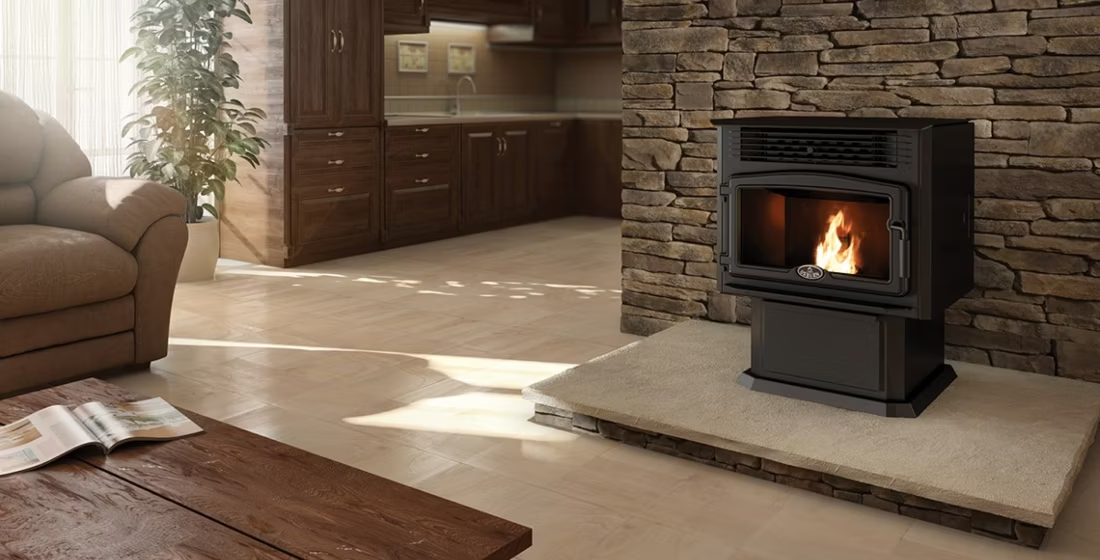
That doesn't mean pellet heat is off the table. A small number of Malden homeowners—usually in single-family houses with a usable exterior wall and some room for pellet bag storage, often on the city's northern edge toward Melrose—install a pellet stove for supplemental heat or as a hedge against gas prices. Regional pellet supply is solid: brands like New England Wood Pellet (NH) and Maine Woods Pellet Co (ME) mill pellets from the same oak, maple, birch, and ash that fill New England's forests, and Lignetics distributes widely through the region's hardware and hearth stores. If you're one of the homeowners for whom pellet heat genuinely fits, the housing-stock challenge is solvable—it just takes a dealer who knows how to work within a triple-decker's or condo's constraints.
Three steps. No salesperson until you're ready.
Tell us about your project
Your zip code, your situation, and the fuel you're leaning toward—or let the answers point you to one.
See what's actually available
The brands dealers within 100 miles genuinely carry—real options, never a catalog mirage.
Get your dealer & Project Guide
A trusted local dealer, plus the free Project Guide & Parts List that names every component of the job.
Frequently Asked Questions
Are pellet stoves actually common in Malden?
No, and it's worth saying plainly: pellet fuel is flagged as not-applicable for most Malden homes, not because pellet stoves don't work here, but because the housing stock doesn't suit them well. Most of the city is triple-deckers, duplexes, and condo buildings with shared walls, limited exterior wall access, and little room for pellet bag storage. Add in that natural gas is standard and widely available for central heat, and there's simply less incentive to install a stand-alone pellet appliance. The homes where it does make sense are almost always single-family houses with a garage, basement, or mudroom that can accommodate the unit and a fuel supply.
How much does a pellet stove installation cost in Malden?
Because installs are uncommon here, there's no deep local pricing history to point to the way there would be in a pellet-heavy market. Across greater Boston, a typical pellet stove installation—including a code-compliant side-wall vent kit and hearth pad—generally runs $4,000 to $7,500, with the low end covering a straightforward install in a basement or garage with easy exterior wall access, and the high end covering trickier venting runs through a triple-decker's multiple floors or masonry. Get a firm quote from a local installer after they see your specific wall and floor layout—rarity here means estimates vary more than they would in, say, rural Maine.
Where do the pellets themselves come from, and what do they cost?
Most pellets sold in the Malden area come from regional mills—New England Wood Pellet in New Hampshire and Maine Woods Pellet Co in Maine both process the same oak, maple, birch, and ash that make up New England's hardwood forests, and Lignetics distributes more broadly through hardware chains and hearth shops. Expect to pay in the range that's fairly standard across the Northeast, generally $250 to $320 per ton, sold by the pallet (roughly 50 forty-pound bags). A typical pellet-stove household burns 1 to 2 tons per winter depending on how much supplemental versus primary heating it's doing.
Can I actually install a pellet stove in a Malden triple-decker or condo?
It's harder than in a single-family home, but not automatically impossible. Pellet stoves vent through a small-diameter side-wall pipe, which means you need direct, unobstructed access to an exterior wall on the unit where the stove will sit—often a challenge in a triple-decker where each floor is a separate unit with shared structure. Condo buildings add another layer: most condo associations require board approval for any exterior wall penetration, and some bylaws prohibit solid-fuel or pellet appliances outright. If you're in a condo, check your association's rules before you shop for a stove. If you're in a single-family Malden home, the install is much more straightforward.
Do I need a permit to install a pellet stove in Malden?
Yes. Massachusetts requires a building permit for any new solid-fuel or pellet-burning appliance, handled locally through the City of Malden Building Department, and the unit itself needs to meet EPA emissions standards. Most installers who do this work regularly will pull the permit as part of the job and coordinate the inspection, so you're not left navigating city hall on your own. Given how uncommon these installs are in Malden compared to gas fireplace or furnace work, it's worth confirming your installer has actually pulled a pellet-stove permit here before, not just gas permits.
Will a pellet stove keep my house warm during a power outage?
Not without a backup power source, and this is a common misconception. Unlike a wood stove, a pellet stove relies on an electric auger to feed fuel and a blower to circulate heat—cut the power and the stove stops working within minutes, even with a full hopper. Malden's electric service runs through NSTAR Electric, Massachusetts Electric, or Fitchburg Gas & Electric depending on your address, at residential rates that run roughly 20 to 24 cents per kWh—reasonably reliable grid service, but outages do happen in Nor'easters. If backup heat during outages is your main goal, a battery backup unit sized for a pellet stove's auger and blower is worth the added cost, or a wood-burning appliance may be the better fit for that specific need.
Pellet vs. gas—which makes more sense for a Malden home?
For most Malden homes, gas wins on convenience and fits the city's existing infrastructure better. Natural gas service is standard and widely available here, most homes already have a gas furnace or boiler, and adding a gas fireplace or insert means no fuel storage, no hopper to fill, and instant on-off heat. Pellet heat requires buying and storing bagged fuel, cleaning ash, and running the stove's electronics—more hands-on than most Malden homeowners are set up for. Pellet still has an edge if you specifically want the visual and radiant feel of a real flame with more autonomy from utility gas pricing, but that's a narrower use case here than it would be in a rural, off-gas-grid town.
Pellet vs. electric fireplace—which fits Malden's housing better?
Electric fits Malden's condo and triple-decker stock far more easily. Electric fireplaces and inserts need no venting, no exterior wall penetration, and no fuel storage—they plug into a standard outlet and work in any unit, on any floor, with no condo association sign-off required. A pellet stove needs a side-wall vent and a place to store bagged fuel, which is exactly the constraint that makes it a poor match for most multi-unit Malden buildings. If you want supplemental heat and ambiance without the structural conversation, electric is usually the simpler answer here.
Where can I find a pellet stove dealer that actually services Malden?
Because pellet installs are uncommon in the immediate area, dealers who specialize in this work tend to be based farther out, in the more rural and northern parts of Middlesex and Essex County where pellet heat is a bigger part of the local heating mix. That's fine—a good installer will travel to Malden, but it matters that they've actually navigated a triple-decker or condo install before, not just single-family jobs in a rural setting. That's the matching problem Find My Fireplace exists to solve: rather than cold-calling hearth shops to ask if they'll even take a Malden job, tell us about your home and fuel access and we'll connect you with a trusted local dealer who's done this work in a market like yours.
Why is a fireplace insert so efficient?
An insert does two things: it seals the chimney completely, so you stop losing air you already paid to heat, and it radiates warmth into the room through the firebox and glass. Most add a heat-exchange fan that pulls cool room air underneath, wraps it around the hot firebox, and pushes it back out warm. Your home is more efficient before you've even lit the first fire.
Why is my open fireplace making my house colder?
Open fireplaces suck—literally. As the fire burns, it consumes air your furnace already paid to heat and pulls it out through the chimney, so the house is actually colder after the fire goes out than before you lit it. An insert fixes this: it seals the chimney, puts fixed glass across the front, and turns that hole in your house into a real heat source.
What is an in-home preview and do I need one?
It's a visit where a hearth professional measures your space, confirms the model you picked actually works in your home, and walks the specs—framing, gas line, venting, finish work—before anything is ordered. Some details you just can't know until you see the house. Never make a down payment without one; it's the single most-skipped step that burns buyers.
Can a fireplace actually lower my heating bill?
Yes—by creating a comfort zone. A furnace heats every square foot of the house just to warm the one room you're in; a gas fireplace on low burns roughly a sixth of the gas a typical furnace does. Set the furnace around 55–60 degrees as a baseline, then heat the rooms your family actually uses. Families who heat this way commonly save $20–$60 a month.
Nearby Dealers
Hearth shops serving Malden and the surrounding area. Every listing shows whether it is a WhyFire partner, a dealer we have verified as authorized for the brands we recommend, or a local business carrying hearth products. No manufacturer pays for placement. How we verify dealers →
Sunline Patio & Fireside
American Chimney Sweeps Inc. Stove Shop
M & M Chimney
Boston Fine Home Details
Euroline Tile
Eurosweep
Norwood Fireplace
Natick Fireplace
West Sport Gas
Sweepnman Fireplace Center
Backyard Living
Advantage Fireplace, Inc
Pellet Brands Stocked Around Malden
Manufacturers will point you to the nearest stocking dealer.
Get a straight answer on pellet heat in Malden.
Tell us about your home—triple-decker, condo, or single-family—and we'll tell you honestly whether pellet makes sense, match you with a trusted local dealer, and send over a free Project Guide & Parts List with the exact parts, including the vent kit, for your specific setup.
Find Your Fireplace →