
Keep Your Family Warm and Safe—No Matter What
Nor'easters knock out power along Cape Ann every winter. Find the right wood stove or insert for your home, and connect with a trusted local dealer.
Every Project Starts From One of These Five Situations
Reliable heat for New England's oldest fishing port.
Gloucester sits at sea level on the tip of Cape Ann, where the Atlantic keeps winters raw and damp rather than bitterly dry—but with average lows around 18°F and a winter heating season about as long and demanding as colder inland climates, the heating load here rivals inland cold-climate cities like Burlington, VT. What makes Gloucester's winters distinct is the wind and the storms: Nor'easters regularly knock out power along the Massachusetts coast for a day or more at a time, and homeowners who lived through recent winters know that a working wood stove isn't a nostalgia purchase—it's the heat source that keeps running when National Grid's lines come down.
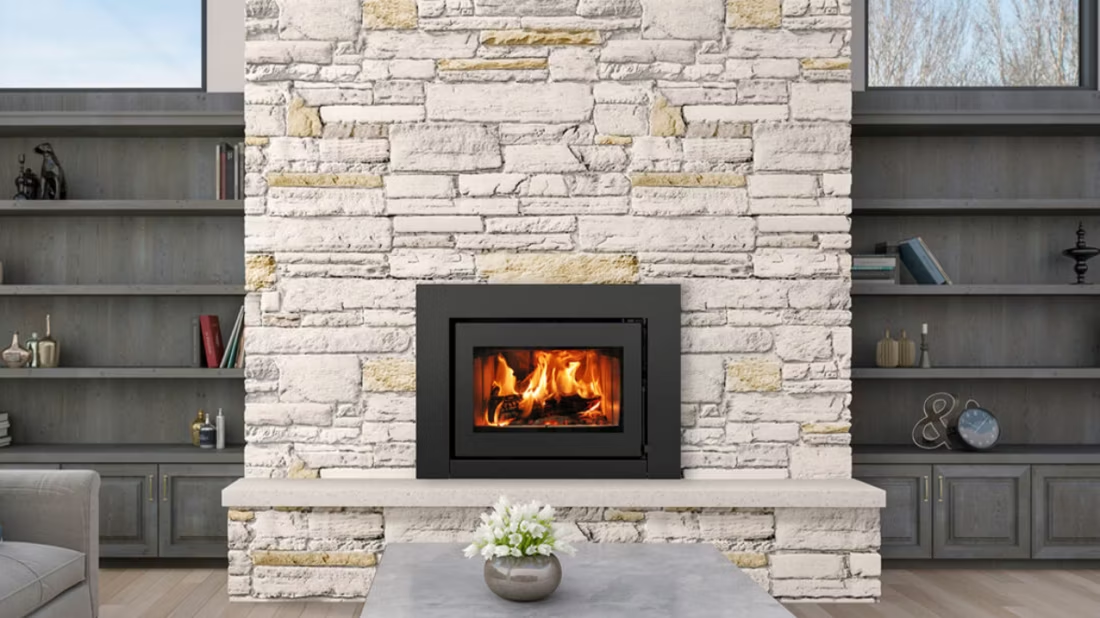
Many homes in Gloucester's older neighborhoods—East Gloucester, Rocky Neck, the downtown historic district—were built with masonry fireplaces that predate central heating, and a well-fitted wood insert can turn one of those drafty original hearths into a genuine heat source. Local hardwood supply leans on oak, maple, birch, and ash from the North Shore and greater Essex County, though the coastal humidity here means dense oak needs a full season or two stacked and covered before it's ready to burn clean. With Massachusetts Electric Co. residential rates running near 23 cents per kWh—among the higher rates in the country—wood heat also pencils out as real savings for anyone using it as more than backup.
Three steps. No salesperson until you're ready.
Tell us about your project
Your zip code, your situation, and the fuel you're leaning toward—or let the answers point you to one.
See what's actually available
The brands dealers within 100 miles genuinely carry—real options, never a catalog mirage.
Get your dealer & Project Guide
A trusted local dealer, plus the free Project Guide & Parts List that names every component of the job.
Frequently Asked Questions
How much does a wood stove installation cost in Gloucester?
A freestanding wood stove installation in Gloucester typically runs $4,000 to $9,000, depending on the stove, whether new Class A chimney pipe is needed, and hearth pad requirements. Converting an existing masonry fireplace to a wood insert usually runs a bit higher—often $5,000 to $10,000—because many of Gloucester's older homes need a stainless steel chimney liner before an insert can be installed safely, especially in the pre-war housing stock around East Gloucester and downtown. Get a firm number from a local retailer after they've looked at your existing chimney condition.
What size wood stove do I need for my Gloucester home?
It depends on square footage, ceiling height, and how drafty the house is—and Gloucester has a real mix, from tight 1900s saltboxes to larger newer builds further from the harbor. As a rough guide: small stoves (up to 1,000 sq ft) suit a single room or a converted fireplace insert in a cape-style home, medium stoves (1,000–2,000 sq ft) cover most main living areas, and large stoves (2,000+ sq ft) can carry a well-insulated whole house through an 18°F night. Coastal wind exposure can push heat loss higher than the square footage alone suggests, so a local retailer's in-home sizing visit is worth doing rather than guessing from a chart.
Where can I find certified wood stove installers near Gloucester?
Look for NFI (National Fireplace Institute) or CSIA (Chimney Safety Institute of America) certification—both indicate real training in wood-burning appliance clearances and venting, not just general construction experience. This matters more in Gloucester than in newer-built areas because so much of the housing stock has original masonry chimneys that need proper evaluation before a stove or insert goes in. The hearth retailers listed above employ certified installers and will inspect your existing chimney's condition, not just its dimensions, before quoting a job.
Should I get a wood stove or a wood insert for my Gloucester home?
If you already have a working masonry fireplace—common in Gloucester's older Rocky Neck and downtown homes—an insert is usually the better move. It uses the chimney you already have, and a modern insert delivers far more usable heat than an open hearth ever will, which matters when you're trying to actually heat a room and not just watch a fire. Freestanding stoves make more sense in additions, garages, basements, or newer homes without an existing chimney, since they can be placed almost anywhere with the right clearances and a new Class A chimney run through the roof.
Do I need a permit to install a wood stove in Gloucester?
Yes—new wood stove and insert installations require a building permit through the City of Gloucester Building Department, and any new unit sold must meet current EPA 2020 NSPS emissions standards. Most local hearth retailers pull the permit and schedule the inspection as part of the installation, so this usually isn't something homeowners have to manage themselves. Gloucester doesn't carry the winter air-quality non-attainment status that some western cities do, so there's no seasonal burn curtailment to plan around here—once it's installed and inspected, you're clear to burn.
What's the best wood stove for Gloucester's coastal winters?
For a primary or serious backup heat source through Nor'easter season, catalytic stoves from Vermont Castings or Blaze King hold a fire 15-20+ hours, which matters when a storm knocks out power overnight and you want heat still going at breakfast. Jotul, a longtime favorite across New England for its cast-iron construction and cold-hardy design, is another solid fit for the damp coastal climate. For a smaller supplemental setup in one room, a non-catalytic model from Pacific Energy or Lopi burns hot and clean without the extra cost of catalytic technology.
How often should my chimney be inspected in Gloucester?
An annual inspection is the CSIA-recommended minimum for any wood-burning appliance, and it's especially worth keeping to in Gloucester given how many chimneys here are original masonry decades or more old. Plan the sweep for late summer or early fall, before the first cold snap. Homes burning wood as a primary heat source through the winter—not just for storm backup—should watch for creosote buildup more closely and may need a mid-season check, particularly if the wood wasn't fully seasoned before it went in the stove.
Where can I get firewood in Gloucester?
Most Gloucester homeowners buy from local firewood and tree-service suppliers on the North Shore rather than cutting their own, since Massachusetts doesn't have the kind of public-land cutting permit program you'd find out west. Oak, maple, birch, and ash are the common local species, typically sold by the cord (a stacked 4×4×8 foot pile). Oak in particular needs a full year or two of covered, stacked seasoning before it burns clean—the coastal humidity here slows drying compared to drier inland climates—so ask any supplier how long the wood has been split and stacked, not just what species it is.
Wood stove or pellet stove—which makes more sense in Gloucester?
Wood stoves run without electricity, which is the deciding factor for a lot of Gloucester homeowners after living through a Nor'easter power outage—load the firebox and you have heat regardless of what the grid is doing. Pellet stoves, using bags from regional makers like New England Wood Pellet or Lignetics, are more convenient day-to-day and burn cleaner with less ash, but the auger and blower need electricity, so they go dark in the same outage a wood stove would shrug off. Given Gloucester's exposure to coastal storms, many homeowners here treat wood as the resilience choice and consider pellet only if they've also got a generator or battery backup for the house.
Why is a fireplace insert so efficient?
An insert does two things: it seals the chimney completely, so you stop losing air you already paid to heat, and it radiates warmth into the room through the firebox and glass. Most add a heat-exchange fan that pulls cool room air underneath, wraps it around the hot firebox, and pushes it back out warm. Your home is more efficient before you've even lit the first fire.
Why won't my new wood stove get going like my old one?
New wood stoves are 70%+ efficient, so far less heat goes up the flue—which also means less draft to get a fire established. The rule: build a genuinely hot fire for about 45 minutes before you choke it down. Skip that and you get smoke in the room, creosote in the chimney, and a fire that never takes off. Most performance complaints trace straight back to this.
Can a fireplace actually lower my heating bill?
Yes—by creating a comfort zone. A furnace heats every square foot of the house just to warm the one room you're in; a gas fireplace on low burns roughly a sixth of the gas a typical furnace does. Set the furnace around 55–60 degrees as a baseline, then heat the rooms your family actually uses. Families who heat this way commonly save $20–$60 a month.
What is an in-home preview and do I need one?
It's a visit where a hearth professional measures your space, confirms the model you picked actually works in your home, and walks the specs—framing, gas line, venting, finish work—before anything is ordered. Some details you just can't know until you see the house. Never make a down payment without one; it's the single most-skipped step that burns buyers.
Nearby Dealers
Hearth shops serving Gloucester and the surrounding area. Every listing shows whether it is a WhyFire partner, a dealer we have verified as authorized for the brands we recommend, or a local business carrying hearth products. No manufacturer pays for placement. How we verify dealers →
American Chimney Sweeps Inc. Stove Shop
Sunline Patio & Fireside
Home & Hearth
Advantage Fireplace, Inc
Jackson Fireplace
Find your wood stove in Gloucester.
Tell us a bit about your home and we'll put together a free Project Guide & Parts List—the exact stove or insert, vent kit, and a trusted local Gloucester dealer to install it right.
Find Your Fireplace →