
Real heat for Cape Ann's coastal winters.
Instant, reliable warmth for Gloucester's historic harbor homes—whether you're converting an old masonry fireplace or starting fresh. Find the right gas unit and connect with a trusted local dealer.
Every Project Starts From One of These Five Situations
Instant heat for Gloucester's old harbor homes.
Gloucester sits at sea level on the tip of Cape Ann, where nor'easters roll in off the Atlantic and winter lows average 18°F across a heating season about as long and demanding as Burlington, Vermont's. Much of the city's housing stock dates to the 1800s and early 1900s, when Gloucester grew up around its working harbor: narrow lots, granite foundations, and masonry fireplaces that were never built for modern heating loads. A lot of those homes still run on oil-fired boilers, and a gas fireplace or insert is one of the most direct ways to add real supplemental heat—or a genuine backup source—without tearing into the plaster and lath of a 19th-century house.
Natural gas service through National Grid reaches most of downtown Gloucester, Riverdale, and West Gloucester, while homes farther out toward Bass Rocks, Eastern Point, and Annisquam more often run on propane. Either fuel works fine in a modern direct-vent fireplace or insert. For a lot of Gloucester homeowners, the draw isn't just the instant flame—it's being able to keep a room warm during a nor'easter power outage without hauling firewood up a stairwell in an ice storm.
Three steps. No salesperson until you're ready.
Tell us about your project
Your zip code, your situation, and the fuel you're leaning toward—or let the answers point you to one.
See what's actually available
The brands dealers within 100 miles genuinely carry—real options, never a catalog mirage.
Get your dealer & Project Guide
A trusted local dealer, plus the free Project Guide & Parts List that names every component of the job.
Frequently Asked Questions
How much does a gas fireplace installation cost in Gloucester?
Most gas fireplace and insert installations in Gloucester run $4,500 to $11,000, depending on the unit, the venting path, and whether new gas line work is needed. A direct-vent insert dropped into an existing masonry fireplace with gas already run to the room sits toward the lower end. Homes that need a new gas line extended from the meter, or venting routed through a granite or brick chimney common in Gloucester's older housing stock, land in the middle to upper range. Local hearth dealers will give you a firm number after walking the specific chimney and gas layout.
Can I convert my old masonry fireplace to gas?
Yes—it's one of the most requested projects among Gloucester's older homes, particularly the Colonials and Victorians around downtown, Rocky Neck, and the Cut. A gas insert slides into the existing masonry opening and vents through a stainless steel liner run up the original chimney, so you keep the look of the fireplace without the draft or upkeep of an open hearth. Typical cost runs $4,500 to $9,500, with the higher end reflecting homes where the chimney needs relining or where no gas line currently reaches the room.
Do I need natural gas, or is propane the better option in Gloucester?
Both are common in the city. National Grid provides natural gas service to most of downtown Gloucester, Riverdale, and West Gloucester—if your home already has a gas water heater or gas range, adding a fireplace is usually straightforward. Homes out toward Bass Rocks, Eastern Point, and Annisquam, where gas mains don't reach, typically run on propane from a local supplier instead. Nearly every direct-vent gas fireplace on the market can be configured for either fuel; your installer sets the orifice and regulator to match.
Will my gas fireplace still work if a nor'easter knocks out power?
In most cases, yes. Gas fireplaces with IPI (intermittent pilot ignition) run on a battery backup that kicks in automatically the moment power drops, so the unit still lights on demand. Given how often Gloucester loses power for a day or more during a bad nor'easter, that backup matters—just don't let the batteries go dead in the off-season. Valor's gas fireplaces take a different approach: the pilot's thermocouple generates its own electricity, so there's no battery to maintain at all. Worth asking a local dealer about if reliable heat during coastal storm outages is a priority.
What's the difference between a gas fireplace, insert, and stove?
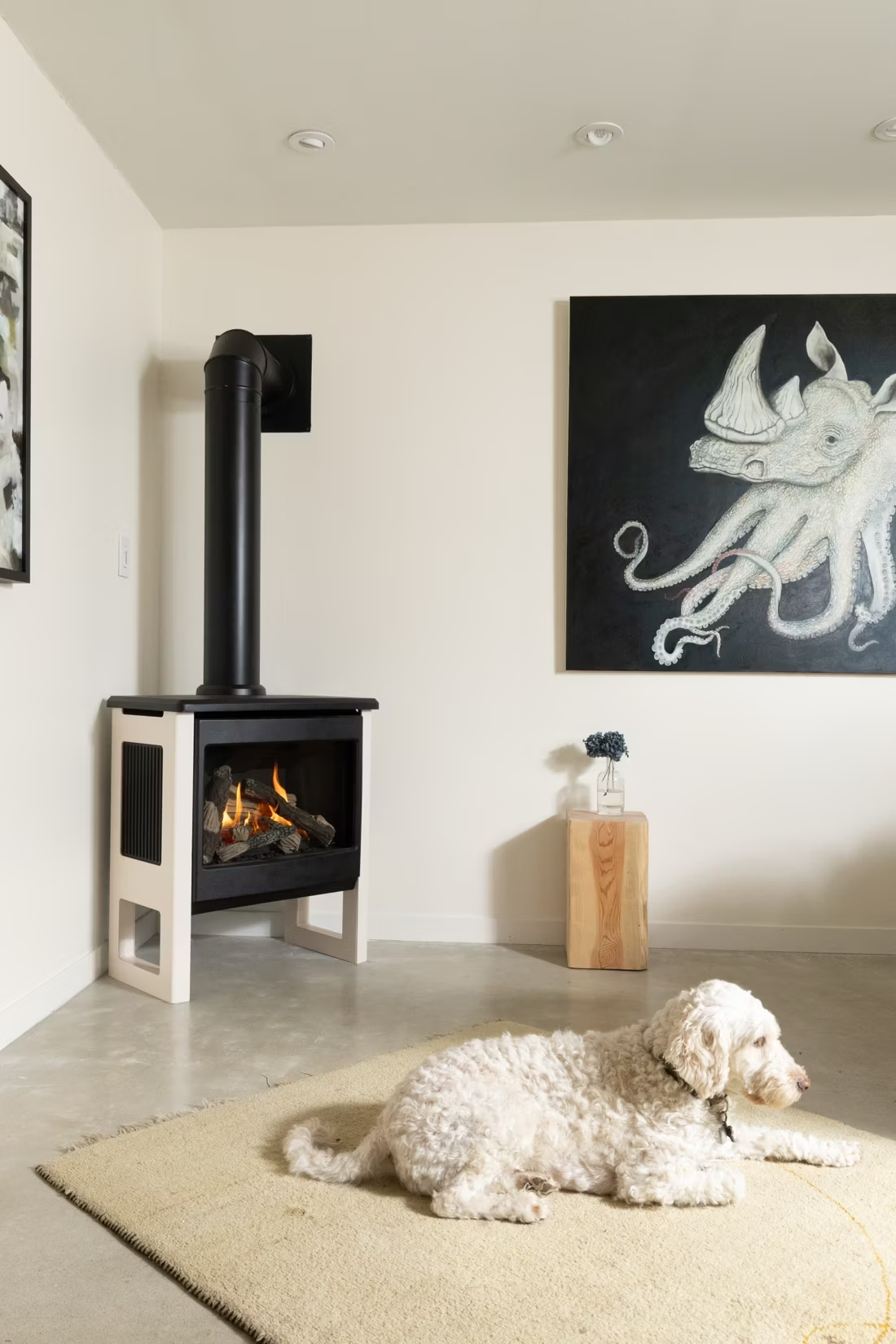
A gas fireplace is a fully built-in unit, framed into a wall—the right call for new construction or a gut remodel. A gas insert is built to slide into an existing masonry opening, which describes a lot of Gloucester's older housing stock. A gas stove is a freestanding unit that sits on the floor and vents through a wall or existing flue, often used in smaller rooms or additions with no fireplace at all. For most homeowners here with an existing fireplace they want to modernize, an insert is the natural fit.
Do I need a permit to install a gas fireplace in Gloucester?
Yes. The City of Gloucester Building Department requires both a building permit and a gas permit for any new gas fireplace or insert installation, and the gas line work has to be done by a licensed gas fitter. Most hearth dealers who serve Cape Ann handle the permitting and inspection scheduling as part of the install, which is one reason it's worth going through a certified dealer rather than a general handyman for this kind of work.
Are vent-free gas fireplaces allowed in Massachusetts?
Massachusetts' fuel gas code is stricter than most states on this point—unvented, vent-free gas fireplaces are effectively restricted for space heating in occupied living areas. In practice, that means direct-vent gas fireplaces and inserts, which draw combustion air from outside and exhaust it back outside through a sealed vent, are the standard install in Gloucester. That's not really a downside: direct-vent units heat well, look good, and don't raise the indoor air quality questions that come with a vent-free unit.
How often does a gas fireplace need to be serviced?
Plan on an annual inspection, ideally before the heating season starts in the fall. A technician checks the burner, pilot assembly, venting, and gas connections, and cleans the glass and interior—important given the salt air along Cape Ann, which can accelerate corrosion on vent caps and exterior components faster than it would inland. Most local service providers charge $150 to $250 for a standard annual visit.
Gas vs. wood—which makes more sense for a Gloucester home?
Wood offers real heat output, lower fuel costs if you're already burning oak, maple, or ash, and—critically for a coastal town that loses power during nor'easters—it works with no electricity at all. Gas offers push-button convenience, no ash or creosote, and cleaner indoor air, but standard direct-vent units need battery backup, or a self-powered pilot like Valor's, to run without utility power. A lot of Gloucester homeowners with older homes and working fireplaces end up running both: gas in the main living space for daily convenience, and a wood stove or insert elsewhere as true storm backup.
Can I put a TV above my fireplace?
Yes—with an asterisk. Fireplaces are hot and TVs don't like heat. Either put a mantel between them to deflect rising warmth, or choose a fireplace with heat-management technology that creates a cool zone on the wall above—the wall stays around 125 degrees, barely warm, while the room still gets full heat. If you like clean lines and don't want a mantel, heat management is the answer.
What's the difference between an insert and a zero-clearance fireplace?
An insert is a fireplace that slides into a pre-existing wood-burning fireplace—if you don't have one, there's nothing to insert it into. A zero-clearance fireplace is built into a framed wall, which makes it the answer for remodels and new construction. Simple test: existing masonry fireplace means insert; blank or framed wall means zero-clearance.
Can I install a fireplace myself?
If you're putting a fire in your house on purpose, it's best to work with an expert. Unless you're genuinely experienced in framing, gas line, vent pipe, and the national code on clearances to combustibles, have a professional do it—and ideally the same company that sells you the fireplace, so warranty, service, and liability all live under one roof.
Should the dealer who sells my fireplace also install it?
Ideally, yes. A fireplace project involves vent pipe, gas line, electrical, and often tile or stone. Hire three or four separate trades and you own the liability and the game of telephone between them. One company selling and installing means one accountable party, start to finish—ask about factory training, on-time completion records, and what happens if an inspection fails.
Nearby Dealers
Hearth shops serving Gloucester and the surrounding area. Every listing shows whether it is a WhyFire partner, a dealer we have verified as authorized for the brands we recommend, or a local business carrying hearth products. No manufacturer pays for placement. How we verify dealers →
American Chimney Sweeps Inc. Stove Shop
Sunline Patio & Fireside
Home & Hearth
Advantage Fireplace, Inc
Jackson Fireplace
Find your gas fireplace in Gloucester.
Tell us about your home and your fireplace or insert, and we'll match you with a trusted local Cape Ann dealer and send over a free Project Guide & Parts List—the exact parts, including the vent kit, for your specific project.
Find Your Fireplace →