
Real heat, zero venting, for every home in Washington County.
From the stone row houses of downtown Hagerstown to the farmhouses along the Antietam battlefield to condos out toward Williamsport—electric fireplaces heat the room without a chimney, a gas line, or a permit headache. Find the right unit and connect with a trusted local dealer.
Every Project Starts From One of These Five Situations
The easiest heat upgrade in the county.
Washington County runs from the ridgeline of South Mountain and the Appalachian Trail down through the Hagerstown Valley to the Potomac River at Williamsport and the narrow neck of land at Hancock. It's climate zone 4A—a solid winter heating season with lows averaging 22°F, colder than D.C. or Baltimore but nowhere near the brutal totals a place like Duluth, Minnesota racks up. That's a real heating season, but not one that demands a wood-fired primary heat source in every home.
A lot of the county's housing stock works against masonry heat anyway. Downtown Hagerstown and towns like Boonsboro and Sharpsburg near Antietam National Battlefield are full of 18th- and 19th-century stone and brick homes where the original chimney is capped, cracked, or gone entirely—and relining it for wood or gas is expensive. An electric insert or built-in unit sidesteps that problem completely: no venting, no gas line, no combustion byproducts to worry about, and it runs on the same Potomac Edison service already feeding the house. For condos, townhomes, and HOA-restricted properties around Hagerstown where an open flame isn't an option, electric is often the only realistic path to a fireplace at all.
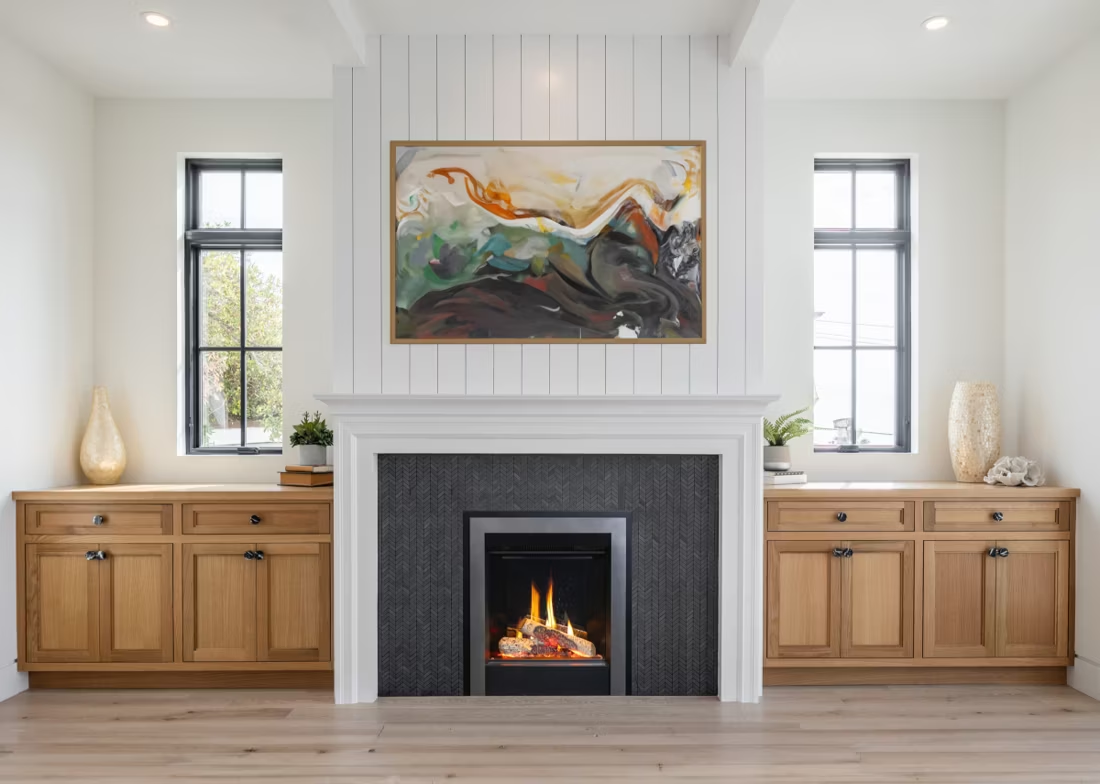
Three steps. No salesperson until you're ready.
Tell us about your project
Your zip code, your situation, and the fuel you're leaning toward—or let the answers point you to one.
See what's actually available
The brands dealers within 100 miles genuinely carry—real options, never a catalog mirage.
Get your dealer & Project Guide
A trusted local dealer, plus the free Project Guide & Parts List that names every component of the job.
Frequently Asked Questions
How much does an electric fireplace installation cost in Washington County?
A plug-in electric insert that drops into an existing fireplace opening runs $300 to $900 installed and typically needs nothing more than the outlet that's already there. A built-in wall unit or a linear electric fireplace set into new framing runs higher—usually $1,200 to $2,500—because it often calls for a licensed electrician to run a dedicated 20-amp circuit, which Washington County code requires for most fixed electric heating appliances. Homes in older sections of Hagerstown or Boonsboro with older panels sometimes need a panel upgrade first, which adds to the cost. Local dealers will scope this during an in-home visit before quoting a firm number.
Do I need a permit to install an electric fireplace in Washington County?
A plug-in electric insert that uses an existing outlet doesn't require a permit. A hardwired built-in unit—one that needs a new dedicated circuit run from the panel—does require an electrical permit through Washington County's Permits, Plans Review and Inspection Services, and the wiring has to be done by a licensed electrician to pass inspection. If the home sits in downtown Hagerstown's historic district or another designated historic area, exterior-visible changes (like a new surround or mantel) may also need a quick sign-off from the historic district review process. Most local hearth dealers coordinate the electrician and the permit paperwork so you're not managing two trades yourself.
Electric fireplace vs. wood—which makes sense for my home?
Wood heat has deep roots in Washington County—oak, hickory, and maple are the common local species, and a wood stove or insert can genuinely carry a home through the coldest stretches of a long, solid winter, plus it keeps working when the power's out. Electric can't do that; it needs the grid running. But electric skips the ash, the creosote buildup, the annual chimney sweep, and any burn restrictions entirely—and it's the only option in condos, apartments, and HOA communities around Hagerstown where wood burning isn't allowed. For a primary heat source in a rural farmhouse near Clear Spring or Hancock, wood often wins. For ambiance and zone heat in a townhome or a room without a chimney, electric is the simpler answer.
Electric fireplace vs. gas—which is the better fit?
Gas delivers more heat output and a more realistic flame, and it's a strong option anywhere natural gas or propane service already reaches the house. But large stretches of rural Washington County—out toward Hancock, Clear Spring, and parts of the Cascade area near the Pennsylvania line—don't have natural gas lines, which means a gas fireplace there means a propane tank and delivery contract. Electric skips all of that. It plugs into existing household wiring (or a simple dedicated circuit), needs no fuel deliveries, and produces zero combustion byproducts—a real advantage in a tightly sealed newer home. Where gas service already exists, it's a fair fight; where it doesn't, electric is usually the more practical choice.
How much heat does an electric fireplace actually put out?
Most electric fireplaces top out around 5,000 to 5,200 BTU, roughly enough to comfortably heat a single room of 400 to 1,000 square feet depending on insulation and ceiling height. That makes them a solid supplemental or zone-heating option—good for taking the edge off a chilly living room or home office without running the furnace—but not a realistic sole heat source for a Washington County winter, where lows average 22°F and the heating season stretches from October into April. Most homeowners here pair an electric fireplace with existing central heat rather than trying to replace it.
What's the best electric fireplace option for an older or historic home?
For the stone and brick homes common in downtown Hagerstown, Boonsboro, and Sharpsburg near the Antietam battlefield, an electric insert sized to fit the existing masonry firebox opening is usually the cleanest solution—it drops into the original opening, needs no venting or chimney work, and preserves the historic mantel and surround. For homes where the original fireplace opening was closed up or never existed, a surface-mounted or recessed linear electric unit set into a wall works well and avoids any structural changes that would trigger historic district review. Either way, a local dealer measuring the opening in person will keep you from ordering a unit that doesn't fit.
Will my electric fireplace work during a power outage?
No—electric fireplaces require power to run, both for the flame effect and any heat output, so they go dark the moment the grid does. That matters in Washington County, where ice storms and summer thunderstorms rolling off South Mountain and the Appalachian ridgeline knock out Potomac Edison service in parts of the county most winters. If backup heat during outages is a priority, pair an electric fireplace with a wood stove or a battery-backed gas unit elsewhere in the house rather than relying on electric alone.
Who installs electric fireplaces in Washington County, and how long does it take?
A plug-in insert is typically a same-day install—a local hearth dealer sets the unit and you're done. A hardwired built-in or linear unit needing a new circuit involves both the hearth dealer and a licensed electrician, and usually takes half a day to a full day depending on how far the new wiring has to run from the panel. Older homes in Hagerstown's historic core or rural properties with older electrical panels sometimes need an extra visit to confirm the panel has capacity before the install date is set.
Electric fireplace vs. pellet stove—which is right for me?
Pellet stoves burn compressed wood pellets—regional brands like Energex, Hamer Pellet Fuel, and Greene Team Pellet Fuel are all sold in this part of Maryland—and they put out real, substantial heat, enough to serve as a primary or near-primary heat source in a Washington County winter. But they need venting, a hopper to refill, ash to empty, and electricity to run the auger and blower, so they're not fuel-independent either. Electric fireplaces skip the venting and the pellet bags entirely but max out around 5,000 BTU, making them a supplemental-heat and ambiance play rather than a serious heat producer. If you want meaningful heat output with far less mess than wood, pellet is the stronger choice; if you just want flame and warmth in one room with zero maintenance, electric wins.
Can I put a TV above my fireplace?
Yes—with an asterisk. Fireplaces are hot and TVs don't like heat. Either put a mantel between them to deflect rising warmth, or choose a fireplace with heat-management technology that creates a cool zone on the wall above—the wall stays around 125 degrees, barely warm, while the room still gets full heat. If you like clean lines and don't want a mantel, heat management is the answer.
Does an electric fireplace need a vent or chimney?
No—that's its superpower. An electric fireplace needs a wall and an outlet, period. No vent pipe, no gas line, no clearances to design around, which is why it works in bedrooms, offices, apartments, and walls where venting a gas or wood unit would be impractical or impossible. Installation is typically the simplest and least expensive of any fireplace type.
How much should I budget for a fireplace?
For an average home—covering the fireplace, the vent pipe, and basic installation—a budget between $3,900 and $5,500 gives you a lot of options across wood, gas, and pellet. By the time you add finish work, gas line, and electrical, the average complete installation lands between $5,000 and $12,000 all-in. In a remodel or new build, a good rule is to put about 2.5% of the total project cost toward the fireplace.
Does a fireplace add value to my home?
On average, a fireplace adds back to the home about the same amount you spent installing it. Add the monthly savings from heating the rooms you actually use instead of the whole house—often hundreds of dollars a year—and the value case is strong before you even count what a fire does for how your family uses the room.
Stove and Fireplace Dealers in Washington County
Listings include WhyFire partner dealers, dealers we have verified as authorized for the brands we recommend, and established local businesses that carry hearth products. Every listing shows which one it is. The ones marked Preferred run on WhyFire's software, so they can show you real pricing and book your appointment right here. No manufacturer pays for placement. How we verify dealers →
Blaine Window Hardware, Inc.
Monocacy Chimney Care
L.t. Rush Stone Inc
Mace Energy Supply Inc.
McLaughlin Home Heating
A&A Pools
Roach Energy
Bunting’s Fireplace & Stove
H & D Service & Stove Inc
Aes Hearth & Patio - Chambersburg
Aes Hearthplace, Inc.
Find your electric fireplace in Washington County.
Tell us a bit about your home and we'll put together a free Project Guide & Parts List for your electric fireplace project—the right unit, the exact parts, and a trusted local dealer to install it.
Find Your Fireplace →