
Instant heat for Hancock homes, without the chimney work.
Zone heat and real ambiance for Hancock's older canal-town homes and river cabins—no venting, no gas line, no permit headaches. Find the right unit and connect with a trusted local dealer.
Every Project Starts From One of These Five Situations
Simple, flexible heat for a small Potomac River town.
Hancock sits in the narrow Washington County panhandle where the Potomac River and the C&O Canal towpath run within a few blocks of Main Street, and where winter lows average 21°F over a heating season on par with places like Rochester, NY. It's a town of about 1,583 people, with a housing stock that runs from turn-of-the-century canal-era rowhomes downtown to newer construction along the ridges toward Sideling Hill—a mix where retrofitting a masonry chimney or running a new gas line isn't always practical or affordable.
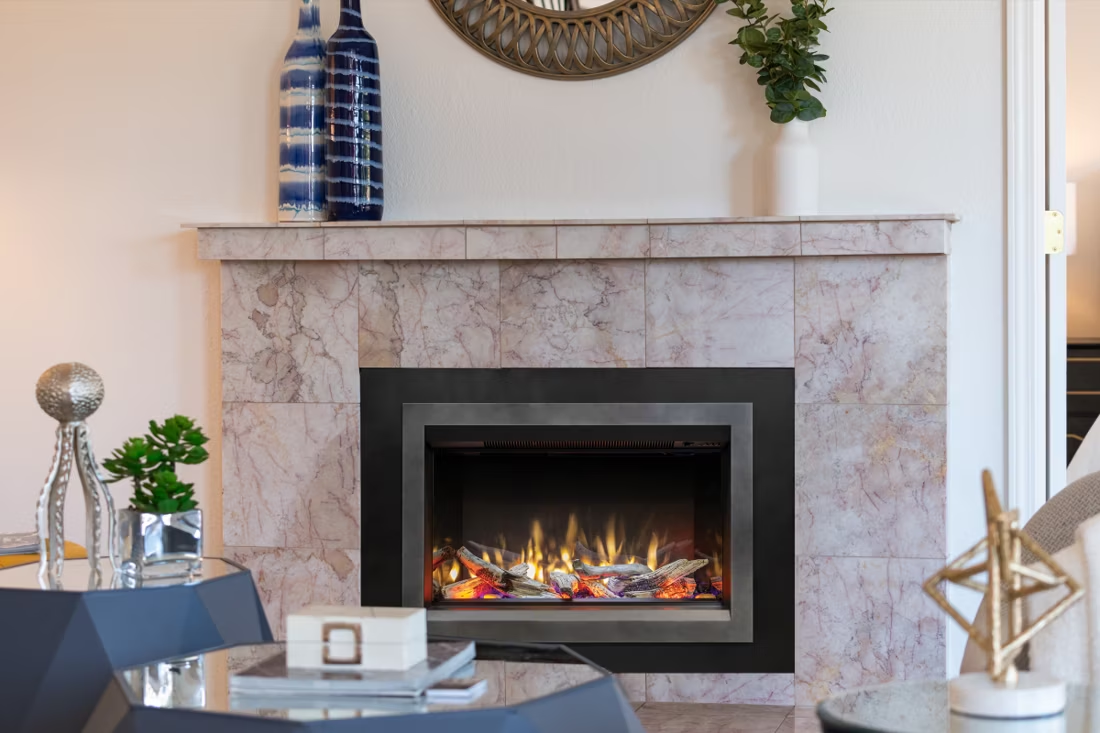
That's where electric fireplaces do real work. Potomac Edison serves the area at roughly $0.1326 per kWh, and an electric insert or wall-mounted unit plugs into an existing outlet (or a single dedicated circuit for larger built-ins) with zero venting, zero clearance-to-combustible headaches, and no Washington County burn permit to think about. For a spare room, a converted porch, or a rental unit near the towpath where a wood or gas retrofit doesn't pencil out, electric delivers real supplemental warmth and the look of a fire with a light switch's worth of effort.
Three steps. No salesperson until you're ready.
Tell us about your project
Your zip code, your situation, and the fuel you're leaning toward—or let the answers point you to one.
See what's actually available
The brands dealers within 100 miles genuinely carry—real options, never a catalog mirage.
Get your dealer & Project Guide
A trusted local dealer, plus the free Project Guide & Parts List that names every component of the job.
Frequently Asked Questions
How much does an electric fireplace installation cost in Hancock?
A plug-in electric insert or freestanding unit typically runs $300 to $1,000 installed, since most just slide into an existing opening or mantel surround and plug into a standard 120V outlet. A built-in wall unit or a linear electric fireplace set into new framing runs higher—often $1,500 to $3,500—once you add a dedicated 20-amp circuit, drywall or tile finish work, and a mantel or surround. Because Hancock's older downtown homes often have limited panel capacity, it's worth having a local electrician confirm circuit availability before you commit to a larger built-in model.
Will an electric fireplace actually heat a room, or is it just for looks?
Most residential electric fireplaces put out 4,600 to 5,200 BTU (roughly 1,500 watts), which is enough to noticeably warm a bedroom, den, or small living room—comparable to a space heater but with a real flame-effect display. It won't replace a furnace or a wood stove as whole-home heat, especially with Hancock's average winter lows around 21°F, but it works well as zone heat for a room you use often, letting you turn the furnace down and heat just the space you're in.
Do I need a permit to install an electric fireplace in Hancock?
A plug-in electric fireplace or insert generally doesn't require a permit since there's no venting or gas work involved—it's treated like any other plug-in appliance. If you're installing a built-in unit that requires a new dedicated circuit, Washington County's Division of Permits and Inspections will require an electrical permit for that circuit work, which any licensed local electrician can pull as part of the install. There's no fuel-burning inspection to worry about either way, since there's no combustion.
Is electric a good fit if my Hancock home doesn't have natural gas?
Yes—this is one of the more common reasons homeowners in and around Hancock look at electric. Much of the panhandle relies on propane, heating oil, or electric resistance heat rather than piped natural gas, and running a new propane line or tank just for a fireplace adds real cost. An electric unit sidesteps that entirely: no fuel delivery, no tank, no combustion byproducts, just an outlet or circuit. For homes already on electric heat through Potomac Edison, adding an electric fireplace for supplemental warmth in one room is a low-friction upgrade.
What size or wattage electric fireplace do I need?
Most residential units are standardized around 1,500 watts (about 5,000 BTU), which comfortably heats 400 to 1,000 square feet depending on ceiling height and insulation—enough for a single room in most Hancock homes, whether that's a rowhome parlor downtown or a den in a newer build off Route 40. The bigger sizing question is usually the fireplace box itself: a 36-inch to 50-inch linear insert suits a modern remodel, while a smaller log-set style insert fits better into an existing masonry opening in an older home. A local dealer can measure your opening and recommend the right width.
What's the difference between an electric insert, a wall-mounted unit, and an electric log set?
An electric insert is built to slide into an existing fireplace opening—masonry or zero-clearance—and is the most common retrofit for Hancock's older homes with an unused wood-burning fireplace. A wall-mounted or linear electric fireplace is meant for new framing, often used in a remodel or new construction for a modern, low-profile look. An electric log set is the simplest option: a plug-in log insert that drops into an existing firebox purely for the visual flame effect, with modest supplemental heat. Which one makes sense depends mostly on whether you're working with an existing opening or building new.
How much does it cost to run an electric fireplace in Hancock?
At Potomac Edison's residential rate of about $0.1326 per kWh, a typical 1,500-watt electric fireplace costs roughly 20 cents per hour to run on full heat, or about $1.60 for an 8-hour evening of use. Most units let you run the flame effect alone (a few watts) without the heater engaged, which is popular in Hancock for ambiance during shoulder-season months when you want the look of a fire without adding heat to the room.
Will my electric fireplace work during a power outage?
No—electric fireplaces require power to operate, so they'll go dark along with everything else on the Potomac Edison grid during an outage. This is worth factoring in if you're choosing between fuel types for backup heat: a wood stove or a properly equipped gas unit with battery-backup ignition can keep running when the power's out, which matters in Hancock during winter storms along the ridge toward Sideling Hill. Many homeowners here pair an electric fireplace for everyday convenience with a wood stove or propane heater elsewhere in the house as a power-outage backup.
Electric vs. pellet stove—which is right for my Hancock home?
Pellet stoves burn compressed hardwood pellets (regional brands like Energex and Hamer Pellet Fuel are both sold in the Cumberland Valley/panhandle area) and can put out real whole-room heat, but they need a vent through an exterior wall or roof, a hopper to refill, and—like electric—power to run the auger and blower. Electric fireplaces need no venting at all and cost far less upfront, but produce less raw heat and won't offset a fuel oil or propane bill the way a pellet stove can. For a room you want warmed and lit with minimal installation, electric wins. For a homeowner looking to meaningfully cut heating costs with local pellet fuel, a pellet stove is worth a look instead.
Can I put a TV above my fireplace?
Yes—with an asterisk. Fireplaces are hot and TVs don't like heat. Either put a mantel between them to deflect rising warmth, or choose a fireplace with heat-management technology that creates a cool zone on the wall above—the wall stays around 125 degrees, barely warm, while the room still gets full heat. If you like clean lines and don't want a mantel, heat management is the answer.
What fireplace styles should I know before shopping?
Four cover most of the market: screen-front traditional (mesh front, open feel, fits craftsman homes), traditional door set (the classic look you grew up with), modern linear (wide, low, the statement piece for entertaining), and clean face contemporary (no trim—your tile or stone runs right to the fire's edge). Walk in knowing those four terms and you're ahead of most buyers.
How much should I budget for a fireplace?
For an average home—covering the fireplace, the vent pipe, and basic installation—a budget between $3,900 and $5,500 gives you a lot of options across wood, gas, and pellet. By the time you add finish work, gas line, and electrical, the average complete installation lands between $5,000 and $12,000 all-in. In a remodel or new build, a good rule is to put about 2.5% of the total project cost toward the fireplace.
Can I install a fireplace myself?
If you're putting a fire in your house on purpose, it's best to work with an expert. Unless you're genuinely experienced in framing, gas line, vent pipe, and the national code on clearances to combustibles, have a professional do it—and ideally the same company that sells you the fireplace, so warranty, service, and liability all live under one roof.
Nearby Dealers
Hearth shops serving Hancock and the surrounding area. Every listing shows whether it is a WhyFire partner, a dealer we have verified as authorized for the brands we recommend, or a local business carrying hearth products. No manufacturer pays for placement. How we verify dealers →
Dawson's Home Center
Dawsons Ace Hardware
A&A Pools
Roach Energy
Hess Alternative Home Heating
Blaine Window Hardware, Inc.
H & D Service & Stove Inc
Alternate Heating
Monocacy Chimney Care
Mace Energy Supply Inc.
Electric Service in Hancock
An electric fireplace's heater draws about 1,500 watts—pennies per hour at local rates.
The Potomac Edison Company
Find your electric fireplace in Hancock.
Tell us a bit about your home and we'll put together a free Project Guide & Parts List for your Hancock electric fireplace project—the right unit, the wiring needs, and a trusted local dealer to install it.
Find Your Fireplace →