
Real Fireplace Ambiance Without the Chimney.
Zone heat and real-flame ambiance for Robinwood homes, plugged in rather than vented. Find the right unit and connect with a trusted local dealer.
Every Project Starts From One of These Five Situations
Simple heat that plugs into what you already have.
Robinwood sits in Washington County at about 588 feet elevation, just outside Hagerstown, in climate zone 4A. Winters here are real but moderate—average lows around 22°F and a moderate seasonal heating need, nowhere near the brutal totals of places like Duluth, MN or Burlington, VT. That matters for electric heat: in a climate this mild, an electric fireplace or insert can genuinely carry a room through most of the season rather than serving as pure backup.
Robinwood's electric service splits between two very different rate structures. The Potomac Edison Company serves much of the surrounding area at around 13.26 cents per kWh, while the municipally owned Hagerstown Light Department, just down the road, charges roughly 7.77 cents per kWh—nearly half as much. Which utility feeds your meter has a real effect on what an electric fireplace costs to run night after night, and it's worth checking your bill before you budget for one.
Three steps. No salesperson until you're ready.
Tell us about your project
Your zip code, your situation, and the fuel you're leaning toward—or let the answers point you to one.
See what's actually available
The brands dealers within 100 miles genuinely carry—real options, never a catalog mirage.
Get your dealer & Project Guide
A trusted local dealer, plus the free Project Guide & Parts List that names every component of the job.
Frequently Asked Questions
How much does an electric fireplace installation cost in Robinwood?
Plug-in electric inserts, mantel packages, and freestanding stoves typically run $300 to $2,500 installed, since most just need an existing 120V outlet and a few minutes of setup—no chimney, no gas line, no venting. Larger built-in linear units or wall-mounted models that require a dedicated 240V circuit run higher, often $1,500 to $4,000, once a licensed electrician runs new wiring and a local carpenter frames the surround. Because there's no combustion involved, Washington County generally doesn't require a mechanical permit for electric units—only an electrical permit if a new dedicated circuit is being added.
What does it cost to actually run an electric fireplace in Robinwood?
Most electric fireplaces draw about 1,500 watts on their heat setting, or 1.5 kWh per hour. At Potomac Edison's residential rate of roughly 13.26 cents per kWh, that's about 20 cents an hour to run on full heat. If your home is served by Hagerstown Light Department instead, at about 7.77 cents per kWh, the same unit costs closer to 12 cents an hour—nearly half the price. On flame-only mode with the heater off, most units draw under 100 watts, so ambiance alone costs pennies a day regardless of which utility serves you.
Do I need a permit to install an electric fireplace in Robinwood?
For a plug-in insert, mantel unit, or freestanding stove that runs off a standard outlet, most Washington County homes don't need any permit at all. If you're installing a built-in unit that requires a new dedicated 240V circuit, an electrical permit is typically required, and the work should be done by a licensed electrician. Local dealers who sell built-in electric fireplaces usually coordinate the electrician and permit as part of the installation, so you're not left tracking it down yourself.
What's the difference between an electric insert, an electric fireplace, and an electric log set?
An electric insert is built to slide into an existing masonry or wood-burning firebox, giving an old fireplace a heat source and realistic flame without touching the chimney. A built-in electric fireplace is a standalone unit framed into a wall, often with a linear, modern look, used in new construction or remodels. An electric log set is the simplest option—realistic-looking logs that sit inside your existing firebox and plug in, with little to no heat output, mostly for ambiance. For Robinwood homes with an old masonry fireplace that no longer gets used for wood, an insert is usually the easiest upgrade.
Can an electric fireplace actually heat a room in Robinwood's climate?
Yes, for a single room. A typical 1,500-watt unit puts out around 5,000 BTU, enough to comfortably heat a bedroom, den, or open living area of a few hundred square feet, which covers a lot of use cases given Robinwood's moderate 22°F average winter lows. It's not going to replace a furnace for the whole house, and at Potomac Edison's rates, running one as a primary whole-home heat source would get expensive fast. Most local homeowners use electric fireplaces to take the load off central heat in the rooms they actually live in, closing vents elsewhere and turning the thermostat down a few degrees.
Electric vs. wood—which makes more sense for my home?
Washington County has good hardwood cover—oak, hickory, and maple are all common locally—so wood heat still makes sense for homeowners with access to cut or purchased firewood and a fireplace or stove already in place. Wood also keeps working during a power outage, which electric can't. But electric wins on convenience: no ash, no chimney sweeping, no permit hassle, and instant on-off operation from a wall switch or remote. For a secondary fireplace in a bonus room or a finished basement where running a flue isn't practical, electric is often the simpler answer.
What's the best electric fireplace for a Robinwood home?
For realistic flame quality, look at models from Dimplex, Napoleon, or Amantii—their multi-layer LED flame technology holds up much better than older units with a single spinning drum. If you're converting an existing masonry fireplace, an insert-style unit sized to your firebox opening will give the cleanest look. For a modern linear feature wall, a built-in unit on a dedicated circuit gives more consistent heat output than a plug-in model. Local dealers can match flame style and heat output to your specific room once they see it.
Will my electric fireplace work during a power outage?
No—this is the one honest tradeoff with electric heat. Unlike a gas fireplace with battery-backup ignition or a wood stove that needs no power at all, an electric fireplace goes dark the moment the power drops, flame effect included. If backup heat during winter outages matters to you, plenty of Robinwood homeowners pair an electric fireplace in the main living space with a wood stove or gas unit elsewhere in the house specifically for that scenario.
Electric vs. pellet stove—which is right for me?
Pellet stoves burn bagged fuel from regional suppliers like Energex, Hamer Pellet Fuel, or Greene Team Pellet Fuel, and put out real, sustained heat suitable for a whole living area—but they need a vent, a hopper to refill, and periodic ash cleanout. Electric fireplaces need none of that, install almost anywhere with an outlet, and cost far less upfront, but they can't match a pellet stove's heat output for a larger space and won't run without grid power. If you want genuine supplemental heat for a larger room and don't mind the venting and fuel handling, pellet is the stronger choice. If you want low-maintenance ambiance with modest heat in a room you can already reach with an outlet, electric is the easier path.
Can I put a TV above my fireplace?
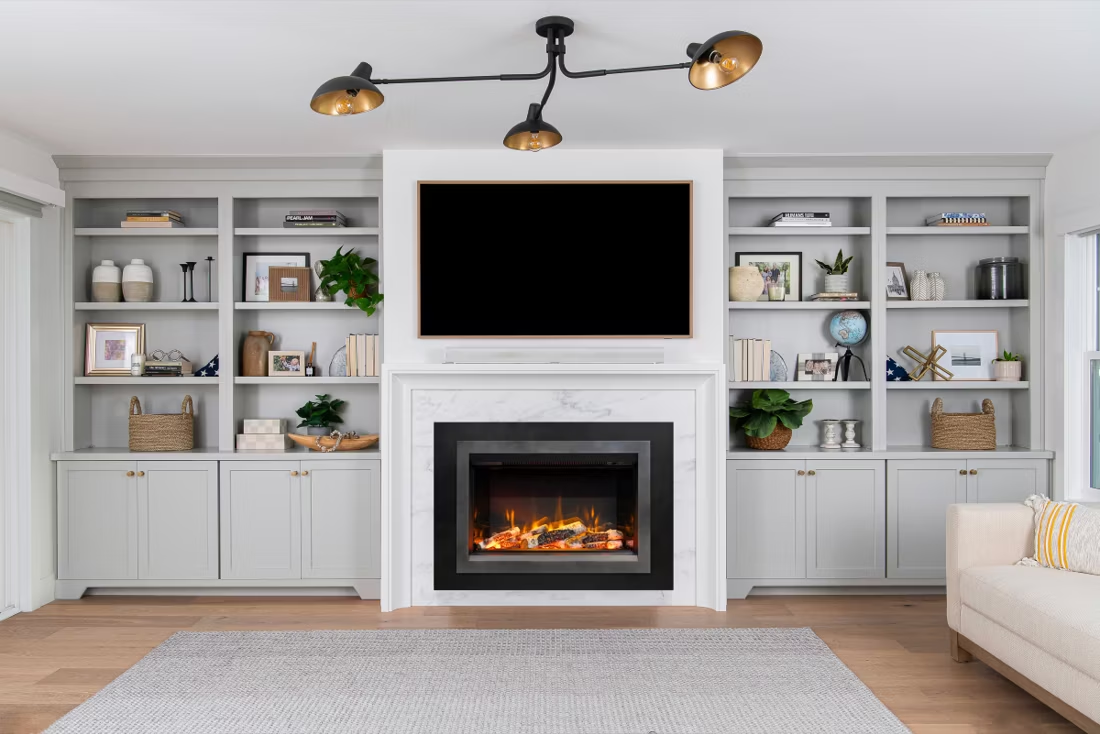
Yes—with an asterisk. Fireplaces are hot and TVs don't like heat. Either put a mantel between them to deflect rising warmth, or choose a fireplace with heat-management technology that creates a cool zone on the wall above—the wall stays around 125 degrees, barely warm, while the room still gets full heat. If you like clean lines and don't want a mantel, heat management is the answer.
Do electric fireplaces actually produce heat?
Yes—most put out around 4,800–5,000 BTUs from a standard outlet, which comfortably warms a bedroom, office, or den as a comfort-zone heater. What they won't do is carry a whole house the way wood, gas, or pellet can. Think of electric as ambiance-first with honest supplemental heat: flames on with no heat in July, flames plus warmth in January.
Can I install a fireplace myself?
If you're putting a fire in your house on purpose, it's best to work with an expert. Unless you're genuinely experienced in framing, gas line, vent pipe, and the national code on clearances to combustibles, have a professional do it—and ideally the same company that sells you the fireplace, so warranty, service, and liability all live under one roof.
What is an in-home preview and do I need one?
It's a visit where a hearth professional measures your space, confirms the model you picked actually works in your home, and walks the specs—framing, gas line, venting, finish work—before anything is ordered. Some details you just can't know until you see the house. Never make a down payment without one; it's the single most-skipped step that burns buyers.
Nearby Dealers
Hearth shops serving Robinwood and the surrounding area. Every listing shows whether it is a WhyFire partner, a dealer we have verified as authorized for the brands we recommend, or a local business carrying hearth products. No manufacturer pays for placement. How we verify dealers →
Monocacy Chimney Care
Blaine Window Hardware, Inc.
Mace Energy Supply Inc.
L.t. Rush Stone Inc
McLaughlin Home Heating
Bunting’s Fireplace & Stove
A&A Pools
Roach Energy
Aes Hearth & Patio - Chambersburg
Aes Hearthplace, Inc.
H & D Service & Stove Inc
Best Htg And Air
Bodmer's Stoves And Pottery
Electric Service in Robinwood
An electric fireplace's heater draws about 1,500 watts—pennies per hour at local rates.
The Potomac Edison Company
Hagerstown Light Department
Find your electric fireplace in Robinwood.
Tell us a bit about your home and we'll put together a free Project Guide & Parts List for your electric fireplace project, then match you with a trusted local dealer in the Robinwood area.
Find Your Fireplace →