
Keep Your Family Warm and Safe—No Matter What
With BGE natural gas and electric heat covering most homes here, wood stoves aren't the default—but for backup heat and a real fire in an existing fireplace, they still make sense for some households.
Every Project Starts From One of These Five Situations
A supplemental choice, not the default.
Randallstown sits in Baltimore County's climate zone 4A, with an average winter low around 27°F and a winter heating season that's moderate compared to genuine wood-heat country. A place like Duluth, Minnesota faces more than double the winter heating load, which is part of why wood stoves are a way of life there and only a niche choice here. Most Randallstown homes were built with central heat in mind, and BGE serves the area with both natural gas and electricity, so the pressure that pushes rural households toward wood—unreliable utility access, extreme cold, cheap local firewood—mostly isn't present.
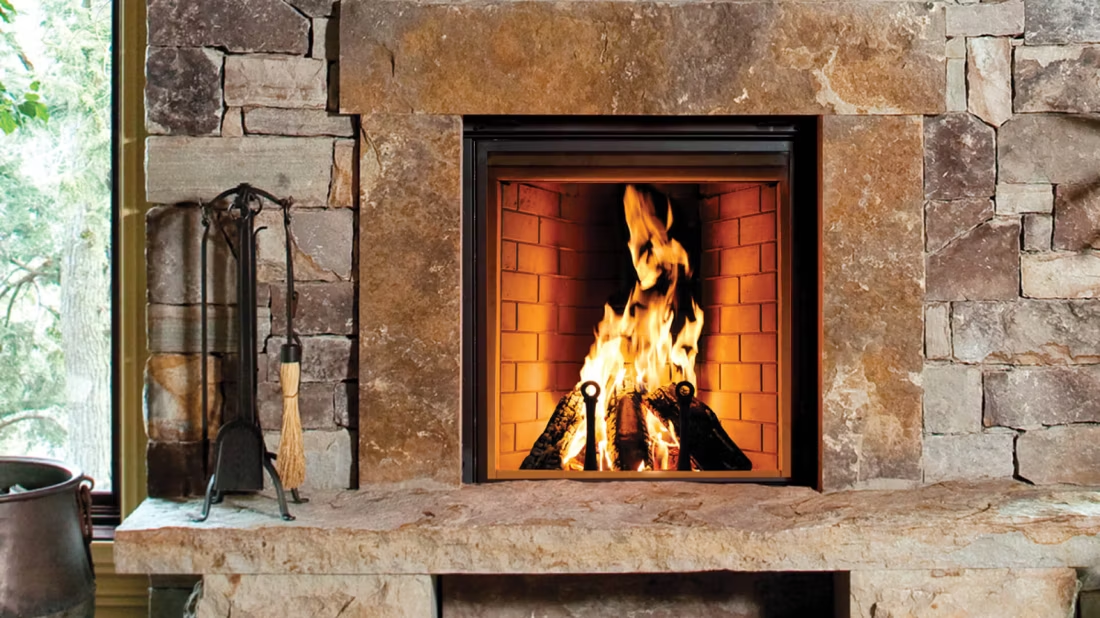
That said, wood hasn't disappeared from the picture. Randallstown has a good number of older homes with existing masonry fireplaces, and some owners convert those into wood-burning inserts for ambiance, occasional backup heat, or lower gas bills during a cold stretch. There's no national forest or large public land nearby for cutting permits, so firewood here is purchased by the cord—usually oak, hickory, and maple sourced from regional dealers in Baltimore County—rather than self-cut. If you're set on wood heat, a local hearth dealer can tell you honestly whether it's worth it for your specific home, or whether gas or electric will serve you better.
Three steps. No salesperson until you're ready.
Tell us about your project
Your zip code, your situation, and the fuel you're leaning toward—or let the answers point you to one.
See what's actually available
The brands dealers within 100 miles genuinely carry—real options, never a catalog mirage.
Get your dealer & Project Guide
A trusted local dealer, plus the free Project Guide & Parts List that names every component of the job.
Frequently Asked Questions
Is a wood stove actually a good fit for a home in Randallstown?
For most Randallstown households, no—not as a primary heat source. Natural gas from BGE and electric heat pumps handle the bulk of home heating here, and the climate, while it does see real winter cold, doesn't reach the extremes that make wood heat a necessity the way it is in places like International Falls, Minnesota. Where wood does make sense is as a secondary system: homeowners with an existing masonry fireplace who want a real fire for ambiance, or households in the outer parts of the 21133 and 21163 zips who want a non-electric backup during storm-related outages. If that's your situation, a wood insert or stove is a reasonable project—just go in knowing it's supplemental, not a furnace replacement.
How much does it cost to install a wood stove or insert in Randallstown?
Converting an existing masonry fireplace into a wood-burning insert typically runs $4,000 to $7,500 in this area, depending on whether a stainless liner and new hearth extension are needed. A freestanding wood stove in a home without an existing chimney costs more—often $6,500 to $10,000 once Class A chimney pipe, a hearth pad, and through-roof or through-wall venting are added. Because so few Randallstown homes are set up for wood burning already, the insert route into an existing fireplace is usually the more affordable path, and it's the more common project local dealers see in this market.
Do I need a permit for a wood stove in Baltimore County?
Yes. New wood-burning installations in Randallstown require a building permit through the Baltimore County Department of Permits, Approvals and Inspections, and the unit itself needs to meet current EPA 2020 NSPS emissions standards. Most hearth dealers who install wood stoves and inserts in this area handle the permit application and inspection scheduling as part of the job, so you're not left coordinating it yourself. Since Randallstown has no air quality non-attainment designation, there aren't seasonal burn curtailment periods to plan around like you'd see in parts of the West—it's a straightforward permit-and-install process.
Where do I get firewood in Randallstown?
There's no national forest or large public land tract nearby for a cutting permit, so firewood in Randallstown is almost always purchased from local suppliers rather than self-cut. Seasoned oak, hickory, and maple are the most common species sold in Baltimore County, typically running $250 to $350 per cord depending on the supplier and how well-seasoned the wood is. If you're installing a stove for backup heat, plan to have at least one to two cords stacked and dry before the season you actually need it—green wood burns poorly and adds to creosote buildup.
Will a wood stove actually work as backup heat during a power outage?
Yes, and this is one of the strongest arguments for wood heat in a suburban market like Randallstown. BGE outages after ice storms or high-wind events can knock out both gas furnace ignition systems and electric heat pumps, since both typically rely on electricity to run blowers and controls. A wood stove or insert with a simple gravity-fed setup keeps producing heat with no power at all—only models with a built-in electric blower lose that feature during an outage, and even then the stove still radiates heat into the room. For households a few miles outside the denser parts of Randallstown where outages tend to last longer, that's a real, practical reason to install one.
What's the difference between a wood stove and a wood insert for my home?
A wood insert is built to slide into an existing masonry fireplace opening, which is the more common project in Randallstown given how many mid-century homes here already have a fireplace. It uses your existing chimney (usually relined) and turns a drafty, inefficient open hearth into a real heat source. A freestanding wood stove sits on its own hearth pad and needs a full chimney system built from scratch—more construction, but more flexibility on placement if your home doesn't already have a fireplace. For most Randallstown homeowners asking about wood heat, the insert route into an existing fireplace is both cheaper and less disruptive.
Are there any wood-burning restrictions in Randallstown?
Randallstown and Baltimore County don't carry a non-attainment air quality designation, and there are no seasonal burn curtailment periods like you'd find in valley regions of the West that trap winter wood smoke. That said, this is a fairly dense suburban area with homes close together, so it's worth being a considerate burner—well-seasoned wood, a properly sized and EPA-certified stove, and hot fires rather than smoldering ones will keep smoke to a minimum for your neighbors even though nothing requires it by code.
Wood vs. gas—which makes more sense for a Randallstown home?
For most homes here, gas wins on convenience and cost of ownership: BGE natural gas service is widely available, a gas insert or fireplace lights instantly, and there's no wood to haul, stack, or clean up after. Wood's advantage is narrower but real—it works with no electricity or gas line at all, which matters if you've had outages, and it gives you a genuine wood fire rather than a gas flame. In practice, most Randallstown households we hear from end up choosing gas for daily use and, if they want wood at all, add it as a secondary system in an existing fireplace rather than replacing their main heat.
What size wood stove or insert do I need?
Because wood heat in Randallstown is almost always supplemental rather than whole-home, most installs here are small to medium units—sized for the room the fireplace sits in, not the whole house. A small stove or insert (rated for roughly 1,000 to 1,500 square feet) is typically plenty for a family room or converted den, even in an older, less-insulated Randallstown colonial. Going bigger than that usually means an oversized fire that smolders and builds creosote faster, which is the opposite of what you want in a backup-heat setup. A local dealer can size it properly during an in-home look at your fireplace and room.
What's the difference between an insert and a zero-clearance fireplace?
An insert is a fireplace that slides into a pre-existing wood-burning fireplace—if you don't have one, there's nothing to insert it into. A zero-clearance fireplace is built into a framed wall, which makes it the answer for remodels and new construction. Simple test: existing masonry fireplace means insert; blank or framed wall means zero-clearance.
Why is my open fireplace making my house colder?
Open fireplaces suck—literally. As the fire burns, it consumes air your furnace already paid to heat and pulls it out through the chimney, so the house is actually colder after the fire goes out than before you lit it. An insert fixes this: it seals the chimney, puts fixed glass across the front, and turns that hole in your house into a real heat source.
Does a fireplace add value to my home?
On average, a fireplace adds back to the home about the same amount you spent installing it. Add the monthly savings from heating the rooms you actually use instead of the whole house—often hundreds of dollars a year—and the value case is strong before you even count what a fire does for how your family uses the room.
How much should I budget for a fireplace?
For an average home—covering the fireplace, the vent pipe, and basic installation—a budget between $3,900 and $5,500 gives you a lot of options across wood, gas, and pellet. By the time you add finish work, gas line, and electrical, the average complete installation lands between $5,000 and $12,000 all-in. In a remodel or new build, a good rule is to put about 2.5% of the total project cost toward the fireplace.
Nearby Dealers
Hearth shops serving Randallstown and the surrounding area.
Get matched with a Randallstown wood stove specialist.
Tell us about your home and your existing fireplace, and we'll connect you with a trusted local dealer plus a free Project Guide & Parts List—the exact parts, including the vent kit, for a wood insert or stove project sized right for Randallstown.
Find Your Fireplace →