
Keep Your Family Warm and Safe—No Matter What
From Centreville to Kent Island, Queen Anne's County homes lean on cordwood heat through Chesapeake nor'easters and the occasional power outage. Find the right stove or insert, and connect with a trusted local dealer.
Every Project Starts From One of These Five Situations
Hardwood heat with Chesapeake Bay winters in mind.
Queen Anne's County sits on Maryland's Eastern Shore, just across the Bay Bridge from Annapolis, with a mix of waterfront communities on Kent Island, farmland around Church Hill and Sudlersville, and the historic county seat of Centreville. Winters here are moderate by national standards—average lows around 29°F and roughly 4,300 heating degree days, well short of what a place like Madison, WI or Duluth, MN sees—but Bay-effect wind and the occasional nor'easter push wind chills down hard enough that a wood stove earns its keep, especially when coastal storms knock out power for a day or two.
The county's mixed hardwood forests and farm wood lots keep oak, hickory, and maple firewood in steady local supply, and with no national forest land in the county, most homeowners source cordwood from local tree services, land-clearing crews, and private wood lots rather than public cutting permits. Queen Anne's County also has no air quality non-attainment designation, so wood burning here isn't subject to the curtailment periods or inversion advisories that limit stove use in some parts of the country. For an Eastern Shore farmhouse with drafty balloon framing or a Kent Island cottage that loses power in a summer squall, a properly sized wood stove or insert delivers dependable, no-electricity-required heat.
Three steps. No salesperson until you're ready.
Tell us about your project
Your zip code, your situation, and the fuel you're leaning toward—or let the answers point you to one.
See what's actually available
The brands dealers within 100 miles genuinely carry—real options, never a catalog mirage.
Get your dealer & Project Guide
A trusted local dealer, plus the free Project Guide & Parts List that names every component of the job.
Frequently Asked Questions
How much does a wood stove installation cost in Queen Anne's County?
A typical wood stove or insert installation in Queen Anne's County runs roughly $3,500 to $8,500, depending on the unit, whether you're inserting into an existing masonry fireplace (common in many of the county's older Centreville and Church Hill farmhouses), and whether new Class A chimney pipe is needed. A freestanding stove in new construction or a home without an existing chimney—common in newer Stevensville and Grasonville developments—can run higher once full through-roof venting and a code-compliant hearth pad are factored in, sometimes reaching $10,000-$12,000. Local dealers typically quote a firm price after an in-home site visit.
What size wood stove do I need for my home?
Sizing depends on square footage, ceiling height, insulation, and whether the stove is primary or supplemental heat. Queen Anne's County has a wide mix of housing stock—waterfront cottages on Kent Island, mid-size ranch and colonial homes near Centreville, and larger, older farmhouses around Sudlersville and Millington with less insulation and higher heat loss. A small stove (up to 1,000 sq ft) suits a cottage or single large room; a medium stove (1,000-2,000 sq ft) covers most main living areas; larger farmhouses often need a bigger unit or supplemental zone heating in a second room. A local dealer will size your space for free during an in-home visit—oversizing leads to smoldering, creosote-heavy fires, while undersizing won't keep up during a hard cold snap.
Where can I find certified wood stove installers near me?
Look for NFI (National Fireplace Institute) certified installers or CSIA (Chimney Safety Institute of America) credentialed technicians—both indicate real training in wood-burning appliance installation and venting. Dealers serving the Route 50/301 corridor typically cover Centreville, Church Hill, Grasonville, and Stevensville, with a short travel charge for more rural addresses near Sudlersville or Millington. Most retailers handle installation directly, which keeps warranty coverage and code compliance under one roof—a safer bet than a general handyman install, since improper clearances and venting are the leading cause of chimney fires.
What's the difference between a wood stove and a wood insert?
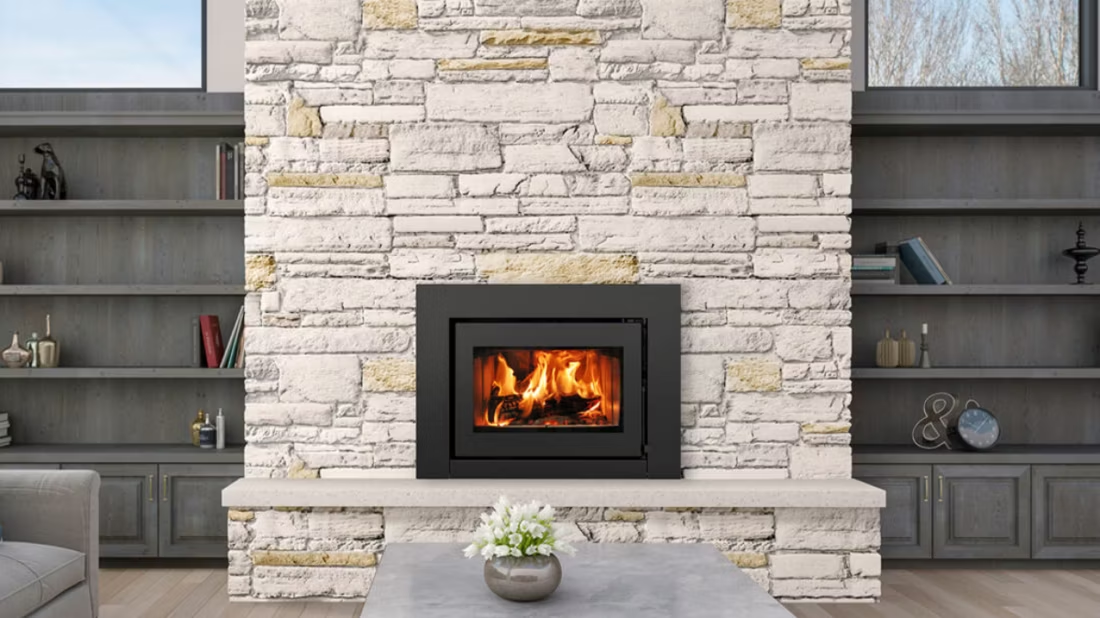
A wood stove is a freestanding unit installed on a hearth pad, vented through a chimney, and can go almost anywhere with the right clearances. A wood insert slides into an existing masonry fireplace, converting an old open hearth into a sealed, high-efficiency heat source. Queen Anne's County has no shortage of older homes—particularly in and around Centreville's historic district and the county's colonial-era farmhouses—with existing masonry fireplaces that are prime candidates for an insert, since it reuses the chimney you already have. Newer construction on Kent Island or in Stevensville without an existing fireplace is usually better suited to a freestanding stove.
Do I need a permit to install a wood stove in Queen Anne's County?
Yes—a building permit is required for new wood stove and insert installations through Queen Anne's County's permits and inspections office, and the unit needs to meet current EPA emissions standards. Most local dealers handle the permit paperwork and schedule the required inspection as part of the install, so homeowners rarely have to navigate it directly. Unlike some Western states, Queen Anne's County has no air quality non-attainment designation, so there are no seasonal burn curtailment periods here—you're free to burn once the stove passes inspection.
What's the best wood stove for Queen Anne's County's climate?
With average winter lows around 29°F, Queen Anne's County doesn't demand the extreme 20-hour catalytic burn times that harsher climates need, so a solid mid-size non-catalytic stove from a brand like Lopi, Pacific Energy, or Jøtul will comfortably heat most homes. For larger, older farmhouses near Sudlersville or Church Hill with higher heat loss, or for homeowners who want maximum overnight burn time during a nor'easter cold snap, a catalytic model from Blaze King is worth the upgrade. Local oak, hickory, and maple firewood all burn hot and dense, which helps any stove perform well through the county's shorter, milder heating season.
How often should my chimney be inspected and cleaned?
The CSIA recommends an annual inspection for any wood-burning appliance, and Queen Anne's County is no exception—plan on a sweep and inspection each late summer or early fall before burning season starts. The Bay's humidity can accelerate creosote buildup and metal corrosion in stovepipe and chimney liners faster than in drier inland climates, so it's worth flagging moisture exposure to your chimney sweep, especially for waterfront homes on Kent Island or along the Chester and Wye rivers. Skipping inspections remains the leading cause of residential chimney fires.
Where can I get firewood in Queen Anne's County?
Firewood in Queen Anne's County typically comes from local tree services, land-clearing operations tied to the county's active farming and development, and private wood lots rather than public forest permits, since there's no national forest land within the county. Oak, hickory, and maple are the most common species sold locally, and a delivered cord typically runs $220 to $300 depending on species and seasoning. Buying a full year ahead and stacking to season through summer is standard practice here, since properly dried hardwood burns hotter and cleaner than green wood cut the same season.
Wood stove vs. pellet stove—which is right for me?
Wood stoves burn cordwood, work with zero electricity, and pair well with the abundant oak, hickory, and maple available locally—a real advantage during the coastal storms and occasional power outages that hit the Eastern Shore. Pellet stoves, using bagged pellets from regional suppliers like Energex, Hamer Pellet Fuel, or Greene Team Pellet Fuel, are easier to operate and burn cleaner, but the auger and blower need electricity, so they go dark in an outage. For a Kent Island home that loses power during a summer squall or a rural Sudlersville farmhouse where backup heat matters, wood usually wins. For homeowners prioritizing convenience with reliable grid power, pellet is a strong option too—both are available through local dealers.
Why won't my new wood stove get going like my old one?
New wood stoves are 70%+ efficient, so far less heat goes up the flue—which also means less draft to get a fire established. The rule: build a genuinely hot fire for about 45 minutes before you choke it down. Skip that and you get smoke in the room, creosote in the chimney, and a fire that never takes off. Most performance complaints trace straight back to this.
What's the difference between an insert and a zero-clearance fireplace?
An insert is a fireplace that slides into a pre-existing wood-burning fireplace—if you don't have one, there's nothing to insert it into. A zero-clearance fireplace is built into a framed wall, which makes it the answer for remodels and new construction. Simple test: existing masonry fireplace means insert; blank or framed wall means zero-clearance.
Does a fireplace add value to my home?
On average, a fireplace adds back to the home about the same amount you spent installing it. Add the monthly savings from heating the rooms you actually use instead of the whole house—often hundreds of dollars a year—and the value case is strong before you even count what a fire does for how your family uses the room.
What is an in-home preview and do I need one?
It's a visit where a hearth professional measures your space, confirms the model you picked actually works in your home, and walks the specs—framing, gas line, venting, finish work—before anything is ordered. Some details you just can't know until you see the house. Never make a down payment without one; it's the single most-skipped step that burns buyers.
Stove and Fireplace Dealers in Queen Anne's County
Find your wood stove in Queen Anne's County.
Tell us a bit about your home and we'll match you with the right wood stove or insert, plus a free Project Guide & Parts List—the exact parts, including your vent kit, and a trusted local dealer to install it.
Find Your Fireplace →