
Find the right gas fireplace for your Queen Anne's County home.
From Kent Island to Centreville, gas offers instant, reliable heat for Eastern Shore winters—find the right unit and get matched with a trusted local dealer.
Every Project Starts From One of These Five Situations
Clean heat for a mild but real Chesapeake winter.
Queen Anne's County sits low and flat along the Chesapeake Bay, and its climate zone 4A winters are moderate compared to inland Maryland or the mountains further west—average lows around 29°F and a winter heating load that's roughly a third of what a place like Duluth, MN sees. That's not nothing, though: Bay-effect damp cold, nor'easters, and the occasional ice storm on Kent Island and along Route 50 mean homes here still need dependable heat, and a lot of Queen Anne's County families want it without the daily work of tending a woodpile.
Gas fireplaces have become a common choice throughout the county, from waterfront homes on Kent Island to farmhouses outside Centreville and Church Hill. Natural gas service reaches parts of the more developed corridors near Stevensville and Chester, while propane is the standard fuel for the county's more rural stretches. Either way, a properly sized and vented gas fireplace or insert gives you heat at the flip of a switch, a backup option during the power outages that come with Bay-area storms, and a clean, no-ash alternative to cutting oak or hickory for the woodstove.
Three steps. No salesperson until you're ready.
Tell us about your project
Your zip code, your situation, and the fuel you're leaning toward—or let the answers point you to one.
See what's actually available
The brands dealers within 100 miles genuinely carry—real options, never a catalog mirage.
Get your dealer & Project Guide
A trusted local dealer, plus the free Project Guide & Parts List that names every component of the job.
Frequently Asked Questions
How much does a gas fireplace installation cost in Queen Anne's County?
Costs vary based on the unit, the venting path, and whether new gas line work is required. A direct-vent gas insert dropped into an existing masonry fireplace where a gas line is already nearby tends to run on the lower end. A new built-in gas fireplace for a remodel or new construction—with framing, venting, and a gas line extension—lands in the middle to upper range. Homes that need a new propane tank set or a longer gas line run from the street will see costs push higher. A local dealer will give you a firm number after walking your home and hearth.
Can I convert my existing wood fireplace to gas?
Yes, and it's a common project for older homes around Centreville, Church Hill, and the historic parts of Queen Anne's County. A gas insert typically slides into your existing masonry firebox, running a stainless liner up your current chimney for venting. Whether you're on natural gas or propane affects the setup, and homes already plumbed for gas appliances are usually the easiest and least expensive to convert. The result keeps your existing mantel and hearth look while trading firewood and ash for a switch or remote.
Do I need natural gas to install a gas fireplace, or can I use propane?
Either fuel works, and which one makes sense depends on where in the county you live. Natural gas service reaches the more built-up corridors near Stevensville, Chester, and parts of Kent Island—if your home already has a gas water heater or range, adding a fireplace is usually straightforward. Out toward Centreville, Church Hill, Sudlersville, and other rural parts of the county, propane is the standard, either from an existing tank or a new tank set by a local propane supplier. Most gas fireplace models can be configured for either fuel with the correct orifice and regulator.
Will my gas fireplace work during a power outage?
Most direct-vent gas fireplaces with intermittent pilot ignition (IPI) include a battery backup that keeps the unit operational when the power drops—which matters on Kent Island and along the Bay where nor'easters and summer storms can knock out power for hours or longer. Valor units take a slightly different approach: their pilot assembly generates its own electricity through the thermocouple, so there's no battery to remember to replace. Ask your local dealer which ignition system is on any unit you're considering, especially if backup heat during storms is a priority for your household.
What's the difference between a gas fireplace, gas insert, and gas stove?
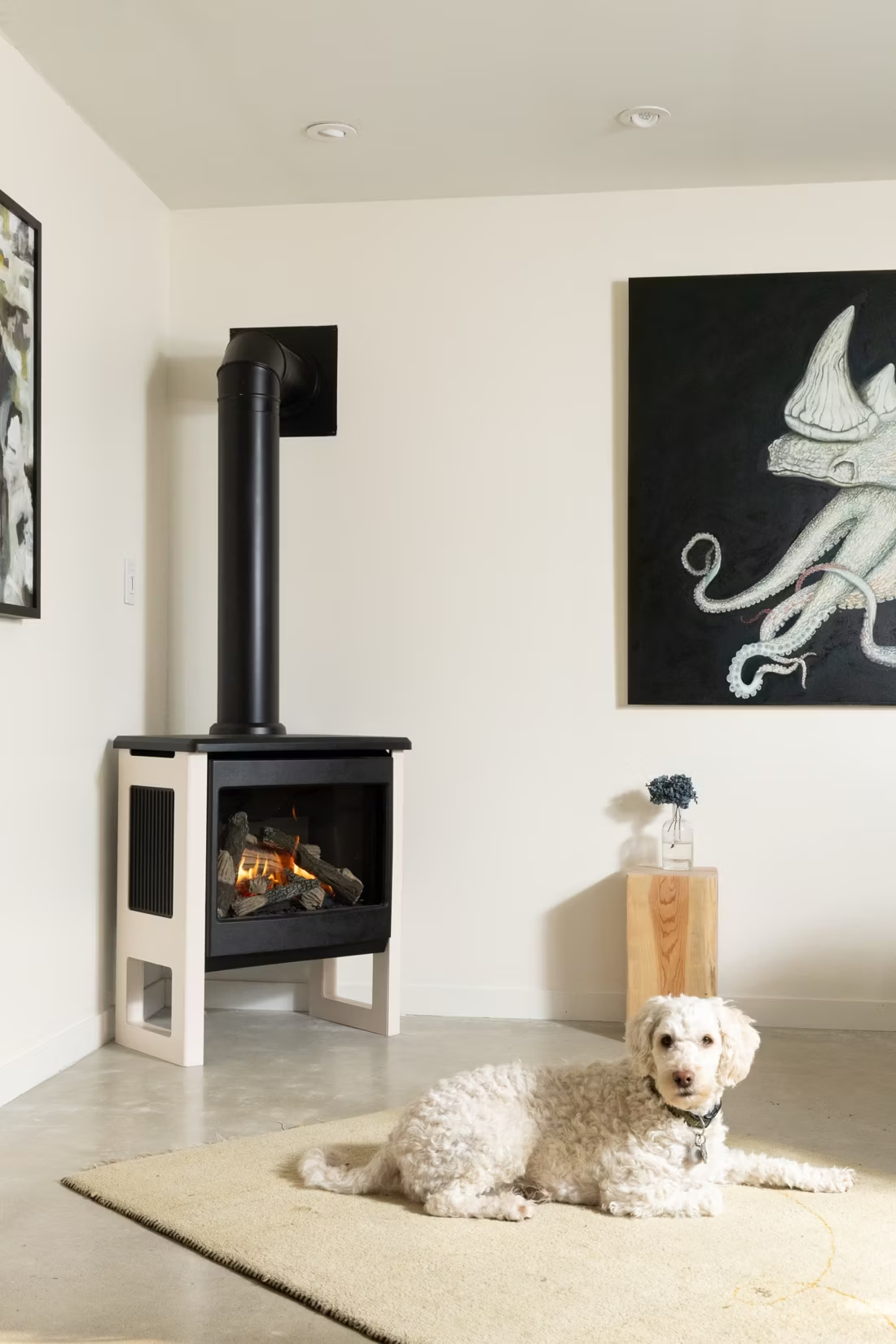
A gas fireplace is a fully built-in unit, framed into a wall—the right call for new construction or a larger remodel. A gas insert is sized to slide into an existing masonry firebox, turning an old open fireplace into a sealed, efficient heat source using the chimney you already have. A gas stove is a freestanding cast-iron or steel unit that sits on the floor, similar in footprint to a wood stove but running on gas. For the many older homes in Queen Anne's County with an existing brick fireplace, an insert is usually the most cost-effective upgrade. New rooms or additions without an existing chimney are better suited to a built-in unit.
Do I need a permit to install a gas fireplace in Queen Anne's County?
Yes—new gas fireplace installations generally require a building permit and gas line permit through Queen Anne's County, and any propane or natural gas line work needs to be done by a licensed gas-fitter. Most established local hearth dealers handle the permitting as part of the installation, coordinating the gas work, venting, and inspection so you're not managing separate trades yourself. It's worth confirming permit handling is included before you sign off on any quote.
What's the difference between vented and vent-free gas fireplaces?
Vented (direct-vent or B-vent) gas fireplaces pull combustion air from outside and exhaust the byproducts back outside through a sealed vent system—they're the cleanest option and code-compliant everywhere, including Maryland. Vent-free gas fireplaces burn without any exterior venting, releasing some water vapor and trace combustion byproducts into the room, which means strict room-sizing rules and required oxygen depletion sensors. Vent-free units are permitted in Maryland but less commonly installed than direct-vent models in Queen Anne's County. For most homeowners here, a direct-vent unit is the simpler, more universally recommended choice—a local dealer can walk you through both if you want to weigh the tradeoffs.
How often should my gas fireplace be serviced?
Plan on an annual inspection, ideally before the coldest stretch of the season sets in. A technician will check the burner, pilot assembly, venting, gas connections, and clean the glass and interior—a much lighter lift than a wood chimney sweep, but still important for safe operation. Local hearth and gas appliance service providers typically charge in the $150–$250 range for a standard annual visit.
Gas vs. wood—which is right for my home?
Wood—commonly oak, hickory, or maple in this part of Maryland—offers a real fire experience, lower ongoing fuel costs if you have access to firewood, and heat that doesn't depend on electricity or a gas line. Gas offers instant on-off convenience, no ash or creosote to manage, and steady heat output without the daily tending a woodstove requires. In Queen Anne's County, where winters are real but not brutal, many homeowners choose gas for the primary living space and value the option to run it even during a storm-related power blip with battery backup ignition. Others keep a wood-burning option for backup heat or the ambiance of a real fire on the water.
Is my gas fireplace wasting gas?
If it was installed more than 15 years ago, probably. Older gas fireplaces keep a standing pilot light burning all the time, and that little flame can cost a couple hundred dollars a year. Newer models use pilot-on-demand ignition—the pilot lights only when you use the fireplace and goes out when you turn it off.
Are new gas fireplaces really better than old ones?
Two ways, and they're both big. Looks: modern gas fireplaces are realistic enough that it's hard to believe they aren't burning wood. Cost: old units burn a standing pilot year-round (roughly $200 a year), while new ones use pilot-on-demand ignition and modern burners. Add remote controls and thermostat operation, and the day-to-day experience isn't close.
How much should I budget for a fireplace?
For an average home—covering the fireplace, the vent pipe, and basic installation—a budget between $3,900 and $5,500 gives you a lot of options across wood, gas, and pellet. By the time you add finish work, gas line, and electrical, the average complete installation lands between $5,000 and $12,000 all-in. In a remodel or new build, a good rule is to put about 2.5% of the total project cost toward the fireplace.
Does a fireplace add value to my home?
On average, a fireplace adds back to the home about the same amount you spent installing it. Add the monthly savings from heating the rooms you actually use instead of the whole house—often hundreds of dollars a year—and the value case is strong before you even count what a fire does for how your family uses the room.
Stove and Fireplace Dealers in Queen Anne's County
Get your free Project Guide & Parts List for a gas fireplace in Queen Anne's County.
Tell us a bit about your home and we'll match you with a trusted local dealer, plus a free Project Guide & Parts List—the exact parts, vent kit, and recommended installer for your gas project.
Find Your Fireplace →