
A Rare Fit for Laurel, Maryland Homes.
Pellet stoves aren't common in Laurel's mild, gas-and-electric suburbs—but for a workshop, a finished basement, or backup heat during a BGE outage, the right setup still makes sense. We'll help you figure out if yours is one of them.
Every Project Starts From One of These Five Situations
Laurel's climate and housing stock favor other heat sources.
Laurel sits in the Baltimore-Washington corridor at just 220 feet of elevation, with a climate zone (4A) and winter heating load that's genuinely mild compared to the wood-and-pellet-heavy markets further north—think Burlington, VT or International Falls, MN, both with a much longer, harder winter heating season. Winter lows here average 26°F, not the sustained single digits that make a hopper-fed stove feel like a necessity rather than a novelty. Most Laurel homes, including the townhomes and newer subdivisions common in this part of Prince George's County, are built around central gas furnaces or electric heat pumps, with little of the chimney chase space or dedicated utility room that solid-fuel appliances typically need.
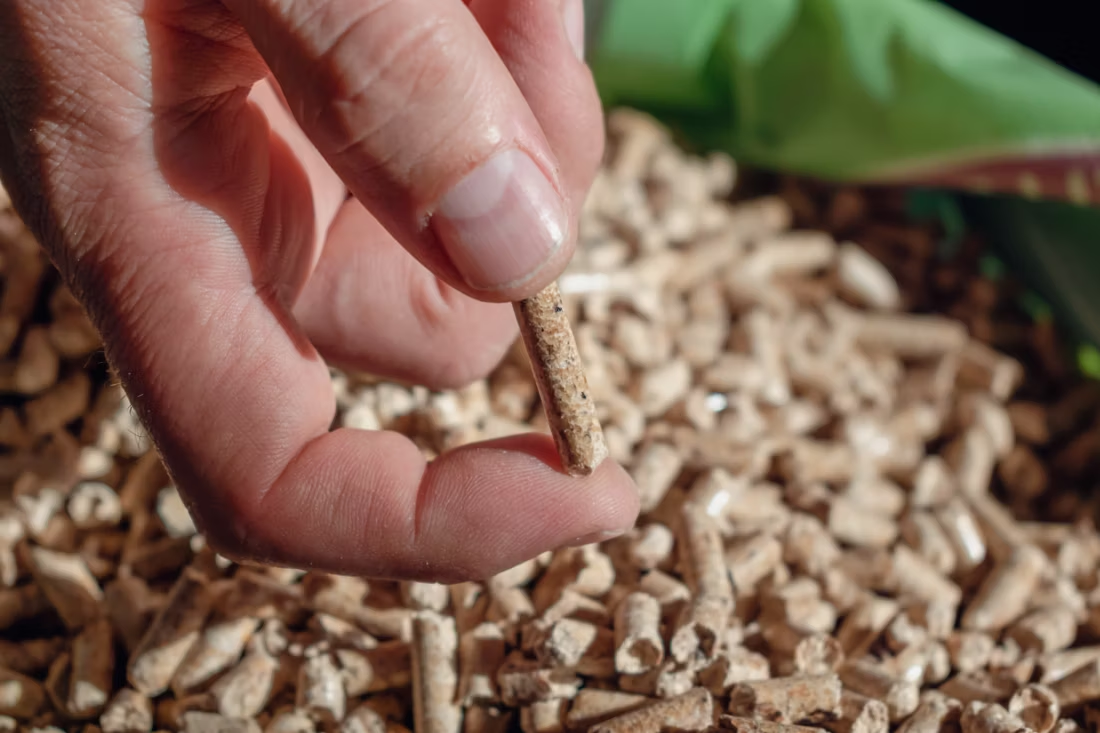
That's not to say pellet heat has no place here. A detached home with a basement or attached garage, a homeowner who wants a hedge against a BGE outage, or someone converting a sunroom or workshop into usable winter space can still get real value from a pellet stove—and because pellet units vent through a simple side-wall pipe rather than a full masonry chimney, they're often more realistic to retrofit into a Laurel home than a wood stove would be. Regional pellet brands like Energex, Hamer Pellet Fuel, and Greene Team Pellet Fuel are sold through hearth shops and farm supply stores around the DC-Baltimore corridor, so fuel isn't the limiting factor—it's whether your home and heating goals actually call for one.
Three steps. No salesperson until you're ready.
Tell us about your project
Your zip code, your situation, and the fuel you're leaning toward—or let the answers point you to one.
See what's actually available
The brands dealers within 100 miles genuinely carry—real options, never a catalog mirage.
Get your dealer & Project Guide
A trusted local dealer, plus the free Project Guide & Parts List that names every component of the job.
Frequently Asked Questions
How much does a pellet stove installation cost in Laurel?
There isn't a deep local install base to benchmark against in Laurel the way there would be in a colder market, which is itself a sign of how uncommon pellet stoves are here. Nationally, a freestanding pellet stove with side-wall venting typically installs for $3,000 to $6,000, and a pellet insert into an existing masonry fireplace runs similarly once the liner and hopper clearance are worked out. Homes without an existing fireplace or chimney chase—common in Laurel's townhome and newer subdivision stock—will lean toward the higher end because of the wall penetration and electrical work involved. A local dealer can give you a firm number once they've seen the space.
Does a pellet stove even make sense in Laurel's climate?
It depends on what you're using it for. With a winter heating load that's fairly mild and winter lows averaging 26°F, Laurel doesn't have the sustained deep cold that makes pellet heat a primary-heat necessity the way it is in places like Burlington, VT. As a whole-home primary heat source here, a pellet stove is usually overkill next to a gas furnace or heat pump. As supplemental heat for one room, a finished basement, or a backup source when the power grid or gas line is disrupted, it can absolutely pull its weight—you're just not going to run it nonstop from November through March the way a Northern Minnesota household might.
Where can I buy pellets in Laurel?
Pellets aren't sold on every corner in Laurel the way they are in colder, pellet-heavy states, but regional brands including Energex, Hamer Pellet Fuel, and Greene Team Pellet Fuel are available through hearth retailers and farm/feed supply stores across the DC-Baltimore corridor, and many will deliver by the pallet (about 50 forty-pound bags) for households burning through a season. Because demand is lower here than in New England or the Upper Midwest, it's worth calling ahead in fall to confirm stock rather than assuming a store keeps a full inventory year-round.
Do I need a permit to install a pellet stove in Laurel?
Yes—new hearth appliance installations in Laurel fall under Prince George's County's Department of Permitting, Inspections and Enterprise Services (DPIE), which requires a building permit and inspection for the unit and its venting. Because pellet stoves vent through a simple side-wall pipe rather than a full masonry chimney, the permitting and inspection process is generally more straightforward than it is for a wood-burning installation. Most hearth retailers who handle these installs in the area will pull the permit on your behalf.
What's the difference between installing a pellet stove versus a wood stove in a Laurel home?
Both are genuinely uncommon in Laurel, but pellet tends to be the more realistic retrofit. A wood stove needs a full Class A chimney system with proper clearances—hard to add to a townhome or an attached home without significant construction. A pellet stove vents through a smaller, horizontal side-wall pipe and can often be installed in a basement or converted room without touching the roofline. The tradeoff is that a pellet stove needs electricity to run its auger and combustion blower, so it won't operate through a power outage the way a wood stove will, unless it's paired with a battery backup.
Will a pellet stove work during a power outage in Laurel?
Not without a backup power source—this is the tradeoff pellet buyers in Laurel should understand upfront. Pellet stoves rely on an electric auger to feed fuel and a blower to distribute heat, so a Baltimore Gas & Electric outage will shut the unit down along with everything else in the house unless you have a small battery backup or generator wired to it. If your main goal is heat that works no matter what the grid is doing, that's worth weighing against a wood-burning or vented gas option instead. If your goal is efficient, low-maintenance supplemental heat under normal conditions, pellet still performs well.
What size pellet stove do I need for a Laurel home?
Given Laurel's relatively mild winter heating load—nowhere near the long, hard winters of genuinely cold-climate markets—most Laurel installations are sized for a single large room, a finished basement, or a converted garage or sunroom rather than the whole house. Small units (rated for 500-1,000 sq ft) cover most of these use cases. Whole-home pellet heating is possible but rare here, since it competes directly with central gas and electric heat pump systems that most Laurel homes already have. A dealer can size the unit properly after seeing your space and insulation.
Pellet stove vs. gas fireplace—which is right for my Laurel home?
For most Laurel homeowners, gas wins on convenience: it's instant-on, requires no fuel storage, and pairs naturally with the gas service already common in this part of Prince George's County. Pellet stoves require loading a hopper, storing bags of fuel, and periodic ash cleanup, plus they depend on electricity to run. Where pellet still has an edge is in spaces without gas service, in a detached structure like a workshop or garage, or for homeowners who specifically want the visual and radiant-heat experience of a real flame without the chimney demands of wood. If convenience and low maintenance matter most, lean gas; if you want a hands-on secondary heat source and don't mind tending fuel, pellet is worth a look.
Is a pellet stove a reasonable backup heat source for a Laurel home?
It can be, with the right setup. A pellet stove paired with a small battery backup or portable generator can keep a single room warm through a multi-day BGE outage, running at roughly the electric draw of a box fan for the auger and blower—at Laurel's residential rate of about 16 cents per kWh, that's a modest daily cost. What it won't do is run with zero power input the way a wood stove does. If backup heat independent of the grid is the priority, most local dealers will point you toward wood or a battery-free gas unit instead; if backup heat with minimal fuss and clean burning is the priority, pellet still has a legitimate case.
Why is my open fireplace making my house colder?
Open fireplaces suck—literally. As the fire burns, it consumes air your furnace already paid to heat and pulls it out through the chimney, so the house is actually colder after the fire goes out than before you lit it. An insert fixes this: it seals the chimney, puts fixed glass across the front, and turns that hole in your house into a real heat source.
Why is a fireplace insert so efficient?
An insert does two things: it seals the chimney completely, so you stop losing air you already paid to heat, and it radiates warmth into the room through the firebox and glass. Most add a heat-exchange fan that pulls cool room air underneath, wraps it around the hot firebox, and pushes it back out warm. Your home is more efficient before you've even lit the first fire.
How much should I budget for a fireplace?
For an average home—covering the fireplace, the vent pipe, and basic installation—a budget between $3,900 and $5,500 gives you a lot of options across wood, gas, and pellet. By the time you add finish work, gas line, and electrical, the average complete installation lands between $5,000 and $12,000 all-in. In a remodel or new build, a good rule is to put about 2.5% of the total project cost toward the fireplace.
Can a fireplace actually lower my heating bill?
Yes—by creating a comfort zone. A furnace heats every square foot of the house just to warm the one room you're in; a gas fireplace on low burns roughly a sixth of the gas a typical furnace does. Set the furnace around 55–60 degrees as a baseline, then heat the rooms your family actually uses. Families who heat this way commonly save $20–$60 a month.
Nearby Dealers
Hearth shops serving Laurel and the surrounding area.
Pellet Brands Stocked Around Laurel
Manufacturers will point you to the nearest stocking dealer.
See if pellet heat makes sense for your Laurel home.
Tell us about your space and how you plan to use it, and we'll give you an honest read on whether pellet is the right call—plus a free Project Guide & Parts List and a match with a trusted local dealer if it is.
Find Your Fireplace →