
Instant heat and real ambiance—no chimney, no gas line.
From waterfront condos in Havre de Grace to finished basements in Bel Air and Fallston, electric fireplaces give Harford County homeowners a plug-in or built-in flame with zero venting. Find the right unit and connect with a trusted local dealer.
Every Project Starts From One of These Five Situations
The simplest fireplace upgrade in the county.
Harford County runs from the Chesapeake Bay and Susquehanna River at Havre de Grace, through suburban Bel Air and Aberdeen—home to Aberdeen Proving Ground—up into the rolling farmland near Forest Hill and Fallston. Climate zone 4A here means a real but moderate heating season: winter lows average 25°F and the county's winter heating load is roughly two-thirds that of a place like Burlington, VT. That moderate climate is exactly why electric fireplaces have found such a strong foothold locally—homeowners want the look and supplemental warmth of a fire without the chimney, gas line, or wood storage that a harsher climate might demand.
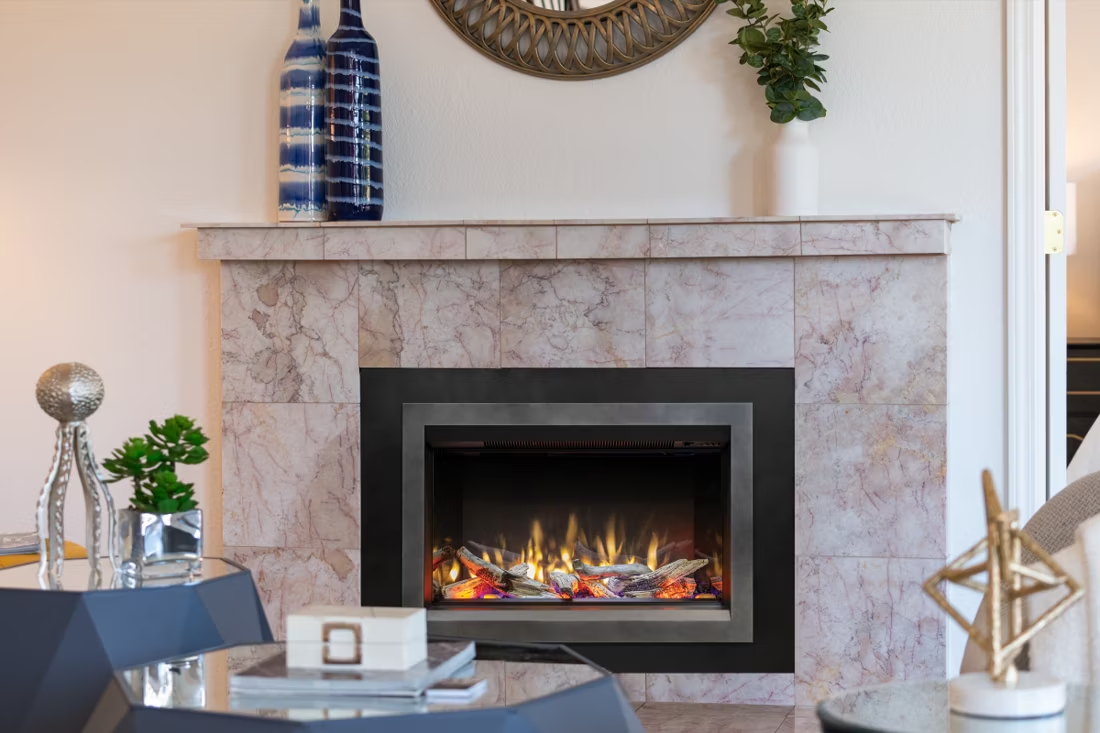
Electric units also solve a problem that gas and wood can't: they go almost anywhere. Waterfront condos and townhomes around Havre de Grace and Joppatowne often have no chimney and no gas service, and HOA rules in newer Bel Air and Abingdon developments frequently restrict venting appliances entirely. A plug-in insert or built-in wall unit sidesteps all of that. BGE (Baltimore Gas and Electric) serves electric accounts throughout the county, and most units run on a standard 120-volt outlet, though larger built-ins benefit from a dedicated 20-amp circuit run by a licensed electrician.
Three steps. No salesperson until you're ready.
Tell us about your project
Your zip code, your situation, and the fuel you're leaning toward—or let the answers point you to one.
See what's actually available
The brands dealers within 100 miles genuinely carry—real options, never a catalog mirage.
Get your dealer & Project Guide
A trusted local dealer, plus the free Project Guide & Parts List that names every component of the job.
Frequently Asked Questions
How much does an electric fireplace installation cost in Harford County?
Plug-in electric fireplace inserts and freestanding stoves typically run $300 to $1,200 installed, since most just need an existing outlet and a mantel or surround. Built-in wall units and linear electric fireplaces with custom cabinetry or a dedicated circuit run by an electrician tend to land between $2,000 and $6,000, depending on unit size and finish work. Homes in newer Bel Air and Abingdon developments with unfinished basements often see costs on the lower end, since there's less demolition involved than retrofitting an older Havre de Grace rowhome.
Do I need a permit to install an electric fireplace in Harford County?
Most plug-in electric fireplaces need no permit at all—they draw power from a standard outlet just like any appliance. Built-in units that require new electrical wiring or a dedicated circuit typically need an electrical permit through Harford County Government's Permits, Approvals & Inspections Division, and the work should be done by a licensed electrician. If the installation also involves framing a new wall niche or mantel surround, a building permit may apply as well. Local dealers who handle both the unit and the install usually pull whatever permits are required as part of the job.
Can an electric fireplace actually heat a room, or is it just for looks?
Most electric fireplaces include a built-in heater rated around 4,600-5,000 BTU, enough to comfortably warm a single room of 400-500 square feet as supplemental heat. Given Harford County's moderate 4A climate—average winter lows around 25°F rather than the sustained sub-zero stretches of Fargo, ND or Duluth, MN—that's usually plenty for a finished basement, a bonus room over an Aberdeen garage, or a den that runs cold. Electric fireplaces are not designed or intended as a primary heat source, and most owners run them with the flame effect only, using the heater setting on the coldest evenings.
Electric vs. gas vs. wood—which is right for my Harford County home?
Wood offers real heat output using local oak, hickory, and maple and works during power outages, but it needs a chimney, clearances, and permits. Gas delivers strong, consistent heat and can run on natural gas where available or propane elsewhere, but it requires venting and gas line work. Electric needs neither—no venting, no fuel storage, and installation as simple as a licensed electrician wiring an outlet. For primary heat in an older Forest Hill farmhouse, wood or gas usually wins. For ambiance and supplemental warmth in a condo, basement, or HOA-restricted development around Bel Air or Havre de Grace, electric is often the only realistic option.
Should I get a wall-mount electric fireplace, an insert, or a built-in?
A wall-mount unit hangs like a large flat-screen and needs only a nearby outlet—popular in Havre de Grace condos and apartments where drilling into masonry isn't an option. An electric insert is sized to slide into an existing masonry fireplace opening, a common retrofit in older Bel Air and Aberdeen homes that want to retire an unused wood-burning firebox. A built-in electric fireplace is framed into new construction or a remodel, often with a custom mantel and surround, and is the most common choice in new Abingdon and Edgewood developments where the fireplace wall is planned from the start. A local dealer can walk your space and tell you which fits.
Will my electric fireplace still work during a power outage?
No—electric fireplaces require power to run both the flame effect and any heat output, so they go dark along with everything else when BGE service drops. This is the main tradeoff against wood heat, which keeps working regardless of grid status. For Harford County homeowners who want backup heat during winter storms along the Bay or the Susquehanna, a wood or gas unit paired with an electric fireplace elsewhere in the house is a common combination—electric for daily convenience, wood or gas as the fallback.
Where does an electric fireplace make the most sense in a Harford County home?
Finished basements are the single most common install we see across Bel Air, Fallston, and Forest Hill, since there's rarely an existing chimney and running gas line or venting down there is expensive. Waterfront condos and townhomes in Havre de Grace and Joppatowne are another strong fit, since many have no masonry chimney at all. Bedrooms, home offices, and additions also work well—anywhere a homeowner wants ambiance and a little supplemental warmth without opening up a wall for venting.
How much does an electric fireplace cost to run on BGE electric rates?
A typical electric fireplace heater draws around 1,500 watts on the heat setting, which costs roughly 20-25 cents an hour to run at current BGE residential electric rates—a few dollars for a full evening. Running the flame effect alone without heat uses a fraction of that, often under 50 watts, since it's just LED lighting. That's meaningfully cheaper per hour than heating an entire room with central HVAC, which is part of why electric fireplaces are popular as targeted, room-by-room supplemental heat in Harford County homes.
What electric fireplace brands are available through Harford County dealers?
Local hearth dealers serving the county typically carry a mix of national electric fireplace brands alongside their gas and wood lines, ranging from budget-friendly plug-in inserts to higher-end linear built-ins with realistic flame technology and multi-color LED options. Selection varies by dealer and changes as new models come out each year, which is exactly why we match Harford County homeowners with a specific local dealer rather than pointing you at a catalog—they'll know current stock and what's realistically installable in your space.
Can I put a TV above my fireplace?
Yes—with an asterisk. Fireplaces are hot and TVs don't like heat. Either put a mantel between them to deflect rising warmth, or choose a fireplace with heat-management technology that creates a cool zone on the wall above—the wall stays around 125 degrees, barely warm, while the room still gets full heat. If you like clean lines and don't want a mantel, heat management is the answer.
Does an electric fireplace need a vent or chimney?
No—that's its superpower. An electric fireplace needs a wall and an outlet, period. No vent pipe, no gas line, no clearances to design around, which is why it works in bedrooms, offices, apartments, and walls where venting a gas or wood unit would be impractical or impossible. Installation is typically the simplest and least expensive of any fireplace type.
Can I install a fireplace myself?
If you're putting a fire in your house on purpose, it's best to work with an expert. Unless you're genuinely experienced in framing, gas line, vent pipe, and the national code on clearances to combustibles, have a professional do it—and ideally the same company that sells you the fireplace, so warranty, service, and liability all live under one roof.
Can a fireplace actually lower my heating bill?
Yes—by creating a comfort zone. A furnace heats every square foot of the house just to warm the one room you're in; a gas fireplace on low burns roughly a sixth of the gas a typical furnace does. Set the furnace around 55–60 degrees as a baseline, then heat the rooms your family actually uses. Families who heat this way commonly save $20–$60 a month.
Stove and Fireplace Dealers in Harford County
Listings include WhyFire partner dealers, dealers we have verified as authorized for the brands we recommend, and established local businesses that carry hearth products. Every listing shows which one it is. The ones marked Preferred run on WhyFire's software, so they can show you real pricing and book your appointment right here. No manufacturer pays for placement. How we verify dealers →
Clearwater Pool & Spa
Costello's Hearth & Spa - Forest Hill
Maryland Dream Kitchens And Baths, LLC
Courtland Hearth & Hardware
Fireplaces And Stoves Md
Ace Of Diamonds Chimney
Hunters Home Center
Starks Chimney Services
Watson's Fireplace & Patio
Duvall's Lawn & Garden Inc.
Tri-Gas & Oil
Bulls Supply Co, Inc
Find your electric fireplace in Harford County.
Tell us a bit about your home and we'll put together a free Project Guide & Parts List for your electric fireplace project—the right unit, the parts you'll need, and a trusted local Harford County dealer to install it.
Find Your Fireplace →