
Clean, Plug-In Warmth for Every Room in Bel Air North.
No chimney, no gas line, no venting—just real supplemental heat and ambiance for Harford County homes. Find the right unit and connect with a trusted local dealer.
Every Project Starts From One of These Five Situations
Warmth without the venting, or the wood.
Bel Air North sits in climate zone 4A with a winter heating season comparable to a typical mid-Atlantic climate and winter lows averaging 25°F—a real mid-Atlantic winter, but a mild one compared to places like Burlington, VT or Duluth, MN where a wood stove has to carry the whole house. Most homes here are newer single-family builds and townhomes, many without an existing masonry chimney, which makes retrofitting for wood or gas a bigger project than it needs to be. Electric sidesteps that entirely.
Electricity in Bel Air North runs through Baltimore Gas & Electric Company at a residential rate around 16.1 cents per kWh, which keeps day-to-day operating costs for a supplemental electric fireplace low—a typical 1,500-watt heater costs roughly a quarter an hour to run. A plug-in insert or freestanding unit needs no permit at all. A built-in wall unit or mantel package that requires a dedicated circuit does call for an electrical permit through Harford County Government's Inspections, Licenses & Permits Division and a licensed electrician—a step your local dealer can typically coordinate as part of the install.
Three steps. No salesperson until you're ready.
Tell us about your project
Your zip code, your situation, and the fuel you're leaning toward—or let the answers point you to one.
See what's actually available
The brands dealers within 100 miles genuinely carry—real options, never a catalog mirage.
Get your dealer & Project Guide
A trusted local dealer, plus the free Project Guide & Parts List that names every component of the job.
Frequently Asked Questions
How much does an electric fireplace installation cost in Bel Air North?
Costs vary widely because electric fireplaces span such a range of products. A plug-in freestanding stove or a simple insert that uses an existing standard outlet runs $200 to $800 with no installation labor at all. A wall-mounted linear electric fireplace or a mantel package that requires a new dedicated circuit typically runs $1,500 to $4,000 installed, depending on wall framing, whether an electrician needs to run new wiring, and the size of the unit. Built-in units set into custom cabinetry or a stone surround can push higher once finish carpentry is included. A local dealer can give you a firm number after seeing your room.
Do I need a permit for an electric fireplace in Bel Air North?
It depends on the unit. A freestanding or insert-style electric fireplace that plugs into a standard 120V outlet doesn't require a permit—it's treated like any other appliance. If you're installing a built-in unit that needs a new dedicated circuit or 240V line, Harford County requires an electrical permit and the work needs to be done by a licensed electrician. Most local hearth dealers either employ licensed electricians or coordinate directly with one, so this is usually handled as part of the quote rather than something you manage yourself.
How much does it cost to run an electric fireplace with BGE rates?
At Baltimore Gas & Electric's residential rate of about 16.1 cents per kWh, a typical electric fireplace heater running at 1,500 watts costs roughly 24 cents an hour to operate on high heat. Most units let you run the flame effect alone without the heater, which draws only 20-30 watts—essentially pennies per day. For a family room used as supplemental heat on a cold evening rather than as your primary heat source, the running cost stays modest compared to cranking the whole-house furnace.
Electric vs. gas—which is right for my Bel Air North home?
Gas fireplaces put out more heat (typically 20,000-40,000 BTU versus 5,000-9,000 BTU for most electric units) and can serve as genuine supplemental or zone heat during a cold snap. Electric fireplaces install almost anywhere with no gas line, no venting, and no combustion byproducts—a real advantage in newer Bel Air North townhomes and condos where running gas line or a flue isn't practical or permitted by an HOA. If you already have gas service at the house, gas gives you more heat output for the investment. If you want flexibility, easy install, and a unit you can move or add to a bedroom or basement, electric is usually the simpler answer.
What type of electric fireplace works best for my home?
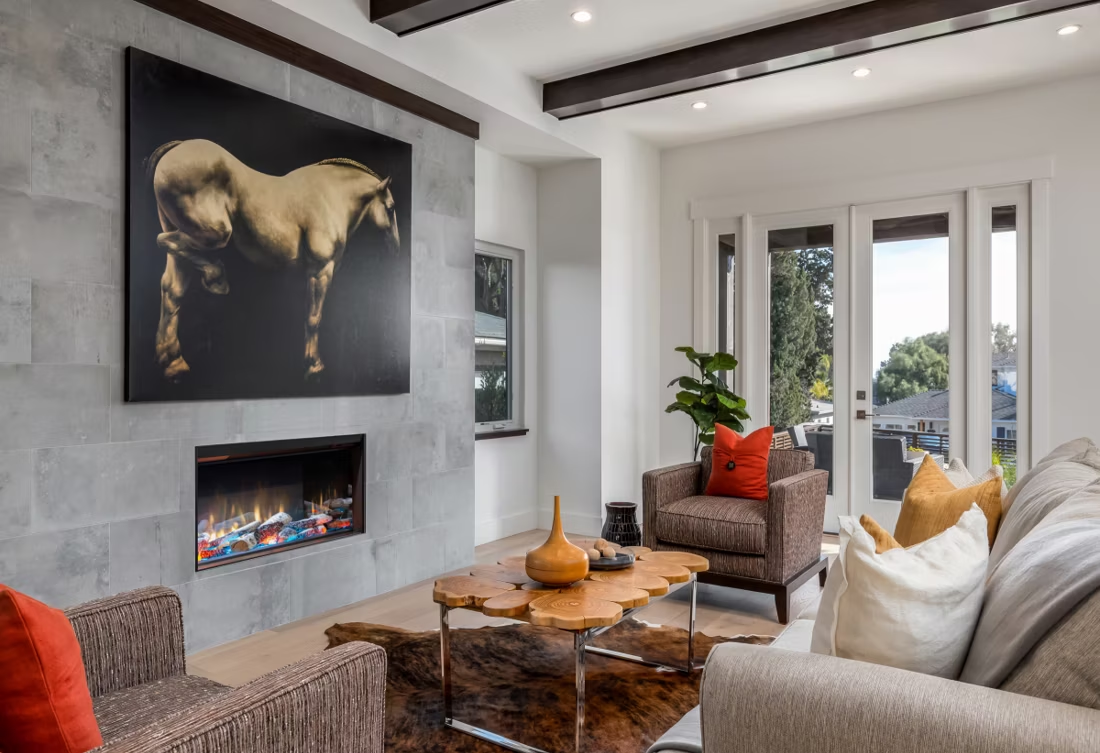
For Bel Air North's mix of housing stock, a wall-mounted linear electric fireplace works well in newer great rooms and finished basements where there's no existing fireplace opening. Homes with an older masonry fireplace can use an electric insert that slides into the existing firebox, giving you the look of a working fireplace without any chimney work. Mantel packages—a freestanding electric unit paired with a surround—are popular for buyers who want a traditional look in a room with no chimney at all. A local dealer will walk your space and recommend based on the wall, outlet location, and whether you're working with an existing opening.
Can an electric fireplace actually heat a room, or is it just for looks?
Most electric fireplaces are rated for 5,000 to 9,000 BTU, enough to comfortably supplement heat in a single room of 300-400 square feet, but not enough to serve as primary heat for a whole house—even in Bel Air North's relatively moderate winter climate. Think of it as zone heating: warming the room you're actually in so you can turn the thermostat down elsewhere, rather than replacing your furnace. If you want a unit that meaningfully cuts your BGE bill on cold nights, look for models with a higher-wattage heater (1,500W is the standard max) and good room-sealing where it's installed.
Are electric fireplaces safe around kids and pets?
Electric fireplaces are generally considered the safest hearth option for households with young children or pets. There's no open flame, no hot glass in most models (many use cool-touch glass fronts), no combustion byproducts, and no ash or embers. Some models do have a heating element that can get warm to the touch during operation, so it's still worth checking manufacturer specs if you have curious toddlers. Compared to a wood stove's hot exterior or a gas fireplace's glass front, which can reach several hundred degrees, electric units are the lower-risk choice for family rooms and playrooms.
What brands of electric fireplaces are available near Bel Air North?
Local hearth dealers in the Harford County and greater Baltimore area typically carry Dimplex, Napoleon, and Touchstone for wall-mount and insert-style electric fireplaces, along with a range of mantel packages from furniture-style manufacturers. Availability varies by dealer and season, which is exactly why matching with a local retailer matters more than browsing a national catalog—you want to know what's actually in stock and what a dealer will stand behind for install and service in Harford County.
Electric vs. wood—which is right for my home?
Harford County has plenty of oak, hickory, and maple available for wood burning, and a wood stove or insert delivers more raw heat and works during a power outage—a real consideration if BGE service drops during a winter storm. But wood requires a chimney or venting, regular cleaning, and a spot to store cordwood, which doesn't fit every Bel Air North property, especially newer townhomes and HOA communities. Electric fireplaces skip all of that: no venting, no permit for plug-in models, and no combustion byproducts, at the tradeoff of needing grid power to run and lower overall heat output. For a supplemental, low-maintenance option in a home without an existing chimney, electric is usually the more practical fit.
Can I put a TV above my fireplace?
Yes—with an asterisk. Fireplaces are hot and TVs don't like heat. Either put a mantel between them to deflect rising warmth, or choose a fireplace with heat-management technology that creates a cool zone on the wall above—the wall stays around 125 degrees, barely warm, while the room still gets full heat. If you like clean lines and don't want a mantel, heat management is the answer.
Do electric fireplaces actually produce heat?
Yes—most put out around 4,800–5,000 BTUs from a standard outlet, which comfortably warms a bedroom, office, or den as a comfort-zone heater. What they won't do is carry a whole house the way wood, gas, or pellet can. Think of electric as ambiance-first with honest supplemental heat: flames on with no heat in July, flames plus warmth in January.
Does a fireplace add value to my home?
On average, a fireplace adds back to the home about the same amount you spent installing it. Add the monthly savings from heating the rooms you actually use instead of the whole house—often hundreds of dollars a year—and the value case is strong before you even count what a fire does for how your family uses the room.
Can a fireplace actually lower my heating bill?
Yes—by creating a comfort zone. A furnace heats every square foot of the house just to warm the one room you're in; a gas fireplace on low burns roughly a sixth of the gas a typical furnace does. Set the furnace around 55–60 degrees as a baseline, then heat the rooms your family actually uses. Families who heat this way commonly save $20–$60 a month.
Nearby Dealers
Hearth shops serving Bel Air North and the surrounding area. Every listing shows whether it is a WhyFire partner, a dealer we have verified as authorized for the brands we recommend, or a local business carrying hearth products. No manufacturer pays for placement. How we verify dealers →
Costello's Hearth & Spa - Forest Hill
Clearwater Pool & Spa
Courtland Hearth & Hardware
Maryland Dream Kitchens And Baths, LLC
Fireplaces And Stoves Md
Watson's Fireplace & Patio
Hunters Home Center
Ace Of Diamonds Chimney
Bulls Supply Co, Inc
Starks Chimney Services
Duvall's Lawn & Garden Inc.
Hillside Acres Stoves
Glyndon Gardens
Electric Service in Bel Air North
An electric fireplace's heater draws about 1,500 watts—pennies per hour at local rates.
Baltimore Gas & Electric Co
Find your electric fireplace in Bel Air North.
Tell us a bit about your home and we'll match you with the right electric fireplace, insert, or mantel—plus a free Project Guide & Parts List and a trusted local dealer to install it.
Find Your Fireplace →