
The Fireplace Upgrade Bel Air Homes Don't Need a Chimney For.
Zone heat and real ambiance for Harford County homes—plug it in or wire it to a dedicated circuit, no masonry or venting required. Find the right unit and connect with a trusted local dealer.
Every Project Starts From One of These Five Situations
Warmth that fits into homes that were never built for a chimney.
Bel Air sits in climate zone 4A with a moderate seven-month heating season and winter lows averaging 25°F—cold enough for real supplemental heat, but nowhere near the extremes of a place like Burlington, VT, which faces a much longer, harsher heating season most winters. That milder profile is part of why electric fireplaces have caught on around town: a lot of the housing stock near Main Street and the older neighborhoods off MD-24 was built before central air, with additions, finished basements, and converted sunrooms that never had a flue and don't need one now.
With Baltimore Gas & Electric serving the area at roughly $0.1612 per kWh, running an electric fireplace as zone heat in a home office or family room costs pennies compared to running the whole-house heat pump harder. There's no gas line, no combustion byproducts, and in most cases no building permit—just a plug or, for a built-in unit, a dedicated 20-amp circuit run by a licensed electrician. For Bel Air's older homes with existing masonry fireboxes that were never relined for solid fuel, an electric insert is often the simplest way to get the look of a fire back without touching the chimney at all.
Three steps. No salesperson until you're ready.
Tell us about your project
Your zip code, your situation, and the fuel you're leaning toward—or let the answers point you to one.
See what's actually available
The brands dealers within 100 miles genuinely carry—real options, never a catalog mirage.
Get your dealer & Project Guide
A trusted local dealer, plus the free Project Guide & Parts List that names every component of the job.
Frequently Asked Questions
How much does an electric fireplace installation cost in Bel Air?
A plug-in electric insert or freestanding unit typically runs $250 to $600 installed, since most just need an existing outlet—no electrician required. A built-in wall unit or a linear electric fireplace that needs a new dedicated circuit runs more like $1,000 to $3,000 once you factor in the electrician's time to run wire from the panel, especially in older Bel Air homes where the existing panel may need a subpanel or additional capacity. Local dealers will give you a firm number after seeing your electrical setup.
What size electric fireplace do I need for my Bel Air home?
Most electric fireplaces top out around 5,000–5,200 BTU (roughly 1,500 watts), which comfortably heats 400 to 1,000 square feet depending on ceiling height and insulation—plenty for a family room, finished basement, or bedroom addition in a typical Bel Air home. They're not sized to replace your heat pump or furnace as primary heat; they're built for zone heating a room you spend a lot of time in. If you're trying to heat an open-concept space larger than that, you'll likely want two units or a different fuel entirely.
Do I need a permit to install an electric fireplace in Bel Air?
Plug-in units generally don't require any permit—you're just adding an appliance to an existing outlet. If you're installing a built-in electric fireplace that requires new wiring or a dedicated circuit, Harford County's electrical code applies and the work needs to be pulled by a licensed electrician, sometimes with a permit from Harford County Government's Inspections, Licenses & Permits division depending on the scope. Local dealers who handle electric fireplace installs typically coordinate this for you or can point you to an electrician who knows the local process.
What's the difference between an electric insert, a wall-mount unit, and a freestanding electric stove?
An electric insert is built to slide into an existing masonry fireplace opening—a good fit for Bel Air's older homes with a firebox that's no longer used for wood. A wall-mount or built-in linear unit is designed for new construction or a remodel, framed into a wall like a flat-screen TV. A freestanding electric stove sits on the floor and can go almost anywhere with an outlet nearby, which makes it the easiest option for renters or homes where you don't want to touch existing masonry at all.
How much does it cost to run an electric fireplace with BGE rates?
At Baltimore Gas & Electric's residential rate of about $0.1612 per kWh, a typical 1,500-watt electric fireplace running on high costs roughly 24 cents an hour—about $5.80 if you ran it continuously for 24 hours, though most people use the heat setting only a few hours a day and the flame effect alone draws almost no power. Compared to running your central heat pump harder to warm one room, using an electric fireplace for zone heating in a den or bedroom is usually the cheaper option.
Is an electric fireplace enough heat for a Maryland winter?
On its own, no—with winter lows averaging around 25°F in Bel Air, an electric fireplace isn't built to be your only heat source the way a wood stove might be in a much colder climate. It's designed as supplemental zone heat that takes the load off your central heat pump or furnace in the room you're actually using, which is exactly how most local homeowners run them. If you're looking for backup heat during a power outage, keep in mind electric units won't run without power—a battery backup or generator changes that equation, but the appliance itself doesn't.
Electric vs. wood—which makes more sense for a Bel Air home?
Harford County still has plenty of oak, hickory, and maple around, and wood heat has real appeal if you want backup heat during an outage or already have a working chimney. But a lot of Bel Air's older housing stock has fireboxes that were closed up or never relined for solid fuel, and re-lining a chimney to burn wood again can cost more than the electric alternative. If your fireplace already has a working flue and you like the idea of self-sufficient heat, wood is worth a look. If you just want the ambiance and a little extra warmth without touching the masonry, electric is the far simpler project.
Electric vs. gas—which is the better fit?
Gas fireplaces put out real, sustained heat and can run during a power outage with battery-backup ignition, but they require a gas line and venting work that adds real cost and complexity—often several thousand dollars more than an electric install. Electric fireplaces skip the gas line and venting entirely, install in a fraction of the time, and cost very little to run at BGE's residential rate, but they max out around 5,000 BTU and won't function without electricity. For a Bel Air homeowner who wants ambiance and modest supplemental heat with minimal construction, electric usually wins. For a primary heat source in a main living space, gas is the stronger choice.
Can I convert my existing wood fireplace to electric in Bel Air?
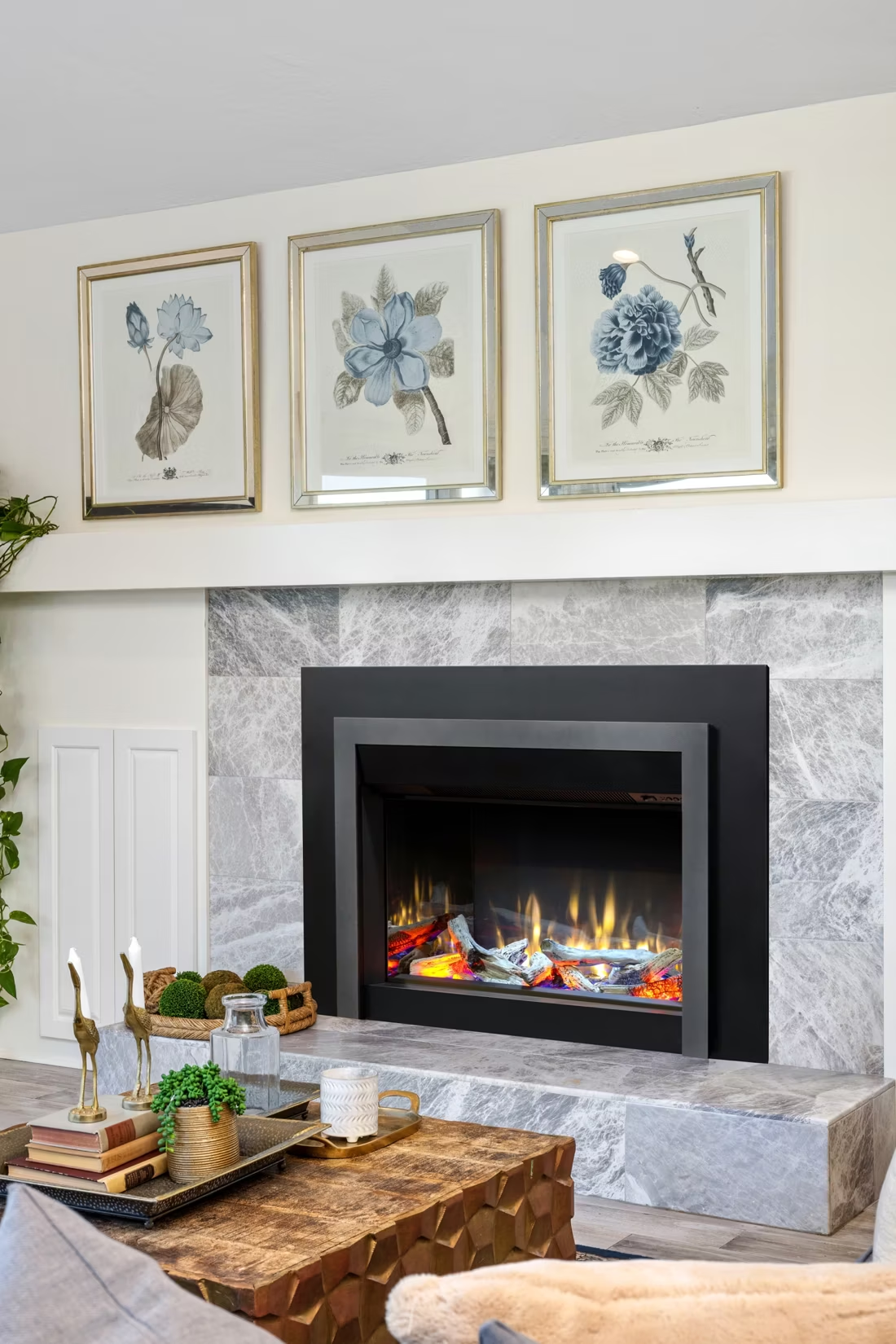
Yes, and it's a common project for the older homes around Bel Air's historic district. An electric insert slides into your existing masonry opening, usually with a surround kit that matches the firebox dimensions, and most installs just need a nearby outlet or a short electrician run to a dedicated circuit—no chimney relining, no cap replacement, no sweep required. It's one of the fastest ways to bring a long-unused fireplace back into daily use without the cost of restoring it for wood or gas.
Does an electric fireplace need a vent or chimney?
No—that's its superpower. An electric fireplace needs a wall and an outlet, period. No vent pipe, no gas line, no clearances to design around, which is why it works in bedrooms, offices, apartments, and walls where venting a gas or wood unit would be impractical or impossible. Installation is typically the simplest and least expensive of any fireplace type.
Do electric fireplaces actually produce heat?
Yes—most put out around 4,800–5,000 BTUs from a standard outlet, which comfortably warms a bedroom, office, or den as a comfort-zone heater. What they won't do is carry a whole house the way wood, gas, or pellet can. Think of electric as ambiance-first with honest supplemental heat: flames on with no heat in July, flames plus warmth in January.
Can I install a fireplace myself?
If you're putting a fire in your house on purpose, it's best to work with an expert. Unless you're genuinely experienced in framing, gas line, vent pipe, and the national code on clearances to combustibles, have a professional do it—and ideally the same company that sells you the fireplace, so warranty, service, and liability all live under one roof.
Does a fireplace add value to my home?
On average, a fireplace adds back to the home about the same amount you spent installing it. Add the monthly savings from heating the rooms you actually use instead of the whole house—often hundreds of dollars a year—and the value case is strong before you even count what a fire does for how your family uses the room.
Nearby Dealers
Hearth shops serving Bel Air and the surrounding area. Every listing shows whether it is a WhyFire partner, a dealer we have verified as authorized for the brands we recommend, or a local business carrying hearth products. No manufacturer pays for placement. How we verify dealers →
Clearwater Pool & Spa
Costello's Hearth & Spa - Forest Hill
Courtland Hearth & Hardware
Maryland Dream Kitchens And Baths, LLC
Fireplaces And Stoves Md
Hunters Home Center
Ace Of Diamonds Chimney
Watson's Fireplace & Patio
Starks Chimney Services
Duvall's Lawn & Garden Inc.
Bulls Supply Co, Inc
Electric Service in Bel Air
An electric fireplace's heater draws about 1,500 watts—pennies per hour at local rates.
Baltimore Gas & Electric Co
Find your electric fireplace in Bel Air.
Tell us a bit about your home and we'll put together a free Project Guide & Parts List—the right electric fireplace or insert, the exact parts you'll need, and a trusted local Bel Air dealer to install it.
Find Your Fireplace →