
Keep Your Family Warm and Safe—No Matter What
Most Hagerstown homes heat with gas or electric, but a smaller group still wants a real wood fire—for backup heat, ambiance, or a wooded property outside town. We'll connect you with a local dealer who can do it right.
Every Project Starts From One of These Five Situations
Hagerstown runs on natural gas, not cordwood.
Hagerstown sits at 554 feet in Maryland's Cumberland Valley, in climate zone 4A with a winter heating season on par with places averaging about 5,017 on the standard cold-weather scale and winter lows averaging 22°F. That's a real winter, but nowhere near the much longer, harsher heating season of a place like Burlington, Vermont—the kind of cold that makes wood a household necessity rather than an option. With natural gas infrastructure well established across the city and county, most Washington County homes never had a reason to build their heating plan around a woodpile.
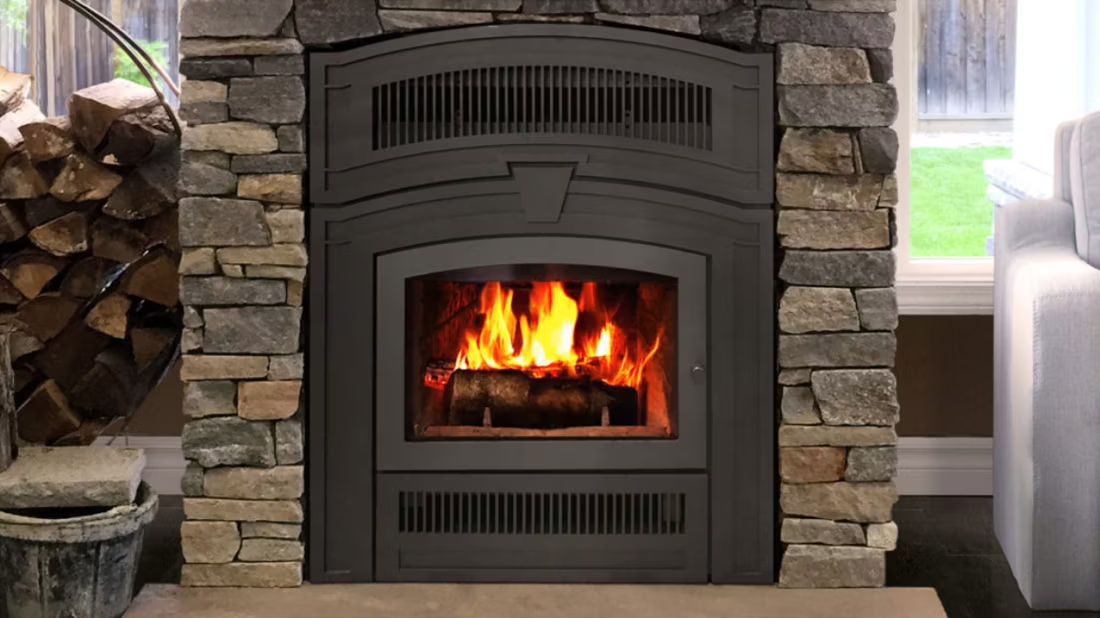
That's why wood stove installations here are the exception rather than the norm. The homeowners who do install one tend to fall into a few categories: households on wooded acreage outside city limits who have easy access to local oak, hickory, and maple, people who want a non-electric backup heat source for winter storm outages, and owners of older Hagerstown homes with an existing masonry fireplace who want to bring it back to life. It's a smaller market than gas or electric, which is exactly why working with a dealer who actually installs wood-burning appliances regularly—rather than one who dabbles—matters more here, not less.
Three steps. No salesperson until you're ready.
Tell us about your project
Your zip code, your situation, and the fuel you're leaning toward—or let the answers point you to one.
See what's actually available
The brands dealers within 100 miles genuinely carry—real options, never a catalog mirage.
Get your dealer & Project Guide
A trusted local dealer, plus the free Project Guide & Parts List that names every component of the job.
Frequently Asked Questions
Is wood heat actually common in Hagerstown?
Not especially, and it's worth being upfront about that. Natural gas and electric heat pumps cover the overwhelming majority of homes in Hagerstown and Washington County, and the mild-to-moderate winters here (a heating season on par with places averaging about 5,017 on the standard cold-weather scale, average lows in the low 20s) don't push most households toward wood the way they would in the mountain valleys of western Maryland or Appalachia. Wood stoves still get installed here, but usually as a deliberate choice—for backup heat, a wooded lot, or the appeal of a real fire—rather than as the default heating plan for the house.
How much does a wood stove installation cost in Hagerstown?
Because wood heat is a smaller niche here than in wood-heavy markets, there isn't a deep bench of installers who specialize in it, and pricing varies more from job to job. As a general guide, a wood stove installation—unit, hearth pad, Class A chimney pipe, and labor—typically runs $3,500 to $8,000 depending on whether you're venting through an existing masonry chimney or building a new chimney chase from scratch. A trusted local dealer will give you a firm number after seeing your home, which matters more here than in markets where every installer already has a standard package.
What firewood is available locally in Washington County?
Oak, hickory, and maple are the common hardwoods in this part of the Cumberland Valley, and all three burn hot and long once properly seasoned. Unlike western states with large blocks of national forest land and cutting permit programs, Washington County is mostly private farmland and woodlots, so there's no public-land permit office to visit here. Most Hagerstown wood-stove owners either buy seasoned cordwood from local tree services and firewood dealers or cut from their own property if they own wooded acreage.
Do I need a permit to install a wood stove in Hagerstown?
Yes, a building permit is required for a new wood-burning appliance installation, and the stove itself needs to meet current EPA 2020 NSPS emissions standards. Inside city limits, that permit runs through the City of Hagerstown's Permits & Inspections Division; outside city limits, Washington County's permits office typically handles it instead. Most established hearth dealers fold this into the installation and pull the permit on your behalf, which is worth confirming before you hire anyone.
Why is wood heat more common in western Maryland than in Hagerstown?
Head west into Allegany or Garrett County and elevations climb, winters get colder and longer, and forest land becomes much more plentiful—all of which make wood a more practical primary or supplemental heat source. Hagerstown, by contrast, sits in the lower, flatter Cumberland Valley with a well-built-out natural gas network. The colder, more forested geography just twenty or thirty miles west changes the calculus in a way that doesn't apply here.
Are there air quality restrictions on wood burning in Hagerstown?
No—Hagerstown doesn't have the winter temperature inversions or non-attainment air quality designations that trigger burn bans in valley cities out west. There are no local curtailment periods to plan around. The main air quality consideration is simply making sure your stove is EPA-certified, which is required for any new installation regardless of local air quality status.
Would a wood stove actually help during a power outage?
Yes, and it's one of the better reasons to install one here. Hagerstown's electric supply comes through Potomac Edison or the municipal Hagerstown Light Department depending on your address, and like any grid, both are subject to outages during ice storms and severe weather. A wood stove that doesn't rely on an electric blower keeps working when the power doesn't, which is a real advantage over a gas furnace with an electronic ignition or a heat pump that stops cold without power.
I have an old fireplace in my Hagerstown home—should I get an insert instead of a freestanding stove?
If your home already has a working masonry fireplace and chimney—common in Hagerstown's older neighborhoods—a wood insert is usually the better fit. It slides into the existing firebox, uses a stainless liner run up your current chimney, and turns a heat-losing open fireplace into an actual heat source. A freestanding stove makes more sense for homes without an existing fireplace, since it needs its own hearth pad and chimney system built from the floor up.
Wood vs. gas—which makes more sense for a Hagerstown home?
For most Hagerstown households, gas wins on convenience: instant on-off heat, no ash or wood handling, and a natural gas network that already reaches most of the city. Wood makes sense in narrower situations—as backup heat that doesn't depend on electricity, for a home on a wooded lot with easy access to oak or hickory, or simply because you want a real fire rather than a flame behind glass. Plenty of local homes run both: gas for daily heat, a wood stove or insert for outages and atmosphere.
Why is my open fireplace making my house colder?
Open fireplaces suck—literally. As the fire burns, it consumes air your furnace already paid to heat and pulls it out through the chimney, so the house is actually colder after the fire goes out than before you lit it. An insert fixes this: it seals the chimney, puts fixed glass across the front, and turns that hole in your house into a real heat source.
What do I measure to size a fireplace insert?
Four numbers tell you what fits: the front width, the front height, the back width, and the overall depth of your existing fireplace opening. Grab a tape measure, jot those down, and snap a photo of the wall—those two things do more to move your project forward than anything else you can do today.
Can a fireplace actually lower my heating bill?
Yes—by creating a comfort zone. A furnace heats every square foot of the house just to warm the one room you're in; a gas fireplace on low burns roughly a sixth of the gas a typical furnace does. Set the furnace around 55–60 degrees as a baseline, then heat the rooms your family actually uses. Families who heat this way commonly save $20–$60 a month.
Can I install a fireplace myself?
If you're putting a fire in your house on purpose, it's best to work with an expert. Unless you're genuinely experienced in framing, gas line, vent pipe, and the national code on clearances to combustibles, have a professional do it—and ideally the same company that sells you the fireplace, so warranty, service, and liability all live under one roof.
Nearby Dealers
Hearth shops serving Hagerstown and the surrounding area. Every listing shows whether it is a WhyFire partner, a dealer we have verified as authorized for the brands we recommend, or a local business carrying hearth products. No manufacturer pays for placement. How we verify dealers →
Monocacy Chimney Care
Blaine Window Hardware, Inc.
Mace Energy Supply Inc.
L.t. Rush Stone Inc
McLaughlin Home Heating
Bunting’s Fireplace & Stove
A&A Pools
Roach Energy
H & D Service & Stove Inc
Aes Hearth & Patio - Chambersburg
Aes Hearthplace, Inc.
Best Htg And Air
Find your wood stove in Hagerstown.
Tell us about your home and we'll put together a free Project Guide & Parts List for your wood stove or insert project—including the vent kit—and match you with a local Hagerstown-area dealer who actually installs wood-burning appliances.
Find Your Fireplace →