
Instant Heat, Built for Hagerstown Winters.
From downtown rowhouses to newer Robinwood subdivisions, a properly vented gas fireplace delivers steady warmth through the Cumberland Valley's cold months—with a trusted local dealer handling the install.
Every Project Starts From One of These Five Situations
Reliable warmth without the woodpile.
Hagerstown sits at about 554 feet in the Cumberland Valley, in climate zone 4A, where winter lows average around 22°F and the area sees a solid, sustained cold season each year. That's a real four-season climate with a genuine heating season from November through March—noticeably milder than a place like Buffalo, NY, but still cold enough that homeowners need dependable supplemental heat, not just decoration.
Gas has become the default upgrade path for Hagerstown's older brick colonials and Federal-style downtown homes, many of which still have the original masonry fireplace but no interest in hauling firewood. Natural gas service runs through much of the city core, while homes further out in Washington County—including the more rural 21747 and 21749 zips—more often rely on propane. Either way, a direct-vent gas insert or fireplace gives you real, on-demand heat, works as zone heating alongside a central furnace, and, with the right ignition system, keeps running when a Potomac Edison line goes down in an ice storm.
Three steps. No salesperson until you're ready.
Tell us about your project
Your zip code, your situation, and the fuel you're leaning toward—or let the answers point you to one.
See what's actually available
The brands dealers within 100 miles genuinely carry—real options, never a catalog mirage.
Get your dealer & Project Guide
A trusted local dealer, plus the free Project Guide & Parts List that names every component of the job.
Frequently Asked Questions
How much does a gas fireplace installation cost in Hagerstown?
Most gas fireplace installations in Hagerstown fall somewhere between $4,500 and $10,000, depending on the unit, the venting path, and whether new gas line work is required. Slipping a direct-vent gas insert into an existing masonry fireplace in one of Hagerstown's older brick homes—where a gas line is often already nearby—tends to land on the lower end. A new built-in gas fireplace for a remodel or a newer home out toward Robinwood or Maugansville, requiring fresh framing, venting, and a gas line run, sits higher. Propane installations that also require a new tank push toward the top of that range. A local dealer will give you a firm number after seeing your space.
Can I convert my existing wood fireplace to gas?
Yes, and it's a common project in Hagerstown's older neighborhoods, where many brick colonials and downtown rowhouses still have a masonry fireplace originally built for burning oak, hickory, or maple. A gas insert typically drops into that existing firebox, using a stainless liner run up the existing chimney as the vent path. Expect roughly $4,500 to $9,000 depending on whether you're on natural gas or propane and whether new gas line work is needed. The conversion keeps the look of the original fireplace while giving you real, thermostatically controlled heat instead of an open hearth that mostly just loses warmth up the flue.
Do I need natural gas, or can I use propane?
Either works, and which one you use mostly comes down to where in Washington County you live. Homes closer to downtown Hagerstown and the more established zip codes generally have natural gas service already run to the house, which makes adding a fireplace straightforward if you've got a furnace or water heater on gas already. Out toward the more rural stretches of the 21747 and 21749 areas, propane is the standard fallback, using either an existing tank or a new one set by a local propane supplier. Most gas fireplace models can be configured for either fuel—your installer sets the correct orifice and regulator for whichever you have.
Will my gas fireplace work during a power outage?
Most modern gas fireplaces will, which matters in a region served by Potomac Edison and Hagerstown Light Department where ice storms and downed lines can knock out power for hours at a time. Units with IPI (intermittent pilot ignition) run on a small battery backup that kicks in automatically when the power drops, so the fireplace still lights on demand—just remember to keep fresh batteries on hand. Valor fireplaces skip the battery question entirely: their pilot assembly generates its own electricity through the thermocouple, so the unit runs with or without grid power, no batteries required. Worth asking about directly if backup heat is a priority for your home.
What's the difference between a gas fireplace, gas insert, and gas stove?
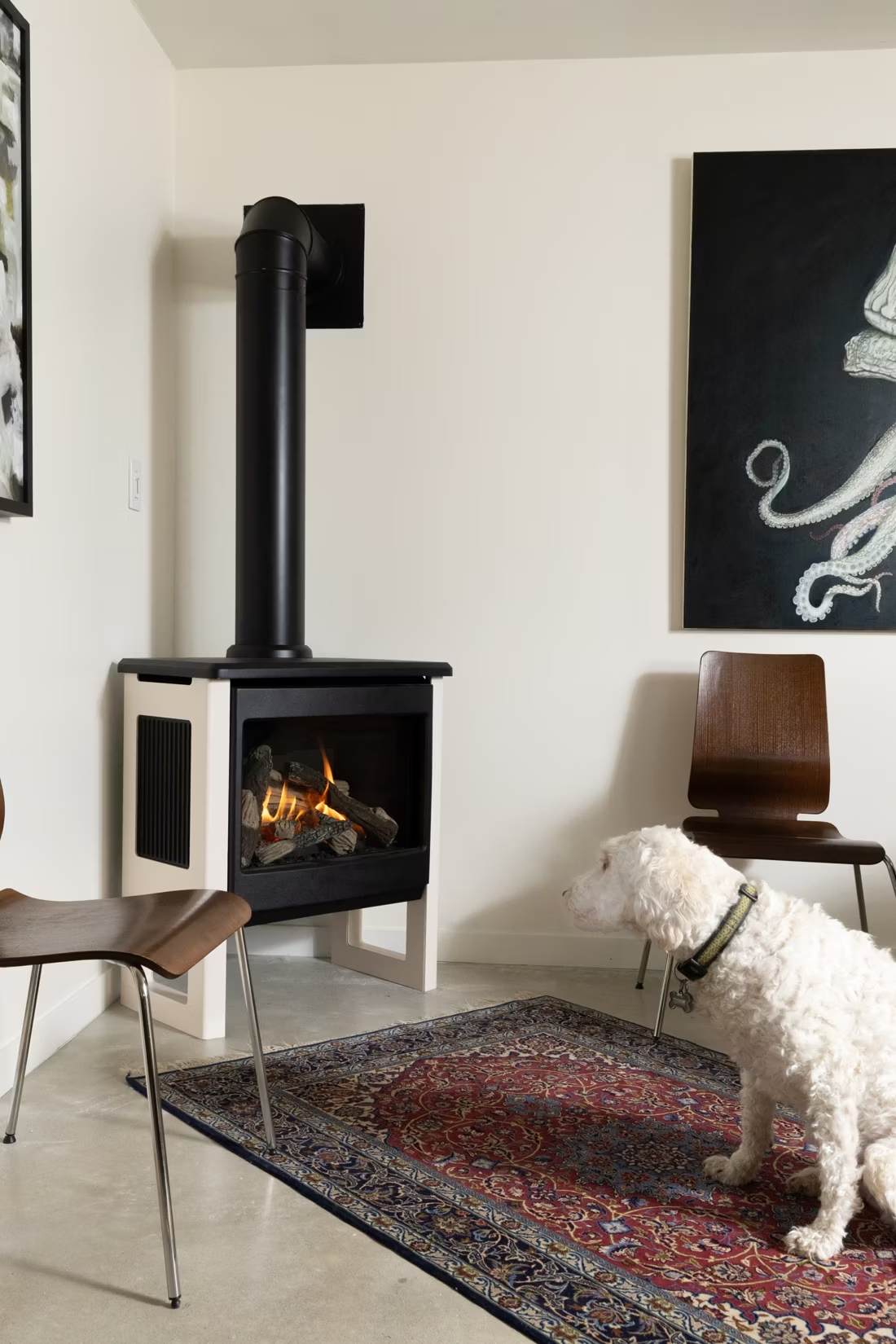
A gas fireplace is a fully built-in unit set into a wall or framed enclosure—the usual choice for newer construction in areas like Robinwood or Maugansville that don't have an existing chimney. A gas insert is built to slide into an existing masonry firebox, which describes a lot of the housing stock in downtown Hagerstown and its older residential blocks, converting a wood-era fireplace into a sealed, efficient gas unit. A gas stove is a freestanding cast-iron or steel unit that sits out in the room like a wood stove would, but runs on gas—a good fit when you want a stove's look and heat output without an existing fireplace to build around.
Do I need a permit to install a gas fireplace in Hagerstown?
Yes. Depending on where the home sits, you'll need a building permit and a gas line permit through either the City of Hagerstown's permitting office or the Washington County Division of Permits and Inspections, and the gas line work itself has to be done by a licensed gas fitter. Most established hearth dealers in the area handle this paperwork as part of the installation, coordinating the gas line, venting, and inspection sign-off rather than leaving you to manage separate trades and separate permit offices.
What's the difference between vented and vent-free gas fireplaces?
Vented gas fireplaces—direct-vent or B-vent—pull combustion air from outside and exhaust the byproducts back outside through a sealed flue. Vent-free units burn gas directly into the room with no external venting at all, which makes them easier to install in a home without existing chimney access but means they release some water vapor and combustion byproducts indoors. Maryland permits vent-free units, but they come with strict room-size and ventilation requirements that a dealer will walk you through. Given Hagerstown's real winter heating needs, most homeowners here still end up choosing a direct-vent unit for the stronger heat output and the peace of mind of full outdoor venting.
How often should my gas fireplace be serviced?
Plan on an annual inspection, ideally in early fall before the heating season starts. A technician checks the burner, pilot assembly, venting, and gas connections, and cleans the glass and interior—a much lighter job than a wood chimney sweep but just as important for safe operation. Local gas appliance service providers in the Hagerstown area typically charge somewhere in the $125 to $200 range for a standard annual inspection.
Should I even consider wood instead of gas in Hagerstown?
For most homes in and around Hagerstown, probably not as a primary system. This part of Washington County doesn't have the cutting-permit infrastructure or forest access you'd find in the more mountainous parts of western Maryland, and most homes here are already set up for natural gas, propane, or electric heat. Oak, hickory, and maple are the traditional local firewood species if someone does want a wood stove for ambiance or a cabin property, but for day-to-day heat in a Hagerstown home, gas delivers instant, thermostatically controlled warmth without sourcing, splitting, or storing cordwood.
What's the difference between an insert and a zero-clearance fireplace?
An insert is a fireplace that slides into a pre-existing wood-burning fireplace—if you don't have one, there's nothing to insert it into. A zero-clearance fireplace is built into a framed wall, which makes it the answer for remodels and new construction. Simple test: existing masonry fireplace means insert; blank or framed wall means zero-clearance.
Can I put a TV above my fireplace?
Yes—with an asterisk. Fireplaces are hot and TVs don't like heat. Either put a mantel between them to deflect rising warmth, or choose a fireplace with heat-management technology that creates a cool zone on the wall above—the wall stays around 125 degrees, barely warm, while the room still gets full heat. If you like clean lines and don't want a mantel, heat management is the answer.
Can I install a fireplace myself?
If you're putting a fire in your house on purpose, it's best to work with an expert. Unless you're genuinely experienced in framing, gas line, vent pipe, and the national code on clearances to combustibles, have a professional do it—and ideally the same company that sells you the fireplace, so warranty, service, and liability all live under one roof.
Should the dealer who sells my fireplace also install it?
Ideally, yes. A fireplace project involves vent pipe, gas line, electrical, and often tile or stone. Hire three or four separate trades and you own the liability and the game of telephone between them. One company selling and installing means one accountable party, start to finish—ask about factory training, on-time completion records, and what happens if an inspection fails.
Nearby Dealers
Hearth shops serving Hagerstown and the surrounding area. Every listing shows whether it is a WhyFire partner, a dealer we have verified as authorized for the brands we recommend, or a local business carrying hearth products. No manufacturer pays for placement. How we verify dealers →
Monocacy Chimney Care
Blaine Window Hardware, Inc.
Mace Energy Supply Inc.
L.t. Rush Stone Inc
McLaughlin Home Heating
Bunting’s Fireplace & Stove
A&A Pools
Roach Energy
H & D Service & Stove Inc
Aes Hearth & Patio - Chambersburg
Aes Hearthplace, Inc.
Best Htg And Air
Find your gas fireplace in Hagerstown.
Tell us a bit about your home and we'll match you with a trusted local Hagerstown dealer and send over a free Project Guide & Parts List—the exact parts, vent kit included, for your gas fireplace project.
Find Your Fireplace →